

Why does a premium smartphone screen feel like a magnet for grease just minutes after you've polished it? It's a constant, frustrating battle. You wipe your display on your shirt, only to find the oil has shifted around; blurring your clarity and making precision gaming feel slippery and imprecise. Finding the right screen protector for oily fingers isn't just about aesthetics. It's about stewardship over your high-value devices and ensuring your hardware performs exactly as intended.
We take the protection of your technology seriously. This guide reveals how specialized oleophobic coatings and advanced material science can finally eliminate smudges. With over 60% of premium screen protectors now featuring these advanced hydrophobic layers, the science of smudge resistance has evolved. You'll discover how to keep your screens pristine while maintaining perfect touch sensitivity and light filtration. We'll explore the technical specifications of 9H tempered glass and the self-healing properties of modern hydrogel. You'll gain the technical insight needed to choose a specialized barrier that guards your device against skin oils and daily wear.
Key Takeaways
- Understand how oleophobic coatings utilize advanced material science to lower surface tension, preventing lipids from bonding to your display.
- Evaluate the performance trade-offs between rigid tempered glass and self-healing hydrogel to find the most effective barrier against persistent smudges.
- Discover why a matte, anti-glare finish is the superior screen protector for oily fingers compared to traditional glossy options.
- Learn how to safeguard specialized hardware, from automotive navigation displays in Tesla and BYD vehicles to industrial Snap-on and Autel diagnostic tools.
- Explore IPG Zerodust and ProActive technology to ensure a seamless, bubble-free installation that maintains the long-term integrity of your high-value screens.
The Science of Smudges: What is an Oleophobic Coating?
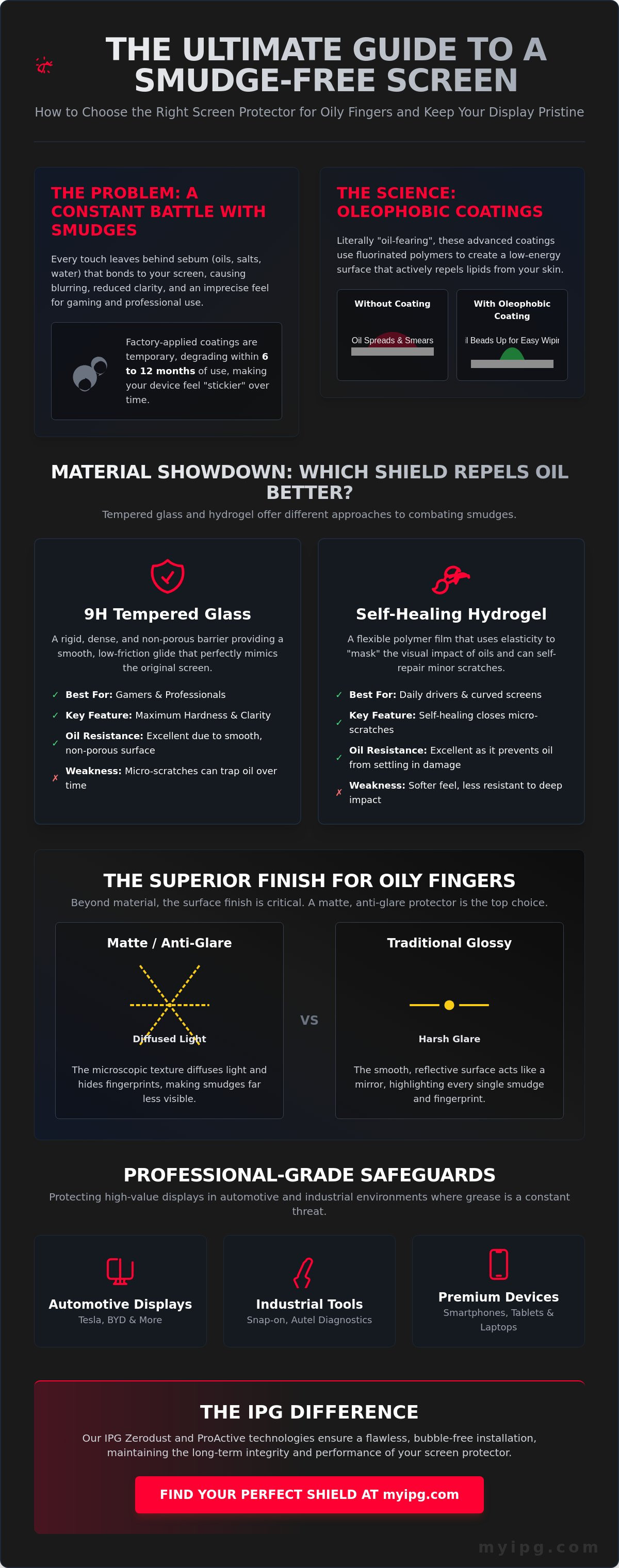
Your screen is a high-traffic surface. Every touch leaves behind a complex mixture of water, salt, and lipids known as sebum. Without a specialized barrier, these oils bond to the glass, creating the cloudy, distorted buildup you see every day. The solution lies in understanding The Science of Smudges: What is an Oleophobic Coating?. This technology uses fluorinated polymers to create a low-energy surface. Oleophobic literally means "oil-fearing." It is a material property that naturally repels lipids. By reducing the surface tension of the display, the coating prevents fingerprints from bonding to the substrate. Instead of a smeary mess, the oil sits on top, ready to be wiped away with a single, effortless pass.
Standard factory screens aren't permanent solutions. Most manufacturers apply a thin, temporary coating that degrades within 6 to 12 months of active use. Constant friction from your pocket and the repetitive motion of your thumb eventually strip this layer away. If you've noticed your phone feels "stickier" than the day you bought it, your factory protection has likely failed. A dedicated screen protector for oily fingers replaces this lost barrier with a more resilient, high-density layer designed for longevity. Industrial-grade grease poses an even greater threat. While skin oil is relatively thin, the heavy lipids found in automotive or workshop environments require a more robust chemical barrier to maintain touch accuracy and visual integrity.
How Oil-Repellent Coatings Work
The secret is in the nanostructure. High-quality protectors feature a microscopic topography that makes it physically difficult for oil to spread. When a fingerprint hits the surface, the low surface energy causes the oil to "bead up" rather than flatten out. This prevents the oil from seeping into the microscopic pores of the glass. Friction is the enemy here. Every swipe acts like fine sandpaper, slowly wearing down the polymer chains. Choosing a protector with a high density of fluorocarbon resins ensures that the oil-repelling performance lasts through thousands of interactions.
Why Some Protectors Fail Oily Fingers
Performance varies wildly based on application methods. Cheap protectors often use a simple "spray-on" coating that can vanish in weeks. Premium options utilize electroplated or vacuum-deposited coatings that bond at a molecular level. These are far more durable and resistant to the harsh cleaning chemicals found in many household glass cleaners. To test your current protection, place a single drop of water on the screen. If it beads into a tight sphere and rolls off easily, your coating is intact. If it flattens and clings to the surface, it's time for a professional-grade replacement.
Hydrogel vs. Tempered Glass: Which Shield Repels Oil Better?
Choosing between rigid glass and flexible film is more than a matter of impact protection. It's a choice about surface chemistry and tactile performance. Tempered glass offers a dense, non-porous surface that excels at repelling liquid. Hydrogel, however, uses a sophisticated polymer matrix that can actually "mask" the visual impact of skin oils. Both materials serve as a vital screen protector for oily fingers, but they address the problem through different physical properties. Glass relies on a hard, slick barrier. Hydrogel utilizes elasticity to maintain a pristine appearance.
Surface energy plays a critical role in how your device handles daily use. Scientific analysis in Professional Grade: Safeguarding Industrial and Automotive Displays confirms that coating durability is tied directly to the substrate's material properties. While glass provides a stable base for electroplated layers, hydrogel's flexibility offers a unique advantage for users who find themselves constantly cleaning their devices. Micro-scratches on traditional glass often act as microscopic reservoirs that trap skin lipids, making them harder to wipe away. Hydrogel's self-healing nature closes these gaps, preventing oil from settling into the surface profile.
The Case for Tempered Glass
Precision matters. For gamers and professionals, the tactile feel of a high-quality 9H tempered glass protector is unmatched. It provides a smooth, low-friction glide that mimics the original device screen. This hardness is essential for maintaining a level surface that resists the "pitting" caused by dust and debris. A smoother surface means less surface area for oils to cling to. If you prioritize high-frequency touch interactions and maximum optical clarity, glass is your standard. It's a robust, retail-ready solution for those who demand a professional finish.
The Hydrogel Advantage for Smudge Control
Modern hydrogel films offer a different kind of stewardship. These protectors are particularly effective at "absorbing" the visual signature of light fingerprints, making them less noticeable during use. This is the "ProActive" approach to device maintenance. Hydrogel is also the superior choice for curved screens where rigid glass often struggles with edge lifting. When glass peels at the edges, it creates a gap where oil and dust accumulate rapidly. The IPG Original (Hydrogel) Screen Protector provides a seamless, edge-to-edge bond that keeps contaminants out. It's an invisible, oil-resistant shield that preserves the integrity of your most valued technology.
Durability is the final factor. While glass offers superior scratch resistance, the oleophobic coatings on hydrogel often feel "fresher" for longer because the material doesn't crack or chip. Consider your environment. If you're in a high-impact setting, glass is your guardian. If you're fighting a losing battle against constant smudges on a curved display, hydrogel is the innovator you need. Choose your shield based on how you interact with your world. Prioritize performance. Secure your display.
Beyond Anti-Fingerprint: Choosing the Right Finish
Surface texture dictates how visible oil becomes on your display. While material science handles the chemical rejection of lipids, the finish manages the visual evidence. A high-performance screen protector for oily fingers must balance aesthetic clarity with practical smudge management. Glossy finishes are the standard. They provide the highest color accuracy and mirror the original display's vibrance. However, they offer no camouflage for skin oils. If you choose glossy, you're committing to frequent polishing to maintain that "out-of-the-box" look. For many users, the constant maintenance of a glossy surface becomes a burden on productivity.
Matte vs. Glossy: The Great Smudge Debate
Matte finishes are the gold standard for oil management. By utilizing a micro-textured surface, these protectors diffuse incoming light rather than reflecting it directly. This scattering effect hides the refractive signature of a fingerprint. To the naked eye, the oil seems to disappear. Older matte films suffered from a "grainy" or "pixelated" appearance. Modern high-definition matte films have solved this. They use tighter, more uniform nanostructures that maintain 1080p and 4K clarity while providing a smooth, paper-like feel. This texture also reduces the "sticky" drag common on oily glossy screens. It's a professional choice for those who value performance over pure reflection.
The efficacy of these surfaces often relies on high-density oleophobic coatings that lower surface energy. This ensures that even on a textured matte surface, the oil doesn't settle into the microscopic valleys of the film. For users in brightly lit offices or outdoor environments, the anti-glare properties of a matte finish provide a secondary benefit. You get improved readability without cranking up brightness. This preserves your battery life and reduces eye strain during long sessions. It's a calculated trade-off where the gain in usability far outweighs the slight shift in color depth.
Privacy Protectors and Oil Resistance
Privacy films introduce a multi-layer structure designed to narrow viewing angles. These layers often include micro-louvers that block light from the side. This complexity can trap more oil if the top layer isn't properly treated. However, professional-grade privacy protectors integrate specialized top-coatings to ensure security doesn't come at the cost of a greasy display. They provide a dual-function benefit. They protect sensitive data from shoulder-surfers while maintaining the touch-sensitive performance required for high-stakes work. Whether you're a medical professional handling patient records or a field engineer on a job site, a privacy-focused finish keeps your screen secure and smudge-free. Choose a finish that aligns with your light environment and your need for discretion. Stewardship of your device means selecting the right tool for your specific reality.
Professional Grade: Safeguarding Industrial and Automotive Displays
Consumer smartphones aren't the only screens under threat. In industrial and automotive settings, the stakes are significantly higher. Mechanics, engineers, and field technicians handle high-value diagnostic equipment with hands frequently covered in grease, hydraulic fluid, and grit. A standard consumer-grade film won't survive these harsh environments. You need a specialized screen protector for oily fingers that can withstand chemical exposure while maintaining perfect touch accuracy. For professionals, a clear display isn't just about aesthetics. It's about precision, safety, and the long-term reliability of mission-critical hardware.
Protection for Diagnostic and Heavy-Duty Tools
Diagnostic tools represent a substantial financial investment. Equipment like the IPG Snap-on Triton Apollo Solus + screen protector is engineered specifically to guard against the realities of the shop floor. Standard guards often peel, bubble, or cloud when exposed to industrial cleaners and heavy lipids. Our specialized films maintain their clarity and molecular bond even under stress. Whether you're operating an Autel MaxiSYS MS909 or MS919, a custom-fit barrier ensures that greasy shop hands don't degrade the sensitive touch interface. This stewardship extends the life of your instruments, keeping them ready for high-precision work.
The Automotive Screen Challenge
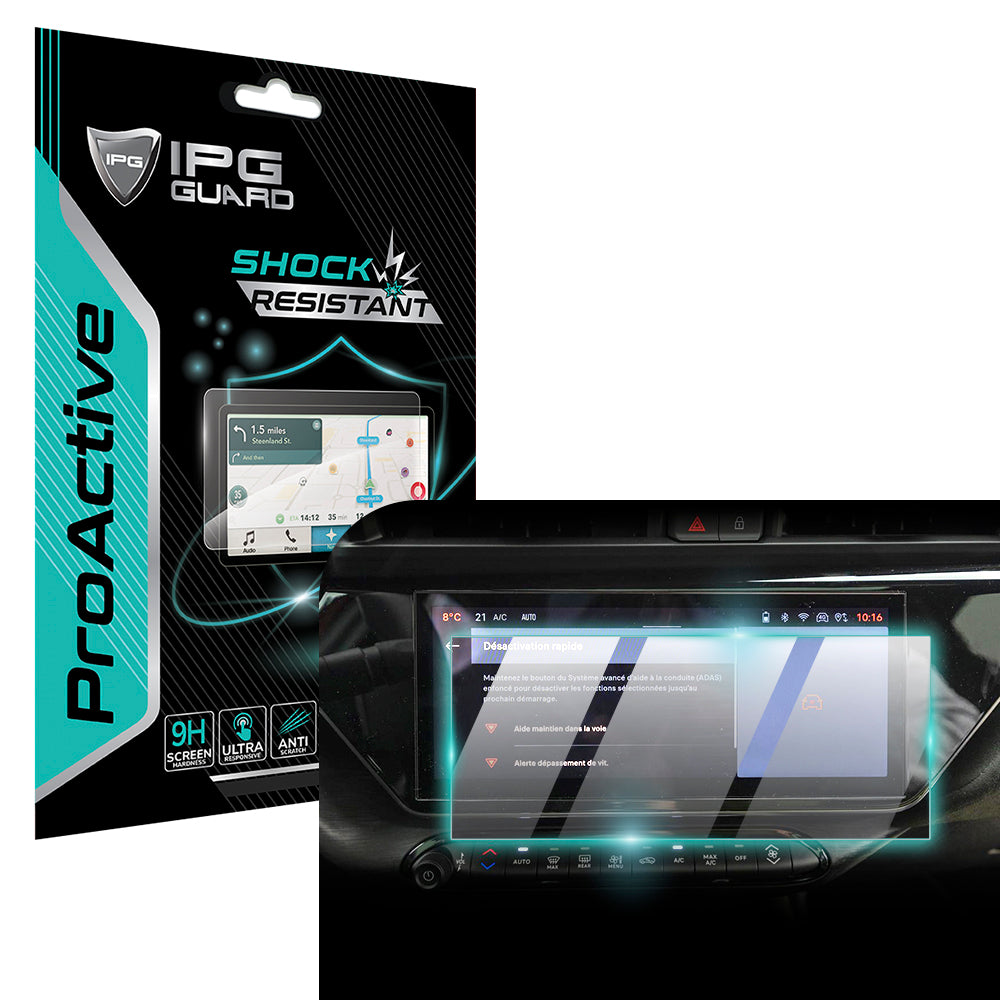
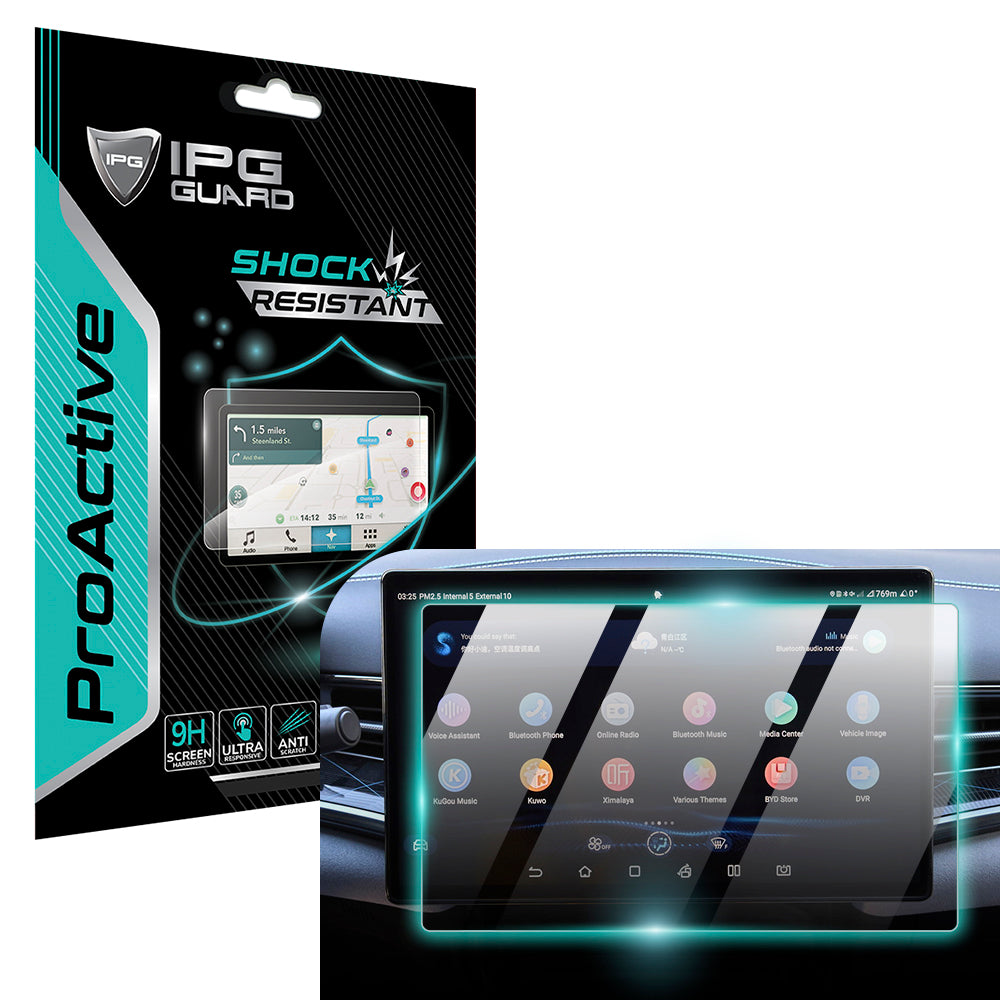
Modern vehicles have evolved into sophisticated mobile computers. The massive navigation displays in Tesla and BYD vehicles serve as the primary interface for almost every car function. These screens are prone to heavy oil buildup from constant daily interactions. The IPG ProActive for BYD 2022-2025 SEAL Navigation Display Screen Protector addresses this challenge directly. Beyond repelling fingerprints, these protectors offer critical anti-glare properties. This is essential for maintaining visibility in bright cabin sunlight. Keeping these screens pristine isn't just for your comfort. It's a strategic move to preserve the resale value of your vehicle. A scratched, greasy navigation unit is a major deterrent for future buyers.
Marine environments add another layer of complexity. Salt spray combined with skin oils creates a stubborn, corrosive film on fishfinders and navigation units. Specialized equipment like the IPG Lowrance Eagle 4" Elite HDS Pro FishFinder screen protector provides a necessary shield against these elements. Similarly, high-end camera lenses used in the field require the same meticulous care. From Harley cluster displays to high-definition camera lenses, every high-value screen deserves a dedicated guardian. Secure your professional equipment today with a professional-grade screen protector tailored for high-performance environments.
The IPG Difference: Zerodust and ProActive Technology
We don't just sell shields. We provide a specialized barrier for your most valued technology. Our commitment to stewardship led to the development of Zerodust technology. This system addresses the primary failure point of any screen protector for oily fingers: the installation process. Dust is the enemy of oleophobic performance. Even a single microscopic speck can compromise the molecular bond of an oil-resistant layer. The IPG Zerodust Screen Protector eliminates this risk. It utilizes an automated dust-removal application to ensure a hermetic seal. This precision ensures your display remains bubble-free and fully responsive through thousands of daily interactions.
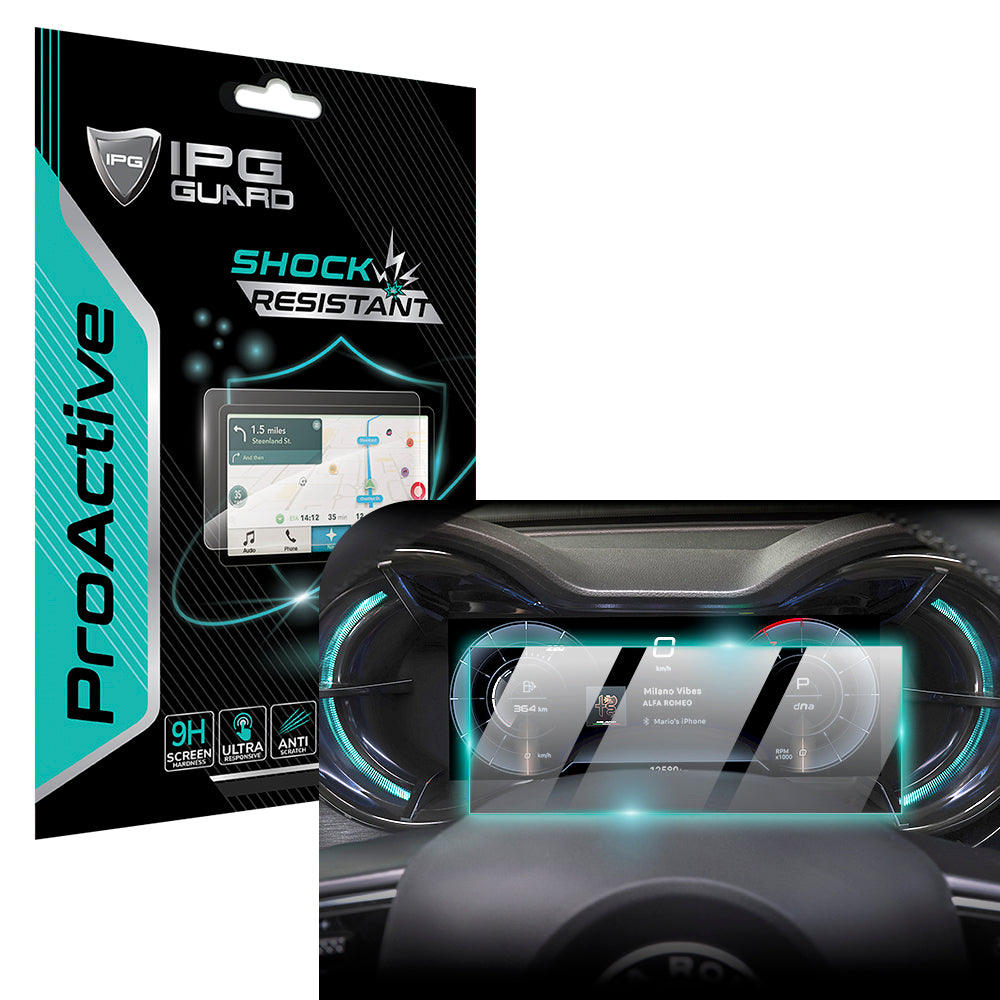
For high-end automotive and industrial displays, we've engineered the ProActive film series. These aren't generic overlays. They are high-performance polymers designed for the specific light filtration and durability needs of professional environments. Whether you're navigating a BYD SEAL or operating heavy-duty diagnostic tools, ProActive technology delivers a tailored solution. It mirrors the factory finish of your hardware while providing a robust defense against skin lipids and environmental grit. It's a professional-grade innovator in a market full of generic alternatives.
Why Precision Fit Matters for Oil Resistance
A protector is only as effective as its coverage. If a shield doesn't provide a true edge-to-edge fit, skin oils and dust will eventually seep under the film. This causes edge lifting and degrades the adhesive bond. Our precision-cut designs ensure a seamless, invisible look for a vast array of hardware. We provide custom solutions for everything from Harley-Davidson cluster displays to high-definition camera lenses. This meticulousness ensures that your screen protector for oily fingers remains a silent guardian. It never compromises touch sensitivity. It never distorts your view. It simply preserves the integrity of the device you value most.
Preservation Without Compromise
Our mission is centered on the security and preservation of your technology. We understand the financial and emotional investment in your devices. Every IPG product reflects a sense of meticulousness and reliability. Beyond the primary display, we advocate for a comprehensive approach to device care. We invite you to explore our Ultimate Guide to IPG Phone Camera Lens Protectors to see how we apply these same science-backed principles to your optics. Total protection means securing every touch-point of your tech ecosystem.
Don't let skin oils and daily wear diminish your experience. Act now to secure your devices with a partner that understands the science of protection. From universal round watch protectors to specialized automotive decals, IPG provides the specialized barrier your hardware requires. Trust the experts. Secure your world.
Secure Your Technology with Precision Engineering
Maintaining a pristine display shouldn't be a daily struggle. You've seen how oleophobic coatings lower surface tension to repel lipids and how the right finish camouflages unavoidable smudges. Whether you require the rigid durability of 9H tempered glass or the self-healing flexibility of hydrogel, the goal is the same: total stewardship over your high-value devices. A high-performance screen protector for oily fingers is the first line of defense in preserving optical clarity and touch sensitivity.
We provide precision-cut solutions for thousands of devices; including specialized hardware from Snap-on, Tesla, and Garmin. By utilizing our advanced Zerodust application technology, you ensure a flawless, bubble-free bond that guards against environmental grit and skin oils. Don't settle for generic shields that peel or cloud. Choose a specialized barrier designed for the rigorous demands of your lifestyle. It's time to experience performance without compromise.
Browse IPG Oleophobic Screen Protectors for Your Device
Protect what matters most. Your hardware deserves a guardian that works as hard as you do.
Frequently Asked Questions
Is there a screen protector that is 100% fingerprint-proof?
No material is entirely fingerprint-proof because physics dictates that skin lipids will eventually settle on any surface. However, a high-quality screen protector for oily fingers utilizes advanced oleophobic coatings to reduce surface tension. This causes oils to bead up rather than smear across the display. While fingerprints may still appear, they're nearly invisible and can be removed with a single wipe of a dry cloth.
Can I restore the oleophobic coating on my screen protector?
You can buy aftermarket coating kits, but they rarely match the durability of electroplated factory layers. These liquid solutions provide a temporary fix that often wears off within weeks. Once the original polymer chains degrade from constant friction, the most reliable way to restore your device's performance is to replace the protector. This ensures the stewardship of your screen's clarity and touch sensitivity remains uncompromised.
How much does an oleophobic screen protector usually cost?
Market prices vary significantly based on the material quality and the sophistication of the application technology. Premium options that feature vacuum-deposited coatings and precision-cut alignment tools represent a higher investment than generic films. These professional-grade shields offer superior long-term value by maintaining their oil-repellent properties for much longer than budget alternatives. Investing in high-tier protection is a strategic move for any high-value device.
What happens if I use alcohol wipes on an anti-fingerprint screen?
High concentrations of isopropyl alcohol act as a solvent that dissolves the fluorinated polymers in your oleophobic layer. Repeated use will eventually strip the coating entirely; leaving your screen feeling "sticky" and prone to heavy smudging. To preserve the integrity of your screen protector for oily fingers, stick to dry microfiber cloths. If a deeper clean is necessary, use a specialized, alcohol-free screen cleaner designed for sensitive coatings.
Do matte screen protectors work better for oily fingers than glossy ones?
Matte finishes are objectively superior for hiding the visual signature of skin oils. By scattering incoming light across a micro-textured surface, they prevent the oil from creating a sharp, reflective glare. While glossy protectors rely entirely on chemical rejection, matte protectors use both chemistry and physics to manage smudges. This makes them the ideal choice for gamers, mechanics, and anyone using their devices in high-glare environments.
How do I install a screen protector without getting dust or oil trapped underneath?
Use a specialized application system like Zerodust to ensure a sterile, bubble-free environment. If you're installing manually, work in a low-dust area and use adhesive strips to lift every visible particle before the final seal. It's also vital to wash your hands thoroughly to remove natural oils before handling the protector. Precision in the preparation phase is the only way to ensure a seamless, invisible bond.
Can oily fingers damage the actual screen of my device over time?
Skin oils won't crack the glass, but their acidic properties can permanently etch the factory coating of your device. Over time, this chemical degradation reduces touch sensitivity and leaves permanent "dead spots" in the display's clarity. Using a protective barrier is essential for maintaining the financial and functional value of your technology. It's an act of security that prevents daily wear from becoming permanent damage.