
A thick sheet of rigid glass is often the first thing photographers reach for to save a screen, but it might be the very thing hindering your workflow. While you want to shield your investment, bulky protectors frequently jam tilt-screen hinges and kill the touch sensitivity required for fast AF point selection. You didn't buy a flagship mirrorless body to struggle with a laggy interface.
We understand the stewardship of high-value optics. Your gear deserves a nikon camera screen protector that acts as an invisible guardian, not a barrier. You shouldn't have to choose between impact resistance and a crystal-clear view of your histogram. Invisible protection; perfect responsiveness; total peace of mind.
In this guide, you'll discover how to preserve your Nikon's display integrity without sacrificing the tactile precision you rely on. We'll break down the technical advantages of IPG Original hydrogel materials and Zerodust technology. You will learn how to achieve a seamless fit that survives environmental grit while keeping your LCD factory-fresh. It's time to protect your professional tools with the precision they deserve.
Key Takeaways
- Compare the performance of IPG Original Hydrogel against standard tempered glass to find the perfect balance of impact protection and optical clarity.
- Ensure your nikon camera screen protector doesn't obstruct multi-axis hinge movement or reduce the touch sensitivity of high-end mirrorless bodies.
- Master the Zerodust installation method to eliminate environmental grit and achieve a clean, professional-grade application in any setting.
- Protect the long-term resale value and display integrity of your professional Nikon gear with materials designed for high-resolution precision.
- Optimize your workflow by choosing ultra-thin, precision-cut protectors that offer invisible security without adding bulk to your camera's profile.
The Critical Role of Screen Protection for Nikon Mirrorless and DSLR Bodies
Nikon bodies like the Z9 or D850 are precision instruments built for the rigors of professional field work. Your high-resolution LCD is the window into your craft. It's also the most exposed component. A dedicated nikon camera screen protector acts as a fundamental layer of security for photographers who operate in unpredictable environments. We don't believe in compromise when your professional tools are at stake.
The concept of an "Invisible Guardian" is central to our design philosophy. A protector should maintain the aesthetic integrity of your Nikon Z or D-series body. It shouldn't look like an afterthought. Beyond aesthetics, the financial implications are real. Pristine screens significantly impact trade-in values. Choosing the right nikon camera screen protector ensures your display remains factory-fresh despite years of heavy use. When you're ready to upgrade to the next flagship, a flawless display ensures you receive top-tier market value for your current body.
Active photographers face a gauntlet of environmental hazards. Grit from a windy beach, salt spray during a coastal shoot, and "buckle-rash" from a camera rubbing against your gear strap are constant threats. These micro-abrasions accumulate. They turn a clear display into a cloudy, difficult-to-read mess. It's a slow degradation that ruins your shooting experience.
The Vulnerability of Modern Nikon Displays
Modern Nikon displays feature advanced anti-reflective coatings. These layers optimize visibility in harsh sunlight. Unfortunately, they're also highly susceptible to physical damage. A scratch is more than an eyesore; it compromises the optical performance of the panel. The shift from DSLR to mirrorless has only increased this vulnerability. We now use our screens as primary interfaces. We swipe, tap, and drag focus points hundreds of times per shoot. This constant contact introduces skin oils and trapped dust that wear down the surface. Out-of-warranty LCD repairs are a major expense. Prevention is the only logical choice for a professional workflow.
Preservation Without Compromise
Our approach is rooted in a sense of stewardship. We understand that your gear is an investment. We focus on balancing rugged durability with the precise engineering Nikon is known for. You need protection that doesn't interfere with the multi-axis tilt-screen movements of a Z8 or Z9. The IPG Original Hydrogel is designed specifically for this purpose. It offers a seamless, precision-cut fit that bonds to the screen without adding bulk. It preserves the tactile responsiveness you expect from your mirrorless system while providing a robust barrier against the elements. It's security that feels like it isn't even there.
Material Science: Choosing Between Hydrogel and Tempered Glass for Your Nikon
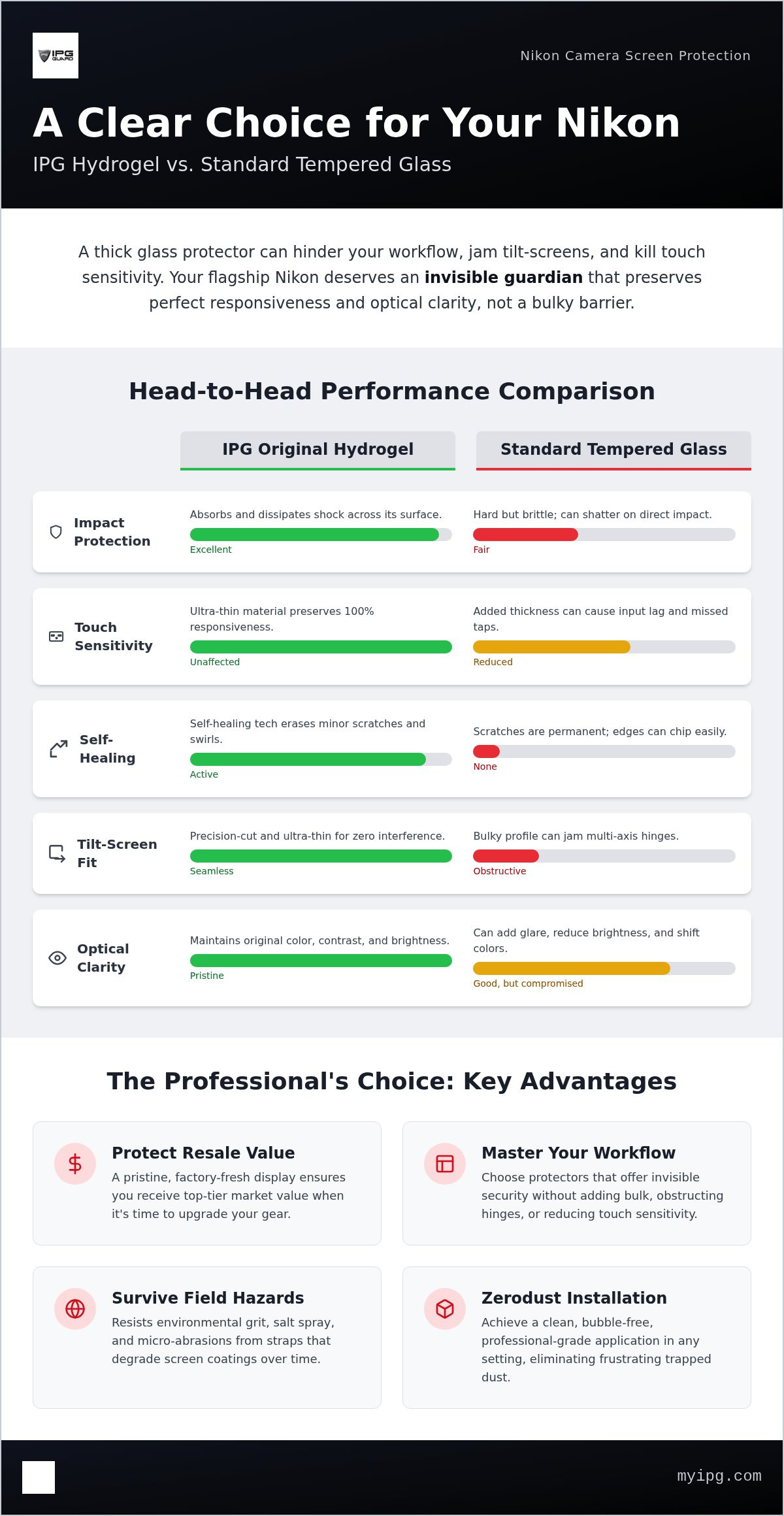
Selecting the right nikon camera screen protector requires a deep understanding of material physics. Generic tempered glass often adds unnecessary bulk and can chip at the edges under pressure. IPG Original Hydrogel offers superior optical properties, ensuring that what you see on your high-resolution LCD matches your sensor's output exactly. We prioritize stewardship over your gear by providing materials that don't distort color or contrast.
Impact absorption is where these materials diverge most. Tempered glass relies on its 9H hardness to resist scratches, but a sharp bump can cause the protector itself to shatter. Hydrogel acts as a sophisticated shock absorber. It dissipates kinetic energy across its flexible surface, shielding the underlying glass from cracking during a fall or a collision with other studio gear. This resilience is essential for professionals who can't afford a cracked screen in the middle of a high-stakes assignment.
Professional field work inevitably involves grit and micro-abrasions. Hydrogel features advanced self-healing technology that allows minor scratches from dust or cleaning cloths to "erase" themselves over time. This keeps your view clear throughout the life of the protector. We also utilize specialized adhesives designed for extreme climate stability. Whether you're shooting in a humid tropical rainforest or on a freezing alpine peak, our protectors resist the edge-peel that often plagues cheaper, generic alternatives. If you need specialized protection for your mirrorless body, explore our precision-engineered camera protectors designed for the professional workflow.
The Hydrogel Advantage for Professionals
Precision-cut edges are vital for a seamless user experience. A protector that snags on your camera bag or clothing will eventually fail. Our hydrogel films are ultra-thin, maintaining the slim, modern profile of the Nikon Z-series. This flexibility makes it the preferred choice for articulated displays. It moves effortlessly with the hinge, providing total coverage without adding resistance to the multi-axis movement of the Z8 or Z9 screens. You get protection that feels like part of the camera body.
Tempered Glass: When Maximum Hardness is Required
Sometimes, absolute surface hardness is the primary requirement for your shooting style. A 9H hardness rating indicates the material can resist scratches from most common metal objects, such as keys or tripod plates. Our tempered glass includes integrated shatter-proof layers for the safety of both the photographer and the device. We ensure these layers remain thin enough to avoid interfering with the proximity sensor or the clearance of the electronic viewfinder. It's a robust solution for photographers who prioritize maximum scratch resistance in high-impact environments.
Ergonomics and Performance: Impact on Touch and Tilt-Screens
A nikon camera screen protector should never become a barrier between you and your shot. Professional mirrorless systems rely on instantaneous touch input for focus point selection and rapid menu navigation. Any tactile lag is unacceptable. We engineer our materials to maintain the exact capacitive response of the factory panel. You'll experience zero latency when dragging focus points or pinching to zoom during playback. High-performance gear requires high-performance protection. Instant response. Absolute clarity.
Optical clarity and visibility are equally vital in the field. Shooting in bright midday sun often makes LCDs difficult to read. Our advanced light filtration properties reduce glare while preserving color accuracy. This ensures your on-screen preview remains a reliable reference for exposure and white balance. We also apply premium oleophobic coatings to every film. These layers effectively repel fingerprints and facial oils. It's a critical feature for photographers who frequently move between the electronic viewfinder and the rear display. Stay clean. Stay focused.
Optimizing the Nikon User Experience
We rigorously test touch responsiveness with our films on the latest Nikon mirrorless systems. Our goal is a 1:1 tactile match with the native screen. Precision matters for more than just touch. Color accuracy is paramount for professional playback. Our protectors utilize high-transparency polymers that don't introduce color casts or reduce peak brightness. This advanced light filtration also helps reduce screen fatigue during long editing sessions in the field. It's about maintaining the integrity of your workflow from capture to review. For researchers and pros looking to understand how users interact with such displays, ergoneers.com explains the role of eye-tracking technology in behavioral analysis.
Articulation is the cornerstone of modern Nikon ergonomics. The multi-axis hinges on the Z8 and Z9 require extreme precision. Bulky, generic protectors often fail here. They can jam the tilting mechanism or prevent the screen from seating properly against the body. This creates mechanical stress that could lead to long-term hinge failure. We prioritize a flush, interference-free fit. Our IPG ProActive technology ensures the protector remains thin enough to clear every moving part. You get edge-to-edge security without compromising the camera's physical range of motion. It's protection that respects the machine's design.
Installation and Maintenance: Achieving a Professional Finish
A premium nikon camera screen protector deserves a professional-grade installation. We advocate for a methodical approach that mirrors the precision of the camera itself. The "IPG Zerodust" philosophy transforms your workspace into a controlled environment, ensuring no environmental grit compromises the bond between the film and the glass. You've invested in a professional tool; the installation should reflect that stewardship. Don't rely on "shower steam" shortcuts found on forums. Use a dedicated, repeatable process for a factory-fresh result.
The Perfect Application Guide
Pre-cleaning is non-negotiable. Use a high-purity cleaning solution to neutralize factory residues and skin oils that can interfere with adhesive integrity. Alignment on Nikon's specific display dimensions requires a steady hand. We recommend the "hinge method," which uses temporary alignment tabs to create a fixed pivot point. This ensures the protector lands perfectly within the display's borders every time. The wet application process for hydrogel films involves using a specialized spray to allow the protector to slide into position before the adhesive sets. This technique is superior for mirrorless bodies with edge-to-edge glass, as it allows for microscopic adjustments before the final seal.
Long-term maintenance is about preservation. Avoid aggressive chemical solvents that can strip away the specialized oleophobic and anti-reflective coatings. A clean microfiber cloth and light circular motions are usually sufficient. If you encounter trapped air, use a soft-edged squeegee to move the air toward the nearest edge. Small, persistent bubbles often resolve themselves within 24 hours as the hydrogel material breathes and settles.
Troubleshooting Common Issues
If a stray dust particle ruins your alignment, don't panic. Use a precision adhesive strip to lift the edge and "capture" the grit without touching the adhesive with your fingers. Patience is a professional's best tool during this phase. Understanding the 24-hour "settling" period is vital for hydrogel materials. The film needs time to conform to the microscopic texture of the LCD for maximum clarity. If the time comes to refresh your display, ensure you know how to safely remove a screen protector without leaving stubborn residue or scratching the panel. Protect your professional Nikon gear with our Zerodust kits today.
Why IPG is the Ultimate Choice for Nikon Camera Protection
Selecting a nikon camera screen protector is an act of stewardship. You aren't simply buying a consumable; you're securing a vital component of your imaging workflow. Universal brands often rely on "close enough" dimensions that leave edges vulnerable or interfere with sensors. We reject that compromise. Our precision engineering ensures that every film is a 1:1 match for your specific Nikon model. We act as the guardian of your technology so you can focus entirely on the frame. Reliable. Meticulous. Professional.
Material diversity is a cornerstone of our service. We recognize that a studio portraitist has different needs than a high-altitude mountaineer. By offering both IPG Original Hydrogel and high-density tempered glass, we allow you to customize your defense strategy. Our global accessibility means that whether you're on assignment in Tokyo or New York, you have access to the same high-tier protection. We provide a specialized register of material properties and light filtration data to ensure you make an informed choice. No jargon. Just performance.
Engineered for the Professional
We monitor the industry with obsessive detail. When Nikon announces a new Z-series flagship, our engineering team is already finalizing precision-cut specifications. This ensures immediate availability for the latest professional releases. We support your journey from the controlled studio environment to the unpredictable field with gear that matches your camera's build quality. Our communication is rapid and results-oriented. We move quickly from identifying your need to providing a tailored solution. This methodical pace mirrors the efficiency of your own professional workflow. Secure your investment with a brand that understands the value of your tools.
Beyond the Screen: Comprehensive Protection
The same meticulousness applies to your entire mobile kit. Professional photographers often use mobile devices for tethering, scouting, or social delivery. Explore how IPG Phone camera lens protectors apply our signature tech to your smartphone optics. A dedicated specialist understands the emotional and financial value of your gear. By choosing a nikon camera screen protector from a niche expert, you join a global community of professionals who trust the IPG shield. We handle your high-value items with care. We preserve what you value most. For those who also want to secure their physical workspace, CCTVSecurityPros - Professional Security Cameras and Systems offers high-grade surveillance solutions that complement a professional setup. Join the professionals who demand the best for their imaging chain. Secure your gear. Preserve your vision.
Your camera acts as the bridge between your unique perspective and the final image. A high-resolution LCD remains vulnerable to environmental grit, salt spray, and mechanical stress without a dedicated nikon camera screen protector. We have explored how advanced material science, from self-healing hydrogel to 9H tempered glass, provides a necessary barrier without sacrificing touch sensitivity or multi-axis hinge clearance. It's about invisible security that supports your professional workflow.
Stewardship of your gear means choosing protection that reflects the meticulous engineering of the Nikon system. Every IPG film is precision-cut for all Nikon Z and D series bodies. This ensures a flush fit that never interferes with your articulated movements. We utilize a specialized zero-residue adhesive that bonds securely in extreme climates but removes cleanly when it's time for a refresh. Trust the dedicated specialist to maintain your display's integrity while you focus on the craft. Secure Your Nikon with IPG Professional Protection and head into your next assignment with total peace of mind.
Frequently Asked Questions
Does a screen protector affect the touch sensitivity of my Nikon Z-series?
No. High-quality protectors are designed to maintain the exact capacitive response of the factory panel. IPG films use ultra-thin materials that ensure zero latency during focus point selection or menu navigation. This is vital for mirrorless workflows where the touch-screen is a primary interface. You won't experience lag or missed inputs. It's protection that preserves the tactile precision you expect from your professional Nikon body.
Can I use a tempered glass protector on a Nikon tilt-screen?
Yes, but thickness is the decideing factor. While tempered glass offers 9H hardness, bulky versions can jam multi-axis hinges or prevent the screen from seating flush against the camera body. We recommend precision-engineered glass or hydrogel to ensure complete clearance. A nikon camera screen protector must respect the mechanical design of the articulation points. If the protector is too thick, it adds unnecessary stress to the hinge.
Will removing an IPG protector damage the anti-reflective coating on my Nikon?
No. Our zero-residue adhesive is specifically formulated to bond securely while remaining gentle on factory coatings. When you lift the edge of an IPG protector, it releases without pulling the delicate anti-reflective layers or leaving stubborn glue behind. This preservation of the original display is a core part of our stewardship promise. You can refresh your protection as often as needed without risking the integrity of your high-resolution LCD.
What is the difference between IPG Hydrogel and standard plastic film?
Hydrogel is a sophisticated, flexible polymer that offers self-healing properties and superior impact absorption compared to basic PET plastic. Standard films are thin and easily scratched; they offer minimal protection against bumps. Hydrogel dissipates kinetic energy across its surface and "erases" micro-abrasions over time. It provides a more organic, glass-like feel while maintaining the slim profile of your Nikon Z-series. It is a professional-grade material for high-value gear.
How do I get air bubbles out of my Nikon screen protector?
Use a soft-edged squeegee or a microfiber-covered credit card to push bubbles toward the nearest edge. For hydrogel protectors, small persistent bubbles often disappear on their own within 24 hours as the material settles and breathes. If a bubble is caused by trapped dust, use a precision adhesive strip to lift the protector and remove the particle. Patience is key. A clean, bubble-free finish is essential for maintaining clear visibility of your histogram.
Is a screen protector necessary if I only use my Nikon in a studio?
Yes. Studio environments present unique risks like contact with tethering cables, tripod plates, or metal jewelry. Even a controlled space cannot prevent skin oils and fine dust from accumulating on the LCD. A nikon camera screen protector prevents the gradual degradation of the display's clarity over years of use. It also safeguards the resale value of your body. Think of it as a permanent insurance policy against accidental bumps in the studio.
Does the screen protector affect the color accuracy of my LCD?
High-end protectors use high-transparency polymers to ensure 1:1 color reproduction. You shouldn't notice a shift in white balance or contrast during playback. We prioritize light filtration properties that maintain the original brightness of the Nikon display. This allows you to trust your on-screen preview for exposure decisions. Poor-quality protectors often introduce a yellow or blue cast; our materials are engineered to be optically neutral for professional color critical work.
How often should I replace my camera screen protector?
Replace the protector if you notice deep gouges, edge-peeling, or significant clouding that impacts your view. While hydrogel self-heals micro-scratches, major impacts may eventually degrade the film's integrity. Most professional photographers refresh their protection once a year or after a particularly grueling field assignment. Regular replacement ensures your display remains factory-fresh and your view stays crystal clear. It's a small investment to maintain the performance of your primary monitoring tool.