

Imagine you're miles offshore or deep in the backcountry when a blinding midday glare turns your navigation display into a useless mirror. It's a moment of pure frustration that risks both your safety and your equipment. Your high-value electronics deserve better than the inevitable saltwater corrosion or abrasive dust scratches that come with the territory. Investing in a high-quality gps screen protector is not just about maintenance; it's about acting as a dedicated steward for your technology. We believe in preserving the integrity of the tools you rely on most.
We understand the deep value you place on your gear and the precision required to keep it functional. This guide shows you exactly how to select a shield that balances perfect optical clarity with rugged, long-term defense. You'll discover the technical specifications of 9H tempered glass and the self-healing properties of advanced hydrogel. We also break down the latest 2026 standards for impact resistance and light filtration. You will learn how to achieve a bubble-free application that secures your device's performance and resale value in any environment.
Key Takeaways
- Identify why outdoor GPS displays face unique threats from UV exposure and abrasive debris that standard mobile shields cannot handle.
- Evaluate the technical differences between IPG Original hydrogel and tempered glass to choose the right gps screen protector for your specific navigation unit.
- Match material properties to your primary activity using an environment-first selection framework for maximum display durability.
- Follow a professional step-by-step installation method to achieve a flawless, bubble-free application in any workspace.
- Discover why precision-cut, model-specific protectors offer superior security and performance compared to universal cut-to-fit alternatives.
The Critical Need for GPS Screen Protection
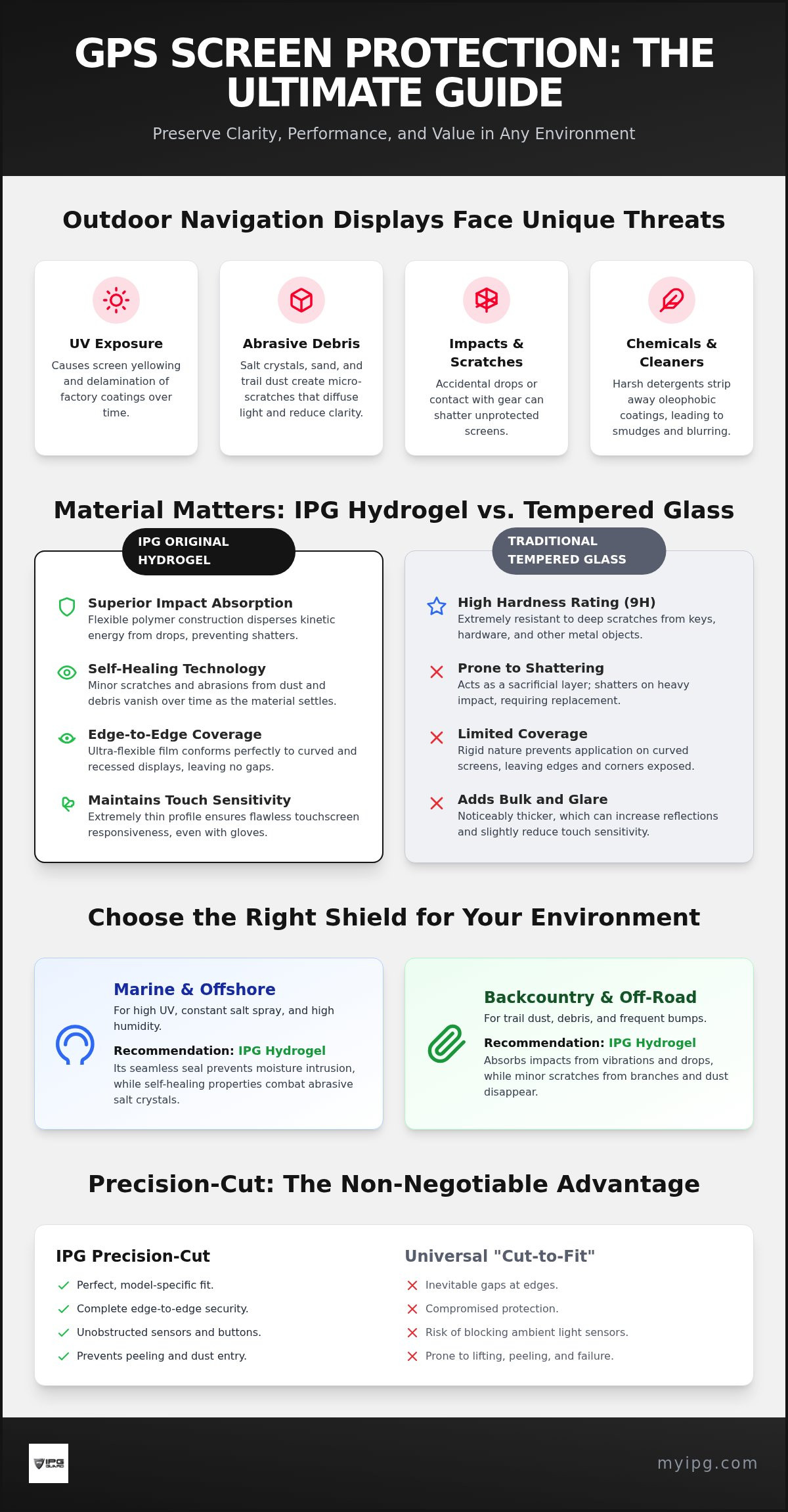
GPS units aren't smartphones. They don't live in padded pockets or climate-controlled offices. Your Garmin or Lowrance unit faces a relentless assault from the elements. Constant UV exposure, abrasive salt spray, and fine trail dust create a hostile environment for sensitive glass. Without a dedicated gps screen protector, these high-value displays degrade rapidly. The damage is often irreversible. Micro-scratches scatter light, making maps unreadable exactly when you need them most.
Think about the financial stakes. A damaged display on a premium marine chartplotter or handheld navigator can cost hundreds of dollars to repair. In many cases, manufacturers don't offer screen-only repairs; they require a full unit replacement. Safeguarding your device with a specialized shield is a small investment that preserves its long-term resale value. Buyers want pristine glass. A scratched screen signals neglect and lowers the market price of your gear significantly.
Visibility is a safety requirement. When you're navigating a narrow channel or a mountain pass, you need instant clarity. Scratches catch the sun and create blinding flares. A high-quality protector maintains optical transparency while diffusing glare. Understanding the science behind Screen protector materials helps you realize that not all films are created equal. Modern shields use advanced polymers to absorb impacts that would otherwise shatter your factory display.
Common Threats to Your Navigation Display
Marine environments are particularly brutal. Saltwater dries into abrasive crystals that act like sandpaper under a cleaning cloth. Direct sunlight causes UV degradation, leading to "yellowing" or delamination of the factory screen coatings. Beyond nature, chemical damage is a silent killer. Many users accidentally ruin their screens by using standard window cleaners or harsh detergents. These agents strip away the oleophobic layers, leaving the display vulnerable to fingerprints and smudge-induced blurring.
The Role of Specialized Protection
Generic, "cut-to-fit" films often fail because they lack the specific adhesive properties needed for outdoor hardware. They peel at the edges when exposed to high dashboard heat or humidity. A professional-grade gps screen protector is engineered for precision. It maintains perfect touchscreen responsiveness, even when you're wearing gloves or dealing with wet fingers. For field operations where equipment failure isn't an option—a standard also held by the professionals at International Investigative Group—high-quality protection is essential. To ensure your entire kit is secure, follow the ultimate screen protector guide for comprehensive device care across all your high-value electronics. Don't settle for "good enough" when your navigation's integrity is on the line.
Comparing Materials: Hydrogel vs. Tempered Glass
Choosing a gps screen protector requires understanding the trade-offs between rigidity and flexibility. For years, tempered glass was the default choice. However, 2026 navigation demands higher performance. Dashboard-mounted units face extreme thermal fluctuations that can cause rigid glass to expand and lose adhesion. This is where modern polymers excel. They provide a resilient barrier that adapts to the environment rather than fighting it.
IPG Original Hydrogel: The Self-Healing Shield
Hydrogel technology represents the evolution of display security. Unlike glass, it's a flexible, resilient material that absorbs kinetic energy rather than shattering. The IPG Original (Hydrogel) Screen Protector is engineered with unique self-healing properties. Minor abrasions from dust or gear simply vanish over time as the material settles. This makes it ideal for rugged outdoor use where debris is constant and unavoidable.
Flexibility is critical for modern GPS units. Many high-end navigators feature slightly curved edges or recessed displays. Hydrogel provides edge-to-edge coverage that glass cannot match. It's also significantly thinner. This low profile ensures that the touch screen technology remains fully responsive. You won't lose sensitivity during critical route adjustments or while wearing tactical gloves. For the most reliable defense, consider precision-cut IPG shields tailored for your specific device.
Tempered Glass: Traditional Hardness
Tempered glass remains a viable option for flat, high-impact environments. It offers a 9H hardness rating. This metric refers to the pencil hardness test, signifying extreme scratch resistance against metal objects like keys or mounting hardware. If your GPS sits in an area prone to direct, heavy impacts, glass provides a sacrificial layer that shatters to save the expensive panel beneath.
However, glass has limitations. It adds bulk and can reflect more light, creating the very glare issues that impede map legibility. It's also prone to cracking under extreme dashboard heat. When a handheld unit falls on a rocky trail, your choice of gps screen protector determines the outcome. Glass often cracks upon the first major impact, requiring immediate replacement. Hydrogel acts like a shock absorber, dispersing the force across its surface to keep your navigation operational throughout your entire journey.
Choosing the Right Shield for Your Environment
Your environment dictates your equipment. A sailor navigating the Atlantic faces different challenges than a trekker in the Sahara. Use an "Environment First" selection framework to determine your needs. Calibrate your choice based on light exposure, moisture levels, and the frequency of physical contact. A generic gps screen protector often ignores these variables. Precision matters when your safety relies on a readable map. High-performance navigation requires a shield that matches the intensity of your surroundings.
Marine and Coastal Navigation
Salt spray is a constant threat. It dries into abrasive crystals that act like sandpaper on unprotected glass. For marine units like the Lowrance Eagle 4" Elite and the HDS series, hydrogel is the superior choice. It creates a seamless, moisture-resistant seal that prevents saltwater from reaching the factory display. It also maintains perfect visibility through polarized sunglasses. Many standard films cause "rainbow" distortion that obscures depth contours. Our specialized light filtration ensures your charts remain clear at every angle, even in the harsh glare of open water.
Automotive and EV Infotainment
Modern EV cockpits feature massive, high-traffic displays. Fingerprints and cabin heat are the primary enemies here. Refer to our car screen protector buying guide for deep integration tips. Large displays in vehicles require advanced anti-glare coatings to reduce eye strain during long drives. These coatings maintain a premium appearance while protecting the sensitive electronics from the high temperatures of a parked car. High-transparency polymers ensure the vivid colors of your infotainment system stay sharp without the oily residue of constant touch input.
Rugged Handhelds and Wearables
Handhelds and wearables live in the dirt. Dust, mud, and physical abrasion are inevitable on the trail. The IPG Garmin DESCENT and other high-end outdoor watches need a shield that handles direct impact without compromising button access. Hydrogel's thin profile allows for perfect bezel fitment. It won't snag on gear or clothing during intense activity. It protects the sensor-rich surfaces of your most relied-upon tools while ensuring the touch interface remains fast and accurate. Choosing a specialized gps screen protector ensures your hardware survives the transition from sea to summit without a single scratch.
Professional Installation and Maintenance Tips
Precision installation is the final act of stewardship for your navigation hardware. Even the most advanced gps screen protector fails if trapped dust or misalignment compromises the seal. We recommend a "Clean Room" approach. Apply your protector in a humid environment, like a bathroom after a hot shower, to ground airborne particles. Use a high-quality microfiber cloth and an alcohol-based prep pad to remove every trace of skin oils and adhesive residue before you begin. A pristine surface is the foundation of long-term durability.
The Bubble-Free Application Process
Alignment is everything. Use the hinge method by placing the protector on the screen and securing one side with two strips of masking tape. This creates a swing-door effect that maintains your position while you peel the backing. Firm, overlapping strokes from the center outward with a squeegee ensure any trapped air is displaced through the permeable hydrogel edges. This technique prevents the kinking often seen on large-format marine displays or EV infotainment screens.
If you discover a dust speck after the film is down, don't panic. Gently lift the nearest corner using a piece of adhesive tape. Use a second piece of tape to "dab" the speck off the screen or the protector's underside. Drop the film back into place. For massive displays, support the film's weight with both hands to avoid stretching the material. Stretching can cause permanent visual distortions that ruin map clarity.
Routine Care and Replacement
Maintaining your shield's integrity requires the right chemistry. Only use water or specialized, ammonia-free cleaning solutions designed for IPG Original films. Harsh chemicals will degrade the adhesive and cloud the optical layers. Wipe in gentle, circular motions using a clean microfiber cloth. This preserves the anti-glare properties you rely on in direct sunlight.
Monitor your protector for signs of service life completion. Replace the unit if you notice lifting at the edges or deep gouges that impede map legibility. To remove an old protector, lift a corner with a plastic card. Pull it back slowly at a 45-degree angle. This technique ensures you don't stress the factory screen coating or leave stubborn residue behind. For a flawless finish, explore our precision-cut installation kits designed for a perfect first-time fit.
Top IPG Original GPS Protectors for 2026
Selecting a gps screen protector shouldn't involve guesswork or compromise. While universal sheets require manual trimming and often leave exposed edges, our collection prioritizes exact engineering. We've developed 53 specialized GPS products within the IPG Original line to ensure a seamless, edge-to-edge fit. This precision prevents debris ingress and maintains the factory aesthetic of your high-value navigation units. Custom-fit protection is the only way to guarantee full sensor compatibility and touch sensitivity across all environmental conditions.
Our commitment extends beyond the initial purchase. We act as long-term guardians for your technology. Every shield represents our dedication to material innovation and user security. By choosing a model-specific solution, you're investing in a product that accounts for specific bezel depths and screen curvatures. These technical specifications ensure the adhesive remains secure even under high vibration or thermal stress. Explore our full collection to find the exact match for your hardware and secure your navigation against the unknown.
Best for Marine: Lowrance and Simrad Series
Open water demands a shield that resists more than just scratches. The IPG Lowrance Eagle 4" Elite protector is a standout for coastal and offshore anglers. It utilizes our salt-resistant hydrogel formula to prevent the corrosive buildup that plagues standard films. This material maintains its clarity even when coated in dried salt spray or exposed to intense tropical humidity. It effectively diffuses harsh horizontal glare, ensuring your sonar readings and depth contours remain visible during the brightest hours of the day. It's a professional-grade barrier for serious mariners.
Best for Wearables: Garmin and Smartwatch Shields
High-performance wearables face unique physical impacts on the trail and in the water. The IPG Garmin DESCENT Screen Protector provides a low-profile, high-durability barrier for your wrist-mounted navigator. It absorbs direct shocks from rock faces or gear clips without the bulk of traditional glass. This shield preserves the sleek, premium look of your luxury GPS watch while offering robust defense. It's designed to stay submerged and secure, making it the ideal partner for diving and multi-sport adventures where equipment failure isn't an option.
Maintain the integrity of your entire navigation suite with our specialized solutions. Whether you're navigating a complex channel or tracking a remote mountain ridge, we provide the clarity and security you need. Our hydrogel technology adapts to your lifestyle, healing from minor abrasions and resisting the elements. Browse our comprehensive GPS collection today and choose the shield that fits your journey.
Secure Your Journey with Precision Protection
Your navigation system is more than a display; it's a critical lifeline in the backcountry and on open water. Choosing a specialized gps screen protector ensures that environmental hazards like salt spray and trail dust never compromise your visibility. We've detailed how hydrogel's self-healing properties outperform traditional glass in rugged conditions, providing a resilient barrier that adapts to your environment. By prioritizing a precision-cut fit, you maintain the technical integrity and resale value of your device for years to come.
We take stewardship of your technology seriously. Our collection features precision-cut designs for over 50 specific GPS models, ensuring a perfect fit that universal films cannot achieve. Benefit from advanced self-healing hydrogel technology and the convenience of global shipping on all our protection kits. Don't leave your navigation to chance. Browse the full IPG Original GPS Screen Protector Collection to find the exact shield for your hardware. Clear paths and secure adventures are just one layer away.
Frequently Asked Questions
Will a GPS screen protector reduce the brightness of my display?
High-quality shields don't noticeably reduce display brightness. Our IPG Original films are engineered for over 99% light transmission, ensuring your maps stay vivid and sharp. You won't need to crank up the backlight, which helps preserve your device's battery life during long trips. We focus on optical purity so that your navigation remains as clear as the day you unboxed it, even in challenging light.
Can I use a phone screen protector on my GPS unit?
Using a phone protector on a GPS unit isn't recommended. GPS devices often feature unique bezel depths and recessed screens that require a precision-cut gps screen protector for a proper seal. Phone films lack the specialized anti-glare and salt-resistance properties needed for rugged outdoor environments. We provide custom-fit solutions for over 50 specific GPS models to ensure every millimeter of your display is secure and functional.
How do I remove air bubbles from my IPG hydrogel protector?
Most small air bubbles in hydrogel disappear naturally within 24 to 48 hours. The material is slightly permeable, allowing trapped air to dissipate through the polymer over time. For larger bubbles during installation, use a firm squeegee or a credit card wrapped in microfiber to push the air toward the nearest edge. Avoid using your fingernails, as this can stretch the material and create permanent distortions in the film.
Is hydrogel better than tempered glass for a marine GPS?
Hydrogel is superior for marine applications due to its flexibility and moisture resistance. Unlike tempered glass, it won't shatter from thermal expansion on a hot dashboard or trap corrosive salt spray at the edges. It provides a seamless barrier that handles the constant vibration and high-humidity levels found in coastal environments. This material acts as a shock absorber, protecting your expensive marine electronics from physical impacts and saltwater damage.
Will the protector interfere with my GPS touch sensitivity?
Your device's touch sensitivity remains fully intact after application. We design our gps screen protector to be ultra-thin, ensuring that capacitive and resistive touch sensors respond instantly to your input. You can operate your unit with bare hands or gloves without experiencing lag or missed taps. This precision is vital when you need to make rapid route adjustments during a trek or while navigating a narrow channel in heavy seas.
How often should I replace my GPS screen protector?
We recommend replacing your protector every 12 to 24 months depending on the intensity of your use. If you notice deep gouges that impede map legibility or if the edges begin to lift from heavy abrasion, it's time for a fresh shield. Regular replacement ensures that the anti-glare coatings and self-healing properties remain at peak performance. This proactive maintenance preserves the underlying display's pristine condition and long-term resale value.
Does the protector help with glare in direct sunlight?
Yes, our advanced coatings are specifically designed to minimize glare in direct sunlight. These layers diffuse incoming light to prevent the "mirror effect" that often makes navigation screens unreadable at high noon. This feature is a critical safety factor for pilots and sailors who rely on instant data recognition. By reducing reflections, the protector allows you to maintain focus on your surroundings rather than struggling to see your maps.
Is the IPG Original protector easy to remove later?
Removing the IPG Original protector is a simple, residue-free process. Use a plastic card or your fingernail to gently lift one corner, then peel the film back slowly at a 45-degree angle. The specialized adhesive is designed to stay secure for years but release cleanly when you're ready for a replacement. It won't damage the factory screen coating, leaving your display in the same condition it was in before the initial installation.