
A single hairline scratch on your Nikon's LCD doesn't just mar the glass. It compromises your ability to judge critical focus and color accuracy in the field. You've invested thousands in high-precision optics, and it's frustrating when a low-quality Nikon camera screen protector ruins that experience with trapped air bubbles or sluggish touch response. We understand that your gear isn't just equipment; it's your legacy and your most vital tool. You shouldn't have to choose between protection and performance.
You deserve a solution that disappears the moment it's applied. This guide reveals how to safeguard your display with professional-grade protection that maintains perfect touch sensitivity and crystal-clear clarity, even in extreme weather. We'll break down the 2026 standards for impact resistance and easy, bubble-free application. From the latest self-healing hydrogel films to graphene-reinforced tempered glass, you'll discover exactly how to preserve your camera's optical integrity for years of reliable service. Whether you're navigating the rugged terrain of field work or a controlled studio environment, we'll ensure your display remains as flawless as the day you unboxed it.
Key Takeaways
- Prevent costly LCD repairs by shielding your display against micro-abrasions that degrade image playback in bright sunlight.
- Master the technical differences between hydrogel and tempered glass to choose the best Nikon camera screen protector for your specific shooting environment.
- Understand why modern Z-series mirrorless cameras require ultra-slim, high-resolution protection to maintain full touch sensitivity and screen clearance.
- Learn the professional "Steam Room" installation technique to achieve a flawless, dust-free application every time.
- Discover how precision-cut films provide edge-to-edge security without compromising the sleek aesthetics of your professional Nikon gear.
Why Your Nikon Camera Screen Needs a Dedicated Shield
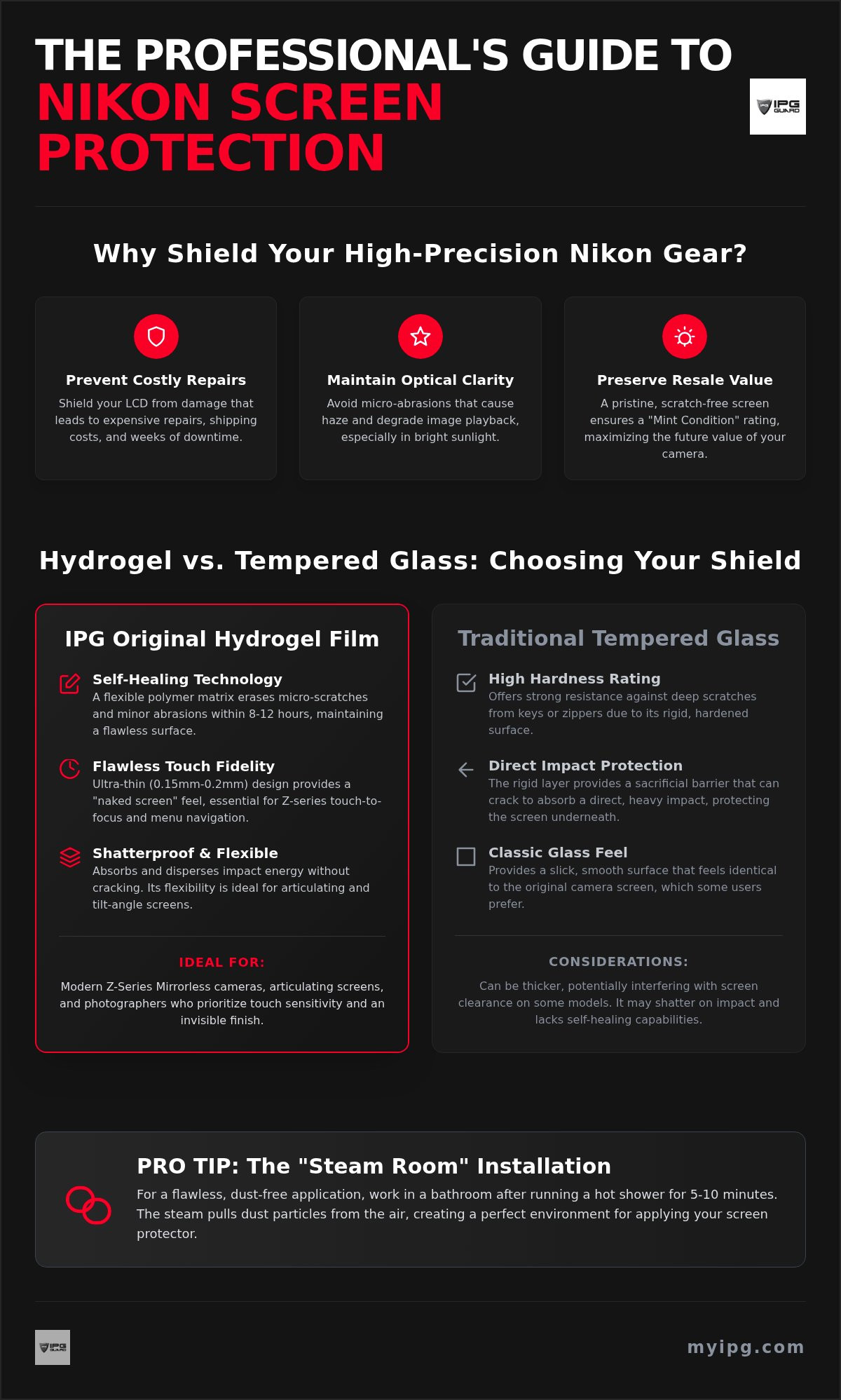
Your Nikon is a high-precision instrument built to withstand the rigors of professional photography. However, the LCD remains its most vulnerable component. While the magnesium alloy chassis can take a beating, the display is susceptible to damage that can halt a shoot instantly. Repairing a modern Nikon screen, especially on flagship models like the Z9 or D850, is a costly endeavor. It involves significant labor fees, shipping costs, and weeks of downtime. Investing in a Nikon camera screen protector is a small, proactive step that prevents these massive logistical and financial headaches.
Beyond catastrophic cracks, the everyday environment is a constant threat. Micro-abrasions from camera bags, zippers, and even coarse cleaning cloths accumulate over time. These tiny scratches aren't just cosmetic flaws. They catch and refract light, creating a distracting haze when you're shooting in bright sunlight. This degradation makes it nearly impossible to accurately judge exposure or check critical focus during a high-stakes outdoor session. Proper protection ensures your view remains as clear as the day you unboxed the gear.
The Vulnerability of Modern LCD Displays
Modern Nikon displays feature sophisticated anti-reflective coatings. These factory finishes are designed for clarity and touch sensitivity, not for impact resistance or abrasive contact. When you're working in the field, you're constantly exposed to environmental hazards. Sand at the beach, fine dust in the desert, and salt spray by the ocean can quickly erode these delicate coatings. Maintaining the integrity of your display is a matter of professional stewardship, ensuring your tools remain as reliable as your creative instinct.
The evolution of screen protector materials means you no longer have to sacrifice performance for safety. Specialized films and glass layers now offer better protection than factory surfaces alone. Nikon-specific designs also account for unique hardware vulnerabilities, such as:
- Articulating Hinges: Fully-rotating screens on the Z-series are often exposed at awkward angles, increasing the risk of side-impact damage.
- Tilt Mechanisms: DSLR tilt-screens can trap grit between the body and the glass, leading to pressure-point scratches.
- Top LCD Panels: Professional bodies feature secondary displays that require their own dedicated precision-cut shields.
Investment Protection for Resale
For many photographers, gear is a business asset that eventually gets traded in for the next generation of technology. A "Mint Condition" rating is almost impossible to achieve if the LCD shows even minor signs of wear. Potential buyers often view a scratched screen as a sign of general neglect, which can significantly drive down the resale price. A pristine display suggests a well-maintained camera, giving buyers the confidence to pay a premium. By applying protection early, you're essentially locking in the future value of your equipment.
Hydrogel vs. Tempered Glass: Choosing the Right Protection
Selecting the right Nikon camera screen protector requires understanding the specific demands of your workflow. While most retailers push generic glass, the choice between hydrogel and tempered glass depends on how you handle your gear. High-resolution Z-series displays require ultra-thin layers to maintain touch responsiveness, while D-series DSLRs often benefit from rigid shields. Both materials aim to preserve optical integrity, but they achieve this through vastly different physical properties. You aren't just buying a sticker; you're choosing a sacrificial layer for your most expensive interface.
IPG Original Hydrogel Technology
Hydrogel represents a significant shift in display protection. Our IPG Original (Hydrogel) Screen Protector utilizes a flexible, chemically-enhanced polymer matrix. This material is remarkably thin, typically between 0.15mm and 0.2mm, making it the superior choice for Nikon's articulating and tilt-angle screens. Because it's flexible, it conforms perfectly to the edge-to-edge dimensions of modern mirrorless displays without adding bulk that might interfere with the screen's closing mechanism. It's the preferred option for photographers who want invisible, seamless security.
- Self-Healing: The polymer matrix can erase micro-scratches in 8-12 hours, maintaining a flawless surface even after heavy use.
- Touch Fidelity: Provides a "naked" screen feel, which is essential for Z-series menu navigation and touch-to-focus accuracy.
- Shatterproof: Unlike glass, hydrogel cannot crack or splinter. This ensures long-term reliability in the field without the risk of sharp edges.
Tempered Glass: The Heavy-Duty Choice
For photographers working in high-impact environments, tempered glass remains the gold standard for security. These protectors are rated at 9H hardness. This means they can resist scratches from materials as hard as a steel blade. This rigidity provides a sacrificial layer that absorbs the energy of a direct impact, potentially saving the underlying LCD from a catastrophic fracture. It's the ideal companion for rugged outdoor sessions where gear often knocks against belt buckles, tripod legs, or jagged rocks.
Optical clarity is paramount for accurate image playback. High-quality glass and hydrogel both feature advanced oleophobic coatings to repel fingerprints and skin oils. This science ensures that your screen remains smudge-free, preserving the color accuracy and contrast you need to judge your shots. If you prefer the tactile sensation of a rigid surface, glass is a strong contender. If you value a seamless, invisible fit that won't peel in extreme heat, consider exploring the IPG Original (Hydrogel) Screen Protector for your next assignment.
Nikon DSLR vs. Z-Series Mirrorless: Different Needs
Nikon's transition from DSLR to the Z-series mirrorless system changed more than just the lens mount. It revolutionized how we interact with our cameras. Modern displays are larger, brighter, and significantly more sensitive. Choosing a Nikon camera screen protector today requires a different strategy than it did a decade ago. While legacy DSLR bodies often relied on bulky external covers, modern mirrorless systems demand precision-cut films that don't interfere with the camera's mechanics or optical performance. You need a solution that respects the engineering of your specific model.
The Problem with Legacy Plastic Covers
For decades, Nikon included hard plastic monitor covers like the BM-6 or BM-12 with their professional DSLRs. While these seemed robust, they created a significant risk for the very glass they were meant to protect. Fine grit and sand inevitably find their way behind the cover. Once trapped, these particles act like sandpaper against your LCD every time the camera moves in your bag. This creates permanent, unsightly swirl marks that ruin clarity. It's a counterproductive cycle that many photographers didn't notice until the damage was done.
Adhesive-based protection has rendered these plastic shells obsolete. Modern films eliminate the air gap that causes internal reflections and glare. This is vital when shooting in high-contrast environments. You need to see exactly what your sensor sees without the distraction of a milky, low-contrast overlay. By bonding directly to the glass, high-quality protectors ensure maximum light transmission and a much cleaner aesthetic.
Optimizing for Nikon Z-Series Mirrorless
The Z-series cameras, including the flagship Z9 and the versatile Z8, feature high-resolution touchscreens that are central to the user experience. Any lag in touch-to-focus or menu navigation is unacceptable in a professional workflow. A high-quality Nikon camera screen protector must offer zero latency. It should feel identical to the factory glass. This ensures your creative rhythm remains uninterrupted during high-speed sessions. For a deeper look at protecting various device types, check out The Ultimate Screen Protector Guide.
Clearance is another critical factor. Many Z-series cameras feature articulating or tilt-angle screens designed to fold flat against the body. Bulky, third-party glass protectors can prevent the screen from closing properly, putting unnecessary strain on the hinge mechanism. Our precision-cut hydrogel and slim-profile tempered glass are engineered to maintain these tight tolerances. They provide security without adding unnecessary volume.
Don't forget the top-plate LCD. Professional bodies like the D850 and Z9 include a secondary settings display. This small window is just as prone to scratches as the main monitor. We provide specialized cuts for these panels to ensure your shutter speed, aperture, and battery levels remain legible in any lighting condition. Our advanced silicone adhesives ensure that if you ever need to replace the protector, it peels away cleanly. You'll never find sticky residue left on your expensive Nikon components.
Step-by-Step: Installing Your Nikon Screen Protector
Installing a Nikon camera screen protector shouldn't be a source of anxiety. The difference between a messy application and a factory-perfect finish lies in your environment. Professional installers often use the "Steam Room" trick to eliminate airborne contaminants. Run a hot shower in your bathroom for a few minutes until the air is humid. The moisture bonds to floating dust particles, dragging them to the floor. This creates a temporary clean-room environment. It is the ideal setting for precision application without the risk of trapped debris.
Preparing the Display Surface
Nikon utilizes sophisticated anti-reflective coatings on their high-resolution LCDs. Never use household glass cleaners or ammonia-based chemicals on your gear. These harsh substances can strip factory finishes, leaving your screen cloudy or permanently damaged. Instead, use a dedicated electronic display cleaner or a dry, high-density microfiber cloth. Clean the surface thoroughly. Remove every trace of skin oil and fingerprints to ensure the adhesive bonds perfectly.
Follow this clinical preparation sequence:
- Initial Wipe: Use a microfiber cloth to collect larger debris. Move in a single direction.
- Oil Removal: Buff the screen until no smudges remain under a bright light.
- Dust Lifting: Apply a dust-removal sticker across the entire surface. This picks up microscopic lint that the eye often misses.
Precision Application and Finishing
Alignment is where most DIY attempts fail. Use the "hinge method" for a perfectly centered fit every time. Before peeling the adhesive backing, place the protector on the screen and align it precisely. Use two small pieces of masking tape on one side to create a hinge. Flip the protector open like a book, peel the backing, and flip it back down. The tape acts as a guide, ensuring the protector lands exactly where you pre-aligned it. This technique eliminates guesswork and prevents crooked edges.
Once the protector makes contact, use a squeegee or a microfiber-wrapped card to push air from the center toward the perimeter. If you encounter a stubborn bubble, don't press down with excessive force. Gently lift the nearest corner, let the air escape, and lay it back down. For those looking to refresh their gear, learning How to Safely Remove a Screen Protector is just as important as the installation itself. A successful application preserves your gear's integrity and your peace of mind. Secure your professional-grade Nikon camera screen protector today to maintain that out-of-the-box clarity.
Why My IPG is the Guardian of Your Nikon Gear
IPG isn't a generalist retailer. We are dedicated specialists. While generic brands provide "close enough" fits, our Nikon camera screen protector is precision-engineered for specific models. We account for the exact tolerances of the Nikon Z9, Z8, and D-series displays. This meticulousness ensures edge-to-edge coverage that won't lift or peel. You've invested in the best optical hardware. You deserve protection that respects that investment. Our cuts are handled with care, ensuring every sensor and hinge remains unobstructed.
Our brand persona is built on stewardship. We act as the guardian of your technology. This commitment extends from our design lab to your camera bag. We understand the emotional and financial value of your professional tools. That's why we prioritize performance over mass-market convenience. We don't just sell covers. We provide security and preservation for the items you value most.
Specialized Protection for Professionals
We operate with a "Zero Dust" philosophy. Every protector is manufactured in a controlled environment to eliminate contaminants before they reach you. This is critical for the high-resolution standards of 2026. Modern displays require specialized light filtration and material properties to maintain color accuracy. Our hydrogel and tempered glass options are tested against these rigorous benchmarks. We ensure that what you see on the screen is an exact representation of your RAW data.
Your workflow often extends beyond the camera body. Protecting your mobile devices is equally vital for a seamless day on set. For comprehensive advice on mobile optics, explore The Ultimate Guide to IPG Phone Camera Lens Protectors. Our materials ensure that your preview screens and capture lenses remain in peak condition. We bring the same level of technical authority to every device in your kit.
Securing Your Entire Kit
Professionalism requires consistency. When you coordinate your protection across your Nikon, iPhone, and even your Tesla display, you eliminate variables. You get the same tactile response and optical clarity across every interface. This unified ecosystem allows you to focus on your craft rather than worrying about gear failure. Using high-end, specialized materials across all your devices creates a sense of reliability that generic brands cannot match.
Our global shipping network supports photographers on every continent. Whether you're shooting in a dusty studio or a humid rainforest, our films provide a reliable barrier. We've optimized our adhesives to withstand extreme weather conditions without losing their bond. It's time to stop settling for generic shields that compromise your view. Secure your professional kit with a dedicated Nikon camera screen protector today and experience preservation without compromise.
Secure Your Vision for the Future of Photography
Your gear is more than a collection of parts; it's the gateway to your creative legacy. We've explored how modern displays require more than just basic coverage. From the self-healing properties of hydrogel to the impact resistance of 9H tempered glass, the right Nikon camera screen protector ensures your workflow remains uninterrupted. You've seen why legacy plastic covers fail and how precision-cut technology preserves the full articulation of your Z-series mirrorless system. Maintaining this optical integrity is the highest form of gear stewardship.
Don't leave your display's safety to chance. We provide solutions that are precision-cut for all major Nikon models and trusted by professional photographers worldwide. Our advanced hydrogel technology offers invisible protection that maintains the factory feel and touch responsiveness of your device. It's time to act as the dedicated guardian of your professional tools. Guard your Nikon investment with IPG professional protection and ensure your display stays as sharp as your focus. Your next great shot deserves a perfectly clear view.
Frequently Asked Questions
Does a screen protector affect the touch sensitivity of my Nikon Z-series?
High-quality protectors do not compromise touch sensitivity on Z-series displays. We utilize ultra-thin, conductive materials that ensure touch-to-focus and menu navigation remain instantaneous. You'll experience the same tactile responsiveness as the factory glass. This precision allows your creative rhythm to stay fluid during high-stakes assignments without any lag or missed inputs.
Can I remove the protector without damaging the original Nikon screen coating?
You can safely remove our protectors without harming the factory anti-reflective coatings. We use non-residue silicone adhesives that bond securely but peel away cleanly when needed. This is vital for maintaining the integrity and resale value of your equipment. Simply lift a corner with a thin plastic card to begin the removal process; no sticky residue stays behind.
Is tempered glass better than film for Nikon cameras used in the field?
Tempered glass is superior for direct impact protection, while hydrogel films excel at flexibility and scratch resistance. Choose 9H glass if your gear frequently knocks against rugged equipment, belt buckles, or rocks. Opt for hydrogel if you prioritize a slim profile and self-healing properties for micro-scratches. Both options provide professional-grade security tailored to different environmental rigors.
How do I get air bubbles out of my Nikon screen protector?
Remove air bubbles by using a microfiber-wrapped card to push them firmly toward the nearest edge. If a bubble persists because of trapped dust, gently lift the corner and use a dust-removal sticker to clear the debris. Avoid using fingernails or sharp objects that could mar the Nikon camera screen protector or the delicate display surface itself.
Does a screen protector change the color accuracy of my LCD?
Professional-grade protectors do not alter the color accuracy or contrast of your LCD. We use optical-grade materials with high light transmission rates to ensure your playback matches your RAW data exactly. This transparency is essential for making critical exposure and white balance adjustments in the field. Your vision remains unobstructed and technically accurate.
Will a screen protector interfere with my Nikon's articulating or tilt screen?
A precision-cut Nikon camera screen protector will not interfere with articulating or tilt-angle mechanisms. We engineer our products with slim clearances to ensure the screen folds flat against the camera body as intended. This prevents hinge strain and maintains the sleek aesthetics of your mirrorless or DSLR gear. You get edge-to-edge security without mechanical compromise.
Do I need a separate protector for the top LCD panel on my DSLR?
Protecting the top LCD panel is highly recommended for professional bodies. This secondary settings display is often exposed to more direct contact when the camera hangs from a shoulder strap or rests in a bag. We offer specialized kits that include custom-cut shields for both the main monitor and the top settings window. Complete kit security is the best way to maintain your gear's mint condition.
How often should I replace my camera's screen protector?
Replace your screen protector when it shows deep scratches, cracks, or signs of adhesive lifting. While hydrogel films self-heal minor marks, significant impacts require a fresh sacrificial layer to maintain maximum clarity. Regular inspection ensures your display remains under the constant care of a pristine shield. Fresh protection is a small price for long-term optical integrity.