
A single drop of corrosive brake fluid or a stray metal shard should not be the end of your most expensive shop asset. Your diagnostic scanner is the nervous system of your workshop, yet its high-resolution display remains its greatest vulnerability. You need a specialized screen protector for diagnostic tools that does more than just stop scratches; you need a shield that maintains haptic integrity in a grease-heavy environment.
We understand the frustration of fighting screen glare under bright shop lights or struggling with a touchscreen that ignores your gloved hands. It is a matter of stewardship and protecting what you value most. This guide shows you how to safeguard your high-value scanners from garage hazards without sacrificing touch precision or screen clarity. We will break down the technical specifications of 9H hardness ratings, chemical-resistant oleophobic coatings, and self-healing hydrogel films. Discover the exact material science required to keep your data visible and your hardware secure through 2026 and beyond.
Key Takeaways
- Identify why standard mobile films fail in industrial settings and how to mitigate the high financial risk of scanner screen repairs.
- Compare the durability and clarity of plastic, tempered glass, and hydrogel to select the optimal shield for heavy-duty garage use.
- Evaluate critical features like oleophobic coatings and anti-glare technology to maintain display visibility under harsh overhead shop lighting.
- Discover why a precision-cut screen protector for diagnostic tools is necessary to preserve haptic sensitivity for high-end Autel and Snap-on scanners.
- Learn how to achieve a bubble-free, industrial-grade application using specialized installation technology designed for dusty workshop environments.
Why Diagnostic Tool Screens Require Specialized Protection
Your diagnostic scanner is more than a tool; it is a significant financial investment and the primary interface for your daily workflow. The garage is a battlefield for electronics. Unlike a smartphone that spends most of its life in a pocket, a professional scanner lives on greasy carts, near hot engines, and in the path of airborne debris. A standard consumer film simply isn't engineered for this level of abuse. You need a dedicated screen protector for diagnostic tools that functions as a sacrificial shield, preserving the clarity of your high-value hardware against industrial-grade wear.
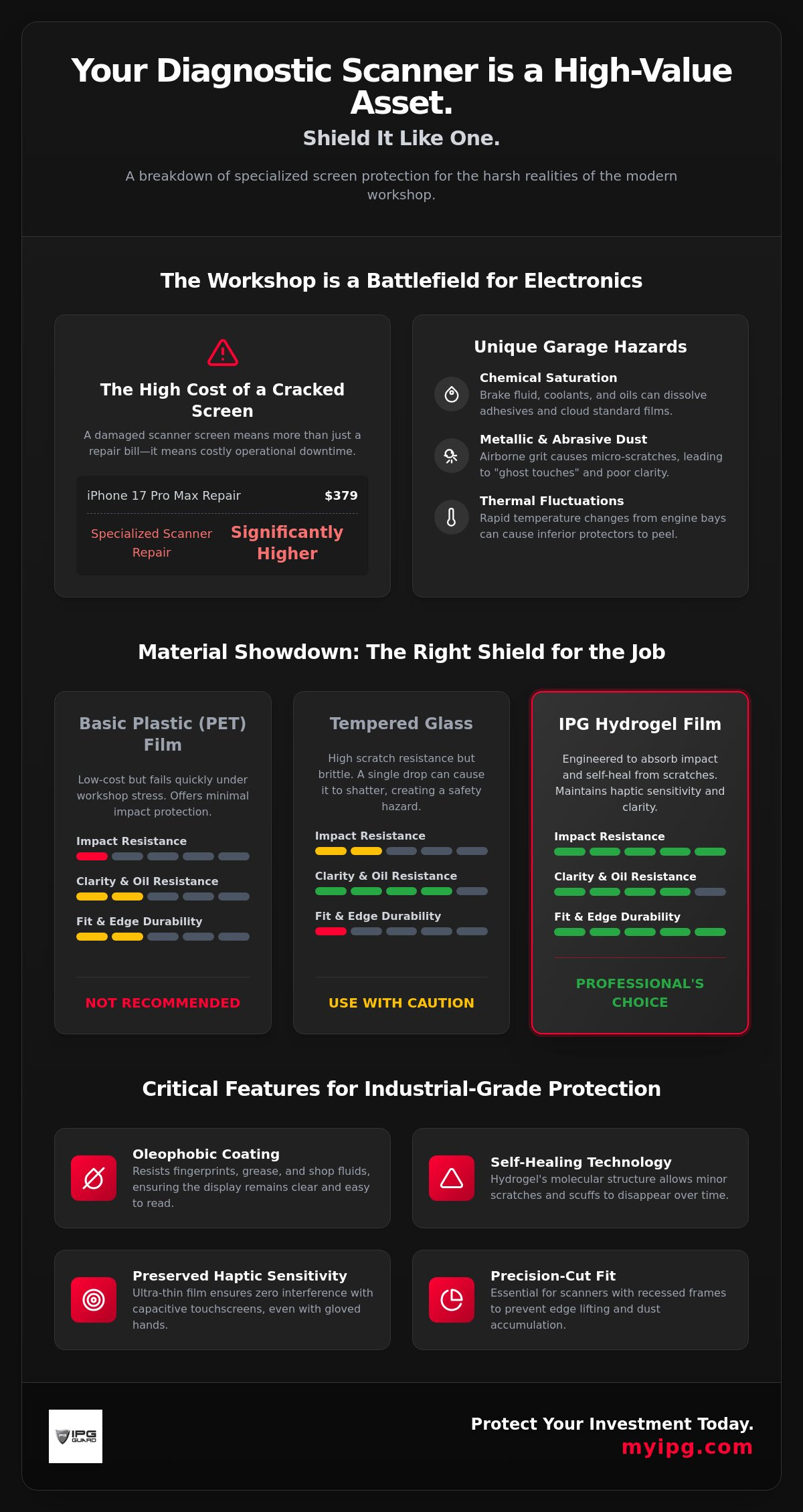
The economic impact of a damaged screen is immediate and severe. While official out-of-warranty screen repairs for high-end consumer devices like the iPhone 17 Pro Max can reach $379, the cost for specialized industrial tablets is often significantly higher. A cracked display on an Autel MaxiSYS or Snap-on Triton doesn't just result in a repair bill; it triggers costly downtime that halts your shop's productivity. Proactive shielding is an act of stewardship over your equipment. It ensures that a single dropped wrench or a splash of caustic fluid doesn't turn a $5,000 asset into a paperweight.
The Vulnerability of Modern HMI Screens
Modern diagnostic tablets utilize sensitive capacitive touchscreens to allow for complex data manipulation. These Human-Machine Interface (HMI) screens rely on a precise electrical field to register input. When grit and metallic dust accumulate on the surface, they create micro-scratches that eventually interfere with this field. Over time, these tiny abrasions lead to "ghost touches," where the scanner behaves as if it's being pressed when it isn't. In 2026, HMI screen protection for industrial tools represents the essential standard for maintaining touch precision and data visibility in high-risk mechanical environments.
Garage Hazards: Beyond the Typical Drop
Environmental factors in a workshop are uniquely aggressive. While common screen protector materials like basic PET or thin plastic films work for light scratches, they often fail under the thermal and chemical stress of a bay. Consider these specific garage risks:
- Chemical Saturation: Brake cleaner, coolant, and high-viscosity oils can dissolve the adhesives used in cheap protectors or cloud the material itself.
- Thermal Fluctuations: Moving a tool from a cold shop floor to a hot engine bay causes expansion and contraction that can lift the edges of inferior films.
- UV Exposure: Technicians working in open bays or mobile units face screen yellowing and glare from constant sun exposure.
Effective protection requires a balance of transparency and toughness. It isn't just about stopping a crack; it's about ensuring the screen remains readable under fluorescent lights and responsive to a gloved hand covered in grease.
Plastic vs. Glass vs. Hydrogel: Comparing Materials for the Shop
Selecting the right material for a screen protector for diagnostic tools requires a deep understanding of how different substrates react to mechanical stress. Basic PET plastic films are often the first choice due to their low cost, but they rarely survive a month in a professional bay. These films lack the molecular density to resist high-viscosity oils. Over time, the plastic absorbs grease, leading to permanent clouding that makes reading live data streams nearly impossible. For a technician, a "cheap" film often becomes an expensive mistake when it fails to protect against a direct impact.
Tempered glass is a popular consumer alternative, praised for its high clarity and 9H hardness rating. However, in a heavy-duty environment, this hardness becomes a liability. Glass is brittle. It doesn't absorb energy; it shatters under it. While it may stop a scratch, a single dropped wrench can send glass shards across your workspace. For those seeking a more resilient solution, the IPG Original Hydrogel provides a specialized alternative that prioritizes both security and performance.
The Limitations of Traditional Tempered Glass
Standard glass protectors often struggle with the unique architecture of industrial scanners. Most diagnostic tools feature recessed frames or ruggedized bezels designed to protect the screen edges. Thick tempered glass frequently creates fitment issues, leading to edge lifting where dust and metallic grit can accumulate. Once the adhesive is compromised by shop debris, the protector peels away, leaving the display vulnerable. Safety is also a primary concern. You don't want micro-shards of glass near sensitive vehicle interiors or your own hands during a complex tear-down.
Hydrogel: The Invisible Protective Guard Standard
Hydrogel technology represents the pinnacle of stewardship for your high-value assets. Unlike rigid glass, hydrogel is a flexible, energy-absorbing polymer. It doesn't crack or chip when struck by a heavy object; it distributes the force across its surface. This material science is the foundation of IPG ProActive technology for 2026, which ensures your scanner remains functional even after significant trauma.
One of the most impressive features for technicians is the self-healing property of the film. Minor tool nicks or surface abrasions from grit literally disappear as the polymer settles back into its original state. This keeps your display looking pristine and prevents the "ghost touches" caused by permanent surface damage. If you're ready to upgrade your shop's defense, you can find custom-fit solutions tailored to your specific hardware.
Beyond Scratches: Evaluating Oil Resistance and Haptic Sensitivity
A technician’s hands are rarely clean during a diagnostic session. While previous sections focused on physical impact, the true daily challenge for a screen protector for diagnostic tools is chemical warfare. Grease, oil, and brake fluid are aggressive solvents that can bond to unprotected glass or cheap plastic films, creating a permanent haze. High-quality protection requires a specialized oleophobic coating. These coatings aren't just about fingerprints; they are engineered to maintain a clear line of sight to your data even when your environment is saturated with contaminants.
Precision timing requires precision touch. Haptic feedback is critical when performing sensitive tasks like steering angle sensor resets or forced DPF regenerations. You can't afford input lag or "dead zones" caused by a thick, poorly manufactured shield. A professional-grade protector ensures zero latency, allowing the electrical signals from your fingertips to pass through the film without interference. This responsiveness must extend to the "Glove-Touch" test. Whether you're wearing 6-mil nitrile or standard latex, the screen must register every swipe and tap with the same accuracy as a bare finger.
Combating Shop Light Glare
High-intensity fluorescent bay lights are the enemy of visibility. Standard glossy screens act like mirrors, forcing you to tilt the scanner at awkward angles to read trouble codes. This leads to eye strain and potential errors during long diagnostic sessions. Selecting a screen protector with advanced anti-reflective properties or a fine-etched matte finish solves this. Unlike cheap matte films that blur the display, modern 2026 industrial shields maintain high color accuracy. This is vital for technicians who rely on graphing and waveform analysis, where distinguishing between subtle voltage drops on an oscilloscope screen is the difference between a fix and a comeback.
Chemical Integrity and Cleaning
Maintenance of the protector itself is a matter of stewardship. In the garage, screens are often wiped down with whatever is handy, including shop rags potentially contaminated with grit. A diagnostic-grade shield is built to withstand these harsh cleaning cycles. It must resist degradation from gasoline and common solvents that would otherwise turn consumer-grade films yellow or brittle. The oleophobic layer utilizes a specialized molecular structure to lower surface tension, causing petroleum-based fluids to bead up and roll off rather than saturating the protective film. This allows you to clean the device quickly with a simple microfiber cloth, ensuring the scanner is ready for the next job without leaving a streaky, oily residue behind.
Selecting the Right Guard for Your Specific Diagnostic Scanner
Universal is a dangerous word in a professional workshop. If you attempt to trim a generic 10-inch sheet to fit your specific scanner, you are inviting premature failure. Trimming leaves micro-frays along the edge of the film. These frays act as entry points for shop dust, metallic grit, and high-viscosity oils. Within weeks, the edges will lift and the adhesive will fail. A precision-cut screen protector for diagnostic tools is the only way to ensure the shield stays bonded to the display, even when handled with heavy work gloves or subjected to rapid temperature changes.
Compatibility with rugged cases is another critical factor for the modern technician. Most high-end diagnostic tools live inside thick, shock-absorbent boots. If your screen protector is even a fraction of a millimeter too wide, the case will push against the edges of the film. This creates air pockets and eventually peels the protector off. We engineer our shields to sit perfectly within the visible display area, leaving just enough clearance for the protective housing to seat properly without interference. This stewardship over the fit ensures your device remains sealed against the environment.
Snap-on Screen Protector Nuances
Snap-on tools like the Triton, Apollo, and Solus+ often feature recessed displays tucked behind a substantial bezel. This design protects against side impacts but makes installation of a standard film nearly impossible. You need a shield that fits the exact dimensions of the recess. Thickness is a major consideration here. If the film is too bulky, it can interfere with the high-brightness output of these displays, making them harder to read in direct sunlight. Additionally, tools like the Zeus are frequently docked and undocked for charging. Our low-profile hydrogel ensures the tool seats perfectly in its charging cradle every time without catching or peeling. For maximum security, you should order a precision-engineered screen protector for diagnostic tools tailored to your specific Snap-on model.
Autel MaxiSYS and MaxiIM Protection
The Autel MaxiSYS series, including the MS909 and MS919, features massive surface areas that are magnets for shop debris. Protecting a 12.9-inch Ultra display requires a shield that maintains structural integrity across the entire face. Large screens are prone to "oil-rainbowing" if the material isn't high-grade industrial polymer. For portable tools like the MaxiIM KM100, durability is the priority. These smaller devices are often tossed into tool chests or dropped on the floor. Precision-cut shields are vital for Autel’s edge-to-edge glass designs. They provide a seamless transition from the screen to the frame, preventing grit from working its way under the film and damaging the sensitive digitizer underneath.
The IPG Solution: Professional-Grade Shields for the Modern Shop
Dust is a constant in the garage. Between brake lathes and bay fans, the air is never truly clean. Our IPG Zerodust technology ensures that airborne particles don't compromise the bond between the film and your display. This specialized application process is designed specifically for the high-grit reality of a working workshop. It's why seasoned technicians choose the IPG Original Hydrogel screen protector for diagnostic tools. They recognize that a tool is only as good as its visibility. We act as the dedicated guardian of your technology, ensuring your diagnostic capability remains uninterrupted by surface damage or chemical clouding.
Our commitment to stewardship extends to every piece of hardware in your cabinet. If you are running legacy scanners or rare diagnostic equipment that is no longer in production, you don't have to settle for "close enough" fits. We provide custom-fit solutions that maintain the integrity of your older assets. Protecting your equipment is about protecting your livelihood. A scanner with a ruined digitizer is a scanner that can't bill hours. By choosing a professional-grade shield, you are making a meticulous choice to prioritize long-term performance over temporary fixes.
Professional Installation in a Non-Professional Environment
Achieving a bubble-free application in a busy bay requires the right methodology. We recommend the "wet-apply" method for larger diagnostic tablets like the Autel MaxiSYS Ultra. This technique allows you to slide the film into perfect alignment before the adhesive sets. Using the provided IPG installation kit helps eliminate static and repel contaminants during the process. It's a methodical approach that mirrors the precision you apply to a complex engine teardown. Once cured, the bond is industrial-strength, resisting the heat and vibration common in mobile diagnostic work.
Long-Term Stewardship of Your Equipment
Think beyond the immediate fix. A modest investment in a high-quality screen protector for diagnostic tools preserves the high resale value of your scanner. When it's time to upgrade your fleet, a pristine, scratch-free display can significantly increase the trade-in or private sale price of your hardware. Our durability promise for 2026 focuses on maintaining this value through chemical immunity and impact resistance. Whether you are an independent tech or a fleet manager overseeing twenty bays, proactive shielding is the most cost-effective maintenance task you'll perform all year. Secure your shop's future and equip your diagnostic tools with IPG protection today.
Shield Your Precision Diagnostics for the Long Haul
Your diagnostic scanner is the heartbeat of your service bay. Protecting it requires more than a generic film; it demands a specialized screen protector for diagnostic tools that resists corrosive fluids while maintaining perfect touch sensitivity. We have explored how aerospace-grade hydrogel technology outperforms brittle glass by absorbing impact energy and self-healing from daily shop abrasions. Choosing a precision-cut guard ensures your high-end displays from Snap-on, Autel, or Bosch remain clear and functional under the harshest lighting and chemical exposure.
Stewardship of your tools is a direct commitment to your professional success. Since 2004, we have been trusted by professional technicians worldwide to provide the ultimate defense for their critical hardware. Every minute of downtime is a minute of lost revenue, and a compromised screen is a risk you don't need to take. Secure your diagnostic tool with an IPG Precision Shield today and experience the confidence of industrial-grade protection. Keep your data visible, your touch responsive, and your equipment ready for every complex job that rolls through your doors.
Frequently Asked Questions
Do screen protectors interfere with touch sensitivity when wearing mechanics gloves?
No, a high-quality screen protector for diagnostic tools doesn't interfere with touch sensitivity when wearing standard 6-mil nitrile or latex gloves. Our hydrogel films use a thin, conductive polymer that ensures the capacitive electrical field from your finger registers through the glove material. This maintains zero-latency response during critical system resets or live data graphing where precision is non-negotiable.
Can I use brake cleaner to clean my screen protector if it gets greasy?
Never use brake cleaner or harsh solvents to clean your screen protector. These chemicals are designed to strip oils from metal and will dissolve the specialized oleophobic coatings on your shield. Instead, use a damp microfiber cloth with mild soap or an alcohol-free screen cleaner to safely remove grease without compromising the material integrity or causing the film to become brittle.
What is the difference between a plastic screen protector and hydrogel for a diagnostic tool?
Plastic films are rigid PET materials that scratch easily and often cloud over when exposed to high-viscosity shop oils. Hydrogel is a flexible, aerospace-grade polymer that absorbs impact energy rather than shattering like glass or PET. The primary advantage of hydrogel is its self-healing capability, which allows minor surface nicks from grit or tools to disappear within 24 to 48 hours.
Will a screen protector for my Snap-on tool fit if I have a rugged case on it?
A precision-cut shield will fit perfectly alongside a rugged case. We design our protectors with a slight recession from the edge to ensure the "lip" of a Snap-on or Autel protective boot doesn't lift the film. This case-friendly design is essential for maintaining a permanent, dust-proof seal in a professional environment where tools are frequently handled and docked.
How do I remove air bubbles from a large diagnostic tablet screen protector?
Small air bubbles in hydrogel films usually disappear on their own within 24 hours as the material breathes and settles. For larger diagnostic tablets, using a wet-apply installation method allows you to squeegee out excess moisture and air during the initial application. If a bubble persists after 48 hours, it's likely due to a trapped dust particle which requires a cleaner installation environment.
Are there anti-glare screen protectors specifically for outdoor mobile diagnostics?
Yes, specialized matte-finish screen protectors are engineered specifically to eliminate reflections during outdoor mobile diagnostics. These films diffuse direct sunlight and high-intensity bay lights without blurring the display. This ensures trouble codes and waveforms remain legible even when you're working in open-air environments or under harsh fluorescent lighting that typically turns a glossy screen into a mirror.
Does a screen protector affect the heat dissipation of high-powered scanners like the Autel Ultra?
A screen protector for diagnostic tools has no measurable impact on the heat dissipation of high-powered scanners like the Autel Ultra. These devices are engineered to vent heat through internal heat sinks and rear chassis components rather than the display glass. The thin profile of the protective film doesn't trap enough thermal energy to affect the tool's operating temperature or internal performance.
How often should a professional technician replace their screen protector?
Professional technicians should replace their screen protector when visible deep gouges appear or if the oleophobic coating begins to wear down. In a high-volume shop, this typically occurs every 6 to 12 months to maintain peak performance. Regular replacement ensures your scanner maintains maximum clarity and responsiveness, protecting your high-value asset from long-term environmental degradation and chemical clouding.