
A single slip of the hand shouldn't cost you $379, yet that's the current reality for an out-of-warranty iPhone 17 Pro Max screen repair. You've likely felt that heart-stopping moment when your device hits the pavement. It's more than just a repair bill. It's the frustration of micro-scratches ruining your resale value and the persistent anxiety of a shattered display. Understanding the technical tempered glass screen protector benefits is the first step toward securing your high-value tech against these daily hazards. We're here to act as the guardian of your gear.
You deserve a solution that offers uncompromising optical clarity and maximum impact absorption without the headache of installation bubbles. This guide provides a technical deep dive into the latest material science. We'll compare the 9H pencil hardness of premium glass with the self-healing flexibility of advanced hydrogel. You'll learn how to select the ultimate shield for your smartphones, EV navigation displays, and professional tools. Discover how to achieve a perfect, bubble-free fit that preserves the integrity of every screen you own.
Key Takeaways
- Decode the 9H hardness rating to understand how multi-layered engineering shields your display from real-world abrasions.
- Identify the specific tempered glass screen protector benefits for drop protection compared to the self-healing properties of hydrogel films.
- Extend your defensive perimeter to specialty gear, including EV navigation screens, motorcycle clusters, and professional diagnostic tools.
- Master the science of adhesion to eliminate installation anxiety and achieve a perfect, bubble-free fit every time.
- Protect your investment and avoid $379 repair costs by choosing shields that maintain uncompromising optical clarity and long-term durability.
The Evolution of Glass Screen Protector Technology in 2026
Modern screen protection has moved far beyond the flimsy plastic films of the past. In 2026, a high-quality shield is a multi-layered optical component designed to preserve the factory-fresh feel of your device. One of the primary tempered glass screen protector benefits is its ability to maintain 100% optical clarity while providing a sacrificial layer for your screen. Manufacturers now use 9H hardness ratings as a standard. It's vital to understand that this refers to the pencil hardness scale. This means the glass resists scratches from a 9H lead pencil, ensuring that keys, coins, and grit don't leave permanent marks on your primary display.
We've seen a massive shift toward functional films that do more than just block scratches. Privacy filters limit viewing angles to protect sensitive data on your iPhone or Samsung device. Anti-glare treatments improve visibility in direct sunlight. This is crucial for Tesla navigation screens or marine gear. Modern protectors also feature advanced oleophobic coatings. These electroplated layers repel finger oils and smudges. They ensure your touch interface remains responsive and clean throughout the day. It's a professional grade solution for those who demand performance.
The Anatomy of a Tempered Glass Shield
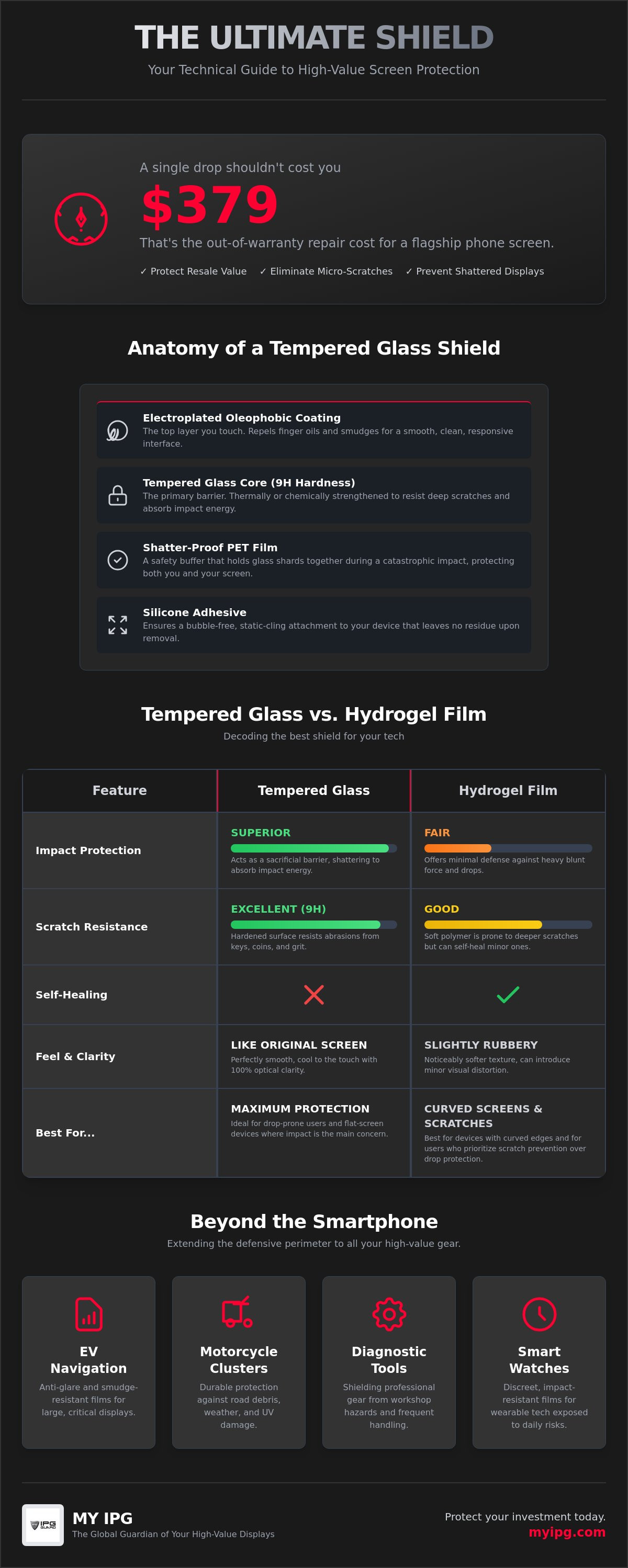
A premium shield is a marvel of material science. It starts with a base of tempered or toughened glass, which undergoes intense thermal or chemical processing to increase its strength. This core is sandwiched between specialized layers to create a unified defense system. The structure typically includes:
- Silicone Adhesive: This bottom layer ensures a bubble-free, static-cling attachment that won't leave residue.
- PET Film: This acts as a shatter-proof buffer. It keeps glass shards together if the protector breaks during a heavy impact.
- Tempered Glass: The primary barrier against impact and deep scratches.
- Electroplated Coating: This top layer provides the smooth, smudge-resistant finish you feel during every swipe.
This stack ensures that even during a catastrophic drop, the protector absorbs the energy. It shatters so your expensive display doesn't have to. It's a calculated sacrifice designed to save your hardware.
Why Screen Integrity Matters for High-Value Assets
Your screen is the window to your digital existence. Protecting it is about more than avoiding a crack; it's about maintaining the financial value of your hardware. With official screen repair costs for flagship phones reaching $379, a quality shield is a small investment with a massive return. Micro-abrasions on an Apple Watch or a high-resolution EV display can significantly lower resale value and degrade the user experience. We view our products as guardians. We provide stewardship over the items you value most. One of the key tempered glass screen protector benefits is this peace of mind. You know your tech is shielded by a dedicated specialist, ensuring your tools remain in pristine condition regardless of your environment.
Tempered Glass vs. Hydrogel: Decoding the Best Shield for Your Tech
Choosing the right material is a critical decision for your device's longevity. You aren't just buying a sticker. You're selecting a defense system. Rigid tempered glass and flexible hydrogel films serve different environments. While tempered glass offers superior impact resistance, hydrogel provides a "barely there" feel with unique recovery properties. Understanding the tempered glass screen protector benefits starts with knowing which material matches your lifestyle and your specific hardware.
Impact resistance is where glass truly shines. It's the king of drop protection. When your phone hits the floor, the rigid structure of the glass absorbs the shock. It shatters to dissipate energy, acting as a sacrificial barrier for your actual display. If you drop your phone often, you're likely best off with a tempered glass protector because of this physical defense layer. Hydrogel, by contrast, is a soft polymer. It excels at scratch resistance but cannot match the structural rigidity of glass against heavy blunt force.
Feel and thickness are also major factors. Tempered glass mimics the original feel of your smartphone screen. It's smooth, cool to the touch, and ultra-responsive. Hydrogel has a slightly softer, rubbery texture. It is significantly thinner than glass, making it nearly invisible on your device. This low profile ensures total compatibility with even the tightest-fitting cases. It doesn't add bulk to your pocket or your grip.
When to Choose Tempered Glass
Tempered glass is the definitive choice for flat displays. If you use a gaming phone or a tablet, the smooth surface is essential for high-intensity touch interaction. It doesn't drag or catch on your fingertips. It remains the ultimate sacrificial layer. Its primary mission is to die so your expensive screen lives another day. This is one of the most significant tempered glass screen protector benefits for anyone working in high-risk environments like construction sites or busy kitchens where drops are frequent.
The Case for IPG Original Hydrogel
Hydrogel is the specialist for curved edges. Glass often struggles with lifting or "halo" effects on modern, rounded displays. Hydrogel wraps around these curves perfectly. It uses a self-healing technology where minor scratches literally disappear over time as the material settles. It's the ideal choice for wearable tech where the screen is constantly exposed to bumps. We highly recommend the IPG Garmin DESCENT Screen Protector for divers and athletes who need edge-to-edge coverage that won't peel. If you need a shield that adapts to complex shapes, explore our hydrogel collection for a precision fit that preserves your device's sleek lines.
Beyond the Smartphone: Selecting Protection for Specialty Gear
High-value displays aren't limited to the pocket of your jeans. They're on your dashboard, your motorcycle cluster, and your marine navigation system. These high-stakes screens face environmental threats that a standard smartphone never encounters. UV exposure can degrade plastic displays on a Harley-Davidson. Salt spray can etch the glass of a Lowrance fishfinder. Protecting these assets requires more than a generic solution. Precision-cut protectors are essential. Universal trim-to-fit options often leave gaps. These gaps allow dust and moisture to ingress, eventually leading to adhesive failure or screen damage. We provide a dedicated shield for every environment.
The primary tempered glass screen protector benefits in specialty gear involve maintaining visibility under extreme lighting. High-light environments, like an open cockpit or a sunny boat deck, require advanced anti-glare properties. Without them, your screen becomes a mirror. A technical shield ensures your data remains readable when it matters most. Experts agree that users are often better off realizing the tempered glass protector benefits like superior damage prevention and high-definition clarity across all their devices.
Automotive and EV Display Protection
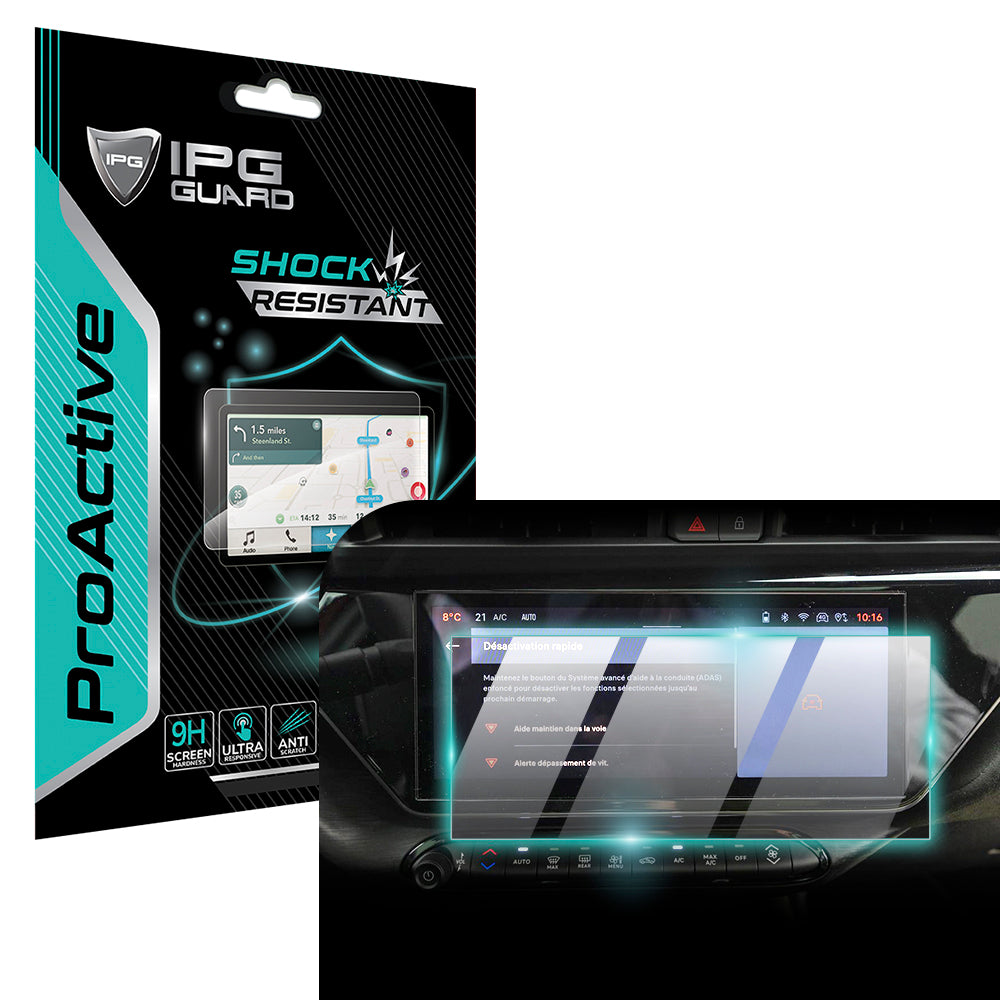
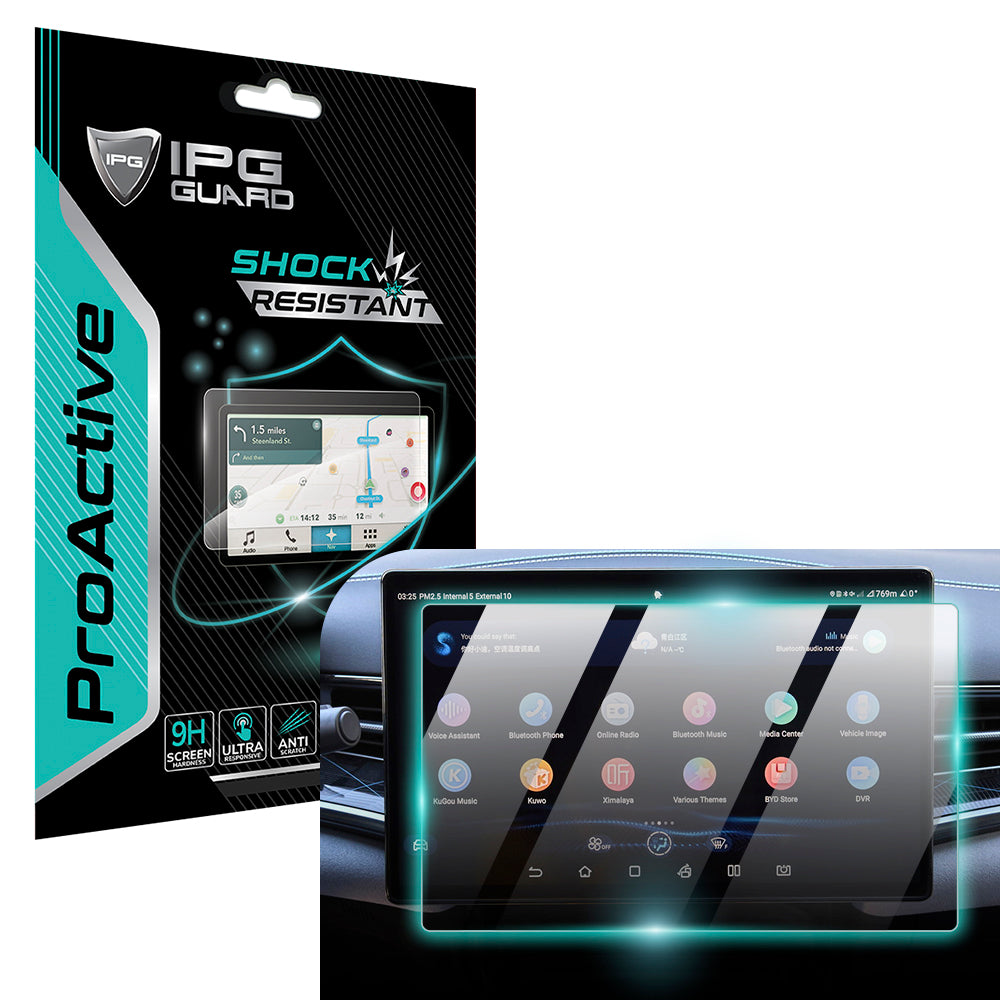
Modern electric vehicles are essentially mobile command centers centered around massive touchscreens. The IPG ProActive for BYD SEAL Navigation Display is engineered specifically for these large-format 15.6-inch interfaces. These screens are constant touchpoints. They become magnets for fingerprints and skin oils that obscure the map and controls. A dedicated protector reduces smudge accumulation and simplifies cleaning. It preserves the sleek, futuristic aesthetic of your interior. For a comprehensive look at securing your vehicle's tech, consult our Car Screen Protector Buying Guide 2026. We help you choose the right material for your specific infotainment system.
Industrial and Diagnostic Tool Safeguarding
In a professional mechanic shop, tools are an investment in your livelihood. Diagnostic scanners from Snap-on or Autel face a daily barrage of grease, oil, and heavy impacts. Using IPG Snap-on screen protectors prevents chemical etching that can permanently cloud a display. It's an act of stewardship over your professional gear. We also provide defense for marine electronics. A Lowrance Eagle or Elite HDS unit needs a shield that resists the abrasive nature of salt spray and the blunt force of shifting gear. Our protectors ensure your fishfinder remains a reliable tool, not a liability. We act as the guardian of your technology, ensuring your displays survive the harshest working conditions.
Troubleshooting Protection: Bubbles, Lifting, and Impact Resistance
Installation anxiety is the primary reason many users delay securing their devices. You don't want a $1,000 smartphone marred by unsightly air pockets. Understanding the technical tempered glass screen protector benefits starts with mastering the application. Modern shields use advanced silicone adhesives designed for a static-cling bond. These adhesives are engineered to be self-spreading, but they require a pristine environment. If you encounter a bubble, the culprit is almost always a microscopic dust particle, not a product defect. Dust creates a physical gap that prevents the adhesive from making full contact with the display.
Impact resistance is a one-time insurance policy. When your protector shatters after a drop, it has successfully performed its duty. It sacrificed its structural integrity to dissipate the kinetic energy that would have otherwise reached your screen. You must replace a cracked protector immediately. A compromised shield no longer offers the same level of impact absorption. Furthermore, the jagged edges of a broken protector can eventually cause micro-abrasions on the very screen you're trying to save. Stewardship of your tech requires recognizing when the guardian has fallen and needs replacement.
The ZeroDust Installation Advantage
Flawless application is a matter of preparation, not luck. We developed the IPG Zerodust Screen Protector technology to eliminate the guesswork. This system focuses on a sterile surface. Start by using 70% isopropyl alcohol to strip away skin oils. Follow this with a high-density microfiber cloth to remove any remaining residue. If you find trapped air during the process, you can learn how to get air bubbles out of screen protector by applying firm, center-out pressure. This technique pushes the air toward the perimeter where the adhesive can properly vent. Precision prep ensures a factory-quality finish every time.
Identifying and Preventing Edge Lifting
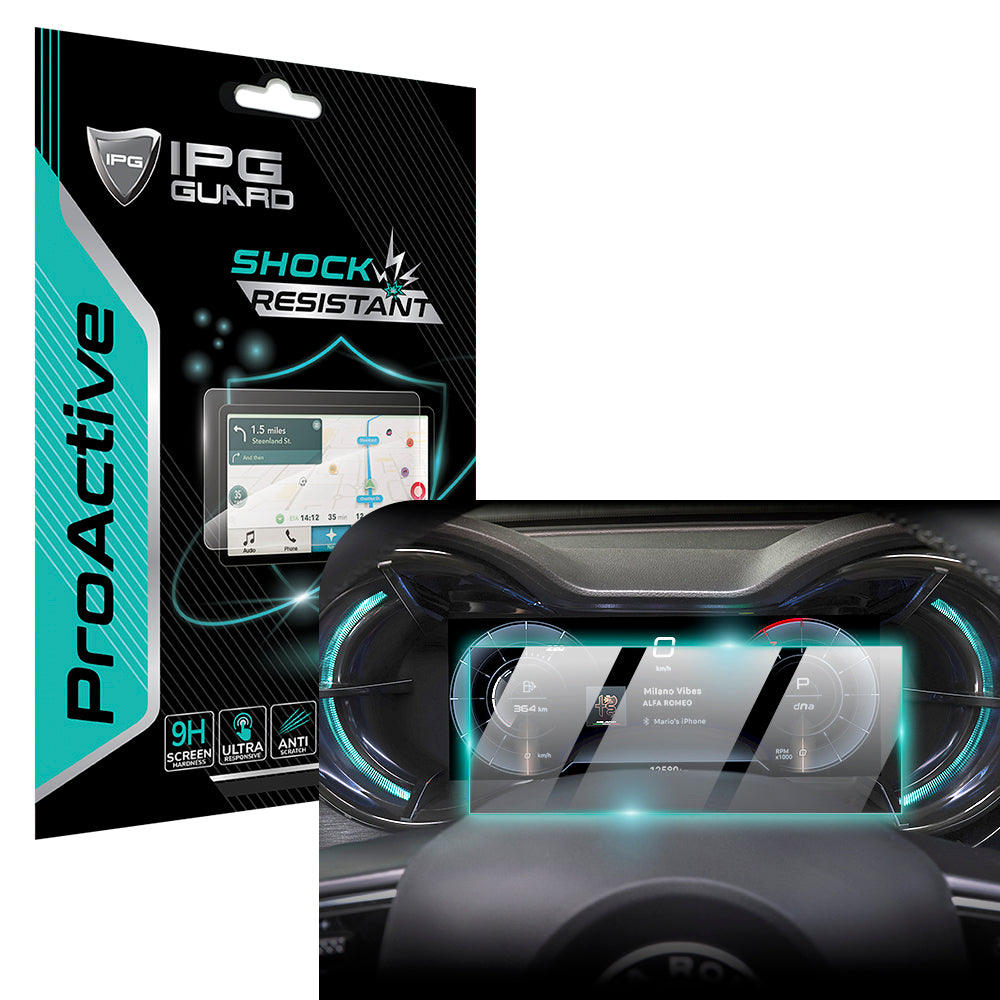
Edge lifting occurs when the adhesive bond is broken by external force or contamination. This is common on complex displays like the Camera Lens Protector for Harley Cluster Display where vibration and wind exposure are factors. Proper alignment is your best defense. Even a half-millimeter deviation can cause the protector to overhang the screen's edge. This creates a leverage point for dust to enter. For smartphone users, case compatibility is the deciding factor. Always ensure a 1mm gap exists between the edge of the glass and the lip of your protective case. This prevents the case from "pushing" the protector off the screen during daily handling. Secure your device today with a precision-fit shield from our catalog for total peace of mind.
Why IPG is the Global Guardian of Your High-Value Displays
My IPG is more than a retail provider. We are dedicated specialists and guardians of the technology you rely on every day. Our commitment to precision engineering and material stewardship has served over 2 million customers over the last 15 years. We understand that your devices are significant financial and personal investments. Whether you're shielding an iPhone 17 Pro Max or a high-stakes industrial scanner, we provide a professional-grade defense. One of the core tempered glass screen protector benefits is the absolute security that comes from a material designed to be a sacrificial barrier. We take this responsibility seriously, ensuring every product we ship meets rigorous standards for light filtration and impact resistance.
Our catalog reflects the diversity of modern life. We don't stop at smartphones. We protect the window to your professional life, from automotive navigation systems to specialized diagnostic tools. This breadth of expertise allows us to apply advanced material science across multiple industries. We provide a methodical, results-oriented solution for every screen in your ecosystem. You've invested in the best technology. It's only logical to protect it with the best available defense. We invite you to explore our full range of custom-fit solutions designed for 2026 tech and beyond.
Precision Cut for Every Device
Mass-produced, generic protectors found on major marketplaces often fall short. They use "one-size-fits-most" templates that leave vulnerable gaps or obstruct essential sensors. We utilize a sophisticated CAD-assisted cutting process to ensure a perfect fit for even the rarest electronics. This meticulousness ensures that your shield integrates seamlessly with your hardware. It feels like a part of the device, not an afterthought. For those focused on mobile photography, check out The Ultimate Guide to My IPG Phone Camera Lens Protectors. We prioritize preservation without compromise for every lens and display.
The My IPG ProActive and ZeroDust Legacy
Innovation is the heartbeat of our brand. Our ProActive and ZeroDust technologies represent the pinnacle of modern display integrity. These systems are specifically engineered for next-gen devices like the iPhone 17 series, where optical clarity is paramount. You've seen the tempered glass screen protector benefits detailed in
Secure Your Digital Legacy Today
Your high-value displays represent a significant investment in both time and capital. They're the primary interfaces for your digital existence. By mastering the technical tempered glass screen protector benefits, you've moved from passive ownership to active stewardship. You're now equipped to choose between rigid impact absorption for flat screens and flexible, self-healing hydrogel for curved wearable tech. Whether you're operating a Tesla or managing industrial diagnostic tools, the right shield preserves optical clarity and resale value simultaneously.
IPG provides precision-cut solutions for over 5,000 unique devices. Our advanced ZeroDust application technology removes the anxiety of DIY installation, providing a factory-quality finish every time. We offer global shipping on all protective films and glass, ensuring professional-grade security is accessible anywhere in the world. Don't wait for a costly accident to act. Protect Your Tech with IPG Precision-Cut Shields and experience the confidence of total display integrity.
Frequently Asked Questions
Is a glass screen protector better than a plastic one in 2026?
Yes, glass is the superior choice for impact defense and optical clarity. One of the main tempered glass screen protector benefits is its ability to absorb shock by shattering; this saves your actual display from expensive repairs. Plastic films offer basic scratch resistance but fail against blunt force. Glass also provides a smoother, more responsive touch experience that mimics your phone's original factory surface.
Will a glass screen protector affect my phone’s touch sensitivity?
No, a premium shield won't degrade your touch interface. We use ultra-thin 0.3mm aluminosilicate glass paired with a high-conductivity silicone adhesive. This combination ensures every tap and swipe is registered instantly. Whether you're gaming or typing, the response remains identical to a bare screen. It's an invisible layer that prioritizes both performance and security for your high-value hardware.
Can I use a screen protector on my car’s navigation display?
Definitely. Large touchscreens are high-stakes assets that attract oils, dust, and UV damage. The IPG ProActive for BYD SEAL Navigation Display Screen Protector is a prime example of a specialized shield for automotive use. These protectors reduce glare from the sun and protect the underlying panel from permanent scratches. They keep your interior looking factory-fresh while simplifying daily cleaning in your vehicle cabin.
How do I remove a cracked glass screen protector safely?
Use a thin plastic card or your fingernail to lift one corner gently. Peel the glass away slowly and don't rush the process. Our shatter-proof layers keep the fragments together, preventing loose shards from causing injury or scratching the display. Once removed, use a microfiber cloth and isopropyl alcohol to strip away any remaining adhesive residue. Your screen will be ready for a fresh shield immediately.
Do camera lens protectors affect photo quality on the latest iPhones?
They don't if they use high-transparency optical materials. The IPG Phone camera lens protector is engineered with anti-reflective coatings to prevent lens flare and ghosting. This allows 99% light transmission for your sensors. You'll get the same crisp, high-definition snaps without worrying about scratching your expensive sapphire glass lenses during daily use. It's professional-grade preservation without any compromise on image quality.
Why does my screen protector keep lifting at the edges?
Lifting is usually caused by improper alignment or case interference. If the glass isn't centered perfectly, the edge may overhang the display's flat surface. This allows air and dust to ingress, breaking the adhesive bond. Additionally, bulky cases can "push" against the protector's perimeter during handling. Always maintain a 1mm gap between the glass and your case to ensure a permanent, bubble-free attachment.
Is hydrogel better than tempered glass for curved screens?
Hydrogel is often the superior specialist for rounded displays. While tempered glass is the king of impact resistance, its rigidity can lead to lifting on extreme curves. The IPG Original (Hydrogel) Screen Protector offers a flexible wrap that contours to complex shapes. It's the ideal solution for devices like the IPG Garmin DESCENT Screen Protector where edge-to-edge coverage is non-negotiable for active users.
What is the 9H hardness rating on screen protectors?
The 9H rating refers to the pencil hardness scale, not the Mohs mineral scale. It means the surface can resist scratches from a 9H lead pencil, which is the hardest standard pencil available. This technical specification highlights the strength of the top electroplated coating. It's a key part of the tempered glass screen protector benefits, ensuring your display survives encounters with keys, coins, and grit.