
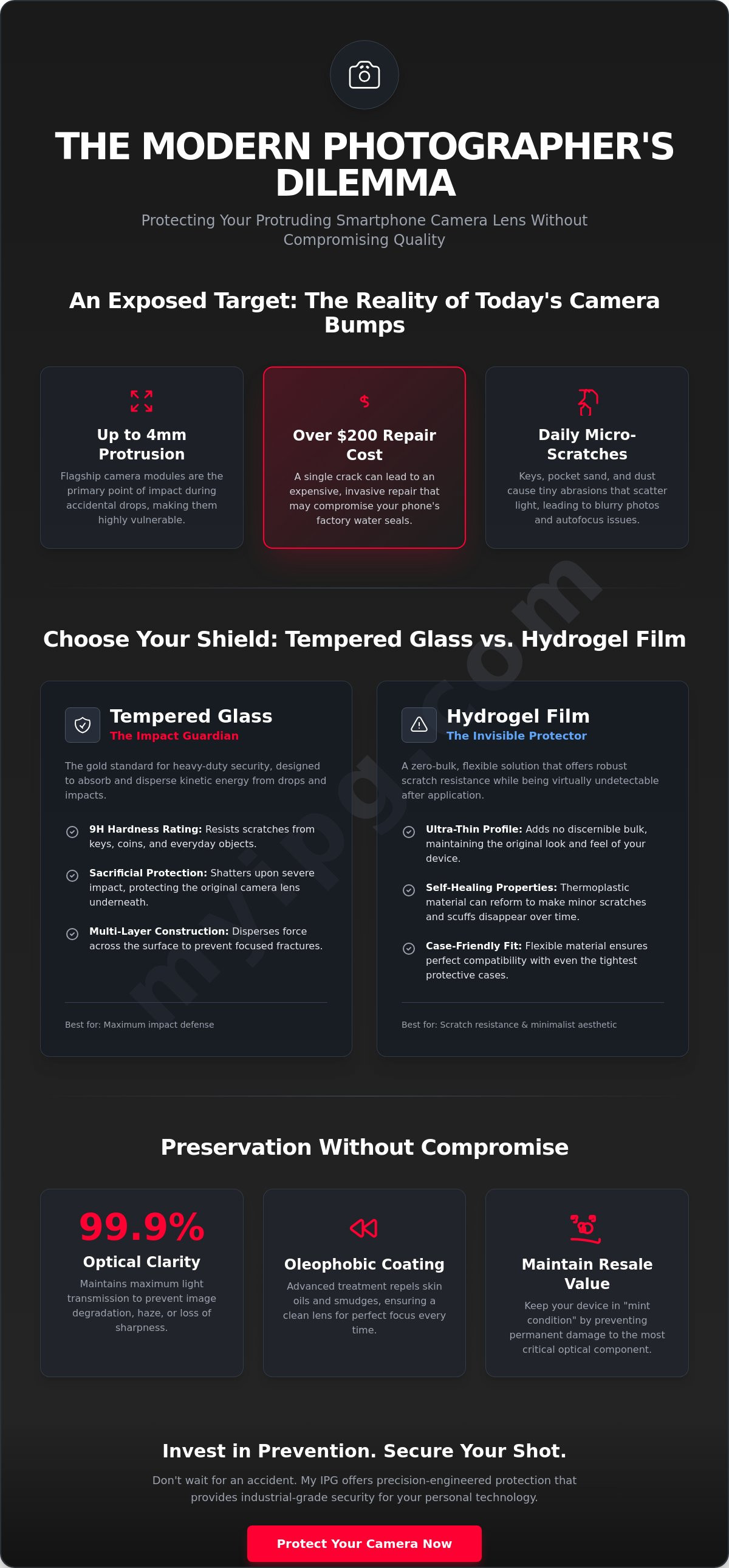
With modern smartphone camera modules protruding up to 4 millimeters from the device body, your lens isn't just a feature; it's a target. A single accidental drop or a stray set of keys can lead to a repair bill exceeding $200 for flagship models. It's a high-stakes gamble every time you set your phone down. We understand that protective anxiety. You want to preserve your hardware without ruining the sleek aesthetics or degrading the light filtration that makes your photos pop.
Choosing a smartphone camera lens protector shouldn't feel like a compromise between safety and clarity. We agree that your device deserves stewardship that respects its original engineering. In this guide, you'll discover how to safeguard your phone’s most vulnerable asset without sacrificing a single pixel of photo quality. We'll demystify the technical specifications of tempered glass versus film and provide a roadmap for a seamless, invisible installation. Prepare to secure your device with professional-grade precision while keeping your focus where it belongs: on the perfect shot. We'll help you maintain the optical integrity of your device through meticulous material selection and expert application techniques.
Key Takeaways
- Modern camera bumps require specialized defense to ensure your device remains fully shielded against daily environmental hazards and impact.
- Compare the structural properties of tempered glass and hydrogel shields to find the perfect balance of scratch resistance and flexibility.
- Learn how a premium smartphone camera lens protector preserves 99.9% light transmission to prevent image degradation or optical haze.
- Follow a step-by-step application guide to achieve a bubble-free, invisible installation tailored to your specific flagship phone model.
- Gain insight into the IPG stewardship approach, where precision-engineered materials provide industrial-grade security for your personal technology.
Why Your Smartphone Needs a Dedicated Camera Lens Protector
Modern devices are engineering marvels, but their physical design creates a glaring vulnerability. We protect the screen religiously. We wrap the body in silicone or leather. Yet, the most sophisticated component, the camera array, often remains exposed. A smartphone camera lens protector isn't an optional accessory; it's a critical defensive layer for 2026 hardware. If you've only shielded the front of your phone, you've only completed half the job. The rear optics are arguably more fragile and certainly more exposed to daily hazards.
Don't let marketing terms like "sapphire" lull you into a false sense of security. While manufacturers use high-performance materials, these are often laminates that still face threats from everyday grit. Pocket sand and quartz-containing dust can leave micro-scratches that are invisible to the naked eye but devastating to your photos. These tiny abrasions scatter incoming light. They cause internal reflections and confuse the autofocus sensors. A single micro-scratch can transform a flagship masterpiece into a blurry disappointment.
The Evolution of the Camera Bump
As smartphone camera technology advances, sensors grow larger to capture more light. This physical requirement has pushed lens modules outward. On flagship models like the iPhone 17 Pro Max and Samsung S26 Ultra, these modules protrude 3 to 4 millimeters from the chassis. Larger sensors. Exposed glass. Higher risk. This protrusion creates a primary impact point. When a phone falls, the camera module frequently hits the ground first. A dedicated smartphone camera lens protector acts as a sacrificial barrier. It absorbs kinetic energy and prevents the primary sapphire or glass lens from shattering upon impact.
Resale Value and Long-Term Integrity
Preserving your device's resale value requires meticulous stewardship. A "mint condition" rating disappears the moment a buyer spots a chipped lens or a scratched coating. Professional lens replacements are invasive and expensive. They often compromise the factory water resistance seals. Preventative shielding is the only logical choice for maintaining the integrity of your investment. It offers the mobile photographer total peace of mind. You can set your phone down on any surface without hesitation. Your focus remains on the perfect shot, not the safety of your hardware. We believe in protecting what you value most through precision engineering and reliable material science.
Understanding the Materials: Tempered Glass vs. Hydrogel Shields
Material science dictates how your device survives a drop. It's a balance of light transmission and physical defense. A high-quality smartphone camera lens protector uses materials that minimize refraction while maximizing structural integrity. You aren't just adding a layer; you're installing a precision-engineered optical filter. Choosing the right material depends on your lifestyle and your aesthetic preferences. We believe in providing options that respect the original design of your hardware while offering uncompromising security.
Every shield we recommend includes an advanced oleophobic coating. This specialized treatment repels oils from your skin. Fingerprint smudges are the primary cause of hazy, low-contrast photos. By maintaining a clean surface, these coatings ensure your autofocus sensors and lenses perform at peak efficiency. It's about preserving the clarity you paid for when you bought your flagship device.
Tempered Glass: The Impact Guardian
Tempered glass is the gold standard for heavy-duty security. Most glass protectors boast a 9H hardness rating. This rating refers to the pencil hardness scale, meaning the surface resists scratches from materials like keys or loose change. The real magic lies in the multi-layer construction. When your phone hits the pavement, the glass layers disperse kinetic energy across the entire surface. This sacrificial layer shatters to absorb the shock, keeping your expensive sapphire lens intact. Precision-cut edges are vital here. They ensure the protector sits flush and remains compatible with tight-fitting protective cases. For those seeking maximum impact defense, our IPG Phone camera lens protector options provide this rugged, reliable barrier.
Hydrogel: The Invisible Protector
Some users prefer a minimal profile. Hydrogel offers a zero-bulk solution for those who hate the "protected" look. These specialized films use thermoplastic properties to absorb minor scuffs and abrasions. They possess unique self-healing capabilities. Small scratches often disappear within 24 hours as the material's molecular structure settles back into place. This technology is a core component of the IPG Original (Hydrogel) Screen Protector. It provides a seamless, almost invisible finish that maintains the phone's original design language without adding weight. It's the perfect choice for users who want stewardship over their device's integrity without changing its silhouette. If you value a sleek, factory-fresh appearance, a hydrogel shield offers the most discreet protection available.
The Truth About Image Quality and Lens Protection
Skeptics often claim that adding a layer to your optics inevitably leads to blurriness. This is a myth born from low-quality plastic alternatives. A premium smartphone camera lens protector utilizes high-index optical glass to ensure that every photon reaches the sensor without distortion. It's about maintaining the integrity of the optical path. When comparing raw performance to protected performance, the difference is indistinguishable to the human eye and digital sensors alike. We don't just add glass; we preserve your vision.
High-performance optics demand high-performance protection. Cheap films often use low-grade polymers that yellow over time. These materials scatter light and reduce contrast. In contrast, precision-engineered shields maintain a 99.9% light transmission rate. This ensures that your sensor receives the exact data intended by the manufacturer. Whether you're shooting in bright daylight or dim interiors, the optical clarity remains absolute. Your device's sophisticated image processing works seamlessly with our materials.
Optical Clarity and Light Filtration
Modern sensors capture 8K video and ultra-high-resolution stills. This requires materials with extreme precision. High-index glass minimizes light refraction. It prevents the soft-focus effect seen in budget protectors. We prioritize a vacuum-sealed application to eliminate air gaps. Air gaps create internal reflections that muddy the image. True optical transparency is defined as the ability of a material to allow at least 99% of visible light to pass through without scattering or absorption. By hitting this 99.9% transmission threshold, your device captures the same vibrant colors and sharp details as a naked lens. Your computational photography AI won't even know the protector is there.
Solving the Flash-Bleed and Ghosting Problem
Night-time photography introduces unique challenges. "Ghosting" occurs when bright light sources reflect between the lens and the protector. This often manifests as strange orbs or flares in your shots. To combat this, advanced protectors feature integrated "Night Circle" technology. These black-circle anti-glare rings surround the lens and flash. They act as a light-tight seal. They absorb stray photons and prevent flash-bleed from washing out your exposure. This engineering ensures that LIDAR and depth sensors remain fully functional. Your autofocus stays snappy. Your portraits keep their professional bokeh. We believe in stewardship that enhances performance rather than hindering it. Secure your device without compromising your artistic vision. Protection should be felt, not seen in your photos.
How to Choose and Apply Your Lens Shield Like a Pro
Precision defines performance. A successful installation of your smartphone camera lens protector requires a controlled environment and a methodical approach. It's a surgical operation for your device's optics. We believe that proper stewardship starts with the right fit. A protector designed for the iPhone 16 Pro Max will not seat correctly on an iPhone 17 model due to minute shifts in lens spacing and module height. Mismatched shields cause vignetting and light leaks. Always verify your specific model number before beginning the application process.
Safe removal is just as vital as application. When it's time to refresh your defense, never use metal tools or blades. Use a thin plastic pick or a fingernail to gently lift one corner. Slow, consistent pressure prevents the adhesive from splintering the protector or marring the original lens coating. Once removed, your hardware should look factory-fresh. This cycle of preservation ensures your device remains in peak condition for years.
The Pre-Installation Checklist
Dust is the enemy of optical clarity. Create a "Zero-Dust" environment by applying your protector in a humid room, like a bathroom after a hot shower. The moisture grounds airborne particles. Use 90% isopropyl alcohol to strip away skin oils and factory residues. This ensures a permanent bond. Use the provided dust-removal stickers to probe the tight crevices between the lens and the module housing. This attention to detail prevents micro-debris from being trapped forever under your shield.
Application Techniques for Perfect Alignment
Master the "Dry Run" method. Position the protector over the lenses without removing the adhesive backing. Memorize the alignment. When you're ready, peel the film and use the "Drop and Center" technique. Hold the protector by the very edges to avoid leaving fingerprints on the underside. Let the adhesive spread naturally from the center outward. If you encounter resistance, learn how to get air bubbles out of screen protector layers using a microfiber cloth and firm, outward strokes. We recommend using our specialized application kits for a flawless, bubble-free result every time. Secure your hardware today with a professional-grade IPG Phone camera lens protector and enjoy total peace of mind.
Preservation Without Compromise: The My IPG Protection Philosophy
True protection is an act of stewardship. At My IPG, we don't just manufacture accessories; we engineer defenses for your most valued technology. Your device represents a significant financial and emotional investment. A smartphone camera lens protector should reflect that value through superior material science and precision fitment. Our philosophy centers on the preservation of original hardware integrity. We ensure your phone performs as the manufacturer intended, year after year. We treat your hardware with the same care you do. It's about maintaining a standard of excellence that respects the engineering of your device.
Our expertise spans beyond mobile devices. We've built a legacy of protective excellence across diverse industries. From precision-cut Tesla door handle decals to specialized aviation-grade films, our materials meet the most rigorous standards. This industrial-strength heritage informs every shield we create. We apply the same meticulousness to a Volkswagen emblem logo as we do to a flagship camera array. Whether it's a high-performance vehicle or a professional-grade smartphone, the goal remains the same: uncompromising security. This same standard for professional results at home is what drives GLI GLI to provide dental-grade oral care for those who value excellence in every aspect of their lives. We are the guardians of your technology. Our persona is built on reliability, technical mastery, and a deep investment in your user experience.
Tailored Solutions for Next-Gen Devices
The upcoming generation of hardware demands a new level of precision. We already provide custom fitments for the iPhone 17 Pro and Samsung Galaxy S26 series. These aren't generic cutouts. They are exact-match shields that account for every sensor, flash module, and microphone port. Our ProActive technology, also utilized in our BYD navigation display protectors, integrates seamlessly into your daily device care routine. It offers a self-healing, high-clarity barrier that specialists trust. This is why My IPG Phone camera lens protectors are the preferred choice for those who refuse to settle for "good enough." We understand the nuances of light transmission and material durability better than any generalist provider.
The My IPG Global Standard
Our commitment to excellence is a global endeavor. We provide worldwide availability of our most durable materials. This ensures that every user has access to professional-grade protection regardless of their location. Technical authority meets personal care in every package we ship. We meticulously test our light filtration and impact resistance to maintain our status as an industry innovator. We don't just sell a product; we provide a partnership in device maintenance. Your journey toward flawless snaps starts with a secure foundation. Secure your lens today. Don't leave your optics to chance. Choose the specialist. Choose the guardian. Your device deserves nothing less than the My IPG standard of excellence.
Secure Your Vision and Your Investment
You've seen the technical reality of modern device design. The protruding optics on your flagship phone are a vulnerability that requires immediate stewardship. By installing a high-quality smartphone camera lens protector, you bridge the gap between rugged security and optical perfection. We've detailed how high-index glass maintains 99.9% clarity while multi-layered tempered glass absorbs the kinetic energy of unexpected impacts. Your device deserves a defense that's as sophisticated as its engineering. Precision fitment ensures that your hardware remains in factory-fresh condition without compromising the optical path.
Our role as your dedicated guardian of technology is to provide professional-grade materials that respect the original silhouette of your iPhone 16, iPhone 17, Samsung S25, or Samsung S26. These precision-cut shields ensure that your sensors, flash modules, and LIDAR systems perform at peak efficiency. Don't wait for a micro-scratch to ruin your autofocus or a drop to shatter your sensor. Take the final step in total device preservation. Secure Your Optics with IPG Precision Lens Protectors today. Your creative journey and your hardware are in safe hands. Keep your focus on the perfect shot while we handle the rest.
Frequently Asked Questions
Do I really need a camera lens protector if I have a case?
Yes, because a case only provides a raised bezel and doesn't shield the glass from direct contact. Sharp objects, pocket grit, or uneven surfaces can still strike the lenses directly. A dedicated smartphone camera lens protector acts as a physical barrier that a standard case cannot provide. It ensures total stewardship over the most fragile part of your hardware's exterior.
Will a lens protector affect the focus of my iPhone camera?
A high-quality protector won't interfere with your iPhone's autofocus or LIDAR sensors. Focus issues usually stem from trapped micro-dust or low-grade plastic materials that scatter light. We use high-index optical glass to ensure the light path remains clear and unobstructed. This allows your device's computational photography systems to function exactly as the manufacturer intended.
Can I use a lens protector with my existing phone case?
Most precision-engineered protectors are compatible with the majority of third-party cases. We design our shields with tight tolerances to ensure they sit flush within the camera cutout. If your case has an extremely restrictive lens opening, you should verify the dimensions before application. A slim, precision-cut smartphone camera lens protector is the best way to maintain case compatibility while securing your optics.
How do I remove a cracked camera lens protector safely?
Use a thin plastic tool or your fingernail to gently lift one corner of the shield. Avoid using metal blades or screwdrivers because these will mar the original glass or the camera housing. Apply slow, consistent upward pressure to prevent the protector from splintering further. Once it's removed, wipe the area with an alcohol pad to clear any residual adhesive before you apply a new shield.
What is the difference between glass and plastic lens protectors?
Tempered glass provides superior impact defense and scratch resistance, whereas plastic or hydrogel films offer a more discreet profile. Glass shields use a multi-layer construction to absorb shock during a drop. Hydrogel options are thinner and feature self-healing properties for minor scuffs. Your choice depends on whether you prioritize heavy-duty security or a minimal, factory-fresh aesthetic.
Does the flash work correctly with a lens protector installed?
The flash functions perfectly if the protector includes an integrated anti-glare ring. These black "Night Circles" prevent light from the flash from leaking into the lens array. Without this feature, your night photos might suffer from hazy artifacts or flash bleed. Our engineering ensures your low-light photography remains crisp and professional-grade without any internal reflections.
How often should I replace my smartphone camera protector?
Replace your shield immediately if you notice any cracks, deep scratches, or delamination. Even a minor fracture compromises the structural integrity of the material and can affect light filtration. If the surface becomes difficult to wipe clean, the oleophobic coating has likely worn down. For most users, a fresh smartphone camera lens protector every six to twelve months maintains peak optical performance.
Will a lens protector fit under my waterproof housing?
Most waterproof housings are designed with extremely tight tolerances that don't allow for additional layers. These cases often rely on a direct seal against the phone's original chassis to maintain their IP rating. Adding a protector might prevent the housing from closing correctly or compromise the waterproof seal. Always test the fit in a dry environment before you expose your device to water.