

Your premium smartphone screen can withstand a steel blade but succumb to a single grain of pocket sand. It's a frustrating paradox. You invest in protection only to find yourself buried in confusing marketing jargon or watching a "tough" protector shatter under the slightest pressure. We understand the sense of stewardship you feel over your devices. It's about preserving the tools that power your life. Selecting the right 9h hardness tempered glass is the first step in securing that legacy.
This 2026 guide decodes the technical reality of screen integrity. You'll learn exactly what the 9H rating measures under the updated ISO 15184:2020 standards and why it remains the industry benchmark for scratch resistance. We'll show you how to balance surface hardness with impact durability to select the ultimate shield. From smartphone glass to specialized fits for industrial tools and automotive navigation displays, we provide the technical clarity you need to protect what matters most.
Key Takeaways
- Master the science behind the pencil hardness scale to distinguish true 9h hardness tempered glass from misleading marketing claims.
- Evaluate the performance differences between tempered glass and hydrogel to choose the ideal material for your specific device and environment.
- Learn why a sacrificial shield is essential for absorbing impact and preventing costly damage to your primary display.
- Identify the unique protection requirements for automotive navigation screens and industrial tools to ensure long-term visibility and responsiveness.
- Explore how precision-cut technology provides a seamless fit for high-value items, from the latest smartphones to next-gen automotive displays.
What is 9H Hardness? Decoding the Science of Screen Protection
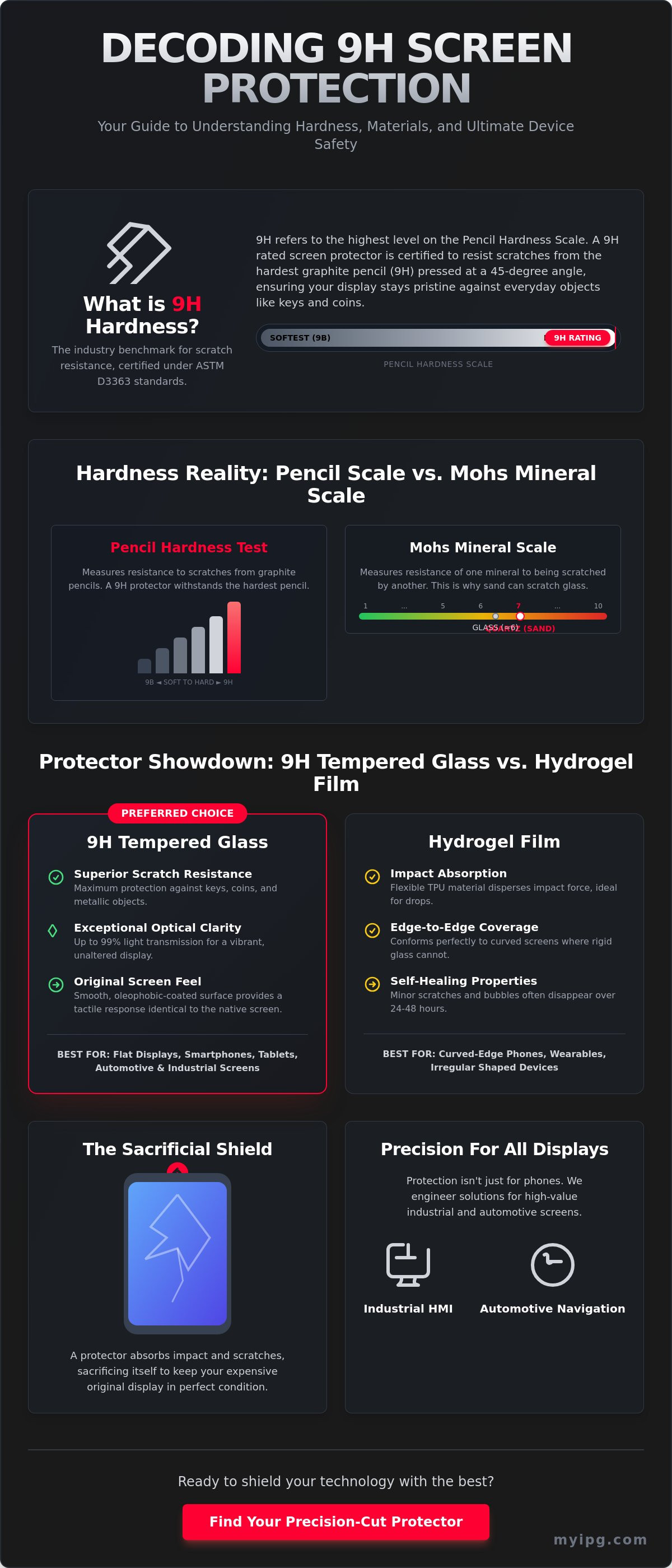
The term 9H is often misunderstood. It does not refer to the mineral hardness scale where diamonds reign supreme. Instead, it identifies the highest level of resistance on the pencil hardness scale. When you apply 9h hardness tempered glass to your device, you are installing a surface certified to withstand the pressure of a 9H lead pencil, the hardest graphite available. This rating is determined through the ASTM D3363 testing method. Technicians move weighted pencils across the glass at a 45-degree angle to verify that no permanent marks remain. It is a rigorous, standardized process designed to ensure your high-value displays remain pristine under daily use.
The Pencil Test vs. The Mohs Scale
Clarity is essential when discussing material science. The pencil hardness scale ranges from 9B, which is the softest and darkest lead, up to 9H, the hardest and lightest. A screen protector with a 9H rating successfully resists scratches from this hardest pencil grade. This is distinct from the Mohs scale of mineral hardness. On the Mohs scale, a diamond is a 10 and regular window glass typically sits between 5 and 6. Because even the hardest pencil lead is softer than glass, 9H glass easily survives the pencil test. However, it can still be scratched by minerals like quartz or sand, which rank higher on the Mohs scale. Understanding this distinction helps you maintain realistic expectations for your protective gear.
Why 9H Became the Industry Standard in 2026
Technical standards evolved significantly in early 2026. The revision of ISO 15184:2020 on February 12, 2026, reinforced the importance of precise coating measurements for modern displays. Manufacturers now prioritize 9H because it offers the perfect equilibrium between optical clarity, thinness, and scratch resistance. This rating provides the smooth, "glass-like" tactile response users demand for high-performance touchscreens. It ensures that keys, coins, and common household items won't mar the surface of your smartphone or automotive navigation screen. 9H is a specific measure of surface scratch resistance, not a guarantee of impact strength or shatter resistance. By focusing on 9h hardness tempered glass, we act as guardians of your technology, ensuring that your primary displays remain functional and beautiful through every interaction.
9H Tempered Glass vs. Hydrogel: Choosing Your Shield
Selecting the right armor for your device requires a firm grasp of material science. You aren't just buying a layer of plastic or glass; you're choosing a specialized barrier tailored to your specific environment. 9h hardness tempered glass consists of multiple layers, including a surface oleophobic coating, a tempered glass core, and a silicon adhesive base. It's rigid and unyielding. In contrast, hydrogel is a flexible thermoplastic polyurethane (TPU) membrane. While both offer protection, they serve different masters. Glass prioritizes surface integrity and tactile smoothness. Hydrogel focuses on coverage and impact absorption for non-traditional shapes.
Touch sensitivity remains a primary concern for high-performance users. Tempered glass provides a nearly identical feel to the original screen, maintaining the rapid response times required for precision tasks. Hydrogel has a slightly softer, more "grippy" texture. While modern TPU membranes offer excellent transparency, they don't quite reach the 99% light transmission levels found in premium glass. Installation also differs. Glass is easier to align on flat surfaces but can trap air if the environment isn't pristine. Hydrogel is more forgiving during the application process, often allowing small bubbles to dissipate over 24 hours.
When to Choose 9H Tempered Glass
Rigid protection is the gold standard for flat displays. If you're securing a smartphone camera lens or a high-resolution tablet, 9h hardness tempered glass is your best ally. It provides a level of scratch resistance that softer materials cannot replicate. While hardness is a primary factor, research into the complexities of scratch damage shows that friction and surface tension also play critical roles. This is why our glass solutions feature advanced surface treatments. Consider these benefits:
- Superior optical clarity for high-resolution displays.
- Advanced oleophobic coating to repel oils and fingerprints.
- Maximum scratch-proof performance against metallic objects like keys or tools.
When Hydrogel Outperforms Glass
Hydrogel is the superior choice for curved edges where rigid glass often lifts or creates a "halo" effect. It wraps around the contours of modern wearables and curved smartphones with ease. These membranes possess self-healing properties, allowing minor scuffs to disappear as the material regains its original shape. For those with edge-to-edge displays, the IPG Original (Hydrogel) Screen Protector provides the necessary flexibility that rigid glass cannot match. Explore The Definitive Guide to Screen Protection in 2026: Shields for Every Device to see how these materials perform across different hardware. Whether you need the rigidity of glass or the flexibility of TPU, we ensure your technology remains guarded against the unexpected.
The Hard Truth: Scratch Resistance vs. Impact Brittleness
Hardness is a double-edged sword. A 9h hardness tempered glass protector acts as a sacrificial layer. It is designed to die so your screen can live. When an impact occurs, the resulting kinetic energy must go somewhere. If the protector shatters, it has successfully dissipated that force, preventing it from reaching the expensive display underneath. This is a victory, not a failure. You are trading a replaceable accessory for the structural integrity of your primary device.
Fundamental material science dictates this trade-off. As you increase surface hardness to resist scratches from keys, tools, and abrasive surfaces, you inherently increase brittleness. The glass becomes less capable of flexing under pressure. This rigidity is necessary to maintain the 9H rating and provide the tactile smoothness users expect. Edge-to-edge coverage provides total security but also exposes the glass to side-impact stress. Because the glass is under constant internal tension, a single micro-fracture on the edge can cause the entire sheet to spiderweb instantly.
Why 9H Glass Still Shatters
The tempering process involves rapid heating followed by immediate cooling. This creates intense surface compression and internal tension. While this makes the glass exceptionally strong against flat impacts, it makes the edges the Achilles' heel of the protector. High-quality 9h hardness tempered glass undergoes a controlled chemical or thermal tempering process to ensure consistent density. Cheap, non-certified alternatives often skip these precise steps. This results in glass that shatters from minor temperature fluctuations or slight pressure. Always verify the certification of your protective gear to ensure it meets the rigorous standards required for modern hardware.
Managing Post-Impact Care
Safety first. Handle a cracked protector with extreme care to avoid injury from micro-shards. Use a thin plastic card or a fingernail to gently lift the edge and peel the protector away from the screen. Once removed, clean the display thoroughly to eliminate any adhesive residue or dust. If you encounter issues during the installation of your new shield, consult our precision guide on How to Get Air Bubbles Out of Screen Protector for professional results. Replace the protector immediately. A compromised shield loses its structural integrity and its oleophobic barrier, leaving your device vulnerable to the next accidental drop.
Tailored Protection: From Smartphones to Industrial HMI
Protection isn't a one-size-fits-all solution. While a smartphone stays in your pocket, an automotive display or industrial tool faces extreme environmental stress. 9h hardness tempered glass provides the necessary surface integrity, but specialized applications require additional features like anti-glare coatings and UV resistance. We treat every device as a high-value asset. Whether you're navigating a coastal waterway or diagnosing a complex engine fault, your screen is the critical interface between you and your goal. Precision-cut fits ensure that every millimeter of that interface remains guarded against the unexpected hazards of the field.
The demands of a vehicle cabin differ vastly from those of a handheld device. High-resolution navigation displays require perfect optical clarity even under direct sunlight. In industrial settings, the priority shifts toward chemical resistance and impact absorption. We understand these nuances. Our engineering process accounts for the specific tactile needs and environmental threats of each device category. By selecting a shield tailored to your environment, you aren't just preventing scratches; you're ensuring the long-term reliability of your most important technology.
Automotive and Marine Display Care
Modern cockpits are centered around expansive glass panels. Owners of a Tesla or a BYD Seal understand that a single scratch on the navigation display ruins the cabin's aesthetic and functionality. These screens endure constant UV exposure and extreme temperature fluctuations that can cause inferior adhesives to fail. For marine enthusiasts using Lowrance fishfinders, the challenge is even greater. Salt spray and intense glare make visibility difficult. Using a 9h hardness tempered glass shield with specialized light filtration is essential for maintaining a clear view. Explore our Anti Glare Fish Finder Screen Protectors: The 2026 Visibility Guide to understand how to maintain clarity in the harshest conditions. Secure your vessel's electronics with a solution built for the elements.
Protecting Industrial Diagnostic Tools
In a professional workshop, screens are exposed to abrasive dust, greasy fingers, and accidental tool drops. Diagnostic equipment like the Snap-on Triton or Autel MaxiSYS represents a significant financial investment. A cracked display on these units often requires a full factory repair, costing thousands of dollars. Installing a sacrificial shield is a logical, high-impact decision for any technician. Our HMI Screen Protection guide details why these displays need specialized barriers to survive high-vibration environments. The cost-saving benefit of a proactive shield far outweighs the risk of tool downtime. Invest in precision-engineered protection to keep your diagnostic tools in peak condition and your workflow uninterrupted.
The My IPG Advantage: Precision-Engineered 9H Solutions
Our commitment to your device's longevity begins with absolute precision. We maintain a technical database of over 2,000 unique device profiles to ensure every cut is exact. Whether you're installing 9h hardness tempered glass on a flagship smartphone or a specialized industrial interface, the fit is seamless. We don't believe in generic, one-size-fits-all solutions. Each protector is engineered to match the specific light filtration and tactile requirements of your hardware. This meticulous approach is why we remain the preferred choice for those who view their technology as a vital investment rather than a mere commodity.
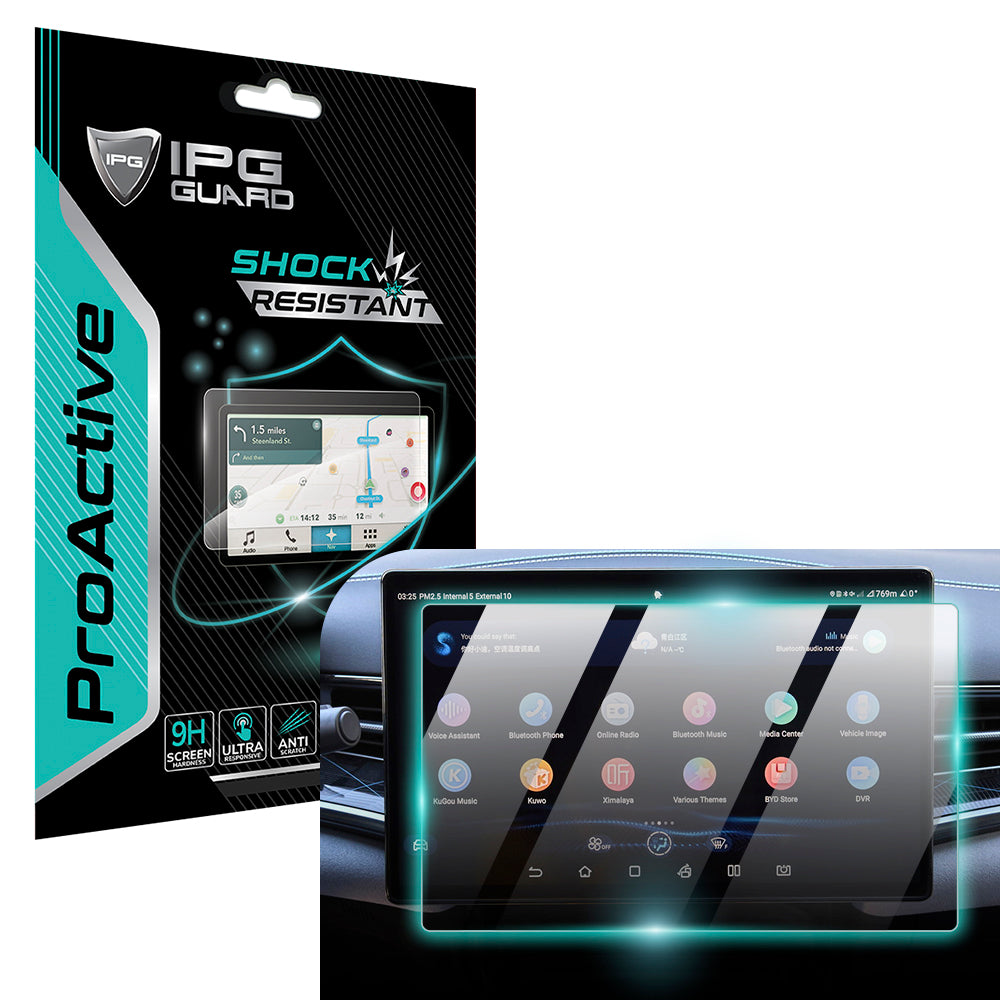
For the next generation of electric vehicles, our ProActive line sets the industry standard. The IPG ProActive for BYD 2022‑2025 SEAL Navigation Display Screen Protector (15.6" inch) provides edge to edge security without compromising touch response or color accuracy. Installation is often the most stressful part of screen protection. We solved this with the IPG Zerodust Screen Protector technology. This specialized process eliminates the frustration of trapped particles and unsightly air bubbles. It ensures a professional, factory-grade finish every time you apply our shields, preserving the pristine look of your high-value displays.
Why Specialists Trust IPG
Professional users require a partner that understands the financial and emotional value of their equipment. We provide worldwide coverage for niche devices that other manufacturers often ignore. Our specialized register of materials includes everything from high-transparency glass to durable, flexible hydrogel membranes. We protect what you value most. Our portfolio extends from IPG Camera Lens Protectors for Harley Cluster Displays to diagnostic tools in high-vibration workshops. This global reach ensures that no matter where you are or what hardware you use, your screens remain under our guardianship. Reliability isn't just a goal; it's our baseline for every product we ship.
Next Steps for Total Device Security
Securing your primary display is only the first step in comprehensive device stewardship. Vulnerable optics require the same level of care as your main screen to maintain functional integrity. We invite you to explore our specialized IPG Phone camera lens protectors to ensure your iPhone or Samsung captures every moment with perfect clarity. Don't leave your high-value items exposed to the hazards of daily use or harsh industrial environments. Browse our collections by category to find the perfect fit for your specific needs:
- Automotive: Specialized shields for Tesla, BYD, and Volkswagen displays.
- Industrial: High-impact protection for Snap-on, Autel, and HMI interfaces.
- Mobile and Wearables: 9h hardness tempered glass and hydrogel for smartphones, watches, and cameras.
Take action now to preserve your technology's integrity. Secure your display today with the guardian of technology. Our precision-engineered glass and flexible hydrogel solutions are ready to act as the ultimate shield for your world.
Secure Your Digital Legacy with Precision Protection
Understanding the technical reality of 9H ratings allows you to move past marketing jargon and choose a shield that actually performs. You now recognize that 9h hardness tempered glass is a strategic sacrificial layer designed to preserve the integrity of your high-value displays. Whether you're shielding a Tesla navigation screen, a Garmin wearable, or a Snap-on diagnostic tool, the goal remains the same: total preservation without compromise. Our specialized fits reduce distracting reflections while maintaining the original optical clarity and touch sensitivity you demand.
As the dedicated guardian of your technology, we ensure your devices remain in peak condition through meticulous engineering. Don't leave your essential tools vulnerable to the hazards of daily use or harsh industrial environments. Act now to provide a reliable barrier that extends the life of your equipment. Browse Precision-Cut 9H Protectors for Your Device and join the specialists who trust us to maintain their technology. Your screens deserve a partner as meticulous as you are. Feel confident in your choice to protect what matters most.
Frequently Asked Questions
Is 9H tempered glass scratch-proof against everything?
No material is entirely scratch-proof. While 9h hardness tempered glass resists scratches from common items like keys, coins, and steel blades, it can still be damaged by harder minerals. Sand, quartz, and certain types of grit found in pockets or bags sit higher on the Mohs scale and can mar the surface. Think of it as a high-performance shield that handles 99% of daily threats but requires basic care to avoid abrasive minerals.
Can a 9H screen protector affect my phone’s touch sensitivity?
High-quality 9H protectors maintain perfect touch sensitivity. These shields are precision-engineered to be ultra-thin, typically measuring between 0.26mm and 0.33mm. This ensures that the capacitive response of your display remains unchanged. If you notice a lag, it's often due to an improper installation or a low-grade adhesive that prevents the glass from seating correctly against the screen.
How do I know if my screen protector is actually 9H hardness?
Verification comes from technical certification. Genuine protectors are tested using the ASTM D3363 standard, where a 9H lead pencil is applied at a 45-degree angle under specific pressure. Look for brands that cite these international standards or the updated ISO 15184:2020 guidelines. Reputable specialists provide clear technical specifications rather than relying on vague marketing terms to describe their material properties.
What happens if my 9H tempered glass protector shatters?
A shattered protector is a sign that the sacrificial layer worked. When your device takes a hard fall, the glass absorbs and dissipates the kinetic energy by breaking, which prevents that force from reaching your expensive primary display. Modern 9H glass includes an anti-shatter film that keeps the fragments together for safety. Peel the damaged layer away carefully and install a fresh shield immediately.
Is 9H tempered glass better than a hydrogel screen protector?
The choice depends on your specific hardware and environment. Tempered glass offers the best scratch resistance and a premium, smooth feel for flat displays like smartphones and tablets. Hydrogel is a flexible TPU membrane that outperforms glass on curved edges and in high-vibration settings. Both materials provide excellent protection, but glass is the standard for surface integrity while hydrogel excels in coverage and impact flexibility.
Can I install a 9H tempered glass protector on a curved car screen?
Rigid glass is generally not recommended for curved automotive displays. Because tempered glass cannot bend, it will fail to adhere to the contours, leading to lifting or air gaps at the edges. For the curved navigation panels found in modern vehicles, a flexible hydrogel solution provides a seamless fit. Reserve tempered glass for flat displays where maximum surface hardness is the primary requirement.
How often should I replace my 9H screen protector?
You should replace your shield as soon as it shows signs of structural failure. This includes any visible cracks, deep scratches, or if the edges begin to lift and trap dust. Even if the glass is intact, the oleophobic coating that repels fingerprints typically wears down after 6 to 12 months of heavy use. A compromised protector cannot provide the same level of impact absorption as a pristine one.
Does a 9H protector reduce screen glare on my Tesla?
Standard 9h hardness tempered glass is transparent and reflective, but specialized versions include anti-glare treatments. For automotive displays like those in a Tesla, look for glass that features a matte or etched surface. These treatments break up light reflections to ensure your navigation remains visible even in direct sunlight. This combination of hardness and light filtration is essential for maintaining safety and display longevity on the road.