

Switching brands doesn’t transfer a warranty. If you migrate from ZAGG to another brand, claims for your existing protector follow the terms of your ZAGG purchase. Registration and claims for a new protector follow the new brand’s process. Treat the two warranties separately.
It’s reasonable to want continuous protection for a device you rely on. But eligibility, proof of purchase, registration, and replacement options vary, so the brand name alone won’t tell you what a claim requires. Keep your original purchase details and know which protector and warranty each claim concerns.
This guide explains how to compare warranty eligibility, registration, claims, and replacement processes when choosing another screen protector brand. Learn what to check before changing protectors, how to organize records, and how to choose a new protector for your device. Clear terms help you manage the transition and understand what protection applies at each step.
Key Takeaways
- Keep warranty claims for your current protector separate from coverage for a replacement; each purchase follows its own terms.
- Before switching, compare registration steps, proof-of-purchase requirements, claim eligibility, and how replacements are handled.
- Match the replacement to your exact device model and decide whether you need screen, camera-lens, or case protection.
- When comparing alternatives in the United States, weigh product fit and warranty terms alongside the listed price and purchase channel.
- Learn how My IPG’s phone camera lens protector and screen protectors can address specific protection needs.
3. What are the best alternatives to ZAGG screen protectors, phone cases, and accessories?
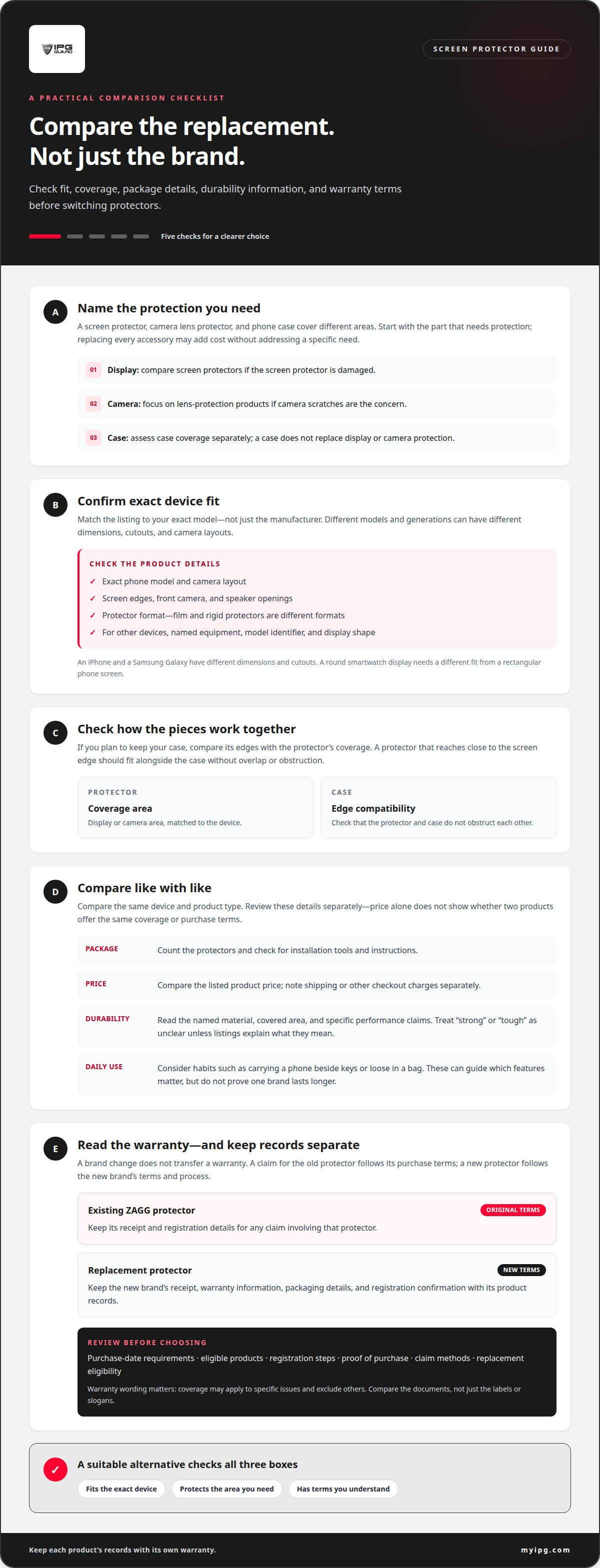
The right alternative depends on what you want to protect and how you use your device. A screen protector, camera lens protector, and phone case address different needs. Start by identifying the area you need covered. If your screen protector is damaged but your case still fits, compare screen protectors first. Replacing every accessory at once may add cost without meeting a specific need.
For the display, compare protector type, device fit, and installation method. Film and rigid protectors are different formats, so read the product description rather than assuming they work alike. Match the listing to your exact phone model, not just its manufacturer. An iPhone and a Samsung Galaxy have different dimensions and cutouts. Check the front camera, speaker openings, and screen edges against your device.
Compare camera protection separately. A screen protector covers the display; a camera lens protector is designed for the camera area. If you’re concerned about camera scratches, focus on lens-protection products. Check that the listing names your phone model and camera layout. A protector made for a different generation may not align with the lenses, even if the phones look similar.
Assess cases and other accessories separately from screen protection. A case provides a different kind of coverage and can’t replace a protector designed for the display or camera. If you plan to keep your case, compare its edges with the protector’s coverage. For example, a protector that reaches close to the screen edge should fit alongside the case without overlap or obstruction.
Compare alternatives with a checklist, not brand reputation alone. Confirm the exact device model, product category, and intended coverage. Then review installation instructions, package contents, warranty eligibility, registration requirements, and the claims process. A replacement has its own terms: a warranty attached to an earlier ZAGG purchase does not describe coverage for another brand.
For devices beyond phones, match the protector to the equipment and display named in its product details. A smartwatch, vehicle navigation display, and diagnostic tool have different shapes and uses. A round watch display, for example, needs a different fit from a rectangular phone screen. Confirm the model identifier and display shape instead of choosing by appearance alone.
Compare the purchase channel and support process as well as the product. Keep the new purchase receipt, packaging details, and registration confirmation. If you need to make a claim, these records help connect the product to its terms. A suitable alternative fits your device, protects the area you care about, and has a claims process you understand before installation.
4. ZAGG vs Alternatives: Price, Durability & Warranty
A fair comparison between ZAGG and another screen protector brand starts with the same device and product type. Compare protectors for the same phone model, not a screen protector against a case or camera accessory. Then assess price, stated durability details, and warranty terms separately. A lower price alone doesn’t show whether products offer the same coverage or purchase terms.
For price, compare the final product listing and what it includes. Check whether the package contains one protector or multiple protectors, installation tools, and instructions. For example, a listing with extra components may differ from a basic protector even if both fit the same phone. Note shipping or other checkout charges separately from the listed product price. Without matching the package contents and purchase conditions, a price comparison between ZAGG and an alternative can be misleading.
Read durability details just as carefully. Look for the material named in the description, the area covered, and any specific performance claims. Compare like with like: a display film and a rigid protector are different formats, so their descriptions may emphasize different properties. Check coverage around screen edges, the front camera, and speaker openings. Don’t treat words such as “strong” or “tough” as a direct comparison unless both listings explain what they mean.
Your daily routine also affects how you assess durability. A phone carried loose in a bag encounters different contact from one kept in a dedicated pocket. Consider habits such as frequent handling or carrying your phone alongside keys. These examples can help you identify relevant protection features, but they don’t show that one brand lasts longer. Use the stated material and coverage details rather than assuming a brand name guarantees a particular service life.
Compare warranty terms, not slogans. Read the documents for ZAGG and the alternative, and identify purchase-date requirements, eligible products, registration steps, proof of purchase, and claim methods. Check the conditions for replacement eligibility. A warranty may cover specific issues and exclude others, so its exact wording matters more than a broad label such as “limited warranty.” Don’t assume brands define coverage in the same way.
Keep records for the two purchases separate. If you migrate from ZAGG to another brand, retain the original receipt and registration details for any claim involving the ZAGG protector. Keep the new brand’s receipt and warranty information with its product records. A claim for the old protector is assessed under its purchase terms; the replacement follows its own documentation. Organized records help identify which product and terms apply.
Make a side-by-side comparison before choosing. Record the exact device model, product format, package contents, stated durability details, listed price, registration process, and replacement conditions. Note any priority features, such as edge coverage or a clear claims process. Then compare ZAGG and alternatives against the same criteria. This shows which listed product and terms best suit your device, budget, and protection priorities without treating brand reputation as proof.
5. What should I check for device compatibility before buying a replacement?
Start with the device’s full model name, not just its brand. Apple iPhones and Samsung Galaxy phones have different screen layouts, and models within each family can differ too. Check your device settings, original packaging, or purchase record for its exact model identifier. Match that identifier with the replacement’s compatibility information. A protector described only as “for iPhone” doesn’t tell you which iPhone it fits.
Next, check the display shape and usable screen area. Compare the product details with your phone’s edges, corners, speaker opening, and front camera position. A screen with curved edges, for example, may need a different coverage profile from a flat display. Look at product images and descriptions, but prioritize stated model compatibility. Similar-looking protectors can still have misaligned openings.
Check camera and sensor placement separately. Face recognition components, proximity sensors, and front-facing cameras occupy specific areas. See whether the product design leaves these areas open or covers them. For a rear camera protector, compare the phone’s camera arrangement and lens positions with the listing. A protector designed for another Galaxy generation may not fit a changed camera layout.
Check case compatibility before buying a screen protector. A case edge can overlap a protector that extends too far across the display. Compare the stated coverage with your case’s shape, especially around the corners and screen perimeter. If you plan to replace both accessories, assess them together. A well-matched protector and case should leave the display accessible without the case pushing against the protector’s edges.
Product category matters as much as model. A screen protector covers the display; a camera lens protector targets the camera area. A phone case covers other surfaces and can’t substitute for either. Decide what you need to protect before comparing listings. A scratched display calls for a display protector, while concern about lens surfaces calls for a camera-focused product. Don’t rely on a broad “phone protection” label.
Before installation, compare the packaging and fitting instructions with your device. Check whether the kit includes an alignment tool and whether the instructions name your model. Follow the cleaning and placement steps carefully, since dust or an off-center fit can affect screen coverage. If a listing supports several models, find your exact model in its compatibility details rather than assuming one shape fits the whole range.
Keep a simple record of your device model, product category, screen shape, camera openings, and case fit. Match each detail against the replacement listing before buying. If you migrate from ZAGG to another brand, remember that compatibility depends on the new product and device, not the old protector. Save the new product description and receipt with your device records to identify the protector later if you need installation or warranty information.
4. Where can I buy ZAGG alternatives in the United States, and what are typical prices
In the United States, compare replacement protectors through brand-owned online stores, electronics retailers, and mobile-device retailers. These channels let you review product details before purchase, though their selections and listings vary. Start with your phone’s exact model, then search for the product category you need. A display protector, camera lens protector, and phone case aren’t interchangeable, even when sold by the same retailer.
A brand’s own store can make it easier to find product details and warranty information together. Read the compatibility description and purchase terms on the same listing. Confirm that a screen protector fits your exact iPhone or Samsung Galaxy model, rather than relying on a broad brand label. Save the product description and receipt after buying to identify the item and its terms later.
Electronics and mobile-device retailers offer another way to compare alternatives. Search by both device model and accessory type, such as a camera lens protector for a specific phone. If shopping in person, use the model name shown in your phone settings or purchase record. Packaging that says only “for iPhone” may not identify the model you need. Your device identifier is the useful comparison point.
There is no single typical price for every alternative. The amount depends on product category, device compatibility, stated materials, package contents, and purchase channel. A screen protector listing with installation accessories isn’t directly comparable with one listing only the protector. First compare products and package contents on equal terms, then compare the displayed price and checkout charges.
Use the same method for every comparison. Open listings for the same device model and type of protection. Record the listed price, quantity, included installation items, warranty terms, and replacement process. Comparing two screen protectors for the same phone, for example, gives a clearer view than comparing one with a case. Check whether the price applies to one item or a package.
Look beyond the headline price. Listings may describe different materials, coverage areas, or installation methods, so compare those details before judging value. Check whether the protector covers the screen edges or leaves specific openings, and whether that coverage suits your device. Review return and warranty terms before checkout. A lower price alone doesn’t establish equivalent coverage or support.
Keep the old and new transactions separate when buying a replacement. A claim for a ZAGG purchase concerns that product’s terms; the alternative has separate documentation. Save each receipt with its product listing and registration details. This keeps price comparisons, warranty eligibility, and replacement questions tied to the correct item.
If you’re comparing a phone display protector or camera protection, browse screen protection options by device and protection type.
Material use and packaging can also be part of a careful comparison. Approximately 367 million metric tonnes of plastic were produced in 2020. 50% of wasted plastics come from packaging in the form of single-use plastics. When reviewing a protector, look at how it is packaged as well as what the product listing says about the item itself. If the seller provides packaging details, consider whether the amount of packaging and its single-use components matter to you. This does not replace checking phone compatibility, coverage, or purchase terms; it adds another consideration alongside them. Avoid assuming that a higher price means less packaging or a different environmental impact, since the listing may not provide enough information to support that conclusion.
A practical choice balances fit, protection type, package contents, and purchase terms. Keep the product listing and receipt so you can refer to the stated materials, package, and replacement process if needed. If details are missing, compare another listing or ask the retailer for clarification before buying. Base your decision on information the seller provides, not assumptions about the product name or headline price.
My IPG: IPG Phone camera lens protector
My IPG’s IPG Phone camera lens protector is an option when you’re replacing protection for your phone’s camera area. Choose camera-lens coverage for that need and a screen protector when the display is your priority. My IPG also offers an IPG iPhone screen protector, an IPG Samsung screen protector, and IPG Camera Lens Protector for iPhone Samsung Tempered glass. Match the product to your device and the area you want to protect, and keep its purchase details with your warranty records. Visit myipg.com to explore the options or get in touch.
Choose protection that fits what you value
Switching brands is an opportunity to choose deliberately for your device’s needs. If you migrate from ZAGG to another brand, let your device model and the area you want to protect guide your selection. Keep the replacement’s purchase and warranty records together so you can find the relevant terms if you need to make a claim.
My IPG offers the IPG Phone camera lens protector, IPG iPhone screen protector, and IPG Samsung screen protector. Choose based on whether your priority is the camera area or the display, then match the protector to your phone. A careful fit is a practical step toward protecting the device you rely on.
Contact My IPG for help with your screen protection options. Take the next step with care, and choose protection that suits your device.
Frequently Asked Questions
Which brands offer screen protectors with lifetime replacement warranties?
My IPG offers a Lifetime Replacement Guarantee. It applies for the life of the protector after warranty registration and excludes installation errors. My IPG also offers a 30-day money-back guarantee from purchase. Read the eligibility and claim terms before choosing a protector, since “lifetime” coverage has specific conditions.
What does ZAGG sell, and which product is the user looking to replace?
ZAGG sells screen protectors, phone cases, and accessories. The user wants to replace a screen protector.
How do I install a replacement screen protector from another brand?
Confirm that the replacement fits your exact phone model, then follow its installation instructions.