


What if the air feels warm, but your car’s surface is still too cold for a decal to bond? Car decal installation temperature can make the difference between a clean finish and edges that lift after the first wash. It’s easy to worry about wasting a decal when the right conditions aren’t obvious.
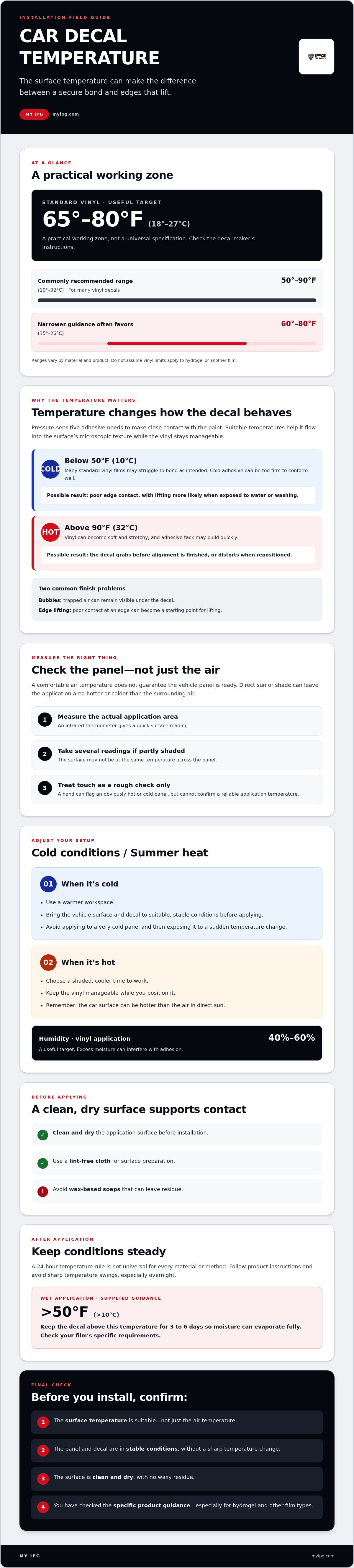
For many vinyl decals, aim for a surface temperature between 50°F and 90°F (10°C and 32°C). A range of 60°F to 80°F (15°C to 26°C) is often more comfortable to work in. Too cold, and the adhesive may not bond properly. Too hot, and the vinyl can soften, stretch, or become difficult to position. Air temperature alone won’t tell the whole story.
This guide explains how to check the surface, choose a suitable time and workspace, and avoid common causes of bubbles and edge lifting. You’ll also learn what to consider after application so your decal has a better chance to settle securely and stand up to weather and car washes.
Key Takeaways
- Check the car decal installation temperature at the vehicle’s surface, not just in the air, and follow the material’s application guidance.
- Temperature affects adhesive tack and vinyl flexibility. Work within the recommended range to avoid a rushed or difficult application.
- In cold conditions, use a warmer workspace and bring the surface and decal to suitable conditions before applying.
- In summer heat, choose a shaded, cooler time so the decal stays manageable while you position it.
- Prepare a clean, dry surface with a lint-free cloth. Avoid wax-based soaps that can leave residue.
Why Temperature is the Most Critical Factor in Decal Application
A decal can be cleanly cut and carefully positioned, yet still fail if the surface or film is too cold or hot. Temperature affects how the adhesive makes contact with the vehicle and how easily the vinyl conforms to its shape. Car decal installation temperature is about more than comfort while you work. It affects the conditions needed for a secure bond.
Most car decals use a pressure-sensitive adhesive. It needs to flow enough to make close contact with the paint, while still holding the decal in place. This balance is part of the adhesive’s viscoelastic behavior, described in this overview of pressure-sensitive adhesive. Cold adhesive is less able to conform to a surface. Excessive heat can make the film and adhesive harder to control.
Understanding Adhesive Wet-Out
Wet-out is the adhesive’s ability to spread across a surface and make intimate contact with it. Automotive paint may look smooth, but it has microscopic texture. At suitable temperatures, adhesive can flow into that texture and build contact across the surface. In cold conditions, it may remain too firm to conform well, weakening the bond from the start.
Surface condition matters, too. A clean, compatible surface helps the adhesive make contact, while contamination or moisture can interfere. Trapped air can form a visible bubble. Poor contact at an edge can create a starting point for lifting. Temperature can’t replace thorough cleaning, but it affects how evenly the adhesive settles.
The Dangers of Improper Temperature
Below 50°F (10°C), many standard vinyl films may struggle to bond as intended. An edge that hasn’t adhered firmly may lift when exposed to water or washing, including during the first car wash. Above 90°F (32°C), vinyl can become soft and stretchy, while adhesive tack may build quickly. The decal may grab before you’ve finished aligning it, then distort if you try to reposition it.
Thermal expansion is the change in a material’s dimensions as its temperature rises or falls. Vinyl and the metal panel beneath it may expand or contract by different amounts.
A rapid change from a cold setting to a warm one can also stress the film as it adjusts alongside the vehicle panel. Avoid applying a decal to a very cold panel and then exposing it to a sudden temperature change. Films can have different materials and adhesive systems, so don’t assume one film’s temperature limits apply to another, including hydrogel films. Check the product’s application guidance, and let the vehicle and decal reach stable conditions before installation.
The Ideal Temperature Range for Applying Vinyl and Hydrogel Decals
For standard vinyl decals, a practical target is 65°F to 80°F (18°C to 27°C). This sits within the commonly recommended installation range of 50°F to 90°F (10°C to 32°C), with narrower guidance often favoring 60°F to 80°F (15°C to 26°C). Treat 65°F to 80°F as a useful working zone, not a universal specification. Always check the decal maker’s instructions.
Material matters. Vinyl application guidance is well established, but hydrogel is more commonly used for screen protection than automotive decals. Don’t assume hydrogel films share vinyl’s temperature limits. For a My IPG film, check the product-specific instructions, since the minimum application temperature can vary by material. Humidity is another consideration. Around 40% to 60% is a useful target for vinyl application, since excess moisture can interfere with adhesion.
Surface Temperature vs. Ambient Temperature
The air may feel comfortable while a car panel is still too cold or has become much hotter in direct sun. Measure the actual application area. An infrared thermometer gives a quick surface reading. Take several readings if the panel has been partly shaded. A hand can flag a panel that feels obviously hot or cold, but it can’t confirm a reliable application temperature. Use touch as a rough check, not a substitute for measurement.
The 24-Hour Rule for Environmental Stability
A stable environment helps the film and surface settle after installation, but a 24-hour temperature rule isn’t universal for every material or method. Follow the product instructions and avoid sharp temperature swings, especially overnight. After a wet application, the supplied guidance advises keeping the decal above 50°F (10°C) for 3 to 6 days so moisture can evaporate fully. Check your film’s requirements before applying.
Preparation still counts. The surface should be clean and dry before application. For general surface-preparation guidance, see The Ultimate Screen Protector Guide. Installers can also consult professional installation standards for information on industry practices. If you’re choosing a model-specific automotive decal, review precision-cut automotive decals and confirm the application instructions for your My IPG film.
How to Install Car Decals in Cold Weather (Below 50°F)
Below 50°F (10°C), standard vinyl adhesive may be too firm to make reliable contact with the vehicle’s surface. That’s a poor starting point for a durable bond, especially on a small, curved area such as a door handle. Check the decal’s application instructions and measure the panel itself. If it’s below the stated minimum, wait or move the work to a warmer space.
Cold vinyl can also become less flexible. Brittle fracture occurs when cold material cracks or tears under pressure instead of bending smoothly. Don’t sharply fold, stretch, or force a chilled decal into place.
Safe Heating Methods for DIYers
A heated garage is the most controlled option. Let the vehicle, decal, and workspace reach stable conditions, then check the panel temperature before starting. There’s no universal acclimation time. A large metal panel may take longer to warm than the air around it. Without a heated garage, gently warm the specific work area and decal with a hair dryer or heat gun on a low setting. Keep the tool moving and follow its instructions. Avoid a torch, open flame, or concentrated heat, which can damage the vinyl or vehicle finish.
Use a thermometer where possible. “Warm to the touch” is only a rough check, not proof that the surface has reached the right car decal installation temperature. Don’t begin until the surface and material meet the decal maker’s stated application range.
Step-by-Step Cold Weather Application
- Clean and dry the panel. Use a suitable cleaning method, such as isopropyl alcohol if it’s compatible with the surface, and a clean cloth. Cold slows evaporation, so let the cleaner evaporate completely before applying the decal.
- Warm the application area evenly. For a door-handle decal, gently warm the handle and nearby surface. Measure the surface rather than relying on the warmth of the surrounding air.
- Position and press carefully. Apply the decal according to its instructions, then use a squeegee to press it down with firm, even strokes. Avoid pulling chilled film tight around curves.
- Secure edges only as directed. Some installations benefit from post-heating, especially around curves, but the correct technique and temperature depend on the film. Don’t assume 120°F is suitable for every decal. Follow the product guidance, use controlled heat, and avoid overheating the paint or vinyl.
After application, keep the vehicle within the film’s recommended conditions while the adhesive settles. If you can’t warm and measure the surface reliably, postponing installation is safer than risking a failed bond.
Managing High Temperatures: Applying Decals in the Summer Heat
Once the application surface rises above 90°F (32°C), a controlled installation becomes harder. Heat softens vinyl and can make the adhesive grab quickly, before you’ve finished aligning the decal. Car decal installation temperature refers to the surface as well as the air, so check the panel itself before you begin. If it’s too hot, pause. A rushed application can leave a decal stretched, misaligned, or difficult to press down evenly.
Cooling the Surface Safely
Move the vehicle into shade or wait for a cooler part of the day, such as early morning. Don’t pour cold water over a scorching panel to cool it quickly. A sudden temperature change can stress the surface, and leftover moisture can interfere with adhesion. Let the panel cool gradually, then make sure it’s clean and completely dry before applying the decal.
Pay special attention to a dark, sun-exposed area, such as a Tesla door handle. Its surface may be much hotter than the surrounding air. Measure it if possible, and wait until it falls within the decal’s recommended application range. The IPG Tesla Model 3 / Model Y door handle decal is precision-cut for those models, but the panel still needs suitable installation conditions.
Preventing Vinyl Stretch and Distortion
Hot vinyl is more pliable, but that doesn’t mean you should pull it tight. Stretching can distort the design, and the material may contract as it cools, putting stress on edges and contours. Position the decal without tension, then smooth it down gradually. For a large decal, a wet or “floating” application may help with positioning, but use application fluid only if the decal’s instructions allow that method. Incompatible fluid can affect adhesion.
Heat can also make transfer tape more difficult to remove. If the tape feels unusually soft or starts stretching, don’t yank it away. Follow the product instructions, peel slowly at a low angle, and support the decal so it stays against the panel. High tack can also make repositioning risky.
Watch for signs of disturbed adhesive, sometimes described as “bruising,” such as cloudy patches, streaks, or uneven-looking areas beneath the film. Keep the vinyl relaxed, use smooth, even squeegee pressure, and avoid repeatedly lifting and pressing the same area. If the panel is too hot to handle comfortably, let it cool before continuing.
Choosing a model-specific decal is only one part of a clean result. Apply your Tesla door handle decal only when the panel and film are within the product’s stated temperature range.
Final Installation Checklist: Ensuring a Professional Finish
Before pressing down the final edge, check the conditions and fit. A neat installation starts with a stable surface, careful cleaning, and time for the adhesive to settle. Use this checklist:
- Confirm temperature: Aim for a surface temperature of 65°F to 80°F (18°C to 27°C) when that range is compatible with the decal’s instructions. Measure the panel, not just the air.
- Clean and dry: Use a lint-free cloth and a surface-compatible cleaning solution. Avoid wax-based soaps, which can leave residue that interferes with adhesion. If using isopropyl alcohol, let the surface dry fully.
- Inspect contact areas: Check the decal’s perimeter, curves, and any edges that need to conform closely. With an overlay such as IPG Decal Honda Center Cap Overlay Wheel Tire Decals, make sure the cap is clean and the overlay is aligned before pressing it down.
- Protect the fresh application: Don’t wash the vehicle until the decal’s instructions say it’s ready. A 48-hour no-wash period isn’t universal, so follow the guidance for the specific film and application method.
Post-Installation Curing and Stability
Initial tack is the adhesive’s early hold. The ultimate bond develops as it settles and makes stronger contact with the surface. Don’t test the edges by picking at them. Keep the new decal out of harsh conditions while it settles, and follow its care instructions for sunlight exposure. A fixed four-hour shade rule may not suit every film. For general guidance on interior display-film care, see the Car Screen Protector Buying Guide 2026.
When to Seek Professional Help
If the panel temperature is outside the film’s recommended range, the surface is difficult to prepare, or the decal must fit a complex curve, wait or consider a qualified installer. A precision-cut decal for a specific vehicle model can reduce measuring and trimming during installation, but alignment and surface preparation still matter. For an EV door-handle decal, check that the film doesn’t obstruct the handle’s movement or cross a seam in a way that prevents normal operation.
Use the car decal installation temperature and product instructions as your final go-or-wait checks. Explore IPG custom automotive decals to find a model-specific option for your vehicle.
Car Decal Installation Temperature: Set Up for Lasting Results
A dependable finish starts before the decal touches the vehicle. Check the panel’s temperature, not just the air, and work within the application range specified for your material. Clean, dry preparation and gentle, controlled application help reduce bubbles, distortion, and lifting. Give the adhesive time to settle, and follow the decal’s care instructions before washing or exposing it to demanding conditions.
With those essentials in mind, car decal installation temperature becomes a practical checkpoint rather than a guessing game. Suitable conditions help protect your investment and make it easier to achieve a neat finish.
My IPG offers precision-cut automotive decals for Tesla, Honda, and Volkswagen, along with protective films for a range of devices and vehicle displays. Browse My IPG’s custom automotive decals to find an option for your vehicle.
Prepare carefully, follow the material guidance, and give the adhesive the conditions it needs to settle.
Frequently Asked Questions
What is the absolute minimum temperature for car decal installation?
There isn’t one universal minimum for every decal, but many standard vinyl films shouldn’t be applied below 50°F (10°C). Some products may specify a different limit, so check the manufacturer’s instructions. Measure the vehicle’s surface, not only the air. If the panel is too cold, wait or move the vehicle into a warmer space instead of relying on brief, uneven heating.
Can I use a hair dryer to install decals in the winter?
Yes, a hair dryer can gently warm the decal and application area, but it isn’t a substitute for a suitable installation environment. Keep it moving, use moderate heat, and warm the surface evenly. Avoid close, prolonged heating, which can damage paint or distort vinyl. Confirm that the panel reaches the film’s recommended application range before applying, and never use an open flame or torch.
How long should I wait to wash my car after putting on a decal?
Follow the care instructions for your specific decal, since wash timing depends on the film and application method. Avoid washing immediately after installation, while the adhesive is still settling. For a wet-applied vinyl decal, the supplied guidance recommends keeping it above 50°F (10°C) for 3 to 6 days so application water can evaporate. Don’t treat 48 hours as a universal rule.
Why is my decal bubbling even though the temperature was right?
Correct temperature helps, but it can’t compensate for trapped air, moisture, dirt, wax, or uneven application pressure. Check that the surface was clean and fully dry, then apply the film gradually with smooth squeegee strokes. Small bubbles may sometimes settle according to the product instructions, but don’t pierce, lift, or rework the decal without checking the maker’s guidance. Surface preparation remains essential.
Is it better to install decals in the morning or evening during summer?
Choose the time that gives you a shaded panel within the decal’s recommended temperature range. Early morning is often cooler, but the vehicle may still be warm from the previous day. Evening conditions can also vary. Check the actual surface with an infrared thermometer rather than relying on the air temperature. If the panel is above 90°F (32°C), let it cool before applying.
What happens if it rains immediately after I install my car decal?
Rain can expose a fresh decal to moisture before the adhesive has settled, especially around edges that haven’t bonded firmly. If rain is expected, postpone installation or work in a protected, dry space. After unexpected rain, don’t scrub, lift, or heat the decal aggressively. Let it dry naturally, then inspect the edges and follow the product’s aftercare instructions for next steps.
Does humidity affect how well a vinyl decal sticks to the car?
Yes. Excess humidity can make it harder for adhesive to bond if moisture becomes trapped between the decal and the vehicle. For vinyl application, relative humidity of about 40% to 60% is a useful target. Most important, make sure both the panel and decal are dry, and avoid applying in damp conditions. The right car decal installation temperature won’t fix a wet or contaminated surface.
Can I install IPG hydrogel screen protectors in the same temperature as vinyl decals?
Don’t assume they share the same temperature requirements. Vinyl decal guidance applies to automotive vinyl, while hydrogel screen protectors are a different product category and may have their own application instructions. Check the specific instructions supplied with the IPG screen protector, including its recommended temperature and surface-preparation steps. Let the device and protector reach those conditions before installation, and avoid applying a screen protector to a damp or dirty display.