
Your screen protector shouldn't be the reason your expensive equipment fails on the job. Yet for technicians, field workers, and professionals who depend on specialized devices every day, a cracked display or a glare-washed screen isn't just an inconvenience — it's a real operational setback. Choosing the right heavy duty screen protector comes down to more than just thickness. It comes down to precision fit, the right material for your specific environment, and protection engineered for the device you actually use.
You already know that generic, one-size-fits-all protectors fail. They peel at the edges, distort touch sensitivity, and fold under the pressure of a real workday. That frustration is valid, and it's exactly why the approach to protection needs to change.
This guide cuts through the noise. You'll learn how material science and precision-cut engineering define true heavy-duty protection, how to match the right protector to your device and environment, and what separates a protector that lasts from one that's just marketing. Whether you're shielding a marine fishfinder, an automotive diagnostic tool, or a smartphone on a job site, the right solution exists. Let's find it.
Key Takeaways
- Not all protection is equal — a true heavy duty screen protector is defined by specific measurable metrics, and knowing the difference between a 9H hardness rating and shock-absorbent polymer layers changes how you shop.
- Material choice is a decision, not a default: tempered glass and hydrogel each dominate in different conditions, and picking the wrong one for your environment can cost you more than the protector itself.
- Professional gear — from Snap-on diagnostic tools to Lowrance marine fishfinders — demands device-specific protection, not generic films that leave critical screens exposed to the elements.
- A precision-cut fit isn't a luxury feature; it's the single most important factor in preventing edge-lift, the leading cause of protector failure in demanding work environments.
- Choosing between clear and anti-glare finishes is a practical field decision — one that can determine whether you can actually read your screen when it matters most.
What Defines a Truly Heavy Duty Screen Protector?
Strip away the marketing and the definition becomes precise: a true heavy duty screen protector is engineered to absorb roughly five times the impact force of a standard PET film. That gap isn't marginal. It's the difference between a cracked diagnostic display on a job site and a device that keeps working through the shift. The metrics that separate real protection from packaged promises are measurable, specific, and worth understanding before you buy.
Two metrics dominate the conversation: hardness ratings and shock-absorption architecture. A 9H hardness rating, measured on the pencil hardness scale, tells you a surface resists scratching from industrial debris like metal shavings, gravel, and grit. Shock-absorbent polymer layers, by contrast, handle what hardness alone cannot: the kinetic energy of a sudden drop or impact. Neither metric is superior in isolation. The best protectors stack both into a single construction.
Thickness is a common misconception. A thicker protector doesn't automatically mean better protection in 2026. Rigid bulk without proper layer engineering can actually concentrate impact force rather than disperse it, leading to fracture points at the edges. What matters is how the layers are structured, not how many millimeters they add to your device.
Edge-to-edge coverage is non-negotiable. Screens fail structurally from the edges first. A protector that leaves even a millimeter of exposed display perimeter creates a stress concentration point, and in high-vibration or high-impact environments, that gap becomes a liability fast.
The Science of Impact Dispersion
Multi-layer construction works by spreading force laterally across the protector's surface rather than allowing it to drive straight through to the display. A 9H hardness outer layer prevents scratches from sharp industrial debris by resisting surface penetration at the point of contact. Beneath that, shock-absorbent polymer cores flex under impact, converting kinetic energy into heat rather than fracture. The oleophobic coating on the outermost surface serves a practical function beyond fingerprint resistance: in workshop environments, it prevents oils and residues from degrading the structural integrity of the upper layer over repeated contact. Understanding tempered glass properties and durability helps clarify why the manufacturing process behind the hard layer matters as much as its final hardness rating.
Environmental Stressors: Beyond the Drop
Drops get the attention. But in professional environments, the slower stressors cause just as much damage. UV exposure degrades unprotected films on marine fishfinders and automotive displays, causing yellowing and delamination over months of outdoor use. Chemical splashes from oil, gasoline, and cleaning solvents attack adhesive layers on workshop tools. Temperature swings in extreme outdoor conditions, from freezing mornings to direct summer sun, cause materials to expand and contract, accelerating edge-lift on protectors that weren't built for thermal cycling. A protector designed for real-world professional use accounts for all of these, not just the drop test.
Heavy Duty Materials: Tempered Glass vs. Hydrogel
The material your heavy duty screen protector is made from isn't a minor spec detail. It's the single decision that determines whether your protection actually matches your environment. Tempered glass and hydrogel aren't interchangeable. They're engineered for fundamentally different threat profiles, and choosing the wrong one for your device is as costly as choosing no protection at all.
Tempered Glass: The Rigid Shield
Tempered glass earns its reputation through one core property: surface hardness. At 9H on the pencil hardness scale, it resists scratches from industrial debris that would permanently etch a bare display. That makes it the right call for flat-screen smartphones, tablets, and professional camera lenses where optical clarity and scratch resistance are non-negotiable. High-resolution camera lenses, in particular, demand 9H glass because even micro-abrasions degrade image quality over time; for mobile creators looking to enhance their output, doctorvideo.co.il offers professional-grade lenses and accessories to complement this protection.
There's also a safety dimension that gets overlooked. Quality tempered glass is engineered to shatter into small, blunt fragments rather than sharp shards. That "shatter-proof" construction protects your fingers during a hard impact while still absorbing the force that would otherwise reach your actual display. For expert technology product guidance on how tempered glass performs across consumer and professional devices, Forbes Technology consistently validates this material's dominance in flat-screen protection categories.
Best use cases for tempered glass:
- Flat smartphones and tablets in high-scratch environments
- Camera lenses on iPhones and Samsung devices
- Professional diagnostic tools with flat display surfaces
Hydrogel: The Flexible Guardian
Hydrogel solves the problem tempered glass can't: curved, contoured, and edge-wrapped displays. Rigid glass lifts and separates at curves. Hydrogel conforms. It bonds seamlessly to the full surface geometry of automotive dashboards, motorcycle instrument clusters, and smartwatch faces where a flat protector would fail within weeks.
The self-healing property of IPG Original Hydrogel is real, not marketing language. Minor surface scratches from everyday contact close over time as the material's polymer structure redistributes under ambient heat. It won't recover from a sharp impact, but it handles the cumulative micro-damage of daily professional use better than any rigid alternative.
In dirty, debris-heavy environments, the ZeroDust advantage becomes critical. IPG's hydrogel formulation maintains a seamless adhesive bond even when installation conditions aren't perfect, preventing the dust contamination that causes bubbling and edge-lift on standard films. That's the difference between a protector that lasts a season and one that lasts a shift.
Touch sensitivity retention is also meaningfully better with hydrogel. Its flexible composition transmits touch input with minimal signal loss, which matters on any device where precision input is part of the job. If your display requires gloved-hand operation or stylus input, hydrogel's responsiveness gives it a clear edge.
Not sure which material fits your specific device? Explore precision-cut options engineered for your exact screen geometry.
Specialized Heavy Duty Protection for Professional Gear
Generic retail protectors are designed for the consumer market. Your professional equipment isn't a consumer product. The diagnostic tool sitting in your bay, the fishfinder mounted on your helm, the navigation display built into your EV — these are working instruments that operate in conditions no phone film was engineered to survive. This is the gap the market consistently ignores, and it's where precision-cut, device-specific protection becomes non-negotiable.
Industrial and Diagnostic Tool Defense
Mechanic's bays are chemically hostile environments. Brake fluid, penetrating oils, degreaser spray, and airborne metal particulates attack unprotected displays constantly. For technicians running Snap-on platforms, the stakes are high: a clouded or scratched diagnostic screen during a calibration sequence isn't just frustrating, it's a liability. The IPG Snap-on Triton, Apollo, and Solus screen protector is precision-cut to the exact display geometry of each platform, eliminating the edge-lift that generic films develop within weeks of shop exposure.
Autel MaxiSYS users face a specific challenge: touch precision during ADAS calibration and sensor programming is critical. A protector that degrades touch sensitivity mid-procedure creates real workflow problems. IPG's screen protectors for the Autel MaxiSYS MS909 and MS919 are engineered to maintain full touch responsiveness while shielding the display from the chemical and impact stressors of daily shop use. Screen clouding from grease transfer and solvent contact is prevented by the oleophobic surface layer, which repels residue rather than absorbing it.
Key threats these protectors address in the mechanic's bay:
- Chemical degradation from oils, solvents, and cleaning agents
- Surface scratching from metal shavings and abrasive grit
- Touch sensitivity loss that disrupts calibration accuracy
- Edge-lift caused by thermal cycling between cold mornings and heat-soaked bays
Marine, Automotive, and Specialty Displays
Saltwater is relentless. It doesn't just corrode metal; it attacks adhesive bonds, degrades films, and accelerates delamination on any protector not built for marine exposure. Lowrance fishfinder displays face this daily. The IPG Lowrance Eagle Elite HDS Pro screen protector is built specifically for these conditions, maintaining optical clarity and adhesive integrity through UV exposure, salt spray, and the constant vibration of an outboard at speed.
Direct sunlight readability is a separate problem that anti-glare technology solves. On a marine display or an automotive infotainment screen, a standard clear protector can reflect ambient light directly into the operator's line of sight. For car screen protectors used in direct sunlight, anti-glare finishes diffuse surface reflection and significantly improve screen legibility without reducing display brightness.
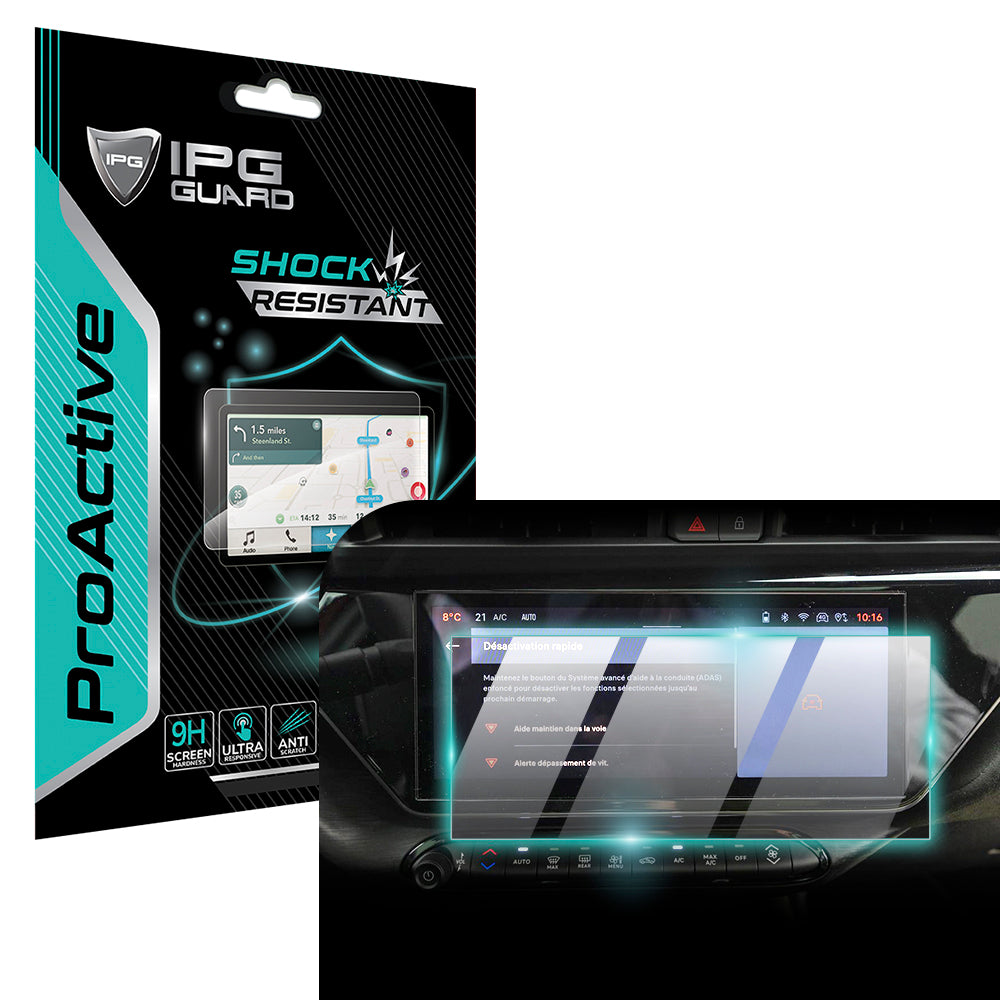
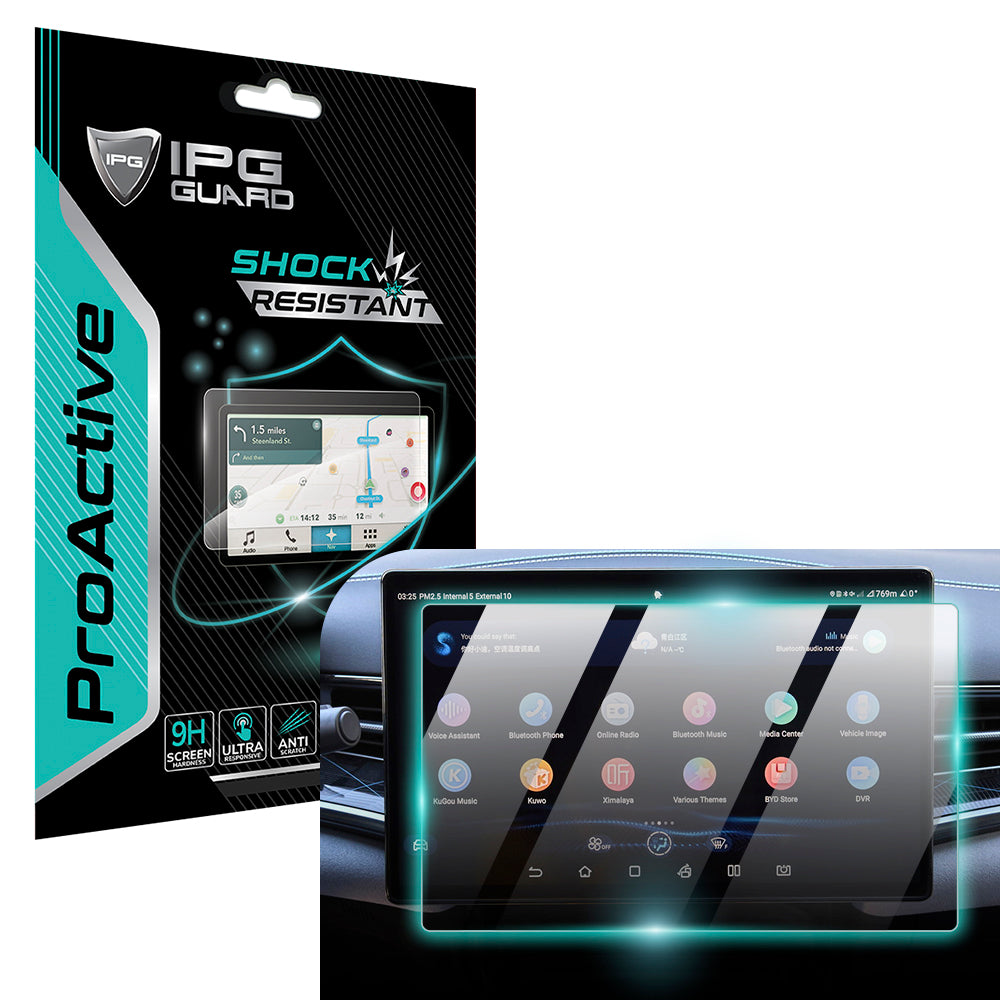
Modern EVs introduce a new scale of protection challenge. The BYD Seal's 15.6-inch navigation display isn't comparable to a phone screen; it's a large-format touch interface that controls nearly every vehicle function. The IPG ProActive screen protector for the BYD Seal is precision-cut to cover that full display surface, protecting it from the UV degradation and surface contact damage that come with daily driver use.
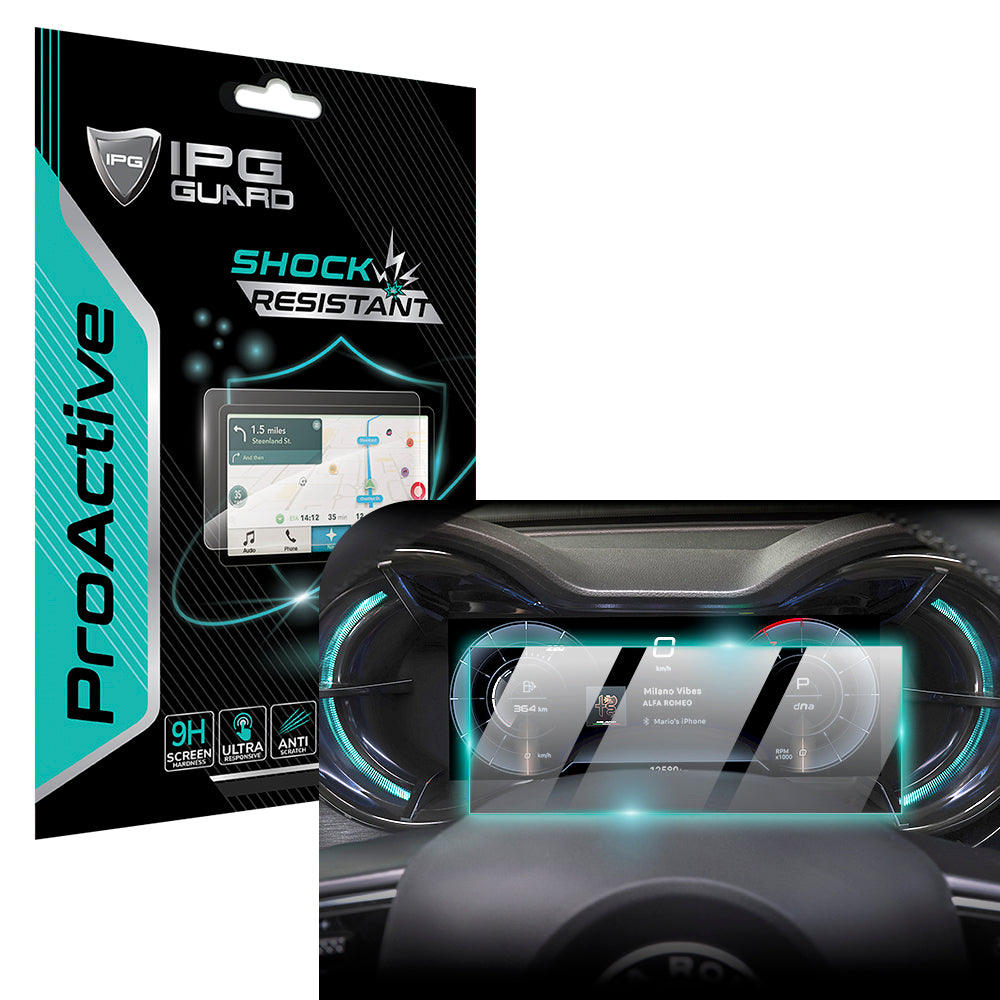
For Harley-Davidson cluster displays, vibration is the primary threat. Constant engine vibration loosens adhesive bonds on rigid protectors over time. A heavy duty screen protector built for the Harley cluster uses flexible hydrogel construction to absorb vibration rather than resist it, maintaining a secure bond through thousands of miles of road exposure. IPG's Harley Cluster Display protector is engineered precisely for this dynamic, combining weather resistance with the flexibility the application demands.
Professional gear deserves protection engineered to match it. Device-specific fit, material selection matched to the operating environment, and a construction that accounts for real-world stressors — that's the standard your equipment requires, and it's exactly where precision-cut solutions separate themselves from the generic shelf stock that fails professionals every day.

How to Choose and Install Your Heavy Duty Shield
Getting the right heavy duty screen protector onto your device correctly matters as much as choosing the right one. A precision-cut protector installed poorly performs like a generic film. Follow these steps in order, and you protect your investment from the first moment it bonds to your display.
Step 1: Identify your exact device model. Not the product family. The exact model. A Lowrance HDS Pro and a Lowrance Eagle Elite share a brand but not a screen geometry. Precision-cut protection is built to fractions of a millimeter, and a misidentified model means exposed edges, misaligned cutouts, and failed adhesion. Check your device's settings menu or the label on the back panel before you order anything.
Step 2: Choose your finish based on where you work. Indoor environments with controlled lighting favor clear protectors for maximum optical transparency. Outdoor environments, marine helms, automotive bays with overhead fluorescents, and any screen read in direct sunlight favor anti-glare. This isn't a preference decision; it's a readability decision. The wrong finish in a high-glare environment makes your screen functionally unreadable when it matters most.
Step 3: Prepare a ZeroDust environment. Dust trapped under a protector creates permanent bubbles. Run a hot shower for two minutes and install in the steam-filled bathroom immediately after. Humidity causes airborne particles to drop to the floor rather than float onto your display. Wipe the screen with the included microfiber cloth using a single directional stroke, not circular motions that redistribute debris.
Step 4: Apply center-out on large industrial screens. For diagnostic tools, navigation displays, and marine fishfinders, peel back roughly one-third of the liner, align the protector to the screen's center, and press down from the middle outward in firm, even strokes. Use a soft squeegee wrapped in the included cloth to push air toward the edges without applying direct pressure that could scratch the film surface.
Step 5: Allow 24 hours for hydrogel to cure. Hydrogel adhesive bonds progressively as it conforms to the display surface. Small bubbles visible immediately after installation typically disappear within the curing window. Using the device normally during this period is fine; applying sustained pressure to the surface is not.
Selecting the Right Finish
Matte finishes diffuse reflected light, which makes them the correct call for high-glare environments. The trade-off is a slight reduction in color saturation. Glossy finishes preserve full display clarity but become mirrors under direct overhead lighting. For privacy-sensitive data on diagnostic platforms or fleet management tools, the IPG Privacy Screen Protector limits viewing angles so that screen content stays visible only to the operator directly in front of the device. On any finish, oleophobic coatings reduce fingerprint transfer and cut cleaning frequency significantly in oily shop environments.
Pro-Tips for Bubble-Free Installation
The steam room trick works because physics is on your side: elevated humidity grounds airborne dust before it can settle on your freshly cleaned display. For removing an old or cracked protector, apply gentle heat from a hairdryer at low setting along one edge for fifteen seconds, then lift slowly from that corner using a plastic card rather than a fingernail. Rushing this step risks pulling adhesive residue onto the display surface, which requires additional cleaning before the new protector can bond cleanly.
Generic installation guides are built for rectangular phone screens. Professional and specialty displays have curves, cutouts, and contoured edges that demand a different approach. Find precision-cut protectors engineered for your exact device and get the fit that makes every installation step count.
The IPG Difference: Precision-Cut Stewardship
Edge-lift is the leading cause of protector failure. Not drops. Not chemicals. Not UV exposure. The moment a protector's edge separates from a display surface, contamination enters, adhesion degrades, and the protection you paid for starts working against you. Generic, mass-produced protectors fail here because universal tolerances are built for average dimensions, not exact ones. A fraction of a millimeter of misfit at the edge is all it takes.
IPG's precision-cut approach eliminates that margin of error. Every protector is engineered to the exact screen geometry of a specific device, not a product family, not a size category. The result is a bond that holds at the edges as firmly as it does at the center, through thermal cycling, vibration, and daily professional contact. That's not a feature. It's the foundation everything else is built on.
Custom Engineering for Every Device
The range of devices IPG covers reflects a deliberate commitment: no high-value screen gets left unprotected. The IPG Tesla Model 3 and Model Y door handle decal demonstrates that precision-cut thinking extends beyond displays to every surface worth preserving. Harley-Davidson cluster displays, BYD Seal navigation screens, Lowrance fishfinders, Snap-on diagnostic platforms, Autel MaxiSYS tools, Garmin Descent watches — each one receives a protector engineered for its exact dimensions and operating environment. Legacy professional tools aren't abandoned as new devices launch. The IPG ProActive series is developed ahead of next-generation device releases, so protection is available from day one rather than months after the device ships.
Preservation Without Compromise
A heavy duty screen protector does more than prevent damage in the moment. It preserves the display in the condition it shipped in, which has real financial consequences. Professional diagnostic tools and specialty devices hold resale value when their displays are scratch-free and optically clear. A clouded or etched screen signals neglect to any buyer. The emotional dimension matters too: the equipment you depend on daily deserves to stay in the condition it earned.
IPG's Guardian philosophy is straightforward. Protect what you value most, with precision that matches the value of the device. That means material selection matched to your environment, a fit engineered to your exact screen, and a heavy duty screen protector that doesn't ask you to compromise clarity, touch sensitivity, or resale integrity to get it.
Just as physical protection is essential for professional field gear, specialized digital tools can optimize your experience on other high-value screens. For Windows PC gamers, Wingo provides an AI-powered overlay that offers voice, text, and screenshot assistance directly on the display.
Your equipment works hard. It deserves protection built to the same standard. Secure your tech today with IPG heavy-duty protection and keep every display performing exactly as it was built to.
Your Equipment Deserves Protection Built to Last
The gap between a protector that survives a real workday and one that fails by lunch comes down to three things: material precision, device-specific fit, and engineering matched to your actual environment. A true heavy duty screen protector accounts for all three, not just the drop test on the packaging.
IPG delivers exactly that. Self-healing hydrogel that recovers from daily micro-damage. Precision-cut fits engineered for Snap-on diagnostic platforms, Garmin Descent watches, and Tesla displays, with zero edge-lift and zero guesswork. Every protector bonds to the exact screen geometry it was built for, because a fraction of a millimeter matters when your equipment can't afford downtime.
Your tools work hard. They deserve protection that works just as hard. Shield your high-value tech with IPG precision protection and keep every display performing exactly as it was built to. The right fit is out there, and it's ready for whatever your workday throws at it.
Frequently Asked Questions
What is the strongest material for a heavy duty screen protector?
No single material wins across every environment. Tempered glass at 9H hardness delivers the strongest scratch resistance for flat displays, making it the right call for smartphones, tablets, and professional diagnostic tools in abrasive conditions. Hydrogel outperforms glass on curved surfaces and in high-vibration applications because it flexes rather than fractures. The strongest choice depends entirely on your device geometry and the specific threats your environment throws at it.
Will a heavy duty protector affect the touch sensitivity of my diagnostic tool?
A precision-engineered protector won't degrade touch sensitivity in any meaningful way. The issue arises with generic, poorly bonded films that create micro-gaps between the protector and the display surface, which disrupts input transmission. IPG's hydrogel protectors for Autel MaxiSYS and Snap-on platforms are specifically engineered to maintain full touch responsiveness, including stylus input and the precision required during ADAS calibration sequences where even slight input lag creates real workflow problems.
Can I install a heavy duty screen protector on a curved car navigation screen?
Yes, but only if you're using the right material. Tempered glass won't conform to curved surfaces; it lifts at the edges within days and the adhesion fails progressively from there. Hydrogel is the correct material for curved automotive navigation displays. IPG's ProActive protector for the BYD Seal's 15.6-inch navigation screen is precision-cut to the exact display geometry, bonding across the full surface including any contoured edges rather than bridging gaps the way rigid glass does.
How do I remove air bubbles from a heavy duty hydrogel protector?
Small bubbles visible immediately after installation are normal with hydrogel and typically disappear within 24 hours as the adhesive cures and the material fully conforms to the display. For persistent bubbles, apply gentle, even pressure from the center outward using a soft squeegee wrapped in a microfiber cloth. Don't press with your fingertip directly; concentrated pressure can distort the film. If a bubble sits at the edge and won't move, a slow, careful re-lift and reapplication usually resolves it cleanly.
Does a heavy duty protector interfere with camera lens quality?
It shouldn't, provided you're using a protector engineered specifically for lens surfaces. A properly fitted lens protector made from 9H tempered glass preserves optical clarity because the glass itself is optically transparent and scratch-resistant. Generic films cut to approximate sizes introduce distortion at the lens perimeter. IPG's camera lens protectors for iPhone and Samsung devices are precision-cut to each lens module's exact dimensions, so there's no overhang, no edge distortion, and no reduction in image sharpness over time.
How often should I replace my heavy duty screen protector in a work environment?
Replacement frequency depends on your environment's severity, not a fixed calendar schedule. Inspect your protector monthly. Replace it when you notice deep surface scratches that catch light at an angle, visible edge-lift, or any delamination starting from a corner. In chemical-heavy environments like mechanic's bays, adhesive degradation from solvent exposure can accelerate this timeline. A protector doing its job absorbs damage so your display doesn't; visible wear is confirmation it's working, not a sign of product failure.
Is it worth getting a screen protector for my Snap-on or Autel tool?
Absolutely. These tools represent a significant professional investment, and their displays are exposed daily to metal particulates, chemical splashes, and accidental drops onto hard shop floors. A scratched or cracked diagnostic screen during a live calibration isn't just inconvenient; it's a workflow interruption with real cost. IPG's precision-cut protectors for Snap-on Triton, Apollo, and Solus platforms, as well as Autel MaxiSYS MS909 and MS919, are built specifically for shop conditions, not adapted from consumer phone films that fail under the same stressors.
What is the difference between 9H hardness and impact resistance?
These two properties protect against completely different threats. A 9H hardness rating measures a surface's resistance to scratching from sharp or abrasive materials like metal shavings, keys, or grit. Impact resistance describes a material's ability to absorb and disperse the kinetic energy of a sudden drop or strike. A protector can have a 9H outer layer and still crack under a hard impact if it lacks shock-absorbing polymer construction beneath that surface. True heavy duty screen protector engineering stacks both properties rather than relying on either one alone.