
Your $10,000 diagnostic scanner is one greasy slip or dropped wrench away from becoming a very expensive paperweight. In a high-volume shop, your gear faces a daily gauntlet of abrasive dust, corrosive fluids, and high-impact accidents. Your scanner isn't just another tablet; it's a precision industrial asset that demands specialized defense. Investing in a dedicated diagnostic tool screen protector is no longer optional if you want to safeguard your shop's most valuable technology in 2026.
We understand that a cracked display doesn't just look bad; it halts your workflow and kills your tool's resale value. You need a solution that stands up to brake fluid and harsh shop lights without sacrificing touch sensitivity. This article will show you how to choose and install the ultimate protective shield for your high-end scanners to prevent costly screen repairs. We will break down the technical differences between self-healing hydrogel and tempered glass, analyze why precision-cut fitment matters for Snap-on and Autel units, and provide a clear roadmap for a flawless, bubble-free installation in any workshop environment.
Key Takeaways
- Shield high-value assets worth up to $15,000 from daily shop hazards like heat, vibration, and heavy tool drops.
- Learn why self-healing hydrogel technology offers superior durability compared to fragile tempered glass in industrial settings.
- Identify the best diagnostic tool screen protector for Snap-on and Autel units to maintain full sensor clearance and touch sensitivity.
- Follow a proven shop-ready installation guide to eliminate grease and achieve a perfect, bubble-free application.
- Preserve your scanner's resale value and optical clarity with precision-cut shields designed for professional-grade hardware.
Why Your Diagnostic Tool Needs a Specialized Screen Protector
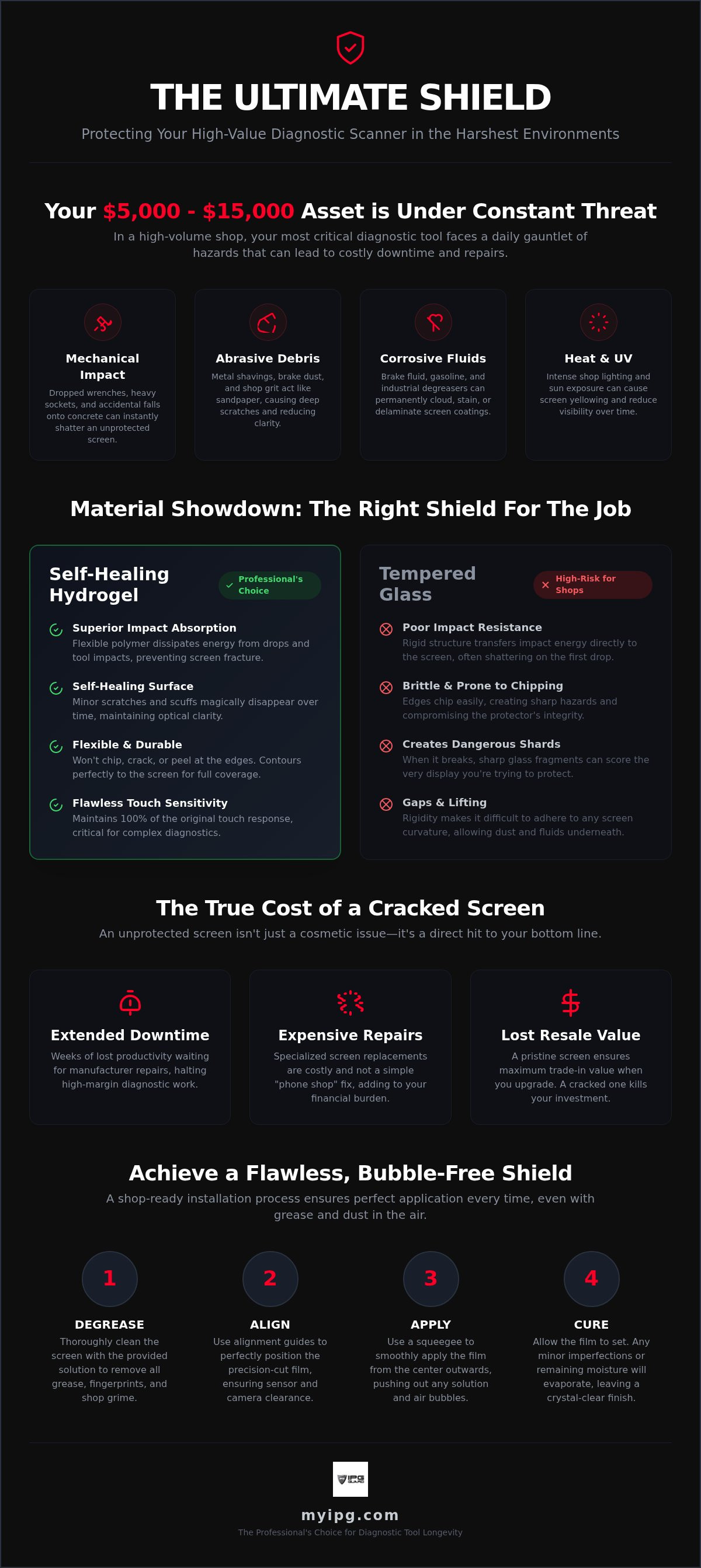
Your diagnostic scanner is likely the most expensive piece of hand-held technology in your shop. With units from industry leaders often retailing between $5,000 and $15,000, these devices represent a massive capital investment. They aren't just screens; they are the gateway to your shop's daily revenue. When a display fails, your ability to bill hours for complex diagnostics vanishes instantly. A specialized diagnostic tool screen protector acts as the first line of defense for these critical assets. Unlike generic consumer-grade films, industrial shields are engineered to handle the unique stresses of a professional automotive environment.
The True Cost of a Cracked Scanner Screen
A single hairline fracture can render a high-end scanner useless. Modern diagnostic tools utilize sensitive capacitive touch layers that often fail completely once the glass is compromised. Repairing these units isn't as simple as visiting a local phone shop. You often face weeks of downtime while the unit is shipped back to the manufacturer for professional service. Beyond the repair bill, consider the lost billable hours. Every day your scanner is in the mail is a day you're turning away high-margin diagnostic work. Maintaining a pristine display also secures your future exit strategy. When it's time to trade in for the next generation of tech, a flawless screen ensures you get the maximum possible resale value. While common screen protector materials like thin PET film might stop a light scratch, they offer zero protection against the structural failures that plague heavy-duty shop tools.
Common Shop Hazards for Diagnostic Displays
Auto shops are hostile environments for sensitive electronics. Your scanner faces a constant barrage of physical and chemical threats that consumer devices never encounter. You need protection that addresses specific workshop realities:
- Mechanical Impact: Falling wrenches, heavy sockets, or accidental drops onto concrete floors can shatter unprotected glass instantly.
- Abrasive Debris: Metal shavings, brake dust, and shop grit trapped on a technician's glove act like sandpaper on a bare screen.
- Corrosive Fluids: Exposure to brake fluid, gasoline, or industrial degreasers can permanently cloud or delaminate standard screen coatings.
- UV and Heat: Intense shop lighting and sun exposure in the bay can cause screen yellowing and reduced visibility over time.
A high-quality diagnostic tool screen protector creates a sacrificial barrier against these elements. It ensures that when you reach for your tool with greasy hands, you're interacting with a replaceable shield, not the expensive hardware itself. This layer of security allows you to focus on the repair at hand without worrying about your equipment's integrity.
Material Science: Hydrogel vs. Tempered Glass in the Shop
Selecting a diagnostic tool screen protector involves a critical choice between two primary materials: rigid tempered glass and advanced hydrogel films. While tempered glass is popular for smartphones, it often fails in industrial settings. Glass is brittle. It chips at the edges and shatters under the direct impact of a dropped socket or wrench. These sharp fragments can actually score the underlying display you're trying to protect. Hydrogel technology provides a flexible, energy-dissipating alternative that prioritizes the structural integrity of your scanner. It maintains perfect touch sensitivity, ensuring that complex diagnostic menus and sliders respond instantly to your input, even through gloved hands.
Why Hydrogel is the Mechanic's Best Friend
Hydrogel's advanced polymer structure enables the material to automatically close and repair minor surface indentations and shallow scratches within hours. This self-healing capability ensures your view remains unobstructed even after a long day of heavy-duty use. Unlike glass, which transfers impact energy directly to the display, hydrogel acts as a mechanical buffer. It's engineered to withstand constant use in zones where vibration and mechanical shock are daily realities. The material's high light transmission maintains crystal-clear visibility. You can read live data streams under bright overhead bay lights without the distortion or glare common in cheaper films. It contours to the screen's edges perfectly, providing a seamless barrier that won't snag or peel.
Chemical Resistance for Automotive Fluids
Auto shops are saturated with corrosive substances that destroy standard consumer electronics. A professional diagnostic tool screen protector must resist accidental splashes of brake cleaner, motor oil, and coolant. Many generic plastic films delaminate, cloud, or melt when they encounter these aggressive shop chemicals. Hydrogel maintains its optical clarity and adhesive bond even when exposed to harsh degreasers. Its specialized oleophobic coating allows you to wipe away thick grease and carbon deposits with a simple microfiber cloth. You won't have to worry about permanent staining or smearing that obscures your data. This long-term adhesion is vital for tools that spend time in hot engine bays or near high-temperature exhaust systems. The film stays put, refusing to lift or bubble despite the thermal cycling of a busy workshop.
For technicians who demand maximum durability and a perfect fit, choosing an IPG Original (Hydrogel) Screen Protector provides the specialized defense your high-value hardware deserves.
Precision Engineering for Industry Leaders: Snap-on and Autel
Generic "one size fits all" solutions fail in the professional workshop. A high-end diagnostic tool screen protector must be precision-engineered to match the exact dimensions of your hardware. Trim-to-fit films leave jagged edges that trap shop dust and eventually peel away. Our precision laser-cutting process ensures every sensor, camera, and button remains unobstructed. This exact fitment prevents debris from accumulating in the screen bezel, which can eventually lead to hardware failure or touch unresponsiveness. We focus on the exact millimeter-specifications of leading brands to ensure your tech remains guarded.
Protecting the Snap-on Ecosystem
Snap-on tools are built for the trenches. They feature ruggedized cases and recessed screens that make standard protectors difficult to apply. We provide a specialized IPG Snap-on Triton Apollo Solus + screen protector designed to sit perfectly within these industrial housings. It accommodates the unique geometry of the Triton, Apollo, and Solus + series without interfering with port access or integrated buttons. These scanners often live in mobile diagnostic vans or are used in open bays. Our anti-glare properties ensure you can read live data streams even in direct sunlight. You get the protection you need without the visual distractions that slow your workflow.
Autel MaxiSYS and MaxiIM Shielding
The Autel MaxiSYS series represents the cutting edge of automotive computing. Tools like the MS909 and MS919 feature high-resolution displays that require extreme optical clarity. Using the wrong film can blur fine text or introduce lag during critical system coding. The IPG screen protector Autel MaxiIM KM100 and MaxiSYS series is engineered for zero-lag touch response. It ensures your inputs are registered instantly during deep-system programming. Whether you're using the compact MaxiIM KM100 or the flagship MaxiSYS units, our precision-cut shields maintain the professional performance of your device. We understand that a split-second delay in touch response can be frustrating during complex calibrations. Our hydrogel material preserves the original feel of the glass while adding a resilient layer of armor.
True edge-to-edge coverage is not just about aesthetics; it's a functional requirement for shop longevity. By sealing the entire display area, you prevent fine metal shavings and abrasive grit from working their way under the protector's edges. This meticulous fitment preserves the integrity of your display for years of heavy-duty use. It's the difference between a tool that looks worn out and one that maintains its value. Don't settle for "close enough" when your shop's most valuable tech is on the line.
Shop-Ready Installation: Achieving a Bubble-Free Shield
Applying a diagnostic tool screen protector in a busy automotive bay requires a methodical approach. You aren't just sticking film on glass; you're sealing a precision instrument. Most installation failures happen because of microscopic oil film or floating shop dust. Before you begin, clear a dedicated workspace away from open bay doors and fans. This "clean zone" is your best defense against contamination. Preparation is 90 percent of the job. If you rush the cleaning phase, you'll trap debris that can cause permanent visual distractions.
Step-by-Step Diagnostic Tool Application
Follow these specific steps to ensure a professional-grade finish on your scanner:
- Step 1: Clean the screen. Use a dedicated electronics cleaner and a fresh microfiber cloth. Never use shop rags or paper towels. They hold grit and lint that will ruin the adhesive bond.
- Step 2: Use dust-removal stickers. Even a clean screen attracts static-charged particles. Blot the entire surface with the provided stickers to catch every airborne speck before the film touches the glass.
- Step 3: Align with the "hinge" method. For large diagnostic displays, use tape to secure one side of the protector to the tool body before peeling the backing. This ensures the laser-cut openings for buttons and cameras stay perfectly centered.
- Step 4: Squeegee from the center. Once the film makes contact, work air bubbles toward the nearest edge. Use firm, consistent pressure to drive out air and ensure the hydrogel adhesive seats fully against the display.
Pro Tips for the Automotive Environment
Shop floors are inherently dusty. To minimize airborne particles, try installing the protector in a humid area. A small steamer or even a nearby bathroom with a hot shower running can pull dust out of the air. This simple trick significantly reduces the chance of trapped lint under the film. It's a professional secret that ensures a factory-perfect look even in a working garage.
Don't panic over tiny bubbles. One of the primary benefits of our hydrogel material is its gas permeability. Most minor imperfections and "micro-bubbles" will naturally disappear within 24 to 48 hours as the film settles and breathes. Avoid the urge to pick at the edges with dirty fingers or greasy tools. Contaminating the adhesive with shop oil is the only way to cause a permanent installation failure. Trust the material to heal and bond over the first two days of use.
Guard your scanners against the daily grind. Secure your hardware with a precision-fit IPG Original (Hydrogel) Screen Protector and maintain total clarity in the toughest shop conditions.
My IPG: The Professional’s Choice for Diagnostic Tool Longevity
My IPG stands as the dedicated specialist for high-value hardware defense. We've developed IPG ProActive technology specifically for industrial environments where standard consumer films fail. This isn't a generic accessory. It's the "Guardian of Technology" promise. We act as stewards for your shop's most critical assets, blending technical authority with a personal commitment to your tool's survival. By choosing a specialized diagnostic tool screen protector, you bypass the inflated markups of the tool truck while gaining superior material science. Our direct-to-consumer model ensures you get aerospace-grade protection and high-end performance without unnecessary middleman costs.
Our expertise covers the entire automotive ecosystem. We provide a unified defense strategy, from protecting infotainment displays with our car screen protectors to safeguarding the ruggedized scanners in your bay. This versatility comes from decades of film manufacturing experience and a deep understanding of material properties. We don't just follow industry trends; we set the standard for industrial-grade protection in 2026. Every film is structured with a heavy emphasis on technical specifications, light filtration, and long-term durability to ensure precision in the toughest environments.
Why Mechanics Trust My IPG
Precision is our baseline. We understand that a diagnostic tool is a precision instrument, not a disposable gadget. Our commitment to exact fitment means we support the latest 2026 hardware releases as they arrive. Mechanics trust us because our hydrogel films maintain perfect touch sensitivity and optical clarity under harsh, flickering bay lights. We offer a global reach with professional-grade support. Whether you're a solo mobile tech or a fleet manager, your gear stays protected. Our layout and communication prioritize immediate comprehension, helping you act quickly to secure your devices.
Next Steps: Securing Your Gear
Vulnerability is a choice you don't have to make. Evaluate your current tool fleet for screen damage today. Look for the micro-scratches, chemical clouding, or impact chips that threaten your scanner's longevity. Don't wait for a catastrophic drop to realize the value of a high-quality diagnostic tool screen protector. Order model-specific kits for your Snap-on and Autel scanners now to secure your hardware's performance and future trade-in value. Protecting your tech is an investment in your shop's daily efficiency and professional reputation.
Browse the full range of IPG Diagnostic Tool Protectors and invest in the longevity of your shop's most valuable tech today.
Secure Your Shop's Digital Future
Your diagnostic scanner is a high-value asset that drives daily revenue. Protecting it requires more than generic film. You need a specialized diagnostic tool screen protector engineered for the rigors of a professional workshop. We've analyzed how self-healing hydrogel technology outperforms brittle tempered glass by absorbing impacts and resisting corrosive shop chemicals. Precision fitment for your Snap-on Triton or Autel MaxiSYS ensures that every sensor and button remains fully functional without dust buildup. These precision-cut shields are trusted by professional mechanics worldwide to maintain clarity and touch responsiveness in the toughest conditions.
Don't let a single drop or chemical splash sideline your productivity. Safeguard your investment with the same meticulous care you give your customers' vehicles. It's time to act as the guardian of your technology. Choose a solution that heals minor scratches and stays crystal clear through years of heavy-duty use. Secure your gear today to ensure your scanners remain as precise as the day you unboxed them.
Protect Your Snap-on and Autel Tools with IPG Professional Shields
Step into the bay with confidence knowing your equipment is ready for the next challenge. Your shop's most valuable tech deserves nothing less than professional-grade defense.
Frequently Asked Questions
Will a screen protector affect the touch sensitivity of my Snap-on scanner?
No, it won't. High-quality hydrogel films are engineered for zero-lag touch response. They maintain the original capacitive feel of the factory glass. This is critical for deep-system coding where precision is required. You'll experience the same tactile feedback whether you're navigating complex menus or using sliders, even while wearing professional shop gloves. Our materials ensure your workflow remains fast and accurate.
Can I install a screen protector on a diagnostic tool that already has minor scratches?
Yes, you can. The specialized adhesive layer of a hydrogel protector often fills in micro-scratches, making them nearly invisible once the film settles. This restores optical clarity to a worn display while preventing further degradation of the screen surface. It's an excellent way to rejuvenate an older tool. By sealing existing damage, you stop grit from getting deeper into the glass.
How do I remove grease and oil before installing the protector?
Use a specialized electronics cleaner or 70% isopropyl alcohol with a fresh microfiber cloth. Avoid using shop rags or industrial degreasers. Those can damage the screen's original oleophobic coating or leave behind lint. Ensure the surface is completely dry and streak-free before attempting the application. A clean, oil-free surface is the only way to guarantee a permanent, bubble-free adhesive bond in a shop environment.
Is hydrogel better than tempered glass for an industrial shop environment?
Hydrogel is the superior choice for workshops because it dissipates impact energy rather than shattering. Rigid glass chips easily at the edges and transfers shock directly to the display. Hydrogel's self-healing properties also handle the abrasive grit found in automotive bays much better than glass. It provides a resilient, flexible barrier that won't crack when a heavy hand tool accidentally strikes the display.
Does My IPG offer protectors for older Autel or Snap-on models?
We maintain a wide catalog that includes legacy support for various industrial tools. Our precision-cutting technology allows us to provide exact fitment for older Triton, Apollo, and Solus series units, as well as classic MaxiSYS scanners. Check our model-specific listings to find the right diagnostic tool screen protector for your device. We believe in protecting your gear, regardless of its generation or age.
What should I do if I get a bubble under the protector during installation?
Leave small bubbles alone for 24 to 48 hours. Hydrogel material is gas-permeable, allowing most minor imperfections to disappear naturally as the film bonds to the glass. If a large bubble persists, use a soft squeegee to gently push it toward the nearest edge. Don't lift the film with your fingernails. Lifting the edges introduces dust and shop oil, which will cause a permanent failure of the adhesive.
Will the screen protector peel off if it gets exposed to brake cleaner?
Our hydrogel films are designed for high chemical resistance, but direct, prolonged exposure to harsh solvents should be avoided. Occasional splashes of shop fluids won't cause immediate delamination or clouding. Wiping the area clean immediately with a dry microfiber cloth will preserve the adhesive bond and film integrity. This specialized diagnostic tool screen protector is built to survive the accidental spills common in a busy bay.
How often should I replace the screen protector on my diagnostic tool?
Replace your shield every 12 to 18 months or when major gouges appear. While the self-healing layer handles micro-scratches, heavy industrial use eventually wears down the top oleophobic coating. Fresh film ensures your scanner maintains maximum visibility under bright shop lights. Regular replacement is a small price to pay to maintain your tool's professional appearance and high resale value when it's time to upgrade.