
Your high-end sonar unit is one stray hook or a splash of saltwater away from a permanent, costly scar. It's the brain of your boat, yet its most vulnerable point is the very display you rely on to find fish. You've likely felt the frustration of squinting through midday glare or noticed the factory coating slowly etching away under the sun. Protecting this investment requires more than a generic film; it requires a specialized fish finder screen protector designed for the rigors of the open water.
We understand that maintaining your gear is about more than aesthetics. It's about preserving the resale value and ensuring peak performance when the bite is on. This guide breaks down the latest 2026 display technologies, including 9H tempered glass and the surging hydrogel films that now offer 8-hour self-healing cycles. You'll learn how to eliminate screen glare, repel saltwater spots, and achieve precision-cut coverage for units like the Lowrance Eagle and Elite HDS Pro. We provide the technical clarity you need to choose a guardian for your electronics that offers total security without sacrificing touch sensitivity.
Key Takeaways
- Understand why standard factory coatings fail against saltwater etching and why a dedicated shield is non-negotiable for long-term sonar health.
- Compare the rigid impact resistance of 9H tempered glass with the vibration-dampening and self-healing benefits of advanced hydrogel films.
- Learn how to identify a precision-fit fish finder screen protector for your specific unit to ensure edge-to-edge coverage and maintained touch sensitivity.
- Master the "clean zone" technique to achieve a professional, bubble-free installation even in high-humidity marina environments.
- Discover how high-quality display protection preserves the resale value of your marine electronics while enhancing visibility in direct sunlight.
Why Your Fish Finder Screen Needs a Dedicated Shield
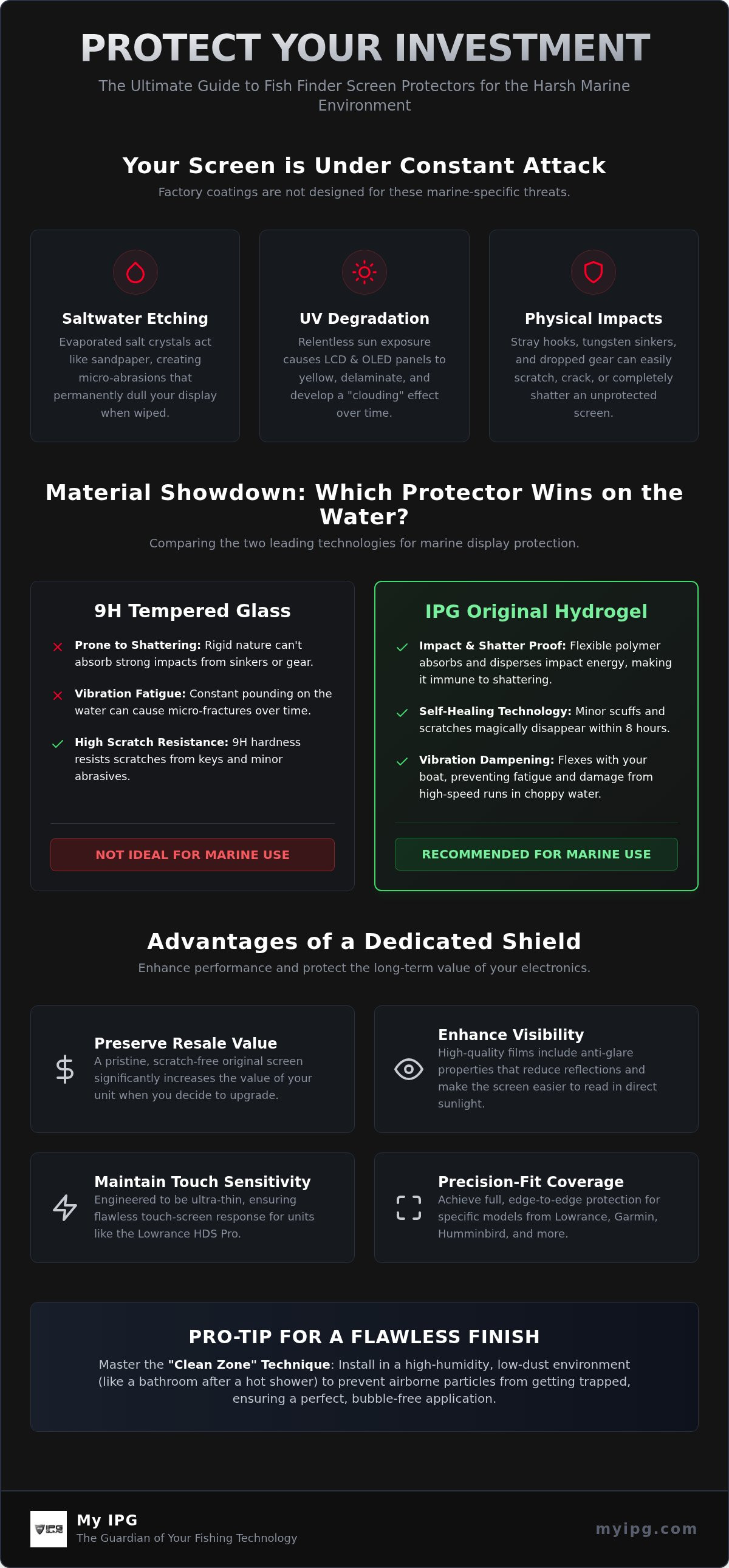
A high-end sonar unit represents a significant financial commitment. It's the central nervous system of your fishing strategy. However, the marine environment is inherently hostile to electronics. Between corrosive salt spray and relentless UV exposure, your display is under constant attack. This is what many seasoned anglers call the "Marine Tax." It is the inevitable wear and tear that degrades unprotected gear. Without a dedicated fish finder screen protector, your expensive display faces irreversible damage that factory coatings simply can't prevent.
Manufacturers apply thin anti-reflective coatings to screens at the factory. These are effective for out-of-the-box clarity but lack long-term durability. They aren't designed to withstand years of abrasive cleaning or physical strikes. Once this factory layer is compromised, the only solution is often an expensive screen replacement or a full unit upgrade. Adding an aftermarket shield creates a sacrificial barrier. It takes the brunt of the abuse while keeping the original hardware in mint condition. This simple step is the most effective way to preserve the resale value of your boat electronics.
The Threat of Saltwater Etching and UV Damage
Saltwater is deceptively destructive. When water evaporates on your display, it leaves behind microscopic salt crystals. If you wipe these away with a dry cloth, you are essentially rubbing sandpaper across the panel. This process, known as saltwater etching, creates micro-abrasions that dull the image and trap more dirt. A specialized film acts as a shield against these particles. It allows for easier cleaning without risking the underlying glass.
Relentless sun exposure is the other silent killer. UV rays can cause LCD and OLED panels to yellow or delaminate over time. Modern screen protector materials utilize specialized UV filters to block harmful radiation. This helps maintain color accuracy and prevents the "clouding" effect common in older, unprotected units. By filtering these rays, you extend the functional life of your display significantly.
Physical Impact: Lures, Gear, and Rough Seas
Fishing is a contact sport. A missed hook set can send a tungsten sinker flying toward your console at high speed. In rough offshore conditions, heavy tackle or pliers can easily slide off a dash and strike the screen. A high-quality fish finder screen protector provides critical shatter prevention. It absorbs the energy of the impact, often cracking itself while leaving the expensive sonar display untouched.
This level of security is essential for anyone running high-speed bass boats or fishing in heavy timber. For a deeper look at display safety across all your devices, consult the ultimate screen protector guide. Investing in this protection now ensures that a single cockpit accident doesn't end your tournament day or result in a multi-thousand-dollar repair bill.
Tempered Glass vs. Hydrogel: Which Material Wins on the Water?
Choosing the right fish finder screen protector usually comes down to two distinct materials: tempered glass and hydrogel. Tempered glass is a traditional choice, known for its 9H hardness and scratch resistance. It provides a rigid shield that feels exactly like the original screen. However, on a boat, rigidity can be a liability. High-speed runs across choppy water create intense vibrations. In these conditions, rigid glass can develop hairline fractures or even shatter upon impact from a heavy lead sinker. It lacks the flexibility needed for the dynamic environment of a moving vessel.
Hydrogel offers a modern alternative designed for resilience. Unlike glass, it is a flexible, memory-based polymer. It doesn't crack or shatter. This flexibility makes it a superior choice for high-speed bass boats and offshore vessels that endure constant pounding. For protecting marine electronics, you need a material that moves with your boat rather than fighting against it. If you want the most durable, vibration-resistant protection for your sonar, consider the IPG Original (Hydrogel) Screen Protector for its impact-absorbing properties.
IPG Original Hydrogel: The Self-Healing Marine Choice
The IPG Original film is engineered as a high-performance memory film. It is designed to absorb impacts rather than transferring that force to your display. One of its most impressive features is its self-healing capability. Minor surface scuffs from hooks or pliers don't stay permanent. The polymer matrix naturally flows back into place, erasing micro-scratches within 8 to 12 hours. This ensures your view remains unobstructed over years of heavy use.
Clarity is paramount for modern CHIRP and LiveSight imaging. Our hydrogel maintains a liquid-like transparency that preserves every pixel of detail and color vibrancy. It also conforms perfectly to curved bezels or flush-mounted units where rigid glass often fails to adhere at the edges. This edge-to-edge security prevents saltwater from seeping underneath the protector and damaging the factory seal.
Anti-Glare and Light Management
Sunlight is the primary enemy of visibility on the water. A matte-finish fish finder screen protector significantly reduces the blinding reflections that make it impossible to track depth. These films also feature oleophobic coatings. These layers repel fish slime, salt spray, and fingerprint oils, making it easy to maintain a clean surface with a quick rinse. Similar technology is used in anti-glare car screen protectors to ensure drivers maintain visibility in harsh lighting. For the angler, this means crystal-clear sonar readings from sunrise to sunset without the need for constant screen adjustments.
Compatibility Guide: From Lowrance Eagle to Garmin EchoMAP
Precision is the foundation of effective marine display security. A fraction of a millimeter makes the difference between a sealed, invisible barrier and a failing film. Most anglers make the mistake of purchasing "universal" trim-to-fit sheets. These kits require manual cutting with a blade, which inevitably leads to jagged edges and improper alignment. These rough perimeters create micro-gaps. In a marine environment, these gaps are magnets for moisture and salt spray, leading to premature delamination and display damage.
Your sonar unit's bezel design dictates the type of fish finder screen protector you need. For example, flush-mounted displays require edge-to-edge coverage to prevent water from pooling at the seam. Conversely, units with recessed screens, like the Humminbird Helix, require a protector that sits perfectly within the housing without overlapping the frame. If the protector is even slightly oversized, it will peel when you attempt to snap on your sun cover or adjust your gimbal mount. We prioritize exact fitment to ensure your gear remains functional and protected in every configuration.
Spotlight on Lowrance Elite and HDS Pro Protection
The Lowrance HDS Pro and Elite FS series represent the pinnacle of modern sonar technology. These units feature high-definition solarMAX displays that demand absolute clarity. A generic protector often compromises the vibrant color palettes of ActiveTarget 2 or SideScan imaging. Our shields are engineered to match the specific dimensions and sensor cutouts of the HDS Pro series. They accommodate the unique button placements and edge-to-edge glass architecture without hindering touch sensitivity.
For those running the latest entry-level or mid-tier units, we apply the same level of technical scrutiny. The IPG Lowrance Eagle collection provides a perfect example of this precision engineering. Whether you're shielding a 4-inch Eagle or a 16-inch HDS Pro, the protector must disappear into the unit's design. It should feel like a part of the hardware, not an after-market addition. This seamless integration is critical for maintaining the professional look and high performance of your console.
Why Custom-Cut Beats Universal Kits
Aesthetics are important, but functionality is where custom-cut protectors truly shine. We call the space between a poorly fitted protector and the bezel the "Salt Gap." When saltwater enters this gap and dries, it leaves behind abrasive crystals. These crystals act like sandpaper against your unit's factory coating every time the boat vibrates. A custom-fit shield eliminates this gap entirely, sealing the display against the elements.
We bring a specialized register of expertise to every product we develop. This same commitment to microscopic accuracy is found in our IPG Phone camera lens protectors. We use the same high-standard manufacturing processes for marine tech as we do for mobile electronics. By choosing a protector designed specifically for your model, you ensure that your view remains unobstructed and your investment stays secure. Don't settle for "close enough" when it comes to your boat's most valuable electronics.
Step-by-Step Installation for a Bubble-Free Marine Display
Installing a fish finder screen protector in a marina environment presents unique challenges. Airborne salt particles and wind-driven dust are your primary enemies. Unlike a controlled indoor setting, the deck of a boat is a high-static zone. You must create a "clean zone" before peeling the adhesive backing. One effective trick is to use a spray bottle to mist the air around your console. This increased humidity forces dust particles to drop to the deck rather than landing on your display. If possible, perform the application inside an enclosed cabin or a garage to minimize environmental variables.
Preparation is the difference between a professional finish and a wasted film. You need a specific toolkit: 70% isopropyl alcohol prep pads, a high-density microfiber cloth, and alignment tape. Ensure the unit is powered off and cool to the touch. Heat can cause the cleaning solution to evaporate too quickly, leaving behind streaks that compromise the bond. Once the surface is prepped, you have a limited window to apply the shield before new contaminants arrive.
Cleaning and Surface Preparation
Begin by rinsing the display with fresh water to remove large salt crystals. Never wipe a dry, salty screen; those crystals act as micro-abrasives that will scratch the factory glass. Use the alcohol pads to dissolve skin oils and old residue from sun covers. Follow this with a dry microfiber wipe, checking the surface from multiple angles with a flashlight to spot hidden smudges. The tack cloth method involves using a specialized sticky fabric to lift static-charged dust particles from the surface without leaving a new residue. This final pass is critical for a truly invisible result.
Solving Common Installation Issues
Alignment on large 12-inch or 16-inch displays is difficult to manage by hand. Use the "hinge method" by placing the protector on the screen with the backing still on. Secure one side to the unit's bezel using painter's tape to create a hinge. Flip the protector open like a book, peel the backing, and flip it back down. This ensures the film lands exactly where you aligned it. If you find a piece of dust trapped underneath, use a small piece of tape to lift the edge and a second piece to "dab" the particle off the adhesive side.
Don't rush to the water immediately after application. The adhesive requires a curing period to reach maximum bond strength. Allow the unit to sit for 24 hours in a shaded area. This prevents moisture from seeping under the edges during high-speed runs. If you see micro-bubbles in a hydrogel film, leave them alone. These typically disappear within 48 hours as the material breathes and settles. Secure your electronics now with a precision-fit fish finder screen protector from IPG to ensure your view remains crystal clear on your next trip.
Why IPG is the Guardian of Your Fishing Technology
IPG stands as a dedicated specialist in marine electronics preservation. We don't just sell film; we provide stewardship over your most valuable navigation tools. In 2026, our IPG ProActive technology has set a new benchmark for material resilience. This proprietary formulation is engineered to withstand the most punishing environments on the water. Whether you're baking in the Florida sun or drilling through thick ice, our protectors maintain their structural integrity. They don't yellow, they don't peel, and they don't crack under thermal stress. Choosing a high-quality fish finder screen protector is the only way to ensure your display survives these extremes.
Our commitment to light transmission is what defines us as the "Invisible Guard." If a shield blocks the display's output, you lose the ability to distinguish baitfish from bottom structure. We leverage 2026 material trends like High-Aluminum Silicon and UTG (Ultra-Thin Glass) to ensure maximum clarity. This allows your CHIRP or LiveSight technology to perform exactly as the manufacturer intended. You get the protection you need without a compromise in visibility. We focus on the material properties that matter to anglers, ensuring every sonar return is crisp and actionable.
The IPG Heritage: From Phones to Fish Finders
We've spent years perfecting the art of display security across multiple industries. The same precision engineering found in our iPhone screen protectors is applied to every marine unit we service. We understand that your sonar unit is a major investment. We treat it with the same meticulous care as a flagship smartphone, ensuring every edge is sealed and every sensor remains unobstructed. IPG is more than a provider; we are a trustworthy partner in maintaining the integrity of your boat's tech.
Ready to Shield Your Sonar?
Don't wait for a stray hook or salt spray to cause permanent damage. A single tournament day can result in screen etching that costs hundreds to repair. Protect your unit before your next trip. Our custom-fit solutions are ready to serve as the ultimate barrier between your electronics and the elements. Invest in the security your technology deserves. Shop the IPG Fish Finder Collection Now and experience the peace of mind that comes with professional-grade display protection.
Secure Your View for the Season Ahead
Your display is the window to your success on the water. Don't let a single scratch or salt-etched blur ruin that vision. Protecting your sonar investment requires a specialized fish finder screen protector built for the harsh marine environment. You've seen how precision fitment and material choice determine whether your gear survives the sun and spray or fails when the bite gets tough. Our stewardship over your technology means you can navigate with total confidence in your equipment's longevity.
IPG provides the ultimate defense with custom-fit solutions for over 50 marine models. Our advanced UV and salt-resistant materials safeguard your screen against the most punishing offshore conditions. By utilizing self-healing hydrogel technology, we ensure that minor surface scuffs from hooks or gear don't become permanent distractions or costly repairs. These shields are essential insurance for your boat's console. Maintain your resale value and keep your focus on the fish, not on a damaged display.
Secure your sonar today at the IPG Fish Finder Collection
Tight lines and clear screens await on your next adventure.
Frequently Asked Questions
Do fish finder screen protectors reduce glare in direct sunlight?
Yes, specifically designed matte-finish protectors significantly reduce glare by diffusing direct sunlight. This prevents the blinding mirror effect that often masks critical sonar data during midday hours. By managing light transmission, these shields ensure your fish finder screen protector enhances visibility rather than hindering it. This is essential for tracking bottom structure and fish arches when the sun is at its peak intensity.
Can I use a tempered glass protector on a touch-screen sonar unit?
Yes, modern tempered glass shields are engineered to maintain 100% touch-screen responsiveness. The high-aluminum silicon materials used in 2026 protectors ensure that multi-touch gestures remain fluid even with wet or gloved fingers. You won't experience any lag or dead zones. These rigid protectors offer a seamless feel that mimics the original factory glass while providing a necessary layer of impact security for your console.
Will saltwater damage the adhesive on an IPG screen protector?
No, the marine-grade adhesives used in our protectors are specifically formulated to resist saltwater corrosion. Once the curing process is complete, the bond creates a watertight seal that prevents salt crystals from migrating under the film. This integrity is maintained through heavy spray and high-speed runs. Proper surface preparation is the only requirement to ensure the adhesive remains stable and clear for years of offshore use.
How do I remove a screen protector from my Lowrance unit without damaging the factory screen?
You can safely remove a protector by gently lifting one corner with a thin plastic card or your fingernail. Slowly peel the film back at a 45-degree angle to avoid putting undue stress on the display panel. If the adhesive is stubborn, a few seconds of low heat from a hairdryer can soften the bond. This process leaves the factory coating untouched and ready for a fresh application.
Is hydrogel better than tempered glass for boat electronics?
Hydrogel is often the superior choice for high-vibration marine environments because it doesn't crack or shatter like rigid glass. Its flexible polymer matrix absorbs impacts from heavy tackle and lures. While tempered glass offers excellent scratch resistance, hydrogel provides self-healing properties and better adhesion on curved bezels. For high-speed bass boats or rough offshore vessels, the resilience of a hydrogel fish finder screen protector is unmatched.
Does a screen protector interfere with polarized sunglasses?
High-quality marine protectors are designed to eliminate the rainbow or oil slick effect often seen with polarized sunglasses. We use advanced light-filtration layers that maintain color accuracy and clarity at all viewing angles. This ensures you can keep your glasses on while monitoring your sonar. Cheaper, non-marine films often fail this test, but our specialized coatings are engineered specifically for the needs of the modern angler.
How often should I replace my marine screen protector?
You should typically replace your protector every two to three years depending on your frequency of time on the water. While our materials are UV-stable, years of abrasive cleaning and salt exposure eventually take a toll on the outer coating. If you notice deep surface scuffs that the hydrogel can't heal or any lifting at the edges, it's time for a fresh shield. Regular replacement ensures your display remains in mint condition.
What is the best way to clean my fish finder screen once a protector is installed?
The best cleaning method starts with a fresh water rinse to remove abrasive salt crystals. Once the large particles are gone, use a clean microfiber cloth and a dedicated marine electronics spray to wipe the surface. Avoid using paper towels or old rags, as these can trap grit and cause micro-scratches. This simple routine keeps your display crystal clear and extends the life of your protective film significantly.