

The obvious choice isn’t always the best match: a black emblem can stand out more because of its finish than its colour. When comparing matte black vs gloss black emblem decals, look at the reflections and trim around your vehicle, not just the shade of black.
Gloss black has a polished, reflective look that can echo glossy factory trim, but its highlights may make fine scratches, swirl marks, and fingerprints easier to notice. Matte black has a quieter, low-sheen appearance that softens reflections and can help disguise minor imperfections. The trade-off is care: waxes and polishes made for glossy surfaces can add unwanted shine to a matte finish.
So, should you choose matte or gloss? Compare the appearance, contrast, upkeep, and fit with the detail you want to update. This guide also explains what to check about emblem shape, overlay fit, surface preparation, installation conditions, and finish-specific care. My IPG’s automotive decal range includes a Volkswagen front emblem decal, Honda wheel center cap overlay decals, and Tesla Model 3 and Model Y door handle decals.
Key Takeaways
- Compare matte black vs gloss black emblem decals with your vehicle’s existing badges, wheels, grille, and window trim.
- Judge finish separately from decal colour, shape, and fit. Black decals can create different visual effects depending on their surface appearance.
- Identify the emblem and location before choosing a decal, then match the product listing to your vehicle and the specific emblem shape.
- Check fit and prepare the emblem surface as directed before application.
- Explore automotive decal categories such as Volkswagen front emblem decals and Honda wheel center cap overlay decals when considering a focused styling change.
Matte Black vs. Gloss Black Emblem Decals: What Changes Visually?
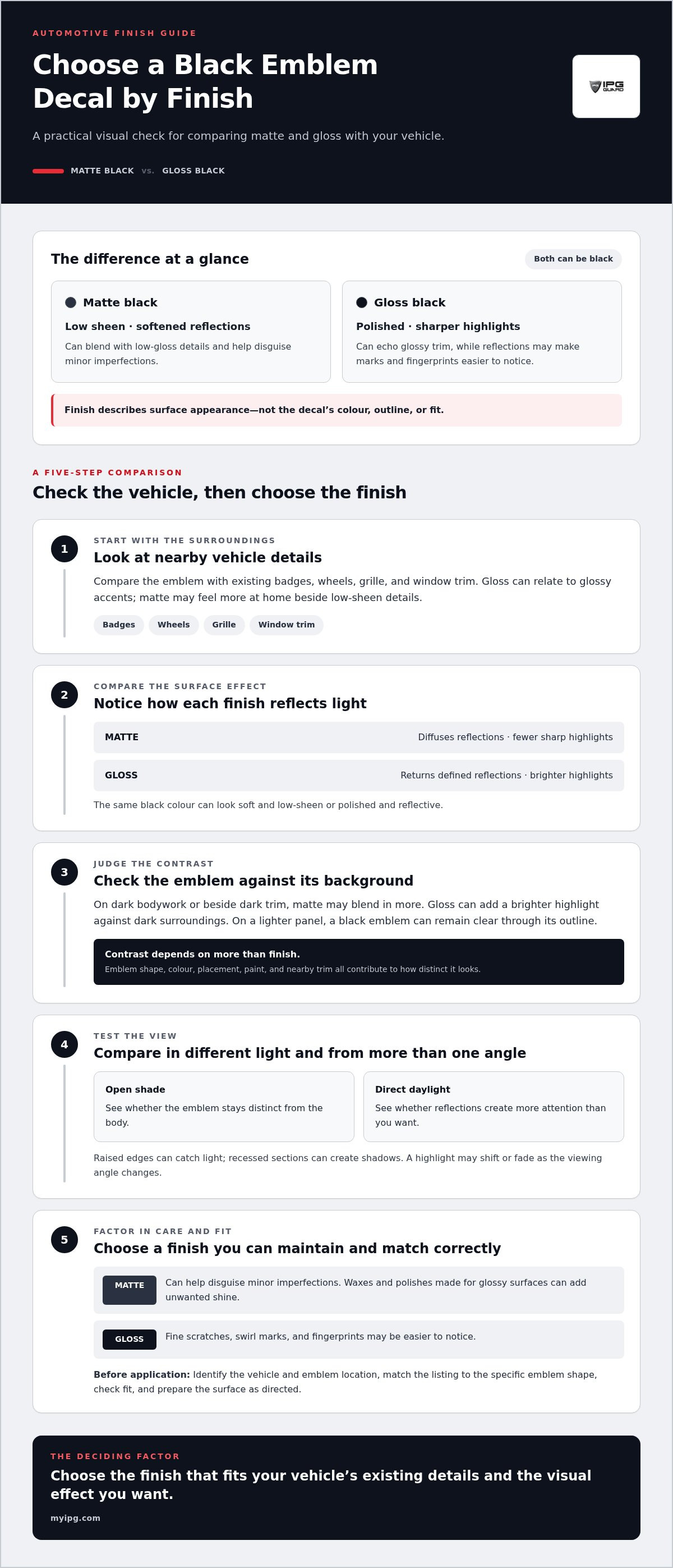
Matte diffuses reflections; gloss creates sharper highlights. That difference can change how an emblem looks, even when both decals are black. Finish describes the surface appearance, not the decal’s colour, shape, or fit. A black decal may look soft and low-sheen or polished and reflective without changing its outline.
A matte surface spreads reflected light more broadly, while a gloss surface returns more defined highlights. The principles behind gloss and matte paint finishes help explain the distinction, though a decal’s appearance also depends on its surface and the vehicle around it.
- Reflection: Matte reduces sharp highlights; gloss makes them more noticeable.
- Visual contrast: Gloss can create a brighter highlight against dark bodywork. Matte may blend more closely into dark surroundings, though emblem shape and colour contrast still matter.
- Styling impression: Matte often reads as restrained or modern; gloss tends to feel polished. Neither effect is universal or automatically better.
Use these differences as a starting point, not a fixed rule. Lighting, emblem shape, viewing angle, paint colour, and nearby trim all influence the result. A raised badge catches light differently from a flatter one. A black emblem on a dark vehicle may also have less visual separation than the same emblem on a pale body panel.
How does matte black look on a vehicle emblem?
Matte black has a low-reflection appearance, so it shows fewer sharp points of light as you move around the vehicle. It can coordinate with matte or low-gloss exterior details. But low reflection doesn’t necessarily make an emblem look subtle: its size, shape, and placement still affect how much attention it draws.
Consider the background as well. On dark bodywork or beside dark trim, a matte emblem may blend in and have less visual separation. On a lighter panel, its black outline can remain clear without glossy highlights.
How does gloss black change an emblem's appearance?
Gloss black returns brighter, more defined reflections, which can make the emblem look more prominent as the light shifts. Its polished appearance can tie in with glossy grille details, window trim, or other reflective accents. For a coordinated look, compare the emblem with the nearest trim rather than judging the finish by itself.
The effect changes with conditions. In direct sunlight, a highlight may make part of the emblem appear brighter; from another angle or in shade, that highlight can fade. Compare the decal with the vehicle outdoors and from more than one viewing angle before deciding which finish fits.
What Makes Matte and Gloss Emblem Decals Look Different?
Matte softens reflected light; gloss concentrates it into sharper highlights. The surface finish changes how light reaches your eyes, which can make an emblem appear more blended or more defined as you move around the vehicle.
Finish is not the same as colour. Both decals can be black, yet one may appear flat and low-sheen while the other looks polished. The surface affects how light interacts with the colour, so a colour swatch alone can’t show exactly how an emblem will look on your vehicle.
When comparing matte black vs gloss black emblem decals, separate three questions: what colour is the decal, what shape does it cover, and how does its finish reflect light? This helps you judge appearance without assuming that finish changes the decal’s outline or fit.
How light and viewing angle affect black emblem decals
In shade or beneath an overcast sky, reflections tend to be less intense, so the difference between finishes may seem subtle. Direct sunlight can produce stronger reflections, especially on gloss, and a small change in viewing angle can move or reduce a highlight. Matte also responds to its surroundings, so it won’t look identical in every setting.
How emblem shape and surrounding trim affect contrast
Emblem geometry adds another layer. Raised edges may catch light while recessed sections create shadows, so a single finish can look different across one badge. Nearby paint, grille surfaces, and exterior trim provide the visual context. Gloss may coordinate with glossy trim, while matte may relate more naturally to low-sheen details.
Compare the finish on the vehicle, not from a colour sample alone. Look at the emblem area from the front and at an angle. Notice which contours catch light, then compare the proposed finish with the paint and adjacent grille or trim. If a sample or product image is available, use it as a reference, keeping in mind that its lighting and display may differ from your vehicle’s setting.
Check the vehicle in both open shade and direct daylight. In shade, assess whether the emblem remains distinct from the body. In sunlight, see whether reflected highlights strengthen the contrast or draw more attention than you want. This gives you a better sense of how the finish works across everyday conditions.
For a focused change to a vehicle detail, explore automotive emblem decals alongside other automotive decal categories.
Matte or Gloss Black: Which Emblem Decal Suits Your Vehicle?
Choose the finish that belongs with your vehicle’s existing details, not the one that sounds more premium in isolation. Matte and gloss can each look intentional; the better match depends on the badges, wheels, grille, and window trim already on your vehicle. To compare matte black vs gloss black emblem decals, decide which details you want the emblem to echo and how much reflected light you want it to show.
Match the emblem finish to the vehicle details you want to echo. Use this quick guide to narrow your choice, then assess it beside the actual paint and trim.
Matte: Choose it if you prefer fewer sharp reflections or want to relate the emblem to low-sheen, dark, or matte accents.
Gloss: Consider it if reflective trim or polished details are already part of the vehicle’s look, or if you want shifting highlights on the emblem.
Either finish: Compare it with the body colour and nearby details. The combination can change how distinct the emblem appears.
When matte black may be the better visual match
A lower-reflection finish may sit naturally alongside understated exterior accents, such as dark trim with little shine or other matte details. It can keep the emblem from adding another strong highlight to a restrained look. Don’t assume matte will always blend in: a black emblem can still stand out clearly against light paint, while dark paint may reduce separation.
When gloss black may make more sense
Gloss can connect an emblem visually with reflective grille details, window trim, or other polished accents. Its changing highlights may also help the badge catch the eye as the light or viewing angle shifts. Compare it with the trim closest to the emblem. A reflective finish that works beside the grille may feel less consistent if the surrounding details are mostly low-sheen.
Look at the whole exterior, not just the front badge. Wheels can establish a different finish from the grille, and window trim can either reinforce that look or create contrast. Decide which feature should guide your choice. If your wheels are glossy but the grille and badges are subdued, consider which area you want the emblem to relate to most.
For a practical comparison, stand back far enough to see the vehicle as a whole, then move closer to inspect the emblem. Check both front and side views, since reflections and nearby trim change with angle. If you compare finish samples or product images, view them beside the relevant paint and trim rather than in isolation. Lighting can affect how a finish appears in photos.
There’s no universal winner. Choose matte when its quieter reflection complements the details you want to connect; choose gloss when reflective accents are part of the look you want to carry through. Let the vehicle’s existing styling set the direction.
How to Choose and Prepare for an Emblem Decal
A considered finish choice only works if the decal is intended for the exact emblem you want to update. Before comparing matte black vs gloss black emblem decals, identify the vehicle detail, review the product’s fit information, and plan the application around its instructions. These checks help you avoid a mismatch in shape, location, or appearance.
- Identify the emblem. Note the vehicle make and model, the emblem’s location, and whether it’s a front badge, wheel center cap, or door-handle detail.
- Compare finishes. Choose the surface appearance that suits the surrounding paint and trim you want to coordinate with.
- Verify fit. Match the product listing to the vehicle make, model, and specific emblem location. Compare any listed dimensions with the intended application.
- Plan the application. Read the product instructions, prepare the surface as directed, and decide how you’ll align the decal before applying it.
What fitment details should you check first?
Start with the exact location. A front emblem, wheel center cap, and door-handle decal are distinct applications, not interchangeable descriptions. Confirm that the product listing names your vehicle and the intended location. If dimensions are provided, compare them with the area the decal is meant to cover. This helps you assess fit before finish becomes the deciding factor.
Keep the part itself in view, too. A center cap has a different outline and placement from a front badge. Don’t rely on the vehicle model alone if the listing specifies a particular emblem location or size.
How can you prepare for a neat application?
Follow the specific product instructions for cleaning and surface preparation. Dirt or residue can affect the finished appearance, so give the application area careful attention. Don’t assume every decal uses the same material or application method. Follow the manufacturer’s directions, including any advice about conditions or handling.
Before removing the backing or placing the decal, plan the alignment. Check how its edges relate to the emblem’s contours, then apply it steadily rather than rushing around curves or corners. If the instructions describe a particular placement method, use it rather than improvising.
Care doesn’t end at application. Use the manufacturer’s care directions for cleaning and maintenance instead of assuming advice for one finish or material applies to another. Follow product-specific guidance for removal, too; generic techniques could affect the decal or the surface beneath it.
For a vehicle-specific starting point, browse My IPG automotive decals, including emblem, wheel center cap, and door-handle decal categories. Review each listing’s vehicle and location details before choosing a decal.
Find Automotive Emblem Decals That Fit Your Vehicle
A finish comparison is useful only after you’ve identified the right vehicle detail. My IPG’s automotive decal categories include a Volkswagen front emblem decal, Honda wheel center cap overlay decals, and Tesla Model 3 and Model Y door handle decals. These are for different locations, so assess each application separately. Don’t assume they share a shape, fit, or finish options.
Start with the part you want to change. Review the product details for the intended vehicle application and location. Once the decal category and fit make sense, consider whether matte or gloss better suits the surrounding trim. This order keeps an appealing finish from distracting you from the fitment question.
Match the decal category to the emblem location
A front emblem decal is intended for a different detail than a Honda wheel center cap overlay. Tesla Model 3 and Model Y door handle decals are another separate category. Identify the exact location first, then use the relevant product listing to assess its vehicle application and fit details. Similar colour or purpose doesn’t make these decal types interchangeable.
Be precise about what you’re updating: the front badge, a wheel center cap, or the door-handle area. Check the listing against your vehicle and the specific location rather than assuming a decal will suit every part of a make or model. If dimensions or other fit information are provided, compare them with the intended area before deciding.
Take the next step with a finish-first decision
With the application identified, return to the finish choice. Compare how matte or gloss reflects light, how much contrast you want around the emblem, and which finish relates best to the nearby grille, paint, wheels, or trim. The goal of comparing matte black vs gloss black emblem decals isn’t to pick a universal winner, but to find a finish that supports the look you want.
Before selecting, read the relevant product details for the vehicle application. Keep the location and fitment in view alongside appearance: a finish preference can’t make a mismatched decal the right choice. Assess the finish in the context of the specific detail you plan to update rather than judging black by colour alone.
Ready to explore options by vehicle detail? Browse My IPG automotive decals and review the product details for the application that matches your vehicle.
Make Your Next Styling Choice with Confidence
Let the vehicle’s details guide your final choice. A finish should look intentional beside the paint and trim, and the decal should match the exact area you plan to update. Picture the finished detail in everyday light, then use the product information to keep your selection grounded in the right vehicle application.
As you compare matte black vs gloss black emblem decals, focus on the look you want to carry through your vehicle, not on a universal rule about which finish is best. A Volkswagen front emblem decal or Honda wheel center cap overlay can offer a focused way to personalize a specific detail. Choose deliberately, bringing fit and visual coordination together.
Explore My IPG automotive decals and review the product details for your vehicle detail.
Frequently Asked Questions
Is matte black or gloss black better for an emblem decal?
Neither finish is universally better. Matte black creates a lower-reflection appearance, while gloss black produces more visible highlights. The right choice depends on your vehicle’s paint, existing trim, emblem shape, and the look you want. Compare the finish with nearby exterior details, such as the grille or window trim, in both shade and direct light. A check from several angles can reveal a mismatch you might miss in a close-up.
Can matte and gloss black look like different shades?
Yes. Even when both decals are described as black, reflections can make one appear brighter or darker in a given setting. Gloss may show sharper highlights, while matte tends to scatter reflected light more evenly. Lighting, viewing angle, and surrounding paint affect perceived colour, too. If you’re comparing samples or product images, view them under similar lighting and against a similar background. Don’t rely on the colour name alone to predict the finished appearance.
Will a black emblem decal fit any vehicle emblem?
No. Vehicle emblems can differ by make, model, year, location, and shape. A decal intended for a front badge may not suit a wheel center cap, even if both are on the same vehicle. Before ordering, match the product details to the exact application and review any listed compatibility and dimensions. Confirm that the listing describes the emblem location you’re updating rather than assuming a general vehicle match means every badge will fit.
Can you apply an emblem decal over an existing badge?
That depends on the decal design and its product instructions. The badge’s curves, edges, surface condition, and available coverage can all affect how it sits. Review the installation guidance before applying it, and compare the decal’s shape with the badge. Don’t force a flat decal across deep contours or around edges unless the instructions support that use. Careful placement matters: stretching or misaligning the decal may change the finished appearance.
How do you clean a vehicle after applying an emblem decal?
Follow the care instructions for the specific decal, since materials and application guidance can vary. Don’t assume every decal supports the same cleaners, tools, or washing conditions. If the instructions describe an initial settling period or a particular cleaning method, follow them. For routine care, use a gentle approach and avoid catching the decal’s edge with a cloth or cleaning tool. Check the product guidance before using a cleaner if you’re unsure it is suitable.
Can an emblem decal be removed without damaging the original badge?
There’s no universal answer. Removal results depend on the decal, the underlying surface, its condition, and how it was applied. Follow the product’s removal instructions and work carefully around lettering, paint, and emblem edges. Don’t assume every adhesive releases in the same way. If the decal has been in place for a long time or exposed to weather, proceed cautiously. Avoid sharp or abrasive tools that could scratch the badge or nearby finish.