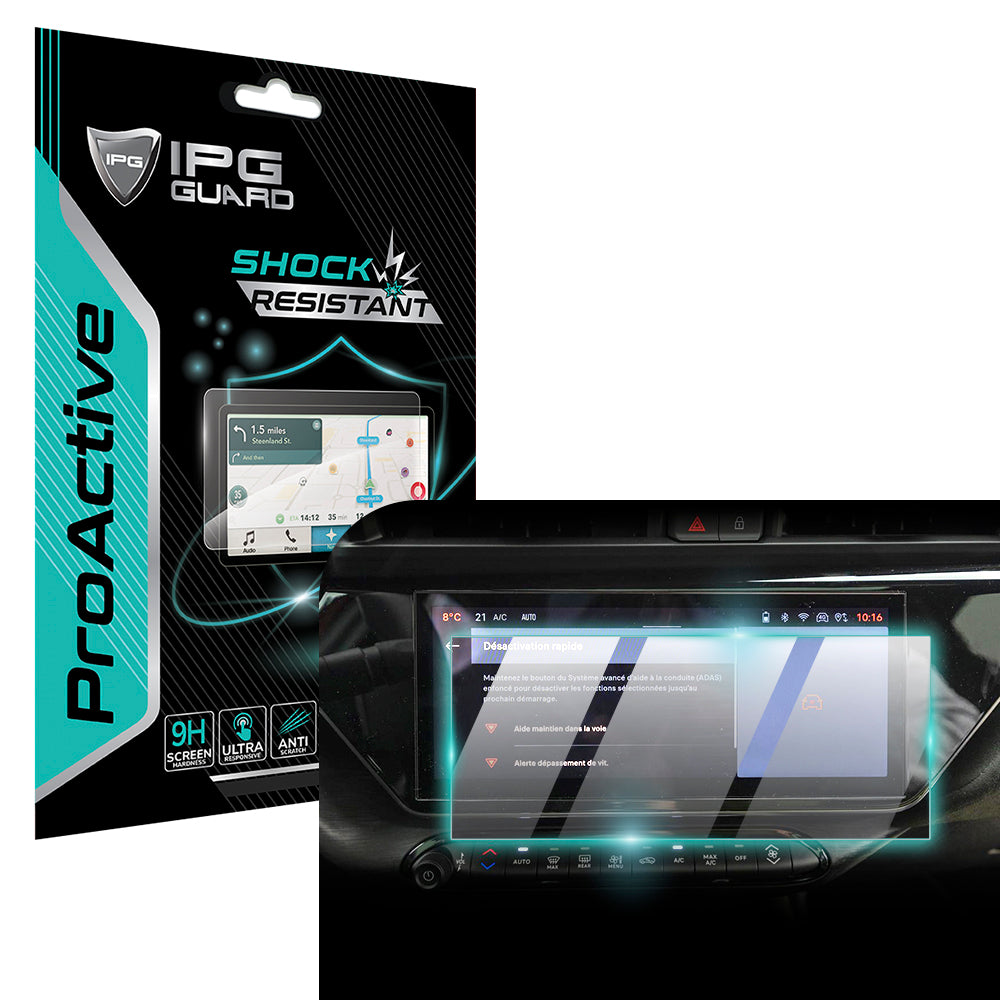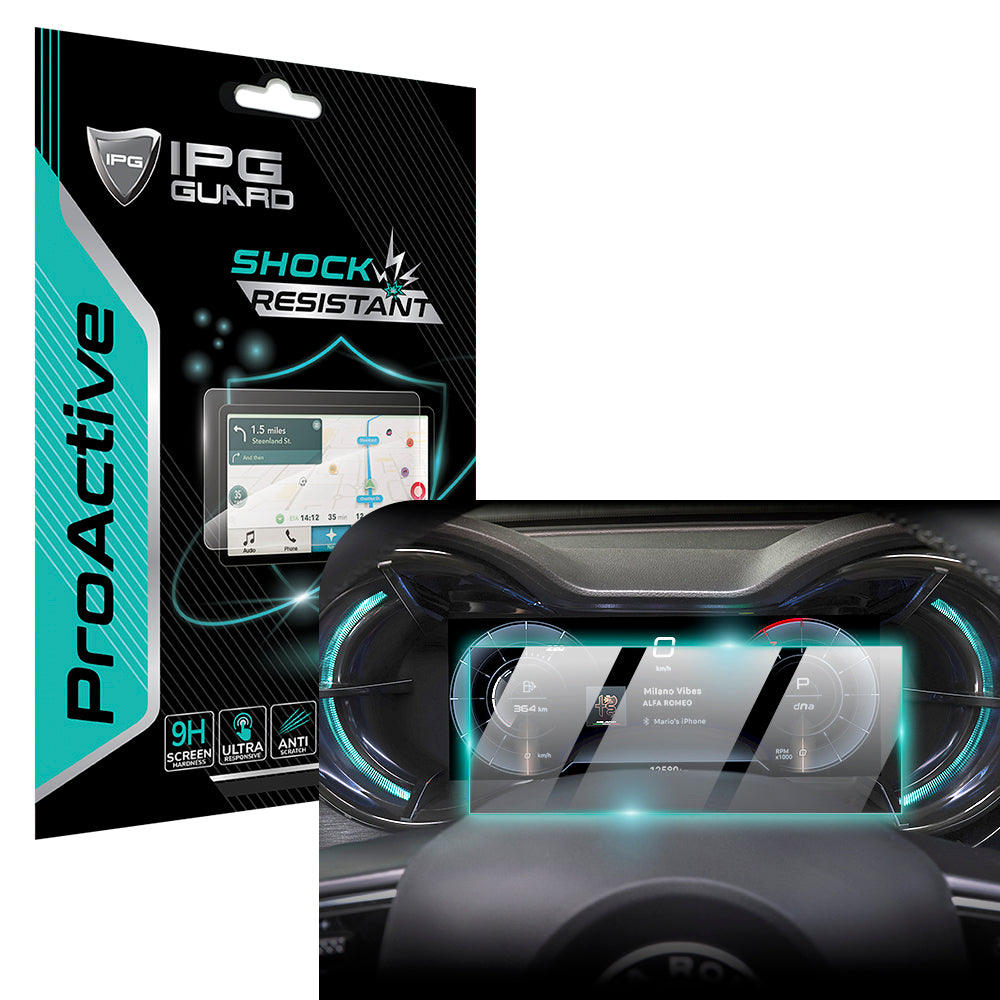
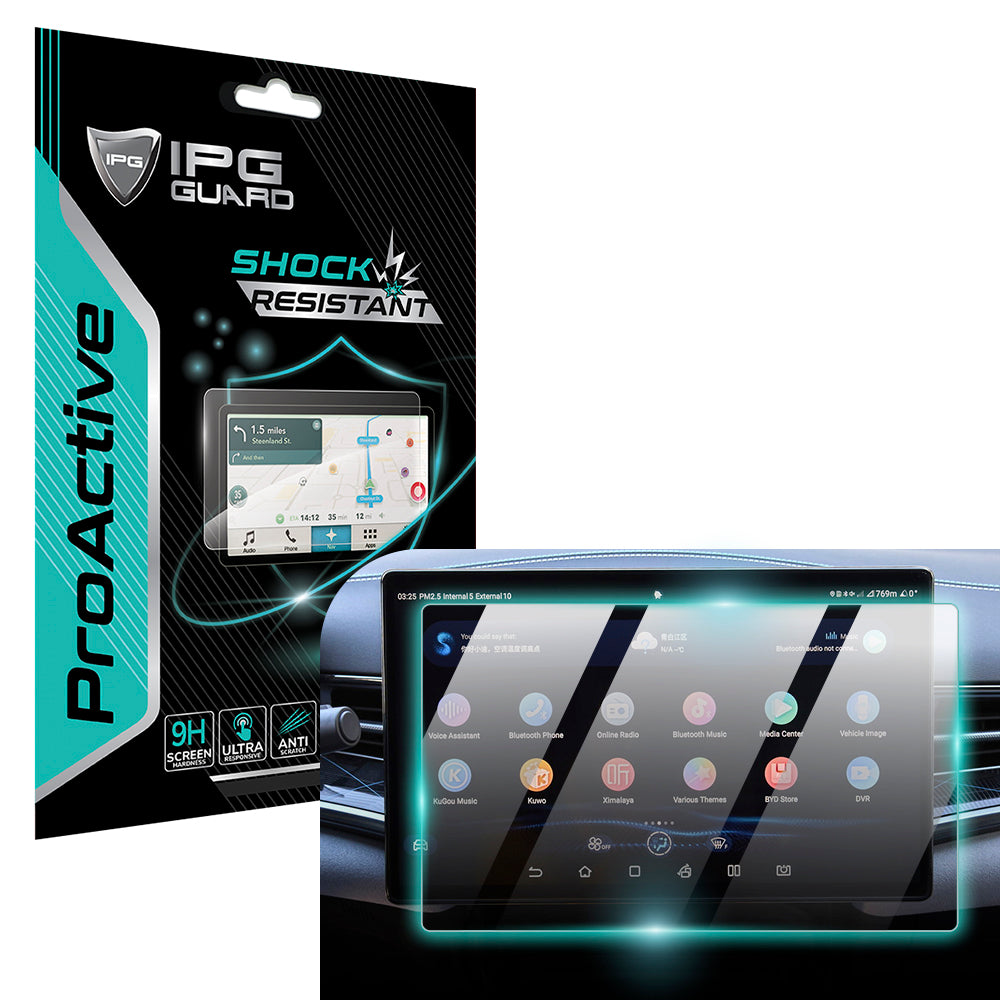

What if your motorcycle's most expensive tech component was also its most vulnerable? Your high-definition TFT display is your mission-critical flight deck, yet it's constantly under siege from UV radiation and abrasive road dust. You've likely felt the frustration of sun glare washing out your navigation just when you need it most. Or perhaps you've noticed those micro-scratches that appear after a simple cleaning. A high-quality motorcycle display screen protector isn't just an accessory; it's essential environmental shielding for the 2026 rider.
We understand that your bike is a high-value investment that deserves meticulous care. We'll show you how to achieve crystal-clear visibility in all lighting conditions while providing invisible, long-term security. This guide covers the technical specifications of advanced hydrogel and tempered glass, ensuring you choose the right material for your specific cluster. You'll learn how to maintain your display's integrity and preserve its resale value through precision-cut protection and bubble-free application techniques.
Key Takeaways
- Understand why modern TFT and LCD displays are high-value components that require specialized environmental shielding against UV yellowing and fading.
- Compare the flexibility of hydrogel (IPG Original) for curved clusters against the impact resistance of tempered glass to find your ideal shield.
- Learn how a precision-engineered motorcycle display screen protector eliminates dangerous sun glare and washout to ensure crystal-clear navigation.
- Master the professional installation process by properly removing oils and road grime for a guaranteed bubble-free finish.
- Discover tailored protection kits for high-end clusters like Harley-Davidson and BMW, featuring the technical performance of IPG ProActive films.
Why Modern Motorcycle Displays Require Specialized Protection
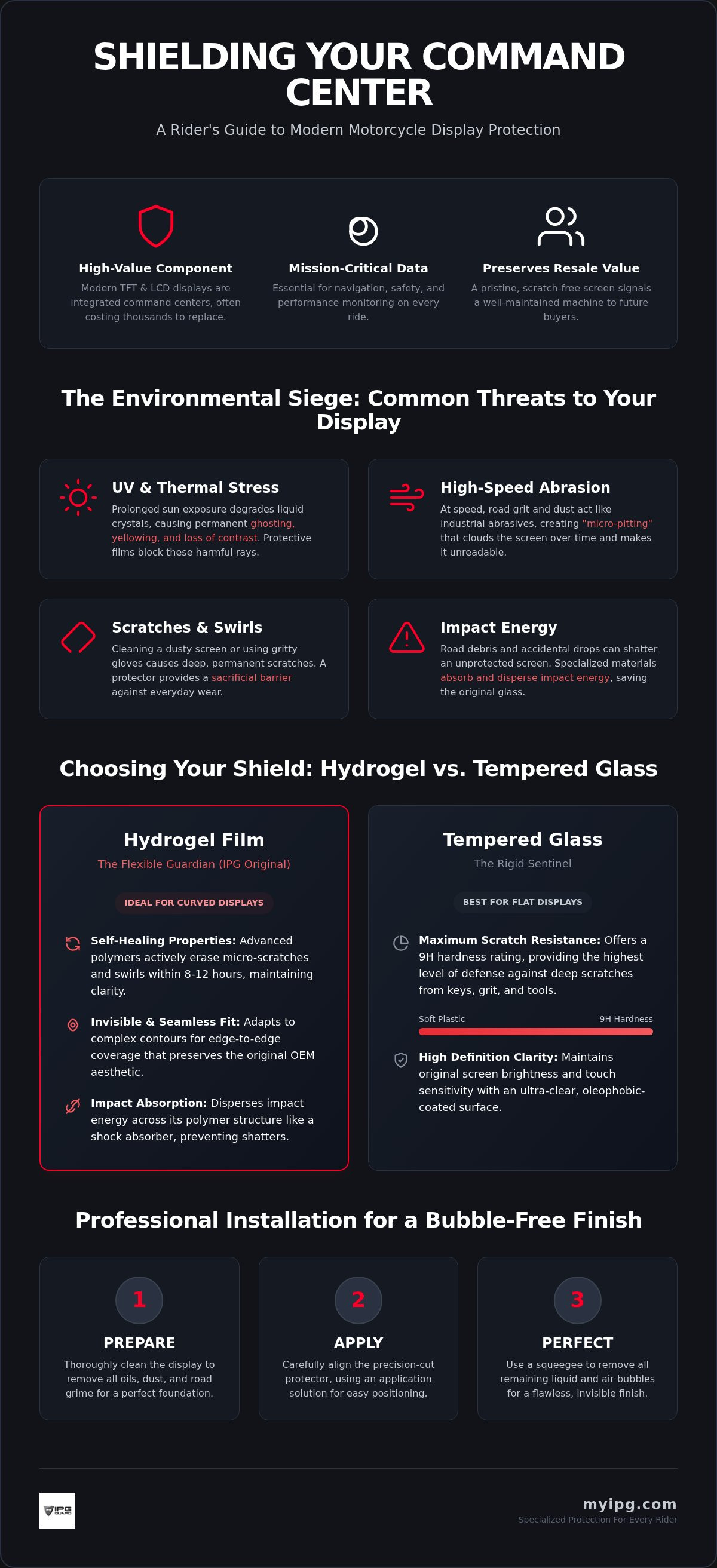
Modern motorcycles feature high-value TFT and LCD instrument clusters. These aren't just speedometers anymore. They're integrated command centers. Replacing a damaged unit often costs thousands of dollars. Unlike a smartphone tucked safely in a pocket, your display faces 100 mph wind, constant engine vibration, and direct exposure to the elements. Preserving this hardware is essential for maintaining your bike's future resale value. A pristine, scratch-free screen signals a well-maintained machine to any future buyer. Don't leave your cockpit's most expensive component vulnerable to the environment.
The Threat of UV and Thermal Stress
Prolonged sun exposure degrades liquid crystal integrity. UV radiation acts as a silent killer for motorcycle clusters. It breaks down the chemical bonds within the display panel, leading to permanent ghosting and loss of contrast. High-performance protective films serve as a critical filter. They block harmful rays before they reach the sensitive electronics. By the year 2026, thermal yellowing in motorcycle displays is defined as the irreversible discoloration of the screen's adhesive and polarizing layers caused by sustained heat absorption and ultraviolet exposure. This degradation makes navigation unreadable and ruins the aesthetic of your cockpit. Choosing the right screen protector materials ensures your tech stays cool and clear even on the hottest summer tours.
Impact and Abrasion on the Open Road
Standard phone protectors fail in the saddle. They aren't engineered for high-vibration environments. Road grit and dust act as industrial abrasives during high-speed rides. Every mile creates "micro-pitting" on an unprotected surface. These tiny craters eventually turn your screen into a cloudy, unreadable mess. Cleaning a dusty screen without a motorcycle display screen protector is even worse. You're essentially rubbing sandpaper into the finish with every wipe. Touch-sensitive units face additional risks. Gritty gloves cause deep, permanent scratches during interface interaction. A specialized motorcycle display screen protector creates a sacrificial barrier. It absorbs the friction and impact energy. It takes the hit so your original glass doesn't have to. Secure your flight deck. Invest in specialized armor that handles the reality of the open road.
Protecting your tech is about stewardship. It's about maintaining the performance of the tools you rely on for navigation and safety. A precision-engineered film provides peace of mind. It ensures that your display remains as responsive and clear as the day it left the showroom.
Hydrogel vs. Tempered Glass: Choosing Your Shield
Selecting the correct motorcycle display screen protector requires a deep understanding of material science and bike geometry. Your instrument cluster isn't just a flat pane of glass. It's a sophisticated interface utilizing advanced display materials designed for high-resolution output. The choice between hydrogel and tempered glass dictates how your tech survives the next 50,000 miles. Each material offers distinct advantages in impact management and optical clarity. Making the right decision is about matching the shield to your specific mission profile. Explore the details of Choosing the ultimate shield in 2026 to ensure your cockpit remains mission-ready.
Why Hydrogel Dominates the Motorcycle Market
Hydrogel is the superior choice for the modern, curved motorcycle cluster. Unlike rigid materials, hydrogel adapts to complex contours. It flows into the edges of the display, providing a seamless, invisible look that preserves the OEM aesthetic perfectly. This material specializes in impact absorption. It acts as a shock absorber for your screen, dispersing energy across its polymer structure rather than reflecting it.
The self-healing properties of hydrogel are a game-changer for riders. Advanced polymer matrices can now erase micro-scratches and swirl marks in just 8 to 12 hours. This is a significant improvement over previous technologies that required a full day to recover. If your glove drags a bit of road grit across the surface, the material actively repairs itself. This resilience ensures your view remains unobstructed by the wear and tear of daily operation. For those seeking this level of resilient stewardship, the IPG Original (Hydrogel) Screen Protector provides the precision fit required for high-end clusters.
When to Consider Tempered Glass
Tempered glass remains a powerhouse for flat display applications. With a hardness rating of 9H, it offers the highest level of scratch resistance currently available. It excels at impact deflection. If a heavy stone strikes a flat screen, the glass shield is designed to sacrifice itself by cracking, which prevents the energy from reaching the primary LCD. However, rigidity brings challenges. On a high-vibration motorcycle chassis, glass can be brittle. Constant engine resonance and chassis flex may cause edge lifting or premature cracking if the fit isn't perfect.
Thickness is another critical variable. A motorcycle display screen protector must be thin enough to maintain full touch sensitivity. You need to be able to navigate menus and maps with gloved hands without lag. Hydrogel typically offers a thinner profile, which often translates to better tactile feedback through leather or textile gloves. Choose glass for maximum surface hardness on flat planes; choose hydrogel for total environmental security on the complex, curved displays found on most 2026 models.
Anti-Glare Technology: Enhancing Ride Visibility
Screen washout is a critical safety hazard. At highway speeds, your focus must remain on the road. A split-second glance at your navigation should be instantaneous. When direct sunlight hits a polished TFT surface, it reflects at a concentrated angle, effectively blinding you to your GPS data and lean-angle sensors. A high-performance motorcycle display screen protector solves this by utilizing micro-textured surfaces to break up specular reflection. This technology ensures that your flight deck remains readable even when the sun is directly overhead.
The science of light diffusion involves balancing "Ultra-Clear" aesthetics with functional "Anti-Glare" performance. Matte finishes offer the highest level of diffusion, though they can slightly soften pixel sharpness. Satin finishes provide a sophisticated middle ground, reducing harsh reflections while maintaining vibrant color contrast. Choosing the right finish is about stewardship over your riding experience, ensuring that environmental lighting never dictates your ability to see critical engine data.
Solving the Direct Sunlight Dilemma
IPG ProActive technology manages high-intensity light through a specialized multi-layer construction. These layers work to trap and dissipate incoming photons rather than bouncing them back into your eyes. This is essential for modern high-resolution clusters that output significant brightness but still struggle against the sheer power of midday sun. By integrating anti-glare shields for modern navigations, you ensure that your routing remains visible through every turn and elevation change. This level of protection allows you to maintain high-speed situational awareness without squinting or repositioning your helmet.
Maintaining Night-Time Clarity
Superior visibility isn't just for the day. A low-quality motorcycle display screen protector can cause dangerous "halos" around backlit instruments during night rides. This happens when the protector's internal adhesive or film structure scatters the display's own light. High-end films prioritize light-transmission rates of 99% or higher to prevent this distortion. Optical clarity standards for 2026 motorcycle displays require a minimum light transmission of 99% while maintaining a haze value below 1% to ensure zero distortion under high-intensity LED backlighting. This meticulous level of engineering ensures that your instruments look sharp and clear, whether you are riding under the noon sun or through a midnight mountain pass.
How to Install Your Protector Like a Professional
Precision installation is the final step in securing your high-value display. It requires a methodical approach and a controlled environment. Preparation is 90% of the success for a bubble-free finish. You aren't just applying a film; you're sealing a mission-critical component against the elements. Use a specialized cleaning solution to strip away oils, waxes, and stubborn road grime. These contaminants are prevalent on motorcycles but rare on consumer electronics. Ensure the surface is clinically clean before the film makes contact. Seal the deck. Protect the glass.
Application methods vary by material and cluster geometry. Hydrogel protectors typically utilize a "wet" application method. This involves a specialized slip solution that allows you to slide the motorcycle display screen protector into the perfect position. It's the ideal choice for complex, curved clusters that require micro-adjustments. Tempered glass usually requires a "dry" install. It relies on a precision silicone adhesive layer. Align it once and let it settle. Both methods demand patience and a steady hand to maintain the integrity of the bond.
The Dust-Free Environment Hack
Never install a protector in a windy driveway or an open carport. Wind carries microscopic grit that ruins the adhesive layer instantly. If a garage isn't available, perform the installation in a shielded area after a light rain or in a humid environment where dust is settled. Use a high-quality "tack cloth" to catch stray particles right before the final application. Alignment on complex dashboard shapes requires starting from a fixed reference point, such as a button or a sharp corner. Work from the center outward to prevent the film from bunching at the edges.
Troubleshooting Common Install Issues
Finding a piece of lint under the shield isn't a disaster if you act quickly. Use a piece of adhesive tape to lift the edge and "fish" out the particle without touching the adhesive with your fingers. Removing air bubbles without damaging the film requires a soft-edged squeegee and consistent, moderate pressure. Push the trapped air toward the nearest edge. For deeper insights into achieving a flawless finish, learn how to remove air bubbles from your protector.
Post-install care ensures long-term adhesion and performance. Avoid high-pressure washing or extreme heat exposure for at least 24 hours. This allows the adhesive to cure and bond fully with the display surface. Check the perimeter periodically to ensure no lifting has occurred. To secure your cockpit with a professional-grade kit, explore our precision-cut screen protectors designed for the 2026 rider.
IPG Specialized Solutions for Every Rider
Generic "cut-to-size" films are a compromise your bike doesn't deserve. They often leave vulnerable gaps where road dust and moisture accumulate. A precision-engineered motorcycle display screen protector from IPG is mapped to the exact CAD data of your bike's instrument cluster. This custom-fit approach ensures that every millimeter of your high-value display is shielded from environmental stress. It eliminates the rough, hand-cut edges that catch on gloves or cleaning cloths. Whether you ride a BMW, Ducati, or Yamaha, our kits provide a factory-spec finish that universal alternatives simply cannot match.
IPG ProActive stands as the gold standard for high-end instrument clusters in 2026. It utilizes a multi-layer construction designed specifically for the high-output TFT screens found on premium European and Japanese motorcycles. This film manages high-intensity light and heat, preventing the thermal degradation that ruins liquid crystal panels over time. For riders who demand a showroom finish at all times, the IPG Zerodust Screen Protector technology revolutionizes maintenance. It utilizes a proprietary anti-static coating that repels fine particles and road soot. This ensures your display remains pristine even during long-haul tours across dusty terrain. Preserve the finish. Maintain the value.
The Harley-Davidson Cluster Specialist
Harley-Davidson displays feature a unique, iconic architecture that requires a dedicated protection strategy. We provide tailored solutions for these luxury cruisers, ensuring the premium aesthetic is preserved. Our kits are precision-cut to follow the distinct, often complex contours of the Harley interface. This level of meticulousness ensures that the protector is virtually invisible once applied. Secure your investment with a specialized Harley Cluster Display protector. It provides a seamless, resilient barrier that guards against the high-amplitude vibration and intense UV exposure typical of open-road touring.
Beyond the Dashboard: Total Bike Protection
Our commitment to technical excellence extends beyond the primary dashboard. We offer a comprehensive suite of protective solutions, including high-durability decals for wheel tire caps and emblem overlays for various manufacturers. Every product we design reflects our role as a guardian of your technology. We believe in the preservation of what you value most. This isn't just retail; it's a partnership in performance and reliability. With global shipping available for riders worldwide, professional-grade protection is always within reach. Protect your ride with IPG specialized shields today and experience the difference of precision-engineered security.
Secure Your Flight Deck for the Miles Ahead
Your motorcycle's display is more than a screen; it's the heart of your riding experience. By now, you understand that environmental shielding is essential to prevent UV yellowing and abrasive road damage. Whether you choose the impact deflection of tempered glass or the self-healing flexibility of hydrogel, the goal remains the same: total stewardship over your technology. Integrating a specialized motorcycle display screen protector ensures that your navigation remains clear and your resale value stays high, regardless of the terrain or the intensity of the sun.
We take pride in providing precision-engineered solutions that riders worldwide trust for their high-value clusters. Our kits are precision-cut for a perfect fit, offering advanced UV and scratch resistance that generic films can't match. Don't wait for the first scratch to act. Browse Precision-Cut Motorcycle Display Protectors today and give your bike the professional-grade armor it deserves. Ride with confidence, knowing your tech is safe under our watch.
Frequently Asked Questions
Do I really need a screen protector for my motorcycle?
Yes. Motorcycle clusters are high-value components exposed to extreme environmental stress. Without protection, your TFT display is vulnerable to UV yellowing, road grit abrasion, and permanent scratches from cleaning. A dedicated motorcycle display screen protector acts as a sacrificial barrier, preserving the integrity of the original glass and maintaining your bike's resale value over thousands of miles. It's a small investment that guards your cockpit's most expensive technological asset.
Will a screen protector make my motorcycle display harder to read in the sun?
No, the right protector actually improves visibility. High-quality anti-glare films use micro-textured surfaces to diffuse direct sunlight and eliminate specular reflection. This prevents the washout effect that makes navigation unreadable during midday rides. Advanced coatings maintain high light-transmission rates while reducing harsh glare, ensuring your critical engine data remains sharp and visible in all lighting conditions. It's about maintaining situational awareness through every elevation change and turn.
Can I install a motorcycle screen protector myself at home?
Yes, you can achieve professional results with a methodical approach. The key is creating a dust-free environment and performing a clinical cleaning of the cluster to remove oils and road grime. Hydrogel protectors often use a wet application method that allows for precise alignment on complex, curved dashboards. Take your time to work air bubbles toward the edges using a soft-edged squeegee for a seamless finish that protects your tech without professional assistance.
Does a screen protector affect the touch screen sensitivity of my bike?
No, modern protectors are engineered to be ultra-thin and highly conductive. They maintain full tactile response even when you're wearing leather or textile riding gloves. Quality materials like hydrogel provide excellent tactile feedback without adding significant bulk. This ensures that your interface remains as responsive as the day it left the showroom, allowing for lag-free navigation and menu scrolling during your ride. You won't lose any functionality while gaining total environmental security.
What is the difference between hydrogel and tempered glass for bikes?
Hydrogel is flexible and ideal for the curved clusters common on modern bikes. It features self-healing properties that erase micro-scratches in 8 to 12 hours. Tempered glass offers a 9H hardness rating for maximum scratch resistance on flat displays but can be brittle under high engine vibration. While glass deflects impacts, hydrogel absorbs them, making it a more resilient choice for many 2026 motorcycle models that feature complex instrument geometries.
How do I remove an old motorcycle screen protector without damaging the cluster?
Start by gently heating the film with a hair dryer to soften the adhesive layer. Once warm, use a fingernail or a plastic card to lift one corner carefully. Peel the protector back at a low angle across the surface rather than pulling it straight up. This technique minimizes stress on the display's polarizing layer and ensures the old shield comes off cleanly without scratching the original glass or damaging the sensitive electronics underneath.
Will it leave a sticky residue if I take it off later?
High-quality protectors utilize advanced silicone-based adhesives that are designed for clean removal. They don't leave a permanent, sticky residue on your instrument cluster. If any minor adhesive ghosts remain, they can be easily wiped away with a microfiber cloth and a small amount of isopropyl alcohol. This ensures your dashboard returns to its factory state without any chemical damage or lingering tackiness, maintaining the pristine look of your high-value motorcycle tech.
How long does a motorcycle screen protector typically last?
A premium motorcycle display screen protector typically lasts between two and three years depending on your riding environment. Factors like constant UV exposure, high-frequency vibration, and cleaning habits influence its lifespan. While the film is durable, we recommend inspecting it periodically for edge lifting or deep impacts. Replacing the protector every few seasons ensures your display always benefits from optimal light filtration and maximum physical security against the harsh realities of the open road.