
That "shatterproof" tempered glass protector you just installed is likely the very reason your fingerprint sensor is failing and your curved screen edges are already lifting. It's a common frustration for anyone holding a modern, high-value device. You want total security, but you're probably asking, what is hydrogel screen protector technology and why is it the new standard? Traditional glass often sacrifices touch sensitivity and aesthetic precision, making a more sophisticated, flexible solution necessary for today's complex screen geometries.
You deserve a protector that feels like the original screen. We'll show you how this advanced, liquid-based polymer matrix acts as a sacrificial, self-healing skin for your most valuable electronics. Whether you're protecting a smartphone, a BYD navigation display, or a motorcycle cluster, hydrogel provides an invisible shield that rigid glass simply can't match. It's about precision fit and uncompromised clarity.
Discover the science behind these flexible films, from their 4H pencil hardness to their ability to heal micro-scratches in under 12 hours. We'll explore why this aerospace-grade material is the superior choice for maintaining the integrity and performance of your tech without the typical installation headaches or unsightly bubbles.
Key Takeaways
- Understand the cross-linked polymer matrix that provides superior impact absorption without the shattering risks of traditional tempered glass.
- Learn what is hydrogel screen protector technology and how its 0.1mm-0.2mm profile maintains 100% accuracy for ultrasonic fingerprint sensors.
- Discover how the self-healing properties of TPU-based films use ambient heat to erase minor surface scratches and maintain a pristine finish.
- Identify why this flexible material is the essential solution for high-value curved displays in automotive, marine, and industrial environments.
- Master the precise cleaning and alignment techniques required to achieve a permanent, bubble-free bond on any complex screen geometry.
Defining Hydrogel: More Than Just a Plastic Film
Many users ask, what is hydrogel screen protector technology and why does it feel so different from traditional glass? To understand the performance, you must look at the chemistry. Hydrogel isn't a basic sheet of plastic. It's a sophisticated network of cross-linked polymer chains. These chains are highly absorbent and structurally flexible, allowing the material to act as a resilient, second skin for your device. While tempered glass is rigid and brittle, hydrogel is dynamic. It doesn't just sit on the surface; it integrates with the display to provide invisible, high-impact protection without adding unnecessary bulk.
The evolution of screen safety has moved past the days of old-school PET films. Those early protectors were prone to yellowing, peeling, and offered almost zero impact resistance. Modern TPU-based hydrogels are a massive leap forward. They possess a unique "rubbery" texture that serves a critical purpose. When an object strikes the screen, the polymer matrix absorbs and disperses the energy across its surface. This prevents the force from reaching the glass underneath. It's a proactive approach to safety that prioritizes the integrity of your high-value electronics.
The Molecular Structure of TPU
Thermoplastic Polyurethane (TPU) serves as the core foundation of every high-end hydrogel shield. This material is prized for its extreme elasticity and optical clarity. Because of its molecular arrangement, TPU can stretch significantly without tearing or losing its shape. This makes it the only viable choice for the deep curves found on modern smartphone displays and automotive infotainment systems. TPU serves as a vital bridge between flexible rubber and durable plastic to ensure maximum screen safety. It provides the toughness of a hard shell with the energy-damping properties of an elastomer.
Why 'Hydro' Matters: Moisture and Adhesion
The "hydro" in the name refers to the material's gel-like consistency and its ability to retain a specific level of moisture within the polymer network. This characteristic is essential for achieving a perfect bond. The gel consistency allows the protector to flow into microscopic screen imperfections, effectively "filling" tiny scratches that might already exist. This process eliminates the air gaps that cause the "rainbow effect" often seen with cheaper films.
This moisture-retention capability is also what powers the ability of self-healing hydrogels to repair themselves over time. By maintaining a flexible state, the polymers can migrate back to their original position after being displaced by a scratch. This advanced behavior is a cornerstone of The Material Science of Modern Screen Protection, ensuring that your view remains crystal clear. The result is a protector that manages light filtration perfectly while remaining virtually undetectable to the eye and the touch.
Hydrogel vs. Tempered Glass: A Performance Comparison
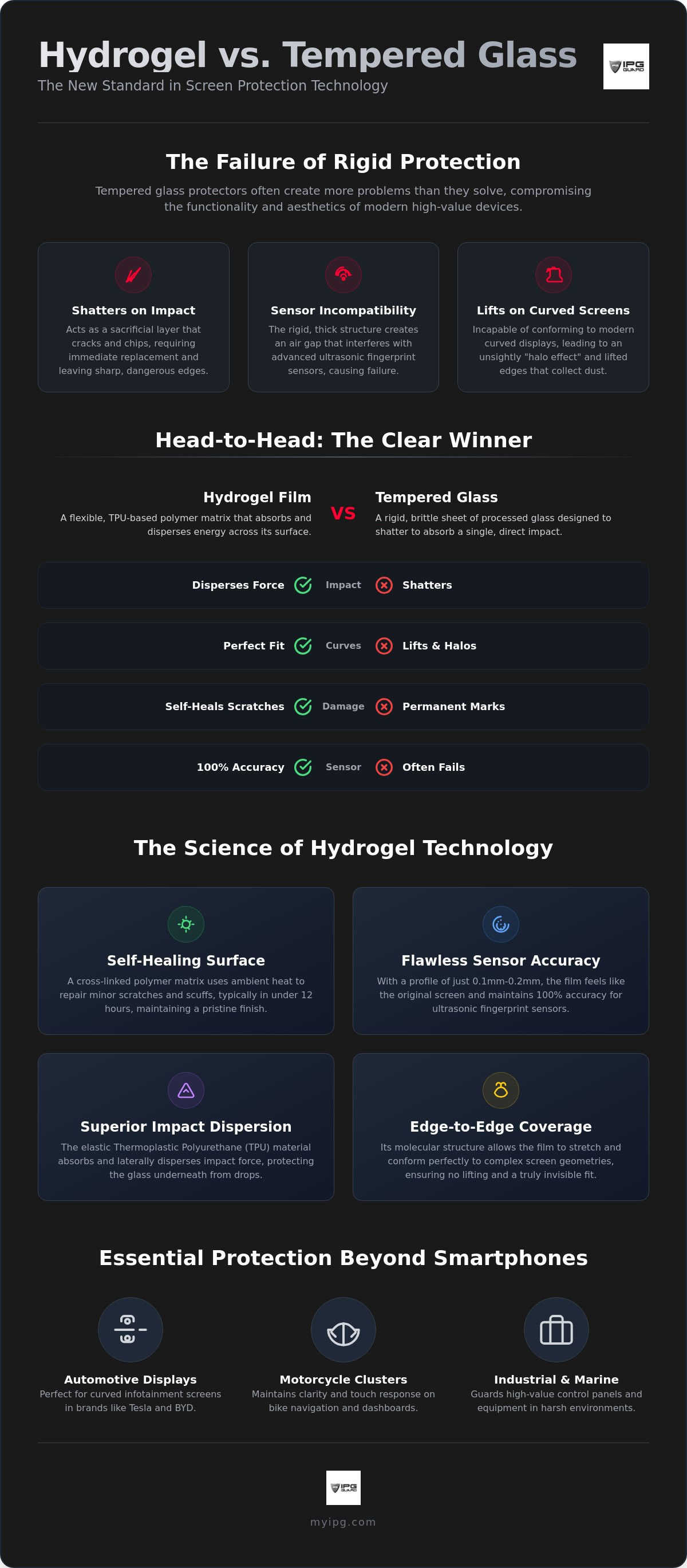
Choosing between rigid glass and a flexible polymer is about more than just scratch resistance. It's about how the material reacts under stress. Tempered glass acts as a sacrificial layer; it shatters to absorb energy. This often leaves the user with sharp, chipped edges and a compromised shield that requires immediate replacement. In contrast, when you ask what is hydrogel screen protector technology designed for, the answer is energy dispersion. The elastic TPU matrix absorbs the force of an impact and spreads it laterally across the film. It doesn't crack. It doesn't chip. It remains a continuous, protective skin that guards your hardware against daily hazards.
Glass frequently fails on curved geometries like Tesla infotainment displays or the rounded edges of an S24 Ultra. The rigid nature of glass prevents it from following the minute contours of the screen, which leads to the "halo effect" or lifting at the corners. Hydrogel is fundamentally different. It creates a permanent, molecular bond with the glass surface. While a glass protector might last only a few months before chipping, a high-quality hydrogel remains intact for the life of the device. It might sustain a minor "dent" from a key or a drop, but the science of self-healing hydrogels ensures these marks often vanish within hours. This resilience makes it a superior long-term investment for maintaining device value.
Clarity and Fingerprint Sensor Compatibility
Modern smartphones rely on sophisticated ultrasonic under-display sensors. Glass is relatively thick, usually between 0.3mm to 0.5mm, which creates a physical barrier that often slows down biometric recognition or renders it useless. IPG Original Hydrogel is significantly thinner, measuring between 0.1mm and 0.2mm. This ultra-thin profile ensures immediate sensor response and 100% touch accuracy. Unlike low-quality films that suffer from a grainy "orange peel" texture, our protectors offer a crystal-clear finish with light transmission rates exceeding 99%. You get the same visual experience as a naked screen without the vulnerability.
Edge-to-Edge Coverage for Curved Displays
Traditional protectors leave the most vulnerable parts of your screen exposed. The curved edges of a 2.5D or 3D display are magnets for impact. Hydrogel is precision-cut to wrap around these curves perfectly. This is especially critical for maintaining the sleek aesthetics of newer rounded models, making specialized iPhone screen protectors a necessity for total coverage. The material grips the edge without lifting, preventing dust ingress and maintaining the factory-fresh look of your hardware. If you value seamless integration, exploring the IPG Original collection is the logical next step for your device's safety.
The Self-Healing Miracle: How Hydrogel Repairs Itself
The term "self-healing" sounds like science fiction, but it's the core reason why users choose this technology. When asking what is hydrogel screen protector material exactly, you're looking at a polymer with high shape memory. Unlike rigid glass that holds onto every scratch until it shatters, hydrogel is dynamic. It's a soft, resilient matrix that reacts to surface deformation. When a sharp object like a key or a grain of sand presses into the film, it doesn't tear the material. Instead, it displaces the polymer chains. Because these chains are cross-linked, they "remember" their original, flat configuration and work to return to it.
Heat acts as the catalyst for this recovery. Whether it's the warmth from your pocket, the sun during a drive, or the heat generated by the device's internal components, thermal energy increases molecular mobility. This allows the material to flow back into the indentations faster. While deep gouges that physically remove material are permanent, the vast majority of micro-scratches from daily use simply vanish. When you understand what is hydrogel screen protector science, you realize it's about molecular elasticity rather than just surface hardness. This process transforms the protector into a proactive guardian, ensuring the screen underneath remains in its factory-pristine state.
The Shape Memory Effect
The molecular architecture of IPG Original Hydrogel is "programmed" to maintain a perfectly flat state. At the microscopic level, the polymer chains act like tiny springs. When a surface scratch occurs, these springs are compressed but not broken. At room temperature, the material possesses enough internal energy to initiate a slow, steady migration back to its baseline. Most micro-scratches sustained during a typical day will heal within 24 hours. This constant renewal ensures that your viewing experience remains uninterrupted by the "spiderweb" of fine lines that plague older plastic films.
Sacrificial Protection vs. Permanent Damage
Think of the hydrogel layer as a sacrificial skin. Its primary mission is to take the brunt of friction and impact so your actual display doesn't have to. Every time you slide your phone across a table or drop it into a bag, the protector absorbs the wear. This is vital for preserving the factory-applied oleophobic coating. Once that coating wears off the original glass, the screen becomes a magnet for fingerprints and smudges. By using a hydrogel shield, you keep that sensitive layer sealed away from the elements. During the initial application, you might see minor imperfections, but removing air bubbles from your protector is often a matter of patience as the material settles and heals into its final, invisible form.
Versatility Beyond Smartphones: Automotive and Industrial Use
While most users first ask what is hydrogel screen protector technology when buying a new phone, the material's true engineering prowess shines in far more demanding environments. Modern displays have moved beyond our pockets and into our car dashboards, boat cockpits, and industrial workshops. These high-value screens face challenges that traditional tempered glass simply cannot handle. Rigid glass is a liability in environments prone to extreme temperature shifts and constant vibration. Hydrogel serves as a resilient, vibration-damping skin that maintains its bond where other materials fail.
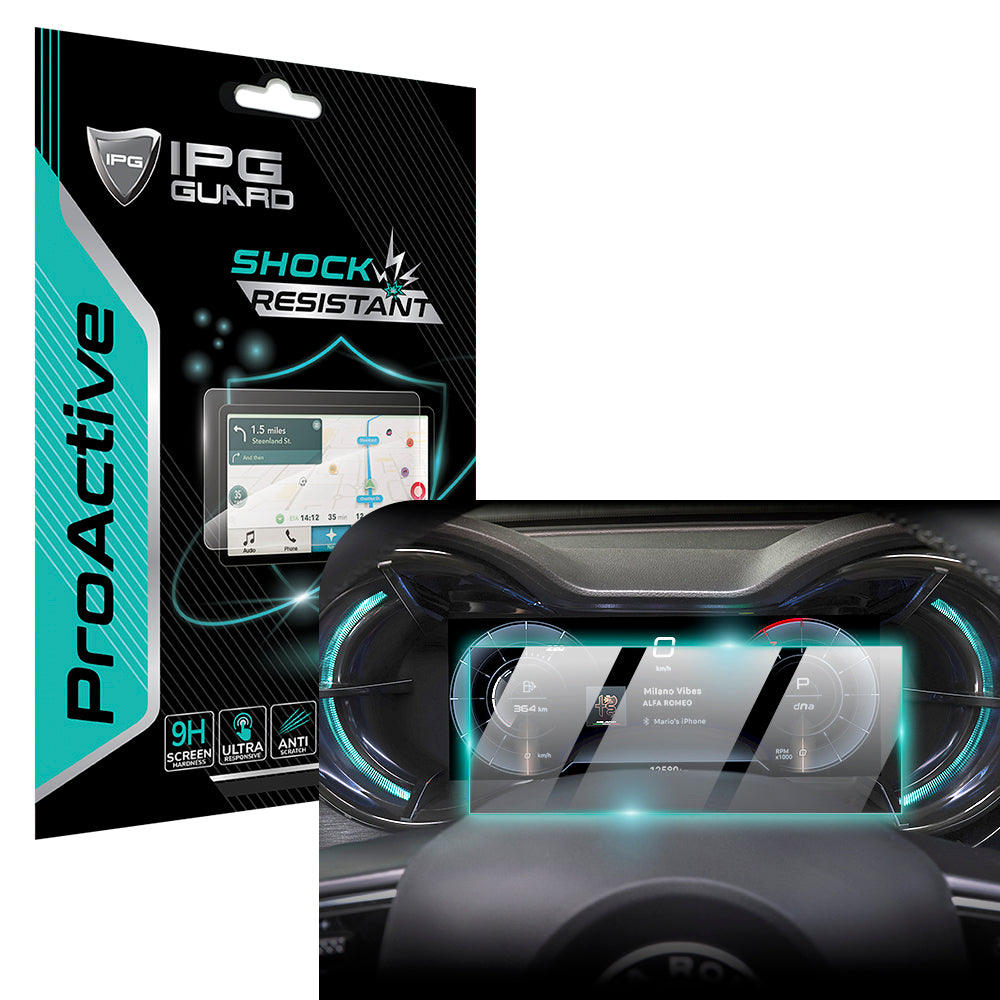
The transition to large-format displays in the automotive and industrial sectors has made precision-cut protection a necessity rather than an option. For specialized equipment like motorcycle clusters or marine electronics, the risk of shattering is a safety hazard. Hydrogel remains intact even under heavy impact. It doesn't produce sharp shards that could cause injury or damage internal components. This non-shattering characteristic makes it the gold standard for professionals who rely on their tools in high-stakes environments. When you understand what is hydrogel screen protector versatility, you see it as a guardian for every vital display you own. For readers interested in broader glass innovations, Fågg AS provides solutions that transform architectural glass from transparent to frosted at the touch of a button.
EV and Automotive Navigation Protection
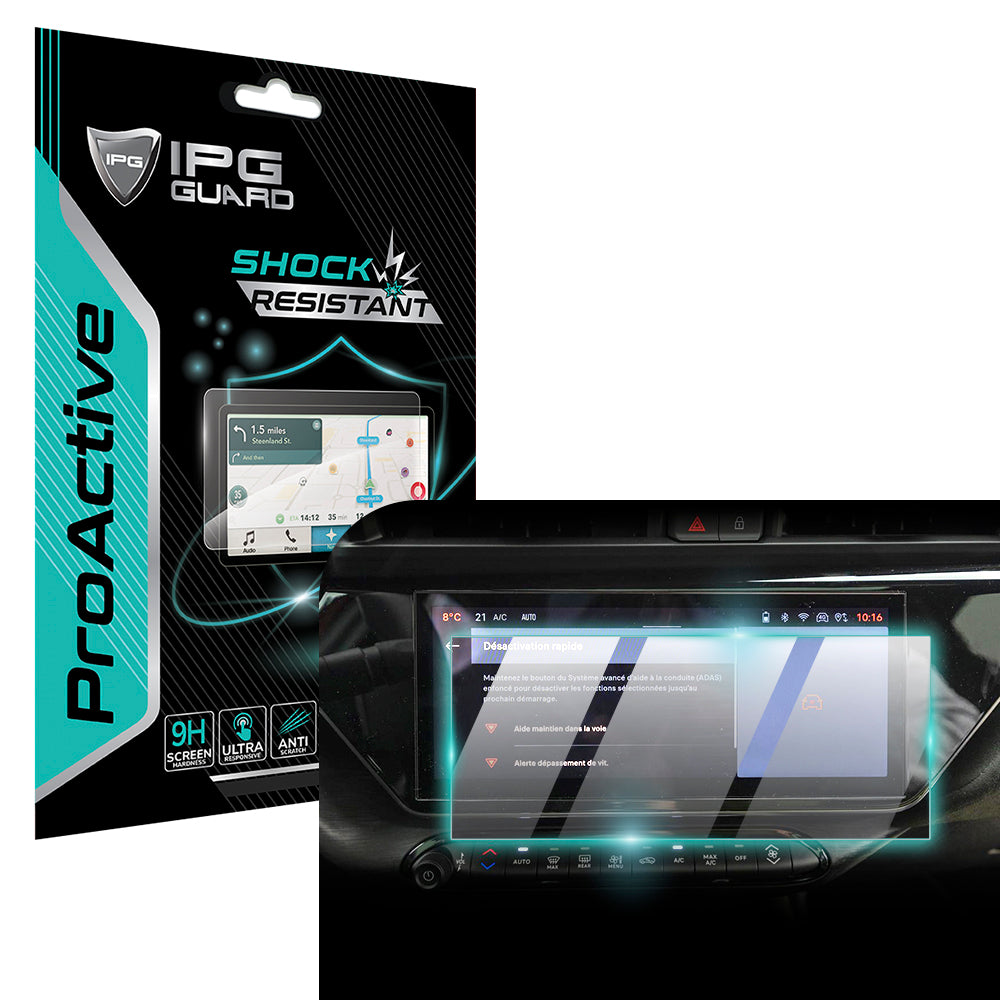
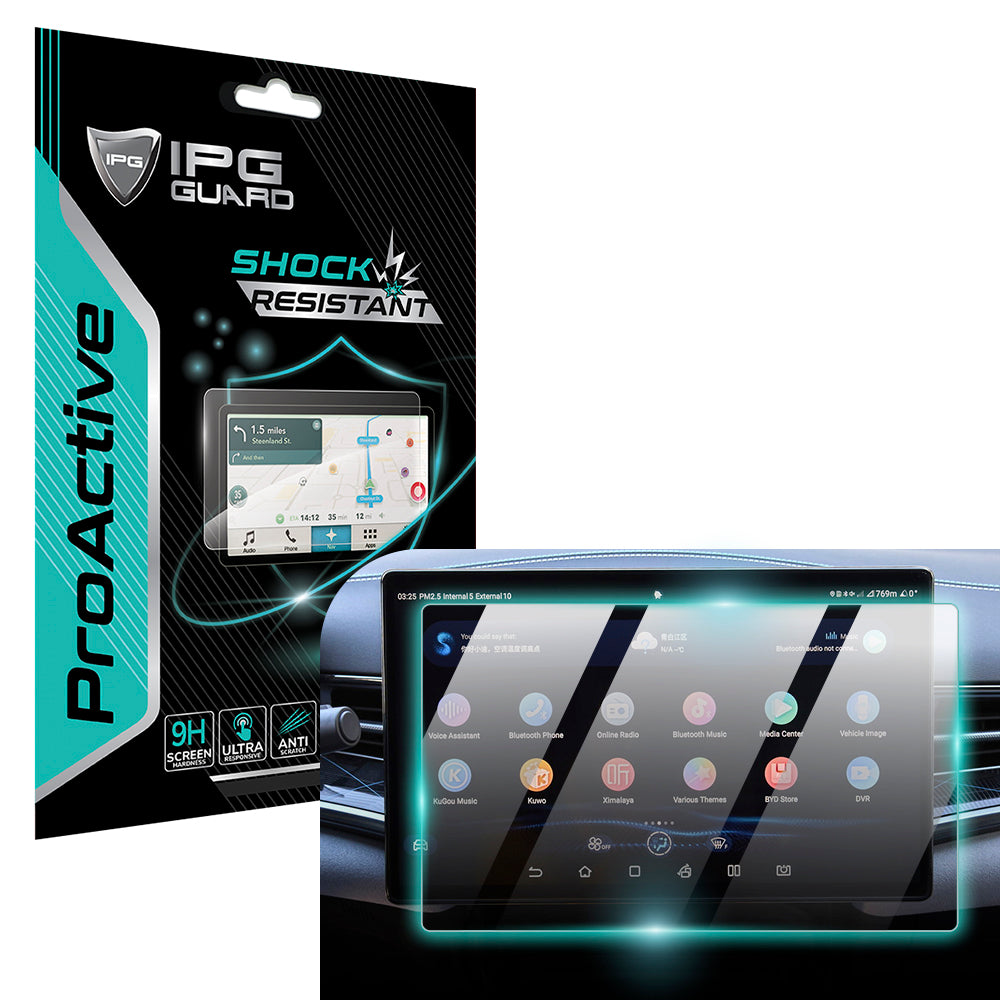
Large 15.6-inch displays in vehicles like the BYD Seal or Tesla Model 3 are prone to distracting glare and oily fingerprint build-up. These screens are also exposed to massive temperature fluctuations. A car parked in the sun can reach internal temperatures exceeding 70°C, causing standard glass adhesives to bubble or lift. IPG Original Hydrogel is engineered for thermal stability. It maintains a perfect seal across the entire surface of these expansive panels. Our car screen protectors are precision-cut to ensure edge-to-edge coverage for specific BYD and Tesla models, preserving the sleek, factory look of your interior.
Rugged Protection for Marine and Industrial Tools
In the marine world, saltwater is the enemy of electronics. Fishfinders from Lowrance and Garmin require a shield that resists salt spray and intense UV exposure without yellowing. Hydrogel provides a chemically resistant barrier that protects the sensitive screen surface from corrosion. Similarly, in the automotive workshop, mechanics use Snap-on Triton or Autel diagnostic tools that are constantly exposed to oil, grease, and heavy handling. The 'Zero Dust' technology integrated into our shields ensures a clean application even in busy environments. This specialized protection prevents oil-based damage and keeps professional equipment operational. Explore our professional-grade industrial shields to safeguard your essential tools against the harshest conditions.
Installation and Maintenance of Your Hydrogel Shield
Installing a high-performance shield requires a methodical approach. Unlike rigid glass, which can be dropped into place, hydrogel requires active engagement with the surface. If you've been wondering what is hydrogel screen protector application like for large-scale displays or complex curves, it's a process of precision and patience. Follow these four critical steps to ensure your "invisible" shield remains flawless for years to come. We treat every application as an act of stewardship over your device's integrity.
- Step 1: Deep Clean. Use the included lint-free cloth and specialized dust removal stickers to eliminate every microscopic particle. Even one speck of dust will prevent a perfect bond and cause a visible defect.
- Step 2: Precise Alignment. For smartphones, use the alignment tool provided in the kit. For larger automotive or marine screens, utilize the "hinge" method. This involves taping one side of the protector to the frame before peeling the backing to ensure it lands exactly where you intend.
- Step 3: Squeegee Activation. Apply firm, consistent pressure with the squeegee from the center outward. This action removes trapped air and activates the advanced adhesive layer to create a molecular bond.
- Step 4: The Settling Period. Allow 24 hours for the material to fully cure. Small micro-bubbles or slight streaks often vanish during this time as the polymer matrix expands and levels out naturally.
The 'Invisible' Finish: Tips for a Bubble-Free Look
A common mistake is trying to peel the protector back up once the gel has started to set. Don't do this. Lifting the edge can stretch the TPU or introduce fresh dust that wasn't there before. If you're working in a high-traffic area, try the "bathroom steam" trick. Running a hot shower for a few minutes clears the air of floating lint and hair, creating a temporary clean-room environment for a perfect install. If you ever need to upgrade or swap your shield, knowing how to safely remove a screen protector is essential to avoid leaving any residue on your factory display. Slow, steady peeling from a corner is always the best practice.
Why Choose IPG Original (Hydrogel)?
At My IPG, we act as the dedicated guardian of your technology. We understand that your devices are both high-value financial investments and essential daily tools. Our IPG Original (Hydrogel) technology is the result of precision aerospace-grade manufacturing. It's designed to fit everything from the latest smartphone to complex motorcycle clusters and industrial diagnostic tools. We don't just sell film. We provide a sophisticated, self-healing skin that preserves the integrity of what you value most. With global shipping and wide compatibility, we ensure your tech is protected no matter where you are. When you consider what is hydrogel screen protector quality at its peak, the answer is always IPG. We take the hit so your screen doesn't have to.
Shop the IPG Original Hydrogel Collection today and experience the ultimate in invisible shielding.
Future-Proof Your Displays with Invisible Shielding
Understanding what is hydrogel screen protector technology empowers you to move beyond the limitations of fragile, rigid glass. You've seen how this flexible polymer matrix absorbs impact and wraps perfectly around complex 3D screen geometries. It's the only viable choice for maintaining the integrity of curved smartphone displays, expansive EV navigation systems, and rugged industrial tools. By choosing a material with built-in self-healing surface technology, you ensure that daily micro-scratches vanish before they can compromise your view.
We take our role as the guardian of your technology seriously. Our aerospace-grade polymer technology provides a resilient, second skin that preserves both the performance and resale value of your high-value items. We offer precision-cut solutions for 5,000+ devices, ensuring a perfect fit for everything from your personal watch to professional marine electronics. Don't settle for protectors that chip, lift, or fail. Secure your device with the IPG Original Hydrogel Shield today and enjoy the peace of mind that comes with uncompromised clarity. Your tech is in safe hands.
Frequently Asked Questions
Is hydrogel better than tempered glass for drop protection?
Hydrogel provides superior energy dispersion compared to tempered glass. While glass shatters to absorb force, hydrogel uses its elastic TPU matrix to spread impact laterally across the surface. This prevents the shock from reaching your screen glass. It's an ideal choice for those who want a protector that stays intact after a drop. You won't deal with sharp shards or immediate replacement needs after a minor accident. However, if a drop has already led to internal display issues or ghost touches, iPhone Werkstatt Marktredwitz provides professional diagnostics and repairs.
Do hydrogel screen protectors get yellow over time?
Modern TPU-based shields are engineered with UV-resistant polymers to prevent yellowing. Older plastic films often discolored due to sun exposure, but high-quality hydrogel maintains its crystal-clear transparency for its entire lifespan. This is vital for outdoor use and automotive displays. We ensure our material science prevents the hazy, aged look common in low-end accessories. Your screen stays bright and color-accurate for the duration of its use.
Can I use a hydrogel protector with a phone case?
Yes, you can use a hydrogel protector with almost any phone case. Because the material is exceptionally thin, usually between 0.1mm and 0.2mm, it doesn't create the bulk that causes cases to lift the edges. We precision-cut our shields to leave a microscopic gap at the perimeter. This design prevents "case push-up" while still providing edge-to-edge coverage. It's the perfect solution for tight-fitting rugged cases.
How do I get rid of the line in the middle of my hydrogel protector?
The faint line in the center is a temporary byproduct of the installation process. It occurs where the protective backing is split for alignment purposes. When people ask what is hydrogel screen protector recovery like, this is the answer. The line will naturally fade and disappear within 24 to 48 hours as the material settles and the self-healing properties activate. Avoid peeling the film to fix it; patience is all that's required.
Are hydrogel screen protectors scratch-proof?
Hydrogel is self-healing rather than strictly scratch-proof. While a deep gouge from a sharp metal object may be permanent, daily micro-scratches from keys or coins will vanish. The polymer matrix is designed to "flow" back into indentations within 12 to 24 hours. This keeps your display looking pristine even after heavy use. It acts as a sacrificial skin that maintains a smooth, unblemished surface over time without the permanent damage seen on bare glass.
Can hydrogel protectors be reused if I take them off?
No, hydrogel protectors are designed for a single, permanent application. Once you remove the film, the adhesive layer loses its integrity and the TPU material can stretch out of shape. Attempting to reapply it will result in bubbles, dust entrapment, and poor edge adhesion. If you need to remove your shield for any reason, it's best to replace it with a fresh unit to ensure your device remains fully protected and visually clear.
Does hydrogel affect the clarity of my car's navigation screen?
Hydrogel actually improves the visual experience of your navigation screen. With light transmission rates exceeding 99%, it doesn't dim the display or shift colors. The material's gel-like consistency fills in existing microscopic scratches on the factory glass, which can restore clarity to older screens. It also helps reduce the harsh glare often found in bright EV cabins. Your maps and data remain sharp and readable in all lighting conditions.
How long does a hydrogel screen protector typically last?
A high-quality hydrogel shield typically lasts between one and two years. Unlike tempered glass, it doesn't chip at the corners or crack from minor pressure. Its lifespan usually matches the upgrade cycle of the device itself. When considering what is hydrogel screen protector durability, remember that environmental factors like extreme heat or chemical exposure play a role. Its ability to heal minor damage significantly extends its functional life compared to standard plastic films.