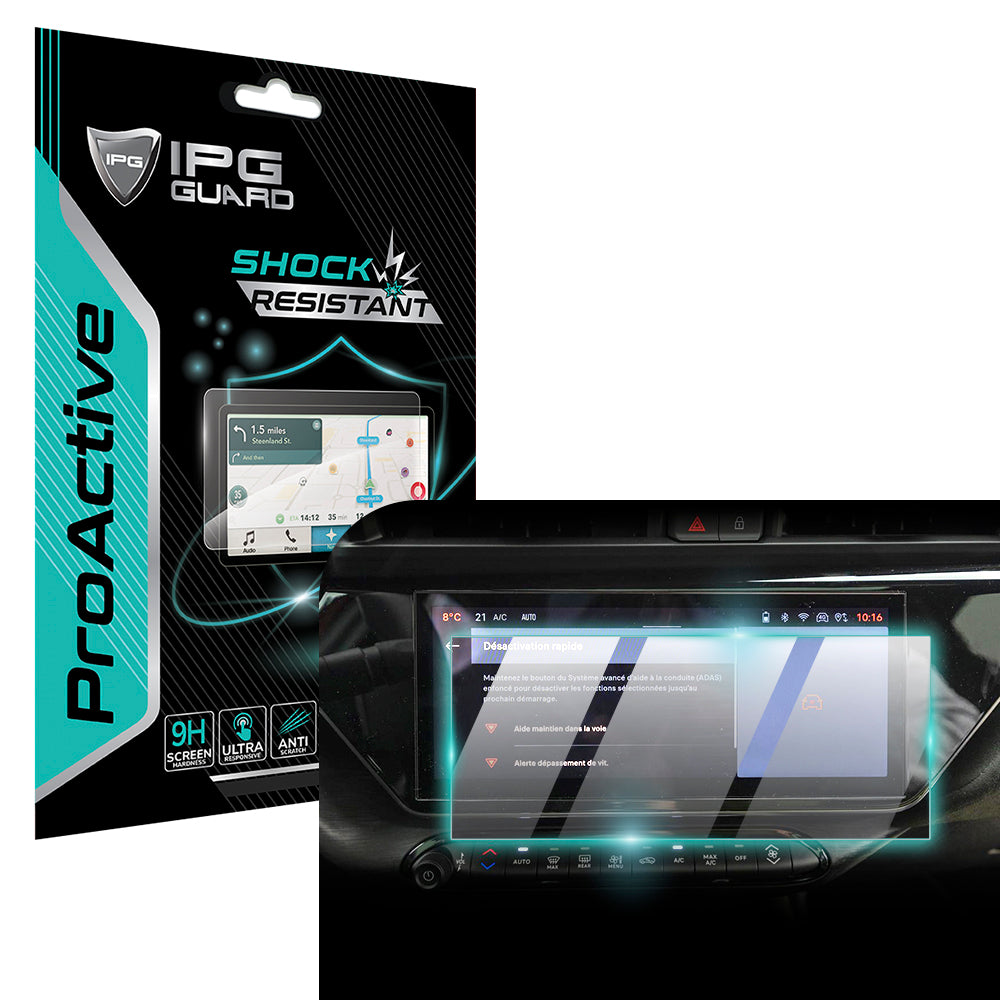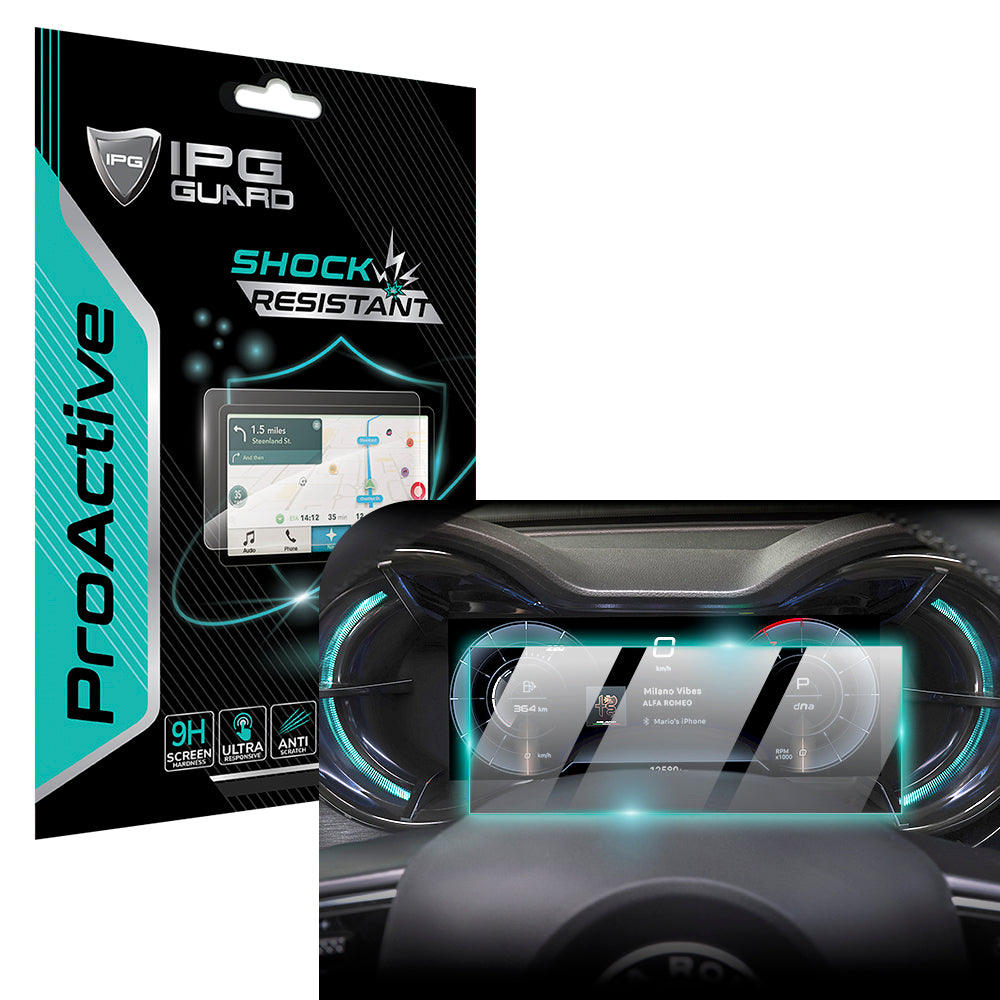
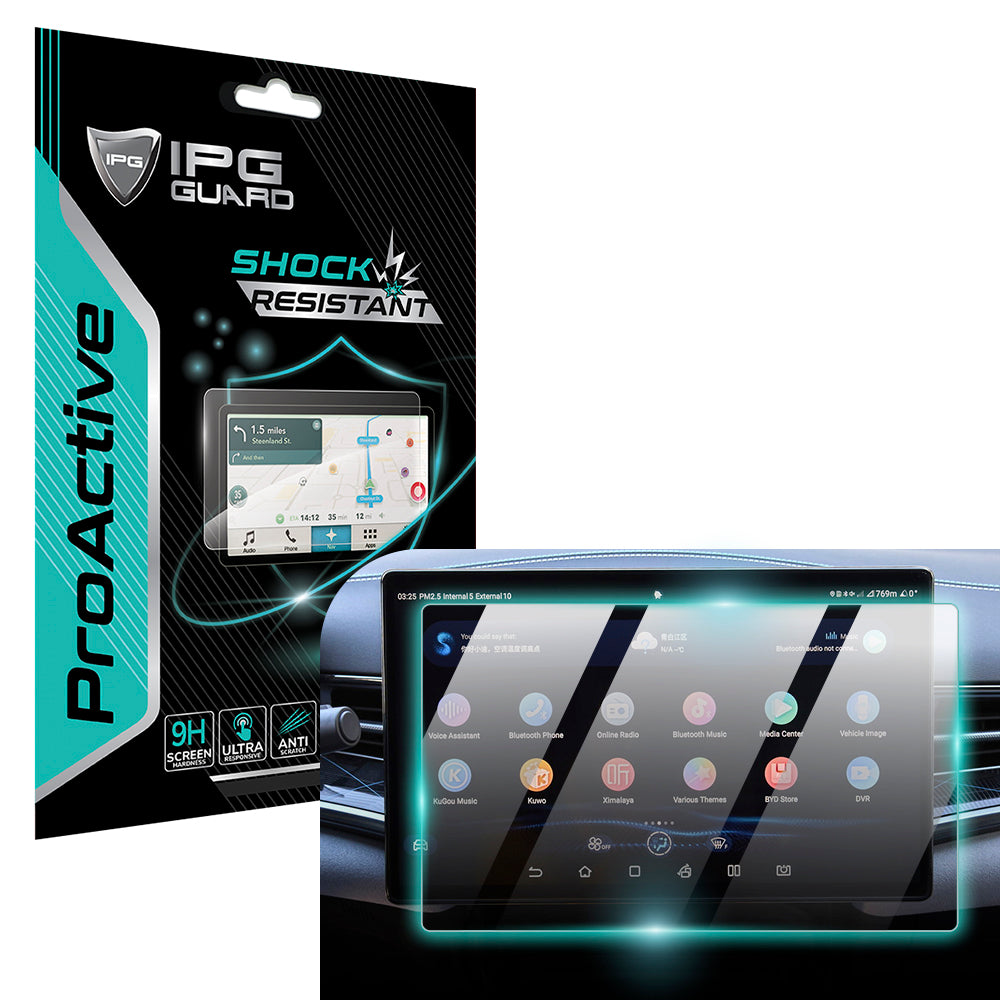


A car touchscreen protector film can help shield a display, but the wrong fit or finish may make the screen harder to see or use. A generic cut can leave edges exposed or overlap the display, while a surface that doesn’t suit your cabin can add distracting reflections. Choosing a protector means balancing coverage with the way you use your screen.
Look beyond the material name. PET, TPU, and tempered glass have different characteristics, and the right choice depends on your vehicle’s exact display, visibility needs, and touchscreen use. A diagonal measurement alone doesn’t describe the screen’s shape, corners, or bezel.
This guide compares fit, visibility, touch response, and material options, with practical checks to make before installation. My IPG’s catalog includes a vehicle-specific example, the IPG ProActive for BYD 2022‑2025 SEAL Navigation Display Screen Protector (15.6" inch), showing why it’s useful to match protection to the actual display.
Key Takeaways
- Match the protector to your vehicle’s make, model, year, trim, and display configuration, not screen diagonal alone.
- Compare the screen’s dimensions, corners, and shape with the protector’s stated fit before choosing.
- Assess visibility and touch response separately, considering cabin light, sunlight, screen angle, and how you use the display.
- Compare film and tempered glass by their stated material, finish, fit, and installation instructions.
- Choose car touchscreen protector film based on exact display compatibility and the viewing experience you want to preserve.
Why car touchscreen protector film starts with your display’s needs
A car touchscreen protector film is a layer placed over an in-dash display. Drivers may choose one to help shield the screen from routine contact and surface wear, or to manage fingerprints and reflections that can make an otherwise clear display harder to view. Just as maintaining cabin surfaces through premium detailing services like Deep Reflections helps preserve your vehicle's interior, dedicated films keep high-touch electronics looking new. Those are useful considerations, but the protector also needs to match the screen and preserve practical access to its information and controls.
Start with the display’s role and position. A central infotainment screen may show maps, audio menus, and vehicle settings. An instrument cluster presents information from in front of the driver, while a separate navigation display may have a different shape and viewing angle. A protector intended for one display isn’t automatically suitable for another, even when both are described with a similar diagonal measurement.
Good protection should fit the screen’s shape, support clear viewing, and keep familiar touch interactions practical.
Which parts of a car display need protection?
Identify the exact surface before comparing materials. The center touchscreen is often within easy reach, so frequent taps and wipes may be a concern. An instrument-cluster screen has its own outline and viewing angle. A separate navigation display may be larger or shaped differently. Placement affects how light reaches the screen and how you read it, so display location is part of compatibility, not a minor detail.
Vehicle-specific examples show why this matters. The IPG ProActive for BYD 2022‑2025 SEAL Navigation Display Screen Protector (15.6" inch) is named for a particular vehicle range and display size. Those identifiers help distinguish it from a generic sheet selected only by approximate diagonal. Match the vehicle and screen configuration, then compare the protector’s stated dimensions and shape with the display.
What should a protector preserve?
Keep the screen useful. Maps, menus, alerts, and other on-screen information should remain readable in ordinary driving conditions, including when cabin light changes. A glossy or matte surface can influence the viewing experience, but don’t assume a finish will eliminate reflections or preserve every detail. Consider visibility in the position where your vehicle’s display sits.
Touch use deserves a separate check. Think about how you interact with the display while parked: tapping menu items, entering destinations, or swiping through controls. A protective layer sits between your finger and the screen, so its material and surface may affect how interaction feels. Review product details rather than assuming scratch resistance, glare reduction, or unchanged responsiveness.
This interaction is part of the broader Human-Machine Interface (HMI), the way people use and receive information from technology. For a car display, protection should respect that relationship instead of focusing only on the surface. Ask yourself: Which display needs coverage? What must stay easy to read? Which touch actions do you rely on? The answers help narrow down fit and material choices.
How to check car touchscreen protector film compatibility
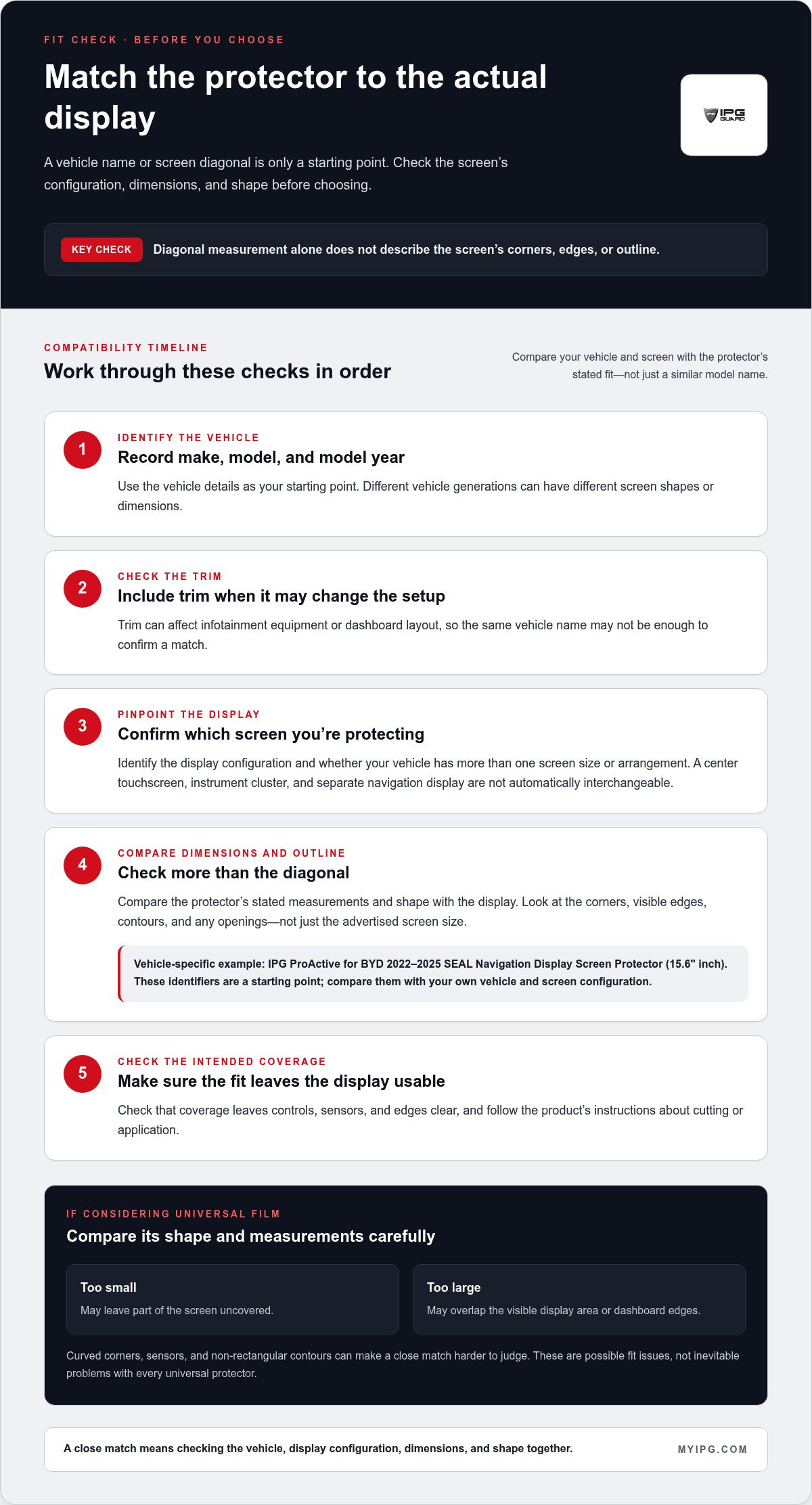
A protector can be well made and still be the wrong fit for your dashboard. Check compatibility in stages before you buy. The car’s badge and the screen’s advertised diagonal are useful starting points, not proof that a particular protector matches your display. Vehicle generations, trim levels, and dashboard configurations can use different screen shapes or dimensions.
Use this checklist to narrow the match:
- Vehicle: Note the make, model, and model year.
- Trim: Include the trim when it may affect the infotainment equipment or dashboard layout.
- Display configuration: Identify which screen you’re protecting, and whether your vehicle has more than one screen size or arrangement.
- Screen shape and dimensions: Compare the protector’s stated measurements and outline with the display, including its corners and visible edges.
Match the protector to the exact display
Identify the screen itself, not just the vehicle name. Check the owner’s documentation or vehicle display settings for configuration details, then compare the protector’s stated fit with what you can see. A diagonal measurement doesn’t describe corner shape, edge contours, or the position of openings. If the stated dimensions or outline don’t align with the display, treat that as a mismatch instead of relying on a similar model name.
The IPG ProActive for BYD 2022‑2025 SEAL Navigation Display Screen Protector (15.6" inch) illustrates a vehicle-and-display-specific listing. Use those identifiers as a starting point, then compare them with your own vehicle and screen configuration. A similar model name or nearby year range alone doesn’t establish compatibility. For more context on comparing vehicle screens and protection options, read this car screen protector buying guide.
Why universal film can be a compromise
Universal film is designed for use with more than one display, so careful comparison is important. A sheet that’s too small may leave part of the screen uncovered; one that’s too large may overlap the visible display area or dashboard edges. Curved corners, sensors, and non-rectangular contours can also make a close match harder to judge. These are possible fit issues, not inevitable problems with every universal protector.
Before choosing a universal option, compare its measurements and shape with your screen. Check that the intended coverage leaves controls, sensors, and edges clear, and follow the product’s instructions about cutting or application. A vehicle-specific option gives you useful identifiers such as make, model, year range, and screen size, but your exact display configuration still matters. My IPG’s automotive display protectors include options for navigation displays and instrument clusters, making it easier to compare vehicle-related protection.
Film, glass, and screen finishes: compare the trade-offs
Material and finish answer different questions. Material describes what the protector is made from and how it’s constructed. Finish describes the surface and how it handles reflected light. Film can have a particular finish, just as a glass protector can. The material alone doesn’t tell you how clearly the screen will appear or how the surface will feel.
Compare the actual product specifications rather than treating every film or glass protector as identical. The table outlines common distinctions to consider. Fit, surface feel, appearance, and installation depend on the individual product and the contours of your vehicle’s display.
| Option | Fit and surface feel | Visual finish | Installation considerations |
|---|---|---|---|
| Protective film | Film may be offered in a thin, display-specific format. Flexibility and surface feel depend on the material and construction. | Check whether the product is glossy, matte, or described with another finish. Film alone doesn’t determine clarity or glare handling. | Follow the product’s stated application method. Confirm its outline and dimensions match the screen. |
| Tempered glass | A distinct, more rigid format. Its edge shape and dimensions need to suit the display. | Review the stated finish and how it may affect the screen’s appearance. | Check the product’s installation instructions and fit details before applying it to a dashboard display. |
| Glossy or anti-glare finish | Finish is a surface characteristic, not a separate material category. Compare the product’s stated feel and compatibility. | Glossy finishes are generally selected for a clear, vivid look; anti-glare surfaces are intended to reduce reflections, though they may change the display’s appearance. | Use the instructions for the specific protector. Don’t infer an application method from the finish. |
When film may suit a car display
Film may suit you if you’re looking for a thin protective layer made for your display. That description alone doesn’t establish how flexible, durable, or scratch-resistant a particular film will be. Those qualities depend on its material and construction. Check the product details for material, finish, coverage, and application method, then compare them with your priorities. For a broader overview of protector materials and their differences, see this screen protector material guide.
When glass or an anti-glare finish may fit better
Tempered glass may appeal if you prefer a rigid protector, but that doesn’t make it the right choice for every dashboard. The screen’s contours and the protector’s stated fit still matter. An anti-glare finish may suit a display that catches sunlight or cabin reflections, while a glossy surface may better match a preference for a clear, vivid image. Weigh those needs against your viewing conditions and preferred screen appearance.
Before choosing car touchscreen protector film, make two separate decisions: which material and construction suit your use, and which finish suits your visibility preference. Then confirm that the specific product’s fit and instructions work for your display.
How to assess visibility, touch response, and everyday usability
A protector’s finish may look suitable in a product description yet feel different in your cabin. Light direction, dashboard position, windshield angle, and screen tilt all affect what you see. Think about when reflections tend to appear on your usual routes, such as bright daytime commutes or nighttime drives with strong cabin lighting. Observe only when safely parked or have a passenger assess the display. Never let a screen check distract you behind the wheel.
Consider what you use the display for. A screen used mainly for navigation needs map labels and route details to remain easy to read at a glance. Media controls may involve frequent taps, while vehicle settings may require precise selections. Assess finish, fit, and touch behavior together to protect the display without compromising how you read or use it.
Check the display in the conditions you actually drive
Notice whether sunlight or interior lights reflect across the screen and whether reflections obscure information you rely on. A matte or anti-glare finish may be worth considering if reflections are a regular annoyance, but no finish should be assumed to remove glare in every cabin or lighting condition. Compare that option with your preference for a clear, vivid appearance and the display’s usual viewing angle.
Separate what you observe from what a listing promises. Look for product-specific information about finish and visibility instead of relying on broad labels such as “anti-glare” or “HD clear.” Those terms don’t tell the whole story. Screen position, light exposure, and your preferred appearance all affect whether a finish suits your use.
Keep touchscreen interaction in the decision
Visibility and touch response are both part of the overall experience, but they’re separate checks. Look for the product’s stated touch compatibility and details about material or surface construction. Don’t assume a film always changes sensitivity, or that every protector leaves it unchanged. The specific product and display matter. If you use small on-screen controls, consider whether accurate taps and familiar gestures remain comfortable.
After installation, assess the interface while parked. Try ordinary actions such as opening a menu, tapping a control, or moving through a map. Use normal, gentle touches; there’s no need to press harder or test functions while driving. If an interaction feels different, pause and review the product’s application guidance before using the display further.
Product-description checklist:
- Is the finish stated, and does it suit your typical light conditions?
- Are touch compatibility and material details provided?
- Does the protector match the display’s fit and coverage requirements?
- Are installation instructions clear enough to follow?
Use these checks to compare car touchscreen protector film options against your real driving routine, not just a feature label. Browse vehicle-specific display protectors to find protection designed around a particular screen.
Choose a vehicle-specific car touchscreen protector film
Your final choice should connect your vehicle’s exact display with the way you view and use it. Weigh fit, finish, touch use, and the product’s stated material together. Don’t fill gaps in a product description with assumptions. If a specification matters to your decision, use it as one of your selection criteria for car touchscreen protector film.
Match your priorities to a protector
Use this decision matrix to turn your priorities into a focused product check. It doesn’t rank one material or finish above another. Instead, it shows what to verify for your screen and driving habits.
- Exact fit: Match the stated vehicle make, model, year, and relevant display configuration. Compare the listed screen size and shape with your actual display.
- Visibility preference: If reflections are a regular concern, look for a stated finish that aligns with your needs. Consider how that finish may affect the display’s appearance.
- Touch use: If you often use on-screen controls, check product-specific information about touchscreen compatibility and review the application instructions.
- Material: Use the material details stated for that specific protector. Don’t assume every film or glass option has the same surface feel, flexibility, or performance.
For example, the IPG ProActive for BYD 2022‑2025 SEAL Navigation Display Screen Protector (15.6" inch) identifies a BYD SEAL model-year range and display size in its product name. These details give you concrete identifiers to compare with your vehicle. Consider the material, surface finish, installation method, and touch behavior as separate product details when making your choice.
What to review before selecting
Pause for one final check before choosing. Confirm that the listing corresponds to your vehicle and display, not merely a similar name or screen measurement. Compare the stated finish with the light and reflections you commonly encounter. Review touchscreen compatibility and read the product’s application and care instructions.
This approach keeps the decision grounded in the details that matter. A vehicle-specific product name can help narrow the match, while material, finish, and interface information help you decide whether it suits your priorities. Base your selection on the product’s stated features and your display’s actual configuration.
My IPG’s catalog includes protection for automotive navigation displays and instrument clusters, with the BYD SEAL listing as one vehicle-specific example. Use the matrix to compare relevant details as you browse, then explore My IPG’s screen protection for options that align with your display and everyday use.
Make your next screen-protection choice with confidence
Your display is part of the everyday driving experience, so choose protection with care. Before browsing, note your vehicle and display details. That makes it easier to compare relevant options and focus on protection that suits your screen, rather than features that don’t match your needs.
My IPG’s catalog includes protection for automotive navigation displays and instrument clusters. One vehicle-specific example is the IPG ProActive for BYD 2022‑2025 SEAL Navigation Display Screen Protector (15.6" inch). Use product-specific information to guide your choice, and compare the stated material, finish, fit, and installation details. The right car touchscreen protector film is the one that fits your display and supports the way you use it.
Ready to choose protection for your display? Explore My IPG screen protection and compare options for automotive displays and other devices.
Frequently Asked Questions
What is car touchscreen protector film?
A car touchscreen protector film is a layer placed over an in-dash display to help shield its surface during everyday use. Coverage and construction vary by product, so check whether the protector is designed for the visible display area and whether its material and application instructions suit your screen. Don’t assume every protector covers or protects the same way.
Can a screen protector affect a car touchscreen’s responsiveness?
It can, depending on the protector and the display, though a change isn’t inevitable. Check product-specific information for touchscreen compatibility instead of relying on a general claim about film or glass. After applying a protector, test familiar actions such as tapping a menu or adjusting a setting while the car is safely parked. If the interface behaves unexpectedly, review the application instructions and avoid pressing harder to compensate.
Does car touchscreen protector film reduce glare?
Some protectors have an anti-glare finish intended to reduce reflections, but the result depends on the product and the light in your cabin. Sunlight, bright clothing, or dashboard lighting may reflect differently as the sun or your viewing angle changes. An anti-glare surface may also alter the screen’s appearance. Review the stated finish and consider the display in the conditions you encounter, rather than expecting one protector to remove every reflection.
How do I find the right screen protector for my car?
Start with your vehicle’s make, model, year, and trim if it affects the display, then identify the exact screen configuration. Compare the product’s compatibility details with the screen’s dimensions and outline; two vehicles with similar names can have different dashboards. Use your owner’s manual or vehicle display settings to identify the system. Search using the vehicle and display together, not only a broad phrase such as “car screen protector.”
Is film or tempered glass better for a car touchscreen?
Neither format is automatically better for every dashboard. Film may suit someone seeking a thin layer, while tempered glass is a more rigid format. The actual fit, surface feel, viewing finish, and installation method depend on the individual product. Consider the display’s shape and the product’s stated details, then choose the option that fits your use. Don’t treat a material label alone as proof of durability or better screen performance.
Can I use a universal screen protector on a car display?
Possibly, if its size and shape work with your particular screen. Universal protectors may require closer comparison because displays can differ in corner shape, curves, edges, or sensor placement. Check the product’s measurements and intended coverage against the display, and follow its instructions about trimming. Don’t assume a protector will fit simply because its advertised diagonal size seems close to your screen’s measurement.
How should I choose between a clear and anti-glare car screen protector?
Choose based on the screen’s usual lighting and the appearance you prefer. A clear or glossy finish may suit drivers who value a vivid-looking display, while an anti-glare finish is designed to address reflections. The trade-off is that a surface intended to diffuse glare can change how the screen looks. Consider how often reflections interfere with maps or controls, and read the specific product description before deciding.