

Will a hydrogel phone screen protector cover your phone’s back glass, or only its display? The material name alone won’t tell you. A protector may be made for the front, the rear, or both as separate pieces. A wrong-sized cut can lift at the edges or catch on a case. Before choosing, match the protector to your exact device model and the surface you want to protect.
Hydrogel film is flexible, so it can conform to curved surfaces where rigid glass may be harder to fit. It is generally suited to guarding against scratches and scuffs, not absorbing the force of a serious drop. In this guide, you’ll learn how the film works, what product details to check for back-glass coverage, and how to compare it with tempered glass. We’ll also cover sizing, case fit, and application expectations, so you can choose a protector that suits your phone and daily use. My IPG offers the IPG Original (Hydrogel) Screen Protector. Choose based on the product’s stated device compatibility and coverage, not the material name alone.
Key Takeaways
- A hydrogel phone screen protector is a flexible-film category, but material details and performance can vary by product.
- Identify whether you want to protect the display or the separate rear-glass panel. Coverage for one does not imply coverage for the other.
- Match the exact phone model and generation, then check the stated surface coverage, cutouts, and case clearance.
- Prepare with clean hands and a clean surface, and follow the product-specific application instructions.
- Compare the IPG Original (Hydrogel) Screen Protector’s stated device compatibility and coverage with the surface you want to protect.
Hydrogel phone screen protector: what does it protect?
A hydrogel phone screen protector is a flexible-film protector category, not a promise of coverage for every glass surface on a phone. “Screen protector” usually means a layer fitted over a particular surface. It could cover the front display, the rear glass, or multiple surfaces as separate pieces. Read the product’s stated coverage before you buy.
The word hydrogel has a scientific meaning: a three-dimensional network of hydrophilic polymer chains that can absorb and retain water. You can learn more about what a hydrogel is, but don’t assume every film marketed for phones has the same composition or construction. Materials and performance can vary, so use the details for the specific product rather than relying on the category name.
Your phone’s display glass and rear-glass panel are separate surfaces. A protector shaped for the display won’t wrap around the device to cover its back. Camera openings, edges, and other cutouts depend on the device-specific design. Match the protector to the intended panel and exact model, including its generation. Similar model names don’t guarantee identical dimensions or cutouts.
Does a hydrogel screen protector cover the back glass?
Only if that specific product is designed and listed for the rear glass. Check both the compatible device model and the named coverage surface. A listing that says “screen protector” or “full coverage” may still need closer reading to determine whether it refers to the display, the back, or multiple pieces. Don’t infer rear coverage from a front-display film’s shape or material.
Hydrogel film versus tempered glass at a glance
Flexible film bends and can be designed to follow contours. Rigid tempered glass holds its shape as a solid piece. That difference affects handling and fit, especially around curved edges and device cutouts. Neither format is right for every phone or use. Compare the exact surface, device fit, and product instructions before deciding. For broader display-protection context, see our complete screen protector guide.
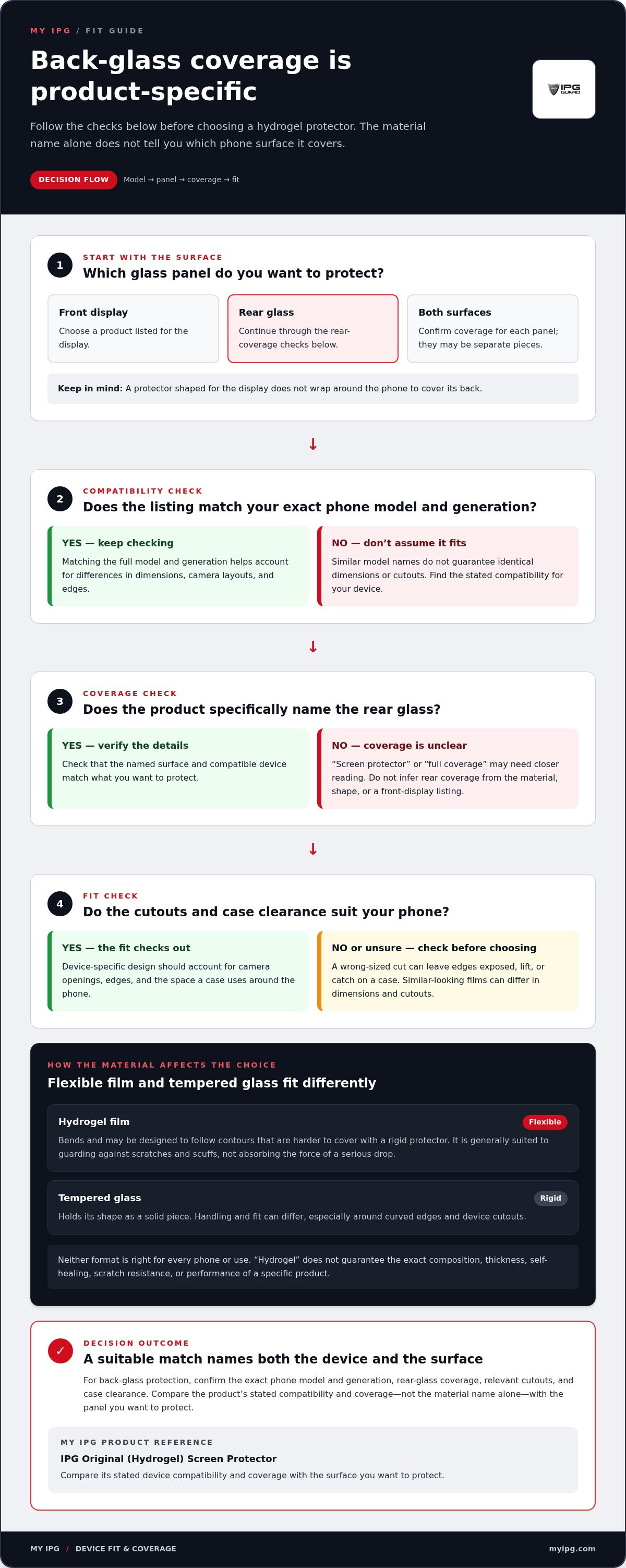
Use this quick check before choosing: identify your exact phone, decide which glass panel you want to protect, then confirm that the product listing names both the device and that surface. This helps prevent a common mismatch: buying a protector that fits the phone but covers the wrong side.
How hydrogel film works on a phone’s glass surfaces
Flexible film sits directly over the glass as a thin, bendable layer. Its flexibility can help it follow contours that are harder to cover with a rigid protector, but the finished fit depends on the film’s design and the phone’s shape. “Hydrogel phone screen protector” describes a material category, not a guarantee of impact or scratch protection.
Expect a different feel from tempered glass. Film bends with the surface and may feel less rigid under a fingertip; glass keeps its shape as a solid panel. Neither description alone tells you how a particular protector will perform. Construction, fit, the surface being covered, and everyday use all matter. Research from Aalborg University examines the impact resistance of screen protector materials, but findings about particular materials shouldn’t be treated as proof that every product in a broad category performs alike.
What flexible film can, and cannot, tell you
“Hydrogel” doesn’t specify a protector’s exact composition or thickness. Nor does it guarantee features such as self-healing or scratch resistance. Those are product-specific claims, so look for supporting details in the listing or documentation rather than assuming they apply to every film. Treat the material name as a starting point, then compare the stated properties of the specific protector you’re considering.
Think of film as a format, not a performance score. A well-matched protector may suit your phone’s shape and the intended surface, but the label alone can’t tell you how it will handle a scrape, pressure, or a drop. Match product claims to your everyday use, and keep expectations tied to the protector’s own specifications.
Why the protected surface changes the buying decision
A front display and a rear panel can have different contours, edges, and openings. A film cut for one side won’t necessarily fit the other. Rear-panel coverage may need to account for camera openings and the space a case uses around the phone’s perimeter. Even a small mismatch can leave edges exposed or cause contact with a case.
Use the exact device and surface compatibility stated for the product. Don’t rely on appearance alone: two films can look similar while differing in dimensions or cutouts. My IPG’s screen protection options include the IPG Original (Hydrogel) Screen Protector. Compare its stated compatibility and coverage with the surface you want to protect before choosing.
How to choose a hydrogel protector for your phone’s back glass
Choose by fit and intended protection, not by the word “hydrogel” alone. A hydrogel phone screen protector listing should match your exact phone model and name the surface it covers. If you’re comparing flexible film with glass, remember that hydrogel is a broad material term, not a complete description of a protector’s performance.
Check phone model, panel, and cutouts first
Use this four-step check before you buy:
- Identify your phone. Match the full model name and generation to the listing. Phones with similar names can have different dimensions, camera layouts, or edges.
- Choose the surface. Decide whether you need coverage for the front display, rear glass, or both.
- Confirm the stated coverage. Look for the specific panel named in the product details. A display protector doesn’t automatically cover the back.
- Check case and cutout fit. Compare the listed camera and flash openings, edges, and case-compatibility details with your phone and how you use it.
Don’t select a protector only because its product photo looks close. Exact model and surface compatibility matter more than appearance.
Match material and coverage to your daily use
Consider what you want to guard against. A protector may help limit surface wear, but neither film nor glass should be treated as a guarantee against every scratch, impact, or drop. Check product-specific performance details and choose based on the surface you want covered and whether you usually keep your phone in a case. Case edges can press against a rear film if the fit isn’t compatible.
Use this quick comparison to narrow the format. Specific products can differ, so let their stated fit and features guide your final choice.
| Selection point | Flexible film | Tempered glass |
|---|---|---|
| Handling | Bends during placement and follows the surface design. | Holds a rigid shape during placement. |
| Fit to contours | Consider when the panel has curved edges or a contoured shape. | Check how the rigid piece fits the phone’s edges. |
| Cutouts and case use | Match openings and edge coverage; check case clearance. | Match openings and dimensions; check case clearance. |
Choosing protection for an iPhone display rather than rear glass? See our iPhone screen protector buying guide for display-focused selection advice.
What to expect when applying and caring for hydrogel film
A careful application starts before the film touches the phone. Dust, fingerprints, and a mismatch between the film and panel can affect how neatly it sits. Set up a clean, well-lit workspace, take your time, and follow the instructions supplied for the specific protector. Application steps and included accessories can vary, so don’t assume every hydrogel phone screen protector uses the same tools or method.
Prepare the phone surface before application
Use this simple preparation sequence:
- Clean your hands. This helps keep fingerprints and residue off the adhesive side of the film.
- Set up a clean, dry workspace. Good lighting makes it easier to spot dust and align the protector.
- Clean and dry the intended surface. Follow the phone and protector care directions, and remove visible dust before positioning the film.
- Read the product instructions first. Follow the specified alignment and application method. Use only the accessories and tools provided or recommended for that protector.
Avoid improvising with liquids or tools that the instructions don’t recommend. Small particles can become trapped beneath the film, so inspect the glass before application and keep the adhesive surface clean.
Set realistic expectations for fit and upkeep
After placement, check the edges, camera openings, and alignment. A lifted edge or trapped debris can point to a fit or application issue, but it doesn’t by itself prove the protector is defective. The phone’s edge shape, surface cleanliness, and contact with a case can all affect how the film sits. If a case presses against the protector, remove it gently and compare the fit with the product’s compatibility details before trying again.
Some bubbles may respond to the application steps in the product instructions; don’t assume every bubble will disappear on its own. Avoid repeatedly lifting the film or pressing hard unless the instructions say to do so. For routine care, clean the phone gently according to the phone and protector guidance. Don’t use harsh cleaners or abrasive materials unless the manufacturer specifically recommends them.
There’s no universal lifespan to expect from the material category alone. Wear depends on the specific product, placement, handling, and daily use. Inspect the film periodically, especially around the edges and openings, and follow product-specific advice if it shifts or becomes damaged.
For a hydrogel option, explore the IPG Original (Hydrogel) Screen Protector and compare its stated device compatibility and coverage with the surface you want to protect.
Choose My IPG hydrogel protection with the right device fit
My IPG offers the IPG Original (Hydrogel) Screen Protector for buyers considering a film-style protector. The right choice depends on more than the material category. Start with the product information for your device, then confirm that its listed compatibility and coverage match the exact phone and surface you want to protect.
When My IPG hydrogel film may suit your priorities
A hydrogel phone screen protector may suit you if you prefer a flexible-film format. Suitability still depends on the individual product’s stated fit and coverage. Don’t assume a protector listed for a phone’s display also covers its rear glass, and don’t take the material name as proof of a particular level of scratch or impact protection. Use the product’s documented details to decide whether it matches your priorities.
This matters especially when you’re shopping for back-glass coverage. Check that the product information identifies the intended panel and your exact device. Don’t infer rear coverage from a phone model appearing in a listing or from a product image that looks similar to your phone.
Make your final fit check before choosing
Before selecting the IPG Original (Hydrogel) Screen Protector, review these details in the product information:
- Phone model and generation: Match the full model name, not just the phone family. Different generations may have different dimensions or camera layouts.
- Intended surface: Confirm whether the stated coverage is for the front display or rear glass.
- Panel coverage and openings: Compare the listed coverage with the glass you want protected, including camera and flash cutouts where relevant.
- Case clearance: If you use a case, consider whether its edges may press against the protector’s edge.
A listing that matches your phone but not your intended surface isn’t the right fit for your goal. Likewise, matching the surface without matching the phone’s exact model can leave you with misaligned edges or openings. Make both checks before choosing, and base your expectations on the specific product information rather than assumptions about hydrogel film as a whole.
Ready to compare device fit and stated coverage? Explore My IPG protection and choose the option that matches your phone and the surface you want to protect.
Choose protection that fits your phone and your priorities
The right hydrogel phone screen protector starts with a precise match: identify your phone’s exact model, decide whether you’re protecting the display or rear glass, and confirm that the product listing names that surface. Flexible film and tempered glass have different handling and fit characteristics, so choose based on your device, the coverage you need, and the everyday wear you want to address.
My IPG offers the IPG Original (Hydrogel) Screen Protector, along with screen protectors for iPhone and Samsung devices. Compare the product’s stated device compatibility and coverage with your intended surface before choosing. Don’t assume a display protector covers the back glass or that any protector prevents every kind of damage.
Ready to make an informed choice? Explore My IPG screen protection and choose an option that matches your device and protection needs.
Frequently Asked Questions
Does a hydrogel phone screen protector protect the back glass?
Only if the specific protector is designed and listed for the rear glass. “Screen protector” doesn’t automatically mean front and back coverage, and a film cut for the display won’t wrap around to protect the rear panel. Check the listing for your exact phone model and the stated coverage surface. If it names only the display, don’t assume it also covers the back.
Is hydrogel film better than tempered glass for a phone?
Neither is universally better. They’re different formats with different fit and handling considerations. Flexible film can bend to follow a surface, while tempered glass is a rigid piece. The right choice depends on your phone’s shape, the surface you’re protecting, and the specific product’s documented features. Compare model compatibility, coverage, and stated protection details rather than relying on the material name alone.
Can I put a hydrogel protector on my phone’s back glass?
Yes, if the product is designed for your phone’s rear panel. Choose a rear-glass protector that matches the exact model and generation, then check its listed dimensions and openings for the camera and flash. A front-display film isn’t automatically suitable for the back, even if it looks similar. Also consider whether your case may press against the film’s edges.
How do I choose the right hydrogel protector for my phone?
Start with your phone’s full model name and generation. Next, decide whether you need coverage for the front display, rear glass, or both. Confirm that the product listing names that surface, then compare its cutouts and edge fit with your phone and case. A hydrogel phone screen protector’s category name alone doesn’t establish its dimensions, composition, or performance.
Will a hydrogel phone protector work with a case?
It can, but compatibility depends on the protector’s fit and the case’s design. A case that presses against the film’s edges may cause lifting or affect how it sits. Check the product’s case-fit information where available, and compare the protector’s edges with the case border. After application, make sure the case doesn’t push against the film or cover important openings.
Does hydrogel film prevent phone screens from cracking?
No screen protector should be treated as a guarantee against cracks. A film may help protect a surface from everyday contact, but its impact performance depends on the specific product and conditions. A hard drop can still damage the glass beneath a protector. Review documented protection claims and choose with realistic expectations, especially if impact protection is a priority for how you use your phone.
How should I apply a hydrogel protector without trapping dust?
Wash your hands and work in a clean, dry, well-lit space. Clean and dry the phone’s intended surface, then inspect it closely for dust before positioning the film. Follow the instructions for that specific protector, including its alignment and application method. Accessories and techniques can vary by product, so don’t assume every kit includes the same tools. Avoid touching the adhesive side.