

What if a single metal strap buckle could cost you $600 in factory repair fees and six weeks of lost shooting time? It's a harsh reality for professional photographers who leave their gear's command center exposed. You've invested thousands in a flagship mirrorless body, but the most vulnerable glass isn't always your lens. Often, it's that small, curved status screen on your top plate. Protecting camera top LCD display surfaces is about more than just aesthetics; it's about preserving the weather sealing and functional integrity of your primary tool.
We understand the frustration of squinting through midday glare or discovering a new gouge caused by a camera bag zipper. This guide helps you master the art of safeguarding your camera’s critical status display with precision-fit solutions and expert installation techniques. You'll learn how to achieve crystal clear visibility of your settings and a perfect, bubble-free fitment that feels completely invisible. We will examine the technical advantages of aerospace-grade hydrogel over rigid glass and provide a step-by-step roadmap for long-term scratch prevention that maintains your camera's peak resale value.
Key Takeaways
- Identify critical hazard zones like metal strap buckles and gear bag zippers that threaten your camera's status display.
- Compare material properties to see why flexible hydrogel is the optimal solution for protecting camera top LCD display areas with curved edges.
- Master professional installation steps to eliminate skin oils and environmental lint for a perfect, invisible bond.
- Learn how to maintain long-term optical transparency through specialized cleaning routines that prevent destructive salt and oil accumulation.
- Explore the technical heritage of aerospace-grade polymers engineered to safeguard high-value professional imaging equipment.
Why Protecting Camera Top LCD Displays is Non-Negotiable
Professional camera bodies like the Canon EOS R5 II or Nikon Z8 rely on the top LCD as a mission-critical command center. It provides instant access to shutter speed, aperture, and battery life without draining power through the main display. While you likely prioritize shielding your lens, protecting camera top LCD display surfaces is equally vital for field reliability. This small window is your primary interface for rapid settings adjustments under pressure.
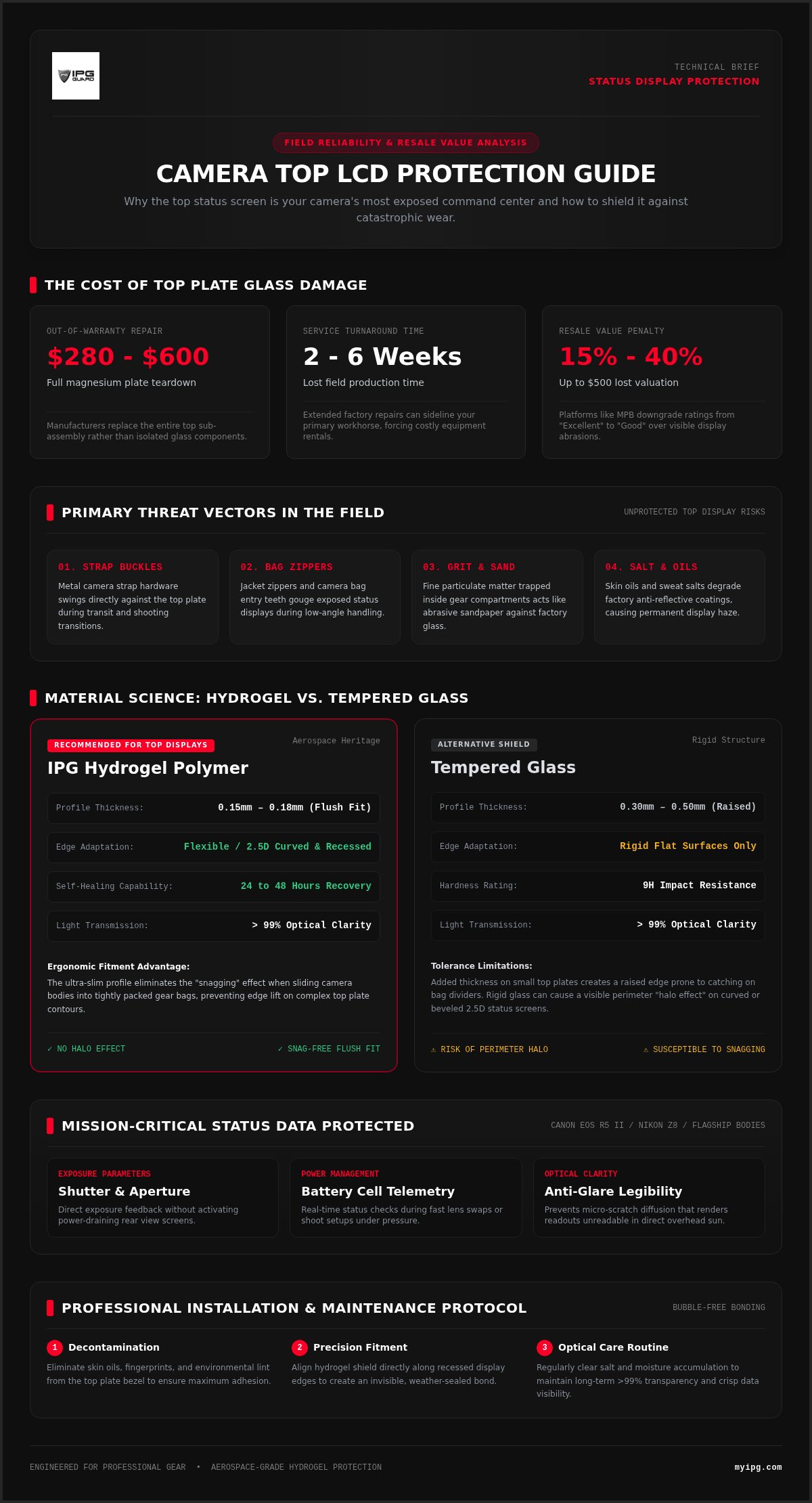
Standard cases and silicon skins often leave this top deck exposed. Think about your daily workflow. In high-tempo environments like live ceremonies and receptions—a core focus of hands-on mentoring at the Institute of Wedding Photographers—dual-camera harnesses and active movement mean metal strap buckles swing against the top plate during transport. Jacket zippers scrape the glass during low-angle shots. Even fine grit trapped inside a gear bag acts like sandpaper over time. Unlike the rear articulated screen, the top LCD can't be flipped inward for safety. It's always in the line of fire. Pristine condition isn't just about pride; it's about financial wisdom. Trade-in platforms like MPB report that visible display scratches can penalize a camera's valuation by 15% to 40%. On a high-end body, that represents a potential $500 loss simply because of a "Good" rather than "Excellent" grading.
Anatomy of the Status Display
Whether your camera uses a traditional monochrome panel or a modern high-resolution color OLED, these screens face unique environmental challenges. They are positioned to catch overhead light, making them prone to intense glare. Micro-scratches diffuse this light, turning a clear readout into a cloudy, unreadable mess in direct sun. Different screen protector materials offer varying levels of light filtration and impact resistance to counter these specific stressors. Without a barrier, skin oils and salt from sweat can also degrade the factory coatings, leading to permanent staining that obscures critical exposure data in low-light conditions.
The Cost of Neglect
Damage to this specific area is rarely a simple fix. Most manufacturers don't service the top glass as an isolated component. Instead, technicians must replace the entire magnesium top plate sub-assembly, requiring a complete teardown of the dials and hot shoe. This results in out-of-warranty repair costs averaging between $280 and $600. Beyond the financial sting, factory service turnaround times typically range from 2 to 6 weeks. Don't let a preventable impact sideline your primary workhorse and force expensive rental fees. Protecting camera top LCD display glass ensures your interface remains sharp and your professional aesthetic stays intact through years of heavy use.
Choosing the Right Shield: Hydrogel vs. Tempered Glass
Selecting the correct material for protecting camera top LCD display surfaces involves a balance of geometry and physics. The top plate of a professional camera is a high-traffic area. It's crowded with mode dials, shutter releases, and control wheels. Unlike the flat, expansive rear screen, top displays are often small, slightly recessed, or feature subtle 2.5D beveled edges. These tight tolerances mean that thickness and flexibility are your primary technical considerations.
The IPG Original (Hydrogel) Screen Protector represents the gold standard for these specific ergonomics. With a profile typically between 0.15mm and 0.18mm, it remains virtually flush with the camera body. This ultra-slim design prevents the "snagging" effect that occurs when a camera strap or bag divider catches on the raised edge of a thicker shield. For a deeper look at material science, consult the ultimate screen protector guide to understand how different polymers interact with various screen technologies.
Tempered glass offers maximum impact protection with a 9H hardness rating. It's a powerhouse for rugged outdoor environments where blunt force is a constant risk. However, glass is significantly thicker, often ranging from 0.30mm to 0.50mm. This added height can create a "halo effect" where the adhesive fails to bond to the very edges of a curved top display. Optical clarity is non-negotiable for either material. You need >99% light transmission to ensure your shutter speed and aperture readouts remain sharp in harsh midday sun or dim studio corners.
The Case for Hydrogel on Small Screens
Hydrogel is a specialized elastomeric polymer. Its standout feature is its self-healing capability. When a metal strap buckle leaves a micro-abrasion, the material's molecular structure "flows" back together to resolve the mark within 24 to 48 hours. It offers superior adhesion on the recessed surfaces common in Nikon and Canon designs. Because it's flexible, it molds to the exact topography of the magnesium top plate, ensuring edge-to-edge coverage that rigid glass simply can't match. Consider the IPG Original (Hydrogel) Screen Protector for a flush, factory-finish look that doesn't interfere with your dials.
Tempered Glass for Extreme Environments
If you're shooting in environments with flying debris or heavy rock scrambling, tempered glass provides an essential sacrificial layer. It's designed to crack upon high-velocity impact, absorbing the energy that would otherwise shatter the camera's internal LCD panel. The trade-off is tactile interference. On compact bodies, a glass protector can sit uncomfortably close to the rotary dials, making quick settings changes slightly more cumbersome. Precision-cut edges are vital here; a poorly fitted glass shield will chip at the corners, creating sharp edges that can catch on your fingers or clothing.
Step-by-Step Guide: How to Install a Top LCD Protector
Precision is everything. When protecting camera top LCD display surfaces, you're working with millimetric clearances. Start by creating a controlled, dust-free environment. A bathroom after a hot shower is ideal; the steam grounds airborne dust particles that cause unsightly bumps. Clear your workspace of any camera bag lint or stray fibers that could drift onto the adhesive side during application.
Surface decontamination is the most critical phase. Use an isopropyl alcohol wipe to strip away skin oils and environmental grime. Even a single fingerprint can compromise the long-term adhesive bond. Follow this with a dry microfiber cloth and a dust-removal sticker to catch microscopic particles. Look at the glass from a shallow angle under a bright light to confirm a perfectly clean surface.
Use the 'Hinge Method' for perfect alignment on small displays. Place the protector on the display with the backing still attached. Align it perfectly with the edges of the top plate. Secure one side with a piece of tape to create a hinge. Flip it open, peel the backing, and swing it back into place. This technique ensures the shield lands exactly where you intended without the need for manual repositioning.
Once applied, eliminate air bubbles by sweeping from the center outward. Use a squeegee or a credit card wrapped in microfiber. Apply firm, steady pressure. This forces the air toward the perimeter where it can escape. For recessed screens, use the edge of your thumb to ensure the corners are fully seated.
Essential Tools for Precision Application
Professional results require specialized tools. High-density microfiber cloths are essential to prevent shedding. Dust-removal stickers are more effective than air blowers for lifting static-charged grit. For IPG Original (Hydrogel) Screen Protector installs, a specialized application gel allows you to slide the film into the perfect position before it sets. Never use household glass cleaners. These contain ammonia or vinegar that can strip the delicate anti-reflective coatings off your camera's status display.
Troubleshooting Common Install Issues
If a corner is misaligned, don't panic. Gently lift the edge with a piece of tape, never your fingernail, and reposition. If you encounter stubborn spots, consult this guide on removing air bubbles from your protector. For hydrogel materials, follow the 'wait and see' rule. Micro-bubbles often disappear within 24 to 48 hours as the polymer settles and "breathes" through its semi-permeable structure. Trust the material science to achieve that invisible, factory-fresh finish.
Maintaining Your Camera Display for the Long Haul
Protecting camera top LCD display integrity requires more than just a one-time application. It's a commitment to long-term equipment stewardship. In the field, your camera faces a constant barrage of salt from sweat, natural skin oils, and environmental humidity. These elements migrate toward the edges of your screen shield. Over time, salt crystals can act as an abrasive. Oils slowly degrade the adhesive bond. A disciplined maintenance routine prevents these contaminants from reaching the camera's factory coatings.
Environmental stressors represent a silent threat to your status display. High-performance cameras often sit in hot vehicles or under direct solar radiation. Surface temperatures on magnesium top plates can soar to 160°F (71°C) within minutes. Standard consumer adhesives fail here. They bubble. They slide. Professional-grade films, such as the IPG Original (Hydrogel) Screen Protector, are engineered to withstand temperatures up to 185°F (85°C). This thermal tolerance ensures your display remains legible and secure regardless of the climate. Protecting camera top LCD display surfaces means accounting for these extreme thermal shifts.
Safe Cleaning Practices
Never use your t-shirt or a rough paper towel to wipe your display. These materials harbor micro-grit that creates permanent swirls on the protective film. Instead, use a clean, dedicated microfiber cloth. For stubborn smudges, apply a drop of distilled water or a specialized, alcohol-free lens cleaning solution. Avoid spraying liquids directly onto the camera body. Dampen the cloth first. This prevents moisture from seeping into the gaps between the protector and the control dials. Use a soft-bristled brush to gently sweep away dust that accumulates in the tight clearances around the screen's perimeter.
When to Replace Your Protector
A screen shield is a sacrificial layer. It's designed to take the damage so your camera doesn't have to. You should inspect your display every few months for specific signs of wear. Look for edge lifting. If the perimeter begins to peel, dust and moisture will infiltrate the adhesive layer. Monitor the material for yellowing or a cloudy appearance that hinders settings visibility. While hydrogel is self-healing for micro-scratches, deep impacts that breach the polymer layer require a fresh application.
If you notice these issues, follow this guide on how to safely remove a screen protector to avoid leaving any residue. When removing, use a piece of adhesive tape to lift a corner rather than a metal tool. Don't wait for a total failure to refresh your gear's defense. Secure your next precision-cut shield today to maintain peak performance and resale value.
The IPG Advantage: Precision Protection for Professional Gear
Generic protectors often fail on the tight topography of a camera's top plate. They overlap buttons or leave jagged gaps that trap debris. Protecting camera top LCD display glass requires a level of accuracy that mass-market products simply can't provide. IPG shields are measured to the micron. This ensures a seamless bond that follows the exact contours of your camera's magnesium housing without interfering with the surrounding control dials or shutter release.
The material science behind our products isn't just for consumer electronics. IPG shields utilize a specialized polymer with deep roots in military aviation. This material was originally engineered to protect helicopter rotor blades from high-speed abrasion and impact. We've adapted this aerospace-grade heritage to serve the needs of professional photographers. Whether you're shooting with a flagship Canon EOS R series, a Nikon Z8, or a Sony Alpha body, our custom fitments provide a sacrificial layer that is both incredibly durable and virtually invisible.
Engineered for Photographers
Visibility is the primary function of a status screen. Our protectors feature advanced anti-glare properties to ensure your shutter speed and aperture readouts remain legible even under the harsh glare of high-noon sun. We also integrate premium oleophobic coatings. These layers repel skin oils and fingerprints, keeping your display clean during intensive shoots. This same high-end optical technology is applied across our entire range. For more information on how we protect critical glass, refer to our phone camera lens protector guide. You'll see the same commitment to preservation without compromise.
Investing in Peace of Mind
Your camera is more than a tool; it's a significant financial investment. Protecting camera top LCD display surfaces is a proactive step toward maintaining that value. A small investment in a precision-cut shield prevents the $600 repair bills and weeks of bench downtime associated with top-plate damage. Join the global community of professionals who trust My IPG to safeguard their primary workhorses. We don't just sell protectors; we provide a sense of security for the gear you value most. Secure your camera's top LCD today and focus on the shot, not the scratches.
Secure Your Professional Command Center
Your camera's status display is the nerve center of your professional workflow. We've explored why protecting camera top LCD display surfaces is vital for both field longevity and long-term trade-in value. From selecting the right material to mastering the hinge method for a bubble-free installation, you now have the technical blueprint for total equipment stewardship. A pristine top deck ensures your shutter speed and aperture remain legible in any environment.
Don't leave your gear's most exposed interface to chance. Join the community of professional photographers worldwide who trust My IPG for its aerospace-grade durability. Our shields are precision-cut for a perfect fit on Canon and Nikon models, providing a sacrificial layer that remains virtually invisible until it saves your glass. It's a small investment that prevents costly bench downtime and expensive factory repairs.
Protect your professional camera with precision-cut IPG shields today. Maintain your focus on the shot while we handle the security of your gear. Your equipment is ready for the next challenge.
Frequently Asked Questions
Does a screen protector affect the visibility of the top LCD?
A high-quality shield actually improves visibility by reducing glare in direct sunlight. Specialized films maintain >99% light transmission, ensuring your shutter speed and ISO readouts remain sharp. Generic plastic options can cause distortion or a cloudy effect, but professional solutions are engineered to be virtually invisible. This clarity is essential when you're shooting in harsh outdoor conditions where every settings change must be instantaneous and accurate.
Can I use a phone screen protector and cut it to fit my camera?
Cutting a phone protector manually isn't recommended because it creates jagged edges that trap dust and lift easily. Professional camera displays have specific dimensions and recessed borders that require a precision-cut fit. Hand-cut edges often snag on camera straps or gear bag dividers, leading to rapid adhesive failure. Using a dedicated, factory-cut shield ensures the material sits perfectly flush with your camera's top plate without any gaps.
Is hydrogel better than tempered glass for curved top displays?
Hydrogel is the optimal material for protecting camera top LCD display surfaces with curved or beveled edges. Unlike rigid tempered glass, which often experiences the "halo effect" or edge lifting on non-flat surfaces, hydrogel is flexible. It molds to the exact topography of your camera's magnesium body. This flexibility provides a seamless, edge-to-edge bond that remains secure even when your gear is subjected to the friction of a camera strap.
Will the adhesive damage my camera's screen if I remove it later?
Professional-grade adhesives are designed to be non-permanent and residue-free. They utilize a static-cling or low-tack silicone layer that bonds securely without reacting with the camera's factory anti-reflective coatings. When it's time for a replacement, the shield peels away cleanly without leaving any sticky film behind. This ensures your status display remains in factory-fresh condition, which is a critical factor in maintaining the high resale value of flagship mirrorless bodies.
How do I remove dust that gets trapped under the protector during installation?
If you spot a dust particle after application, use a piece of adhesive tape to gently lift one corner of the protector. Insert a secondary dust-removal sticker to "grab" the speck from the adhesive side of the film or the screen surface. Avoid using your fingernails, as this can permanently crease the material or leave oils behind. This surgical approach allows you to achieve a perfect, bubble-free finish without ruining the entire protector.
Do I need a protector if my camera has a ruggedized body?
A ruggedized body protects internal electronics from shock and moisture, but the top display glass remains vulnerable to surface abrasions. Metal strap anchors, carabiners, and grit inside your bag can easily gouge the screen regardless of the camera's durability rating. Protecting camera top LCD display glass is a necessary secondary defense. It prevents micro-scratches that diffuse light and make your settings unreadable, ensuring your command center stays clear through heavy use.
How long does a typical IPG camera protector last under professional use?
A typical IPG protector maintains its integrity for 12 to 24 months under heavy professional use. Factors like extreme heat, salt-air exposure, and frequent cleaning will eventually wear down the oleophobic coatings. You'll know it's time for a replacement if the edges start to lift or if the material loses its original transparency. Because our films are engineered with aerospace-grade polymers, they withstand more environmental stress than standard consumer-grade shields.
Can I use the camera immediately after installing a hydrogel protector?
You can use your camera immediately, but the protector needs 24 to 48 hours to achieve its final bond and clarity. During this curing period, any microscopic bubbles or slight haziness from the application gel will naturally dissipate. The hydrogel polymer is semi-permeable, allowing tiny amounts of trapped moisture to evaporate. Avoid placing the camera in a tight, abrasive gear bag for the first few hours to ensure the edges set perfectly.