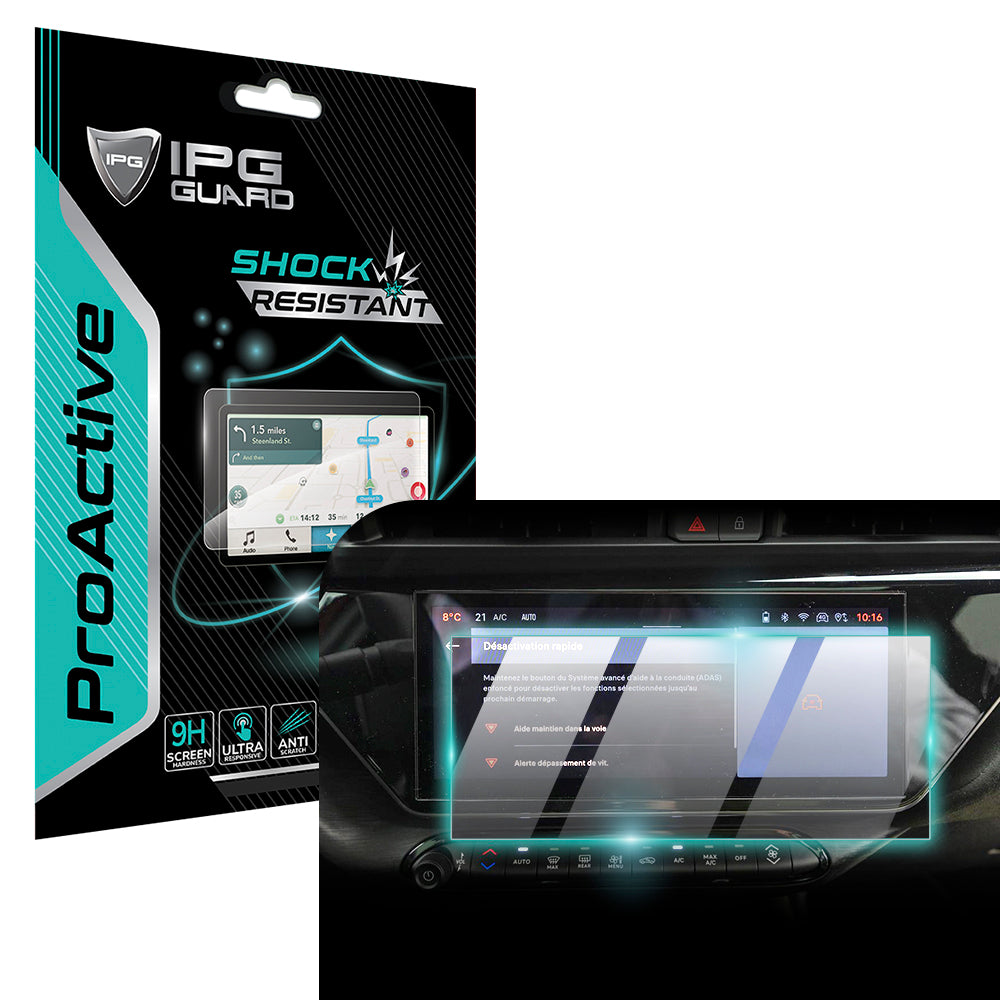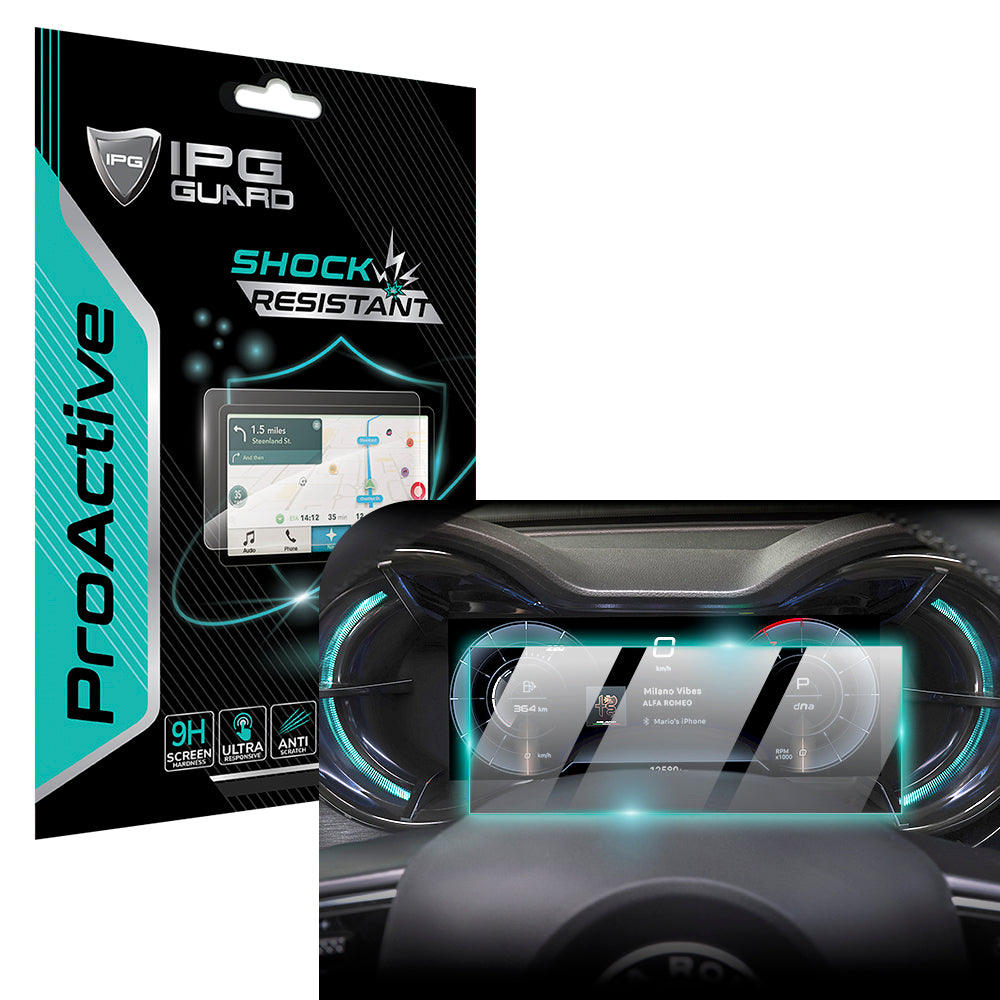
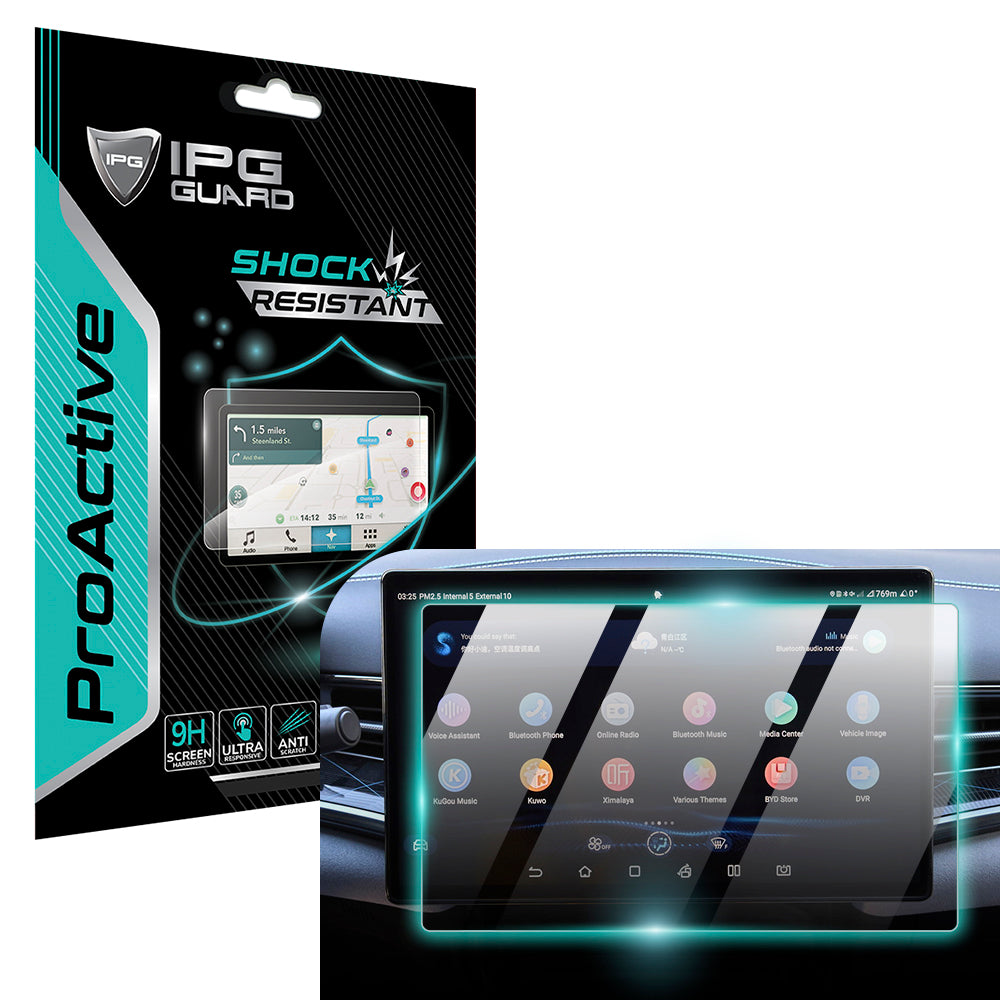


Your Snap-on scanner is the most valuable piece of glass in your bay. One slipped wrench or a splash of caustic fluid can turn a high-value asset into a costly repair bill headache. You've spent years building your kit. Protecting it with a snap-on diagnostic tool screen protector shouldn't be an afterthought. We understand the pride you take in your gear. It's about stewardship; it's about keeping your professional edge.
Choosing the right protection is an investment in uptime, not just a plastic sticker. You need a solution that fights grease, eliminates glare, and maintains surgical touch precision. This guide delivers the technical specs you need to safeguard your equipment from the daily hazards of a high-volume shop. We'll break down the performance of 9H nano ceramic films and self-healing hydrogel technology. You'll learn exactly how to preserve your Zeus+, Triton, or Apollo Solus+ for the long haul. Let's ensure your screen stays as sharp as your diagnostics.
Key Takeaways
- Learn how professional-grade protection shields your high-value gear from caustic chemicals, metal shavings, and expensive screen replacement downtime.
- Compare the technical benefits of self-healing hydrogel against 9H nano-ceramic film to find the best impact resistance for your specific bay environment.
- Identify the correct snap-on diagnostic tool screen protector for Zeus+, Apollo, and Solus models to ensure precision-cut coverage that won't lift at the corners.
- Master the "Hinge Method" installation technique to achieve a bubble-free, dust-resistant seal on large tablet-style scanners.
- Discover how IPG ProActive technology maintains perfect touch sensitivity and screen clarity while providing military-grade durability for the automotive aftermarket.
Why Your Snap-on Diagnostic Tool Needs Professional-Grade Screen Protection
Your Snap-on diagnostic scanner is a high-precision instrument, not just a ruggedized tablet. It serves as the primary interface between your expertise and the vehicle's complex electronic systems. Leaving that expansive glass display vulnerable to the daily grind of the bay is a risk to your efficiency. A dedicated snap-on diagnostic tool screen protector provides a necessary barrier between your investment and the harsh reality of the workshop floor. It represents a commitment to stewardship. Protecting your gear ensures your most used tool remains in peak condition for years of service; for those who also need to protect larger shop assets or bulk inventory, check out Packaging For Industry (PFI). One slip of a wrench shouldn't end your shift.
The Financial Case for Screen Integrity
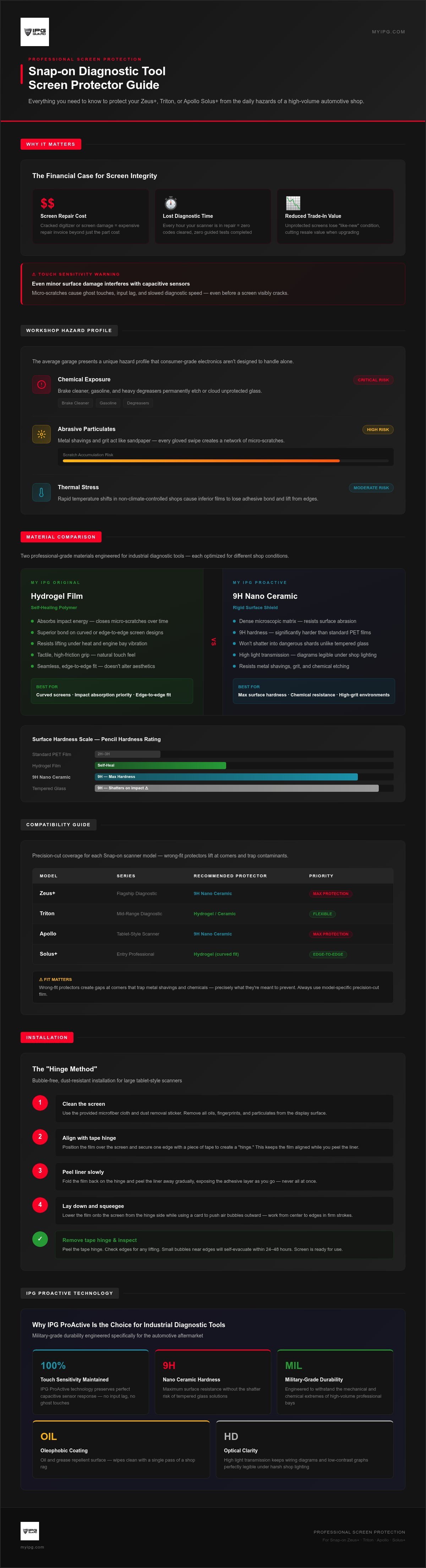
The average garage presents a unique "Workshop Hazard Profile" that consumer-grade electronics aren't designed to handle alone. Chemical resistance is paramount. Accidental contact with brake cleaner, gasoline, or heavy degreasers can permanently etch or cloud an unprotected screen. Shop air is also thick with abrasive particulates. Tiny metal shavings and grit act like sandpaper. They create a network of micro-scratches every time you swipe the screen with a gloved hand. Thermal stress is another silent killer. In garages without climate control, rapid temperature shifts can cause inferior films to lose their adhesive bond. Professional-grade solutions, such as IPG ProActive 9H Nano Ceramic or IPG Original Hydrogel, are specifically engineered to remain stable under these conditions. They provide a durable, optically clear shield that repels oil and resists the abrasive forces common in heavy-duty repair environments.
Comparing Materials: Hydrogel vs. 9H Nano Ceramic for the Workshop
Selecting the optimal snap-on diagnostic tool screen protector requires a deep dive into material science. You need a solution that stands up to the mechanical and chemical stresses of a high-volume bay. Standard retail films lack the industrial-strength properties required for professional gear. Professionals typically choose between the My IPG ProActive 9H Nano Ceramic and the My IPG Original Hydrogel. Each material is engineered for specific shop conditions. One prioritizes surface rigidity; the other excels in impact absorption and self-healing. Clarity remains the common denominator.
The Science of My IPG ProActive 9H Hardness
Nano-ceramic technology creates a dense, microscopic matrix that acts as a rigid shield. This 9H hardness rating is significantly higher than standard PET plastics. It provides a surface that resists the abrasive grit and metal shavings common in automotive environments. Unlike tempered glass, this ceramic film won't shatter into dangerous shards if hit by a heavy tool. High light transmission is a key benefit. It ensures that complex wiring diagrams and low-contrast graphs remain perfectly legible under overhead shop lighting. For maximum surface security, you can browse the My IPG ProActive collection tailored for heavy-duty scanners.
When to Choose Hydrogel for Your Scanner
The My IPG Original Hydrogel is a specialized, self-healing polymer. It's designed to absorb energy from impacts and slowly close micro-scratches over time. This material is particularly effective for scanners with slightly curved screen edges where a more rigid protector might struggle with adhesion. It offers a superior bond that resists lifting, even when exposed to the heat and vibration of a running engine bay. The hydrogel provides a tactile, high-friction grip that feels natural to the touch. It’s an ideal choice for technicians who prioritize impact dispersion and a seamless, edge-to-edge fit that doesn't alter the tool's aesthetics.
Oil resistance is a non-negotiable feature for any mechanic. Both materials feature an advanced oleophobic coating that repels grease and fuel. This prevents fingerprints from clouding your view during critical data analysis. A quick wipe with a microfiber cloth is all it takes to maintain peak visibility. This technology also ensures zero touch lag on high-end Snap-on Zeus+ interfaces. Professional diagnostic software requires instant capacitive response. My IPG protectors are engineered to be thin enough to maintain this precision while providing a robust barrier against workshop hazards. Don't let shop grime slow down your diagnostics.
Compatibility Guide: Finding the Right Fit for Snap-on
Precision is the hallmark of professional equipment. A generic, "cut-to-fit" sheet has no place in a high-production bay. These universal solutions often leave vulnerable gaps or create overhangs that trap abrasive shop dust and lift at the corners. For your snap-on diagnostic tool screen protector to perform, it must be an exact digital match for the hardware. You can identify your specific display needs by checking the model name on the boot screen or the serial tag on the rear housing. Screen sizes range significantly, from compact 7-inch legacy displays to the massive 11.6-inch Zeus+ interface. My IPG designs every protector using laser-measured templates that account for every millimeter of the display surface. This ensures a seamless, edge-to-edge seal that won't peel back during heavy use. Accurate fitment is the foundation of long-term stewardship.
My IPG Custom-Fit for the Snap-on Ecosystem
The Snap-on ecosystem features a diverse range of display specifications. Each requires a unique engineering profile. For the flagship 11.6-inch Snap-on Zeus+ Automotive Diagnostic Tool, the protector must cover the massive glass surface without compromising bezel alignment or edge-to-edge responsiveness. My IPG precision-cut films are also specifically tailored for the 9-inch Apollo-D9 and the 10.1-inch Triton scanners. These mid-sized tablets are the workhorses of the industry; they need robust shielding that doesn't interfere with the ruggedized housing or impact-resistant bumpers. We also provide compact, high-durability protection for the Solus Edge and Solus Legend 8-inch displays. These units face frequent handling and pocket storage. A custom fit is the only way to maintain the tool's original ergonomics and touch accuracy.
Cross-Brand Compatibility: Autel and Beyond
Modern workshops often operate with a multi-brand diagnostic strategy. You might reach for a Snap-on Triton for one job and an Autel scanner for another. Standardizing your equipment maintenance simplifies shop management. It ensures every technician works with the same level of screen clarity and protection across every tool in the shop. Beyond our Snap-on lineup, My IPG offers precision coverage for the Autel MaxiSYS MS909 and other industrial scanners. Using a unified protection strategy across your entire inventory reduces the risk of accidental damage and simplifies the re-ordering process. It also preserves the resale value of your entire diagnostic kit. Don't settle for "close enough" when it's your livelihood on the line. Choose a snap-on diagnostic tool screen protector that's engineered for your specific model. Secure your gear. Maintain your edge.
Step-by-Step: Installing Your Screen Protector in a Mechanic's Environment
Installing a snap-on diagnostic tool screen protector in a busy garage is a tactical challenge. You aren't working in a sterile cleanroom; you're surrounded by engine oil, brake dust, and airborne particulates. Success requires a methodical approach to the environment before you ever peel the backing. Proper installation is an act of stewardship over your gear. It ensures the adhesive bond remains permanent despite the vibration and heat of the shop. Follow these steps to achieve a factory-level finish on your scanner.
Preparing the Surface for Maximum Adhesion
Cleanliness is the foundation of a bubble-free application. Avoid standard household glass cleaners. These often contain ammonia or fragrances that leave a microscopic residue, which eventually ruins the chemical bond of the protector. Use the specialized cleaning kit provided by My IPG to strip away stubborn shop oils and fingerprints. If your bay is particularly dusty, use the "Steam Method" hack. Run a hot kettle or a portable steamer nearby to increase local humidity. The moisture binds to floating dust particles and pulls them to the floor, creating a temporary clean-zone for your display.
Large, tablet-style scanners like the Zeus+ or Triton are difficult to align by hand. Use the "Hinge Method" to ensure surgical precision. Place the protector on the screen with the backing still attached. Once perfectly centered, apply two pieces of masking tape to one side, creating a "hinge." Flip the protector open, peel away the backing, and flip it back down in one smooth motion. If you spot a trapped dust speck, gently lift the nearest corner with adhesive tape and "grab" the particle from the underside. For air bubbles, use a squeegee wrapped in microfiber. Work from the center outward toward the nearest edge using steady, firm pressure. Patience ensures your snap-on diagnostic tool screen protector remains invisible.
Post-Installation Care and Maintenance
Maintenance is simple but critical. Wipe your screen daily using a clean microfiber cloth. Never use shop rags; these often harbor hidden metal shards that can scratch even a high-durability surface. If you notice deep gouges or lifting at the edges after a heavy impact, the protector has done its job and should be replaced to maintain integrity. For more advanced care tips, read The Ultimate Screen Protector Guide. Protect your most valuable diagnostic asset from the daily grind. Secure your My IPG precision-cut protector today.
Why IPG ProActive is the Choice for Industrial Diagnostic Tools
Professional technicians don't settle for "good enough" in their toolboxes. You demand precision and reliability. The IPG ProActive line is engineered specifically for the high-intensity automotive aftermarket. While consumer-grade films focus on aesthetics, our snap-on diagnostic tool screen protector focuses on survival. The IPG ZeroDust advantage is a critical feature for shop environments. It utilizes an anti-static treatment that neutralizes the screen's surface charge during application. This prevents the tool from acting like a magnet for airborne particulates. You get a cleaner install in less-than-ideal conditions. It's about stewardship over your high-value gear.
Our brand ethos is built on being a dedicated specialist. We are the guardian of your technology. We understand that your Snap-on scanner is a significant financial and professional investment. That's why we adapt military-grade durability standards for every film we produce. Global availability ensures that whether you're in a high-volume dealership or a specialized independent shop, you have access to the world's most resilient protection. We provide specialized support tailored to the needs of professional technicians who can't afford a day of downtime. Our products reflect the meticulousness you bring to every repair.
Engineered for Extreme Conditions
The shop floor isn't the only place your tools work. Many technicians operate in outdoor bays or mobile repair units where environmental factors are unpredictable. IPG films feature advanced UV resistance to prevent yellowing or adhesive breakdown under direct sunlight. This ensures your display remains optically clear for the life of the protector. Our anti-smudge properties are equally vital. They utilize a specialized oleophobic layer that prevents oily fingerprints from obscuring critical data during a complex diagnostic session. Budget alternatives often peel or cloud within months. IPG ProActive is built for longevity. It maintains its integrity through thousands of swipes and frequent chemical cleanings.
Complete Shop Protection Solutions
Your stewardship shouldn't stop at your handheld scanners. Modern vehicles are filled with sensitive displays that require the same level of care during a test drive or a customer consultation. We offer comprehensive solutions for the entire workshop. This includes specialized protection for car navigation screens and infotainment systems. If you're running unique or legacy diagnostic equipment, we provide custom-cut solutions to ensure no screen is left vulnerable to the "Workshop Hazard Profile." Don't leave your productivity to chance. Protect your Snap-on tool with IPG today and secure the future of your diagnostic kit.
Secure Your Diagnostic Future and Professional Edge
Your Snap-on scanner is the heartbeat of your diagnostic bay. It deserves a level of protection that matches its high-end engineering. We've explored how a snap-on diagnostic tool screen protector transforms a vulnerable glass surface into a resilient workshop asset. Whether you choose the self-healing flexibility of hydrogel or the extreme impact resistance of 9H nano ceramic, the right choice ensures your tool remains in peak condition despite the daily grind of the shop floor.
Professional technicians worldwide trust IPG to safeguard their livelihood. Our advanced 9H Nano Ceramic technology offers a rigid shield that’s precision-cut for every Snap-on model, including the Solus Legend, Triton, and Zeus+. It's not just about preventing scratches; it's about maintaining the optical clarity and surgical touch sensitivity you need for fast, accurate diagnostics. Precision matters in every swipe.
Don't wait for a chemical spill or a dropped wrench to compromise your productivity. Take charge of your equipment's longevity today. Secure Your Snap-on Scanner with IPG ProActive Protection and work with the confidence that your gear is shielded by the best. Your tools take care of the cars; we take care of your tools.
Frequently Asked Questions
Will a screen protector affect the touch sensitivity of my Snap-on Zeus?
No, a high-quality snap-on diagnostic tool screen protector maintains 100% touch responsiveness. IPG ProActive 9H Nano Ceramic technology is engineered to be thin enough for capacitive sensors while remaining rigid against impacts. You won't experience lag or ghost touches on high-end Zeus+ or Apollo interfaces. Maintaining surgical precision is our priority. We ensure your tool responds as fast as you think, keeping your diagnostic flow uninterrupted and your data entry accurate.
Can I use brake cleaner to clean my screen protector?
Avoid using brake cleaner or gasoline to clean your display. These caustic chemicals can degrade the oleophobic coating and damage the adhesive bond of the protector. Instead, use a clean microfiber cloth and a dedicated screen cleaning solution. If you encounter stubborn grease, a small amount of isopropyl alcohol is safe for the film's surface. Proper chemical management preserves the clarity and longevity of your protective shield and prevents permanent clouding of the glass.
How do I remove a screen protector that has been on my scanner for years?
Removing an old protector is straightforward and safe for the underlying glass. Gently lift one corner using a plastic card or your fingernail. Pull the film back slowly at a 45-degree angle across the screen. If the adhesive has hardened over several years, use a heat gun on its lowest setting for a few seconds to soften the bond. This prevents stress on the scanner's glass. Once removed, wipe the surface with alcohol.
Is it better to use tempered glass or a film for a diagnostic tool?
For a diagnostic tool, 9H Nano Ceramic film is superior to traditional tempered glass. Tempered glass is prone to shattering upon impact, creating sharp shards in your work area. Our Nano Ceramic technology provides the same scratch resistance as glass but remains flexible and shatterproof. It absorbs energy from dropped tools without cracking. This hybrid approach offers the maximum impact protection required for the unpredictable environment of a professional, high-volume automotive repair shop.
What happens if I get air bubbles under the protector during installation?
Air bubbles are usually caused by trapped dust or improper alignment during the application process. Use a squeegee or plastic card wrapped in microfiber to push bubbles toward the nearest edge. If a bubble persists, it likely contains a dust particle. Carefully lift the edge of the snap-on diagnostic tool screen protector with adhesive tape and use a second piece of tape to snatch the dust from the film's underside. Re-apply for a flawless finish.
Does IPG offer protectors for older Snap-on models like the Solus Edge?
Yes, IPG provides precision-cut protectors for legacy equipment to ensure your entire kit stays guarded. We maintain templates for the Solus Edge, Solus Ultra, and older Modis units. Protecting older gear is vital for maintaining its trade-in value or secondary market price. Our catalog covers various screen sizes from 7-inch to 11.6-inch displays. If your specific model isn't listed, we can often provide custom solutions to ensure your gear remains in peak condition.
How often should a mechanic replace their scanner's screen protector?
Replace your protector when you notice deep gouges, edge lifting, or a significant reduction in clarity. In a high-volume shop, most technicians install a fresh shield every 12 to 18 months. If the film suffers a direct hit from a dropped wrench or a chemical splash, replace it immediately. This ensures the underlying glass remains pristine and your visibility stays high. Think of it as a wear item, much like your shop's filters.
Will this protector reduce the glare from my shop's overhead LED lights?
Yes, our specialized films are designed to reduce the harsh reflections from overhead shop lights. High-intensity LEDs can create hot spots on the screen that make wiring diagrams difficult to read. The material properties of IPG ProActive include advanced light filtration that diffuses glare while maintaining high optical clarity. This reduces eye strain during long diagnostic sessions. You get a crisp, readable display regardless of the lighting conditions in your bay or outdoor work area.