


What if the decal itself isn’t the biggest risk to your car’s paint? If you’re wondering, “will decals damage car paint,” the answer depends on the paint’s condition, the decal’s adhesive and age, and how carefully it’s applied or removed. It’s reasonable to be cautious when the finish you’re protecting is valuable.
A suitable decal on sound factory paint can often be applied and removed without damage. But peeling, sun-baked vinyl, weakened clear coat, or rushed removal can increase the risk of residue or paint lifting. A small sticker, a larger vinyl wrap, and paint protection film aren’t interchangeable, so both the surface and the product matter.
This guide explains the conditions that affect paint safety and what to check before choosing a decal. You’ll also find practical steps for preparing the surface, applying a decal carefully, and removing it with less risk. A little care up front can help you personalize your vehicle while looking after its finish.
Key Takeaways
- Whether will decals damage car paint depends on the paint’s condition, the decal and adhesive, environmental exposure, and removal method.
- Heat, sunlight, moisture, and repeated washing can affect a decal and the finish beneath it over time.
- Check for chipped, peeling, or weakened paint before applying a decal. Repainted surfaces may also require specific paint-cure guidance.
- Reduce avoidable risk by inspecting and cleaning the surface as directed, testing an inconspicuous area when permitted, and following the decal maker’s instructions.
- Vehicle-specific fit helps you assess placement, but it doesn’t guarantee paint compatibility. Review application and removal guidance before choosing.
Will Decals Damage Car Paint? Start With the Short Answer
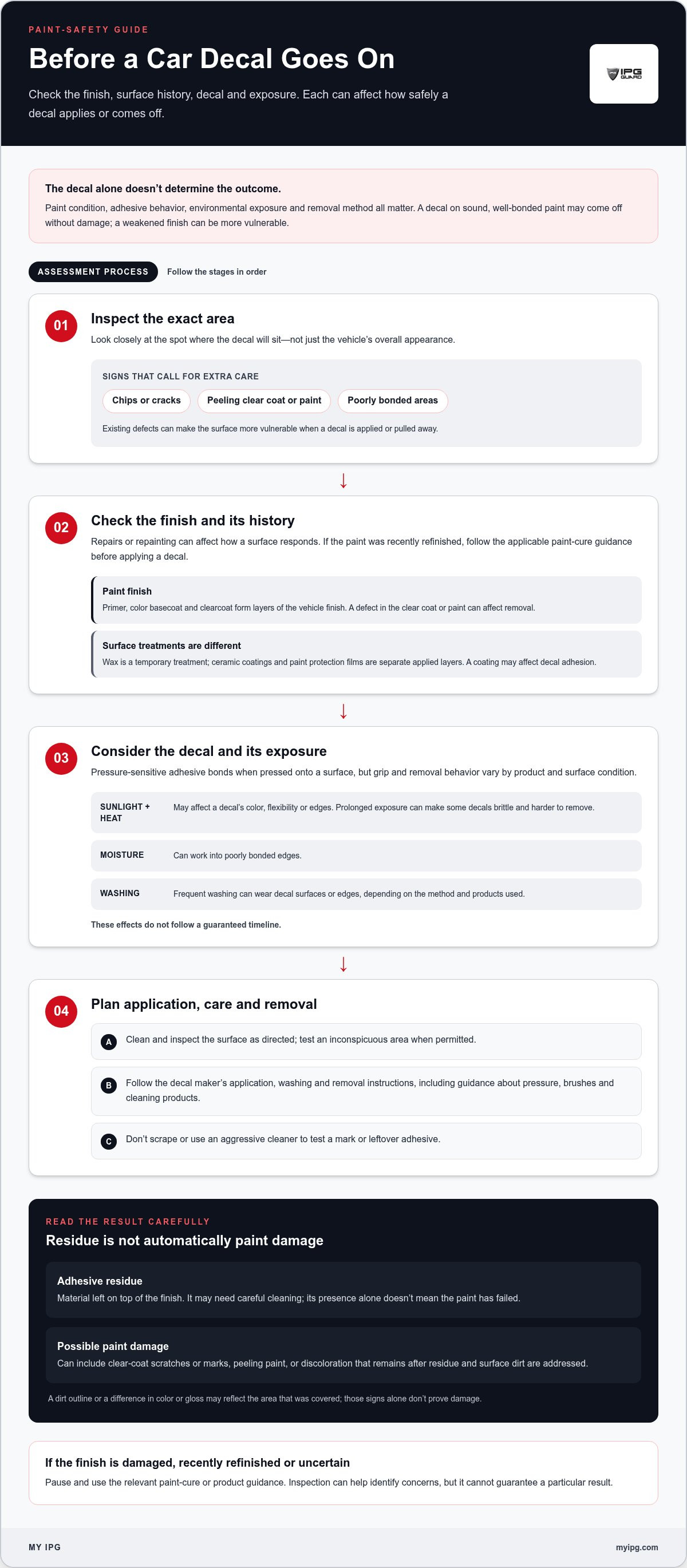
Will decals damage car paint? They can, but the presence of a decal alone doesn’t determine the outcome. Risk depends on the paint’s condition, how the adhesive interacts with the surface, exposure to the elements, and how the decal is removed. A decal on sound, well-bonded paint may leave no damage, while a weakened finish can be more vulnerable.
Separate actual paint damage from changes that may only look concerning at first. Adhesive residue can remain after removal and may need careful cleaning, but residue alone doesn’t mean the paint has failed. A decal may also leave a dirt outline or a visible difference in color or gloss because the covered area was shielded from the same conditions as the surrounding paint. These signs don’t prove damage on their own.
A vehicle finish is a layered system. Primer, color basecoat, and clearcoat each play a role, as outlined in this overview of Automotive paint. A decal sits on the surface, but its adhesive and removal can affect the outer layer. That’s why the same decal may have different results on two vehicles, or even on different areas of one vehicle.
What counts as car paint damage?
Damage may include scratches or marks in the clear coat, peeling paint, or discoloration that remains after residue and surface dirt are addressed. Leftover adhesive is different: it’s material on top of the finish, not automatically a failure of the paint beneath it. Don’t scrape or use an aggressive cleaner to test what you’re seeing. Examine the surface carefully, since appearance alone may not reveal the cause or extent.
Why decal and paint condition both matter
Think of the finish, adhesive, and decal as a system. A chip, crack, peeling edge, or area where paint already appears poorly bonded can be more vulnerable when a decal is applied or pulled away. Vehicle history matters too: previous repairs or repainting can affect how a surface responds. If paint was recently refinished, follow the applicable paint-cure guidance before applying a decal.
Before deciding, inspect the exact area where the decal will sit. Look for existing defects and consider whether the area has a repair history. These checks can’t guarantee a particular result, but they can help you recognize when the finish needs extra care. Judge the paint and decal together rather than assuming every decal is harmless or every removal causes damage.
How Decal Adhesive, Paint, and Weather Affect the Finish
A decal’s adhesive is designed to hold it against a surface, but not every decal bonds in the same way. Pressure-sensitive adhesive forms a bond when the decal is pressed onto a surface. Its behavior depends on the product and the surface condition, so don’t assume every formula has the same grip or removes in the same way.
The surface itself has layers. A vehicle’s clear coat is part of its paint finish; wax is a temporary surface treatment, and ceramic coatings or paint protection films are separate applied layers. These aren’t interchangeable. A coating may affect how a decal adheres, while an existing defect in the clear coat or paint may affect how the surface responds during removal. The Automotive Coatings overview from the American Coatings Association offers context on the technologies and processes behind vehicle finishes.
Decal removal risk depends on how the adhesive, paint surface, and exposure have interacted over time.
How adhesive meets automotive clear coat
Pressing a decal down brings its adhesive into contact with the surface, but bond strength can vary by product, paint condition, and application. After removal, adhesive residue may remain on top of the finish; paint lifting means paint has separated from the surface beneath it. They’re different outcomes. Residue doesn’t prove paint damage, and a clean-looking removal doesn’t rule out every surface change.
What sunlight, heat, and washing can change
Over time, sunlight and heat may affect a decal’s color, flexibility, or edges. Prolonged exposure can make some decals harder to remove, particularly if the material has become brittle. Moisture can work into poorly bonded edges, while frequent washing can wear decal surfaces or edges depending on the method and products used. These effects don’t follow a guaranteed timeline.
Keep care instructions close at hand. Follow the vehicle and decal maker’s washing guidance, including any advice about pressure, brushes, or cleaning products. Don’t assume a household cleaner or abrasive wash method is suitable for a decal or the finish below it. If the car has wax or an applied coating, check how that surface treatment affects decal application before proceeding.
For a vehicle-specific application, fit helps you assess where a decal belongs, but it doesn’t establish how its adhesive will interact with every finish. My IPG offers automotive decals for applications such as Tesla Model 3 and Model Y door handles. Explore vehicle-specific automotive decals with the intended placement in mind, and follow the product’s guidance for care and removal.
Which Car Paint and Decal Conditions Carry More Risk?
Paint condition is one of the clearest clues to how cautiously to approach a decal. Sound factory paint is a different starting point from a panel with peeling clear coat, chips, cracks, or an uncertain repair history. Neither “factory paint is always safe” nor “every decal damages paint” is a reliable rule. Inspect the specific area rather than relying on the vehicle’s age or overall appearance.
Use this quick check to decide whether to proceed or pause:
| Surface condition | Concern | Cautious next step |
|---|---|---|
| Sound factory finish | Condition may still vary by panel and prior care. | Inspect the intended spot and follow the decal instructions. |
| Chips, cracks, peeling, or bubbles | Adhesion or removal may disturb already weakened paint. | Pause. Don’t apply over lifting edges or exposed underlayers. |
| Previously repainted panel | Repair materials and cure status can differ from factory paint. | Follow the paint maker’s applicable cure guidance. |
| Waxed or coated surface | The treatment may change how the decal adheres. | Check vehicle, coating, and decal care instructions for compatibility. |
Factory paint, repainted panels, and existing damage
A well-maintained factory finish may offer a more predictable surface than a visibly compromised area, but it isn’t a universal guarantee. Repainted panels deserve extra care because the coating system and curing process may differ. Don’t rely on a generic waiting period after paintwork. Follow the guidance for that specific finish, and pause if you see lifting edges, bubbling, cracks, or exposed layers.
These signs don’t establish exactly what will happen, but they’re reasons not to treat the area like intact paint. Applying over a defect can make the condition harder to assess later. A vehicle-specific decal, such as one shaped for a door handle, can help identify intended placement; its fit alone doesn’t establish paint compatibility.
Coatings, wax, and older decals
Wax and applied coatings sit above or apart from the paint itself, and their presence may affect how a decal bonds. Don’t assume a surface treatment is compatible just because the underlying paint looks sound. Check the relevant care instructions before application. If an older decal has covered one area for a long time, the exposed paint around it may have weathered differently, leaving a visible outline after removal even if the finish hasn’t peeled.
Before deciding, compare the decal’s location with the condition of the surrounding panel. An outline, dull patch, or color difference can have more than one cause, so avoid diagnosing paint failure from appearance alone. The practical question isn’t simply “will decals damage car paint?” It’s whether this decal, on this particular surface, is a sensible choice given the finish’s condition and history.
How to Apply or Remove a Car Decal More Carefully
A careful process starts before the decal touches the vehicle. Read the decal maker’s installation and removal instructions first, especially if the paint has been repaired or the surface has a coating. Product directions take priority over generic tips. If instructions aren’t available, avoid improvising with solvents, heat, or tools that could affect the finish.
Careful inspection and controlled removal can reduce avoidable risk, but they can’t guarantee a particular outcome. Paint condition, decal age, and adhesive behavior still matter. If you notice peeling, bubbling, or a change in the finish, pause rather than forcing the next step.
Before applying a decal
Check the exact application area for dirt, moisture, chips, lifting edges, or other visible paint failure. Confirm that the decal is intended for that vehicle area and that its placement is correct before exposing the adhesive. Clean the surface only as directed by the vehicle or decal maker, and let it dry if the instructions call for it. Don’t add solvents or cleaners based on guesswork.
Use this sequence to keep preparation deliberate:
- Inspect the paint and stop if it appears loose, cracked, or compromised.
- Confirm the decal’s fit and placement before removing its backing.
- Clean the surface according to the product instructions and allow it to become dry if required.
- Test an inconspicuous area when the instructions permit, then apply the decal carefully as directed.
Work patiently. Pressing a decal into place before confirming alignment can make repositioning harder and may lead to unnecessary pulling. A vehicle-specific design can help establish where it belongs, but fit doesn’t guarantee compatibility with every paint or coating condition.
When it is time to remove one
Start with the decal maker’s removal directions. Lift an edge gradually and keep the movement controlled rather than yanking the decal away. Use only tools or methods identified as suitable for the vehicle finish and decal. Avoid blades, abrasive scrubbing, and chemical cleaners unless the relevant instructions explicitly support them.
Pay attention as you go. If paint appears to lift with the decal, the surface changes, or removal requires force, stop. Continuing can worsen a problem that may already exist. Don’t pick at a stubborn edge with a sharp object. Recheck the product guidance before trying another method, and don’t assume an adhesive remover is safe simply because it’s sold for household use.
Wondering will decals damage car paint? A careful application and removal routine helps you avoid preventable mistakes, but it can’t erase risk from weak paint, uncertain repair work, or a decal that has deteriorated. Give the surface the same attention you give the decal itself.
For a vehicle-specific starting point, explore automotive decals for your vehicle and review the product guidance before application.
Choosing an Automotive Decal With Paint Care in Mind
A thoughtful choice starts with matching the decal to the vehicle and the exact area where you plan to place it. Vehicle-specific sizing can help you judge fit and placement, but it can’t guarantee compatibility with every paint finish, repair, wax, or applied coating. Read the product details before purchase, then compare them with the condition and history of your vehicle’s surface.
What to check before selecting a decal
Look for practical information, not just a vehicle name or product photo. Material, adhesive, expected longevity, and paint-safety claims are product-specific. Don’t assume one decal’s directions apply to another. Before choosing, look for details that explain how the decal is intended to be used and cared for.
- Vehicle and placement: Match the stated vehicle and intended area to your application. A door-handle decal and a wheel-center overlay serve different locations.
- Fit: Check that the shape and dimensions suit the intended part. Accurate fit supports placement, not a promise about paint compatibility.
- Application guidance: Look for surface-preparation and installation directions, including cautions about coatings or paint condition.
- Removal guidance: Review how the maker recommends removing the decal and cleaning any residue. Clear instructions help you plan for its full life cycle.
If the directions address a surface condition you can’t confidently assess, don’t treat a general product description as a substitute for the relevant care guidance. Keep the vehicle’s paint history in mind, especially if the application area has been repaired or refinished. The question “will decals damage car paint” can’t be answered by fit alone. The chosen product and the specific surface both matter.
A vehicle-specific decal example
My IPG offers Tesla Model 3 and Model Y door handle decals. This vehicle-specific category shows how a decal can be made for a particular vehicle application. The vehicle match helps identify intended placement; it doesn’t, by itself, establish the decal’s material, adhesive behavior, removal method, or compatibility with a particular paint condition. Review the product details and instructions before applying it.
Keep exterior decals separate from display protection. A decal is selected for a vehicle’s exterior application, while a screen protector is intended for a display surface. For help distinguishing display-protection considerations, see the car screen protector buying guide.
Choose with the surface and intended placement in mind, then review the details that matter before installation. You can explore My IPG to view vehicle-specific decal options and their relevant product information.
Make Your Next Decal Choice With Confidence
Before choosing a design, match the decal to your vehicle and the exact area you want to personalize. The question “will decals damage car paint” has no one-size-fits-all answer, so let the finish’s condition and the product’s guidance shape your decision. A brief inspection can help you make a considered choice for a vehicle you value.
My IPG’s vehicle-specific options include Tesla Model 3 and Model Y door handle decals, Honda wheel center cap overlays, and Volkswagen front emblem decals. Review the relevant product details with your intended placement in mind, then decide what suits your vehicle and plans.
Explore My IPG automotive decals and find an option for your next personalization project. Choose thoughtfully, care for your finish, and enjoy making your vehicle your own.
Frequently Asked Questions
Can you put a car decal over ceramic coating?
Possibly, but a ceramic coating can affect how well a decal bonds, so compatibility depends on the coating and decal. Check the care instructions for both before applying one. A decal that doesn’t adhere evenly may lift at the edges or fail to stay in place. Don’t sand, strip, or chemically remove a coating to improve adhesion unless its manufacturer specifically recommends that approach.
Will a decal damage paint on a newly repainted car?
It could disturb a finish that hasn’t fully cured, so don’t apply a decal based on a general waiting period. Paint systems and repair conditions vary. Follow the cure and care guidance for the specific paint used. This is especially relevant if the panel was recently refinished, even if the paint looks dry to the touch.
Can a car decal leave a ghost outline after removal?
Yes. The covered area may look different from the surrounding panel because it experienced different exposure, or because dirt or residue remains around the decal’s former edge. After removal, wash the area according to the vehicle’s care guidance and compare it in consistent lighting. Don’t immediately use compound or polish to erase an outline; abrasive treatment can alter the finish and may not address the underlying cause.
Do automatic car washes damage decals or the paint underneath?
They can affect a decal, particularly if brushes catch a lifted edge or the wash uses strong sprays or cleaners. Damage to the decal doesn’t automatically mean the paint beneath it is damaged. Check the decal maker’s washing guidance, and follow any post-installation restrictions. If edges are already lifting, skip the wash and address the decal first rather than letting brushes pull at it.
Are magnetic car signs safer for paint than adhesive decals?
Magnets avoid adhesive contact, but they aren’t risk-free for paint. Dust or grit trapped between the sign and panel can rub against the finish as the vehicle moves, and moisture can collect beneath it. Keep both surfaces clean, remove the sign periodically to inspect underneath, and don’t slide it across the paint. A magnet may suit temporary messaging, but it still needs careful surface maintenance.
Can you put a decal on a leased car?
That depends on your lease terms and the vehicle’s return requirements. Review the agreement before applying anything, including a small decal, and check whether modifications or residue could affect the return inspection. If you choose to proceed, keep the product and placement details, and avoid areas with existing paint damage. A removable design isn’t automatically acceptable under every lease or guaranteed to leave no trace.
What should you do if paint starts lifting while removing a decal?
Stop pulling immediately. Don’t scrape, tug, or apply an unverified solvent to separate the paint from the decal. Photograph the area and note which part of the decal was being removed. Leave the area undisturbed if the lifted section is large or the finish continues to change, and avoid further removal attempts until you have paint-care guidance for that finish.