
A single impact can turn your $500 OLED display into a web of glass shards in less than a second. It's a high-stakes gamble most users lose by relying on generic, ill-fitting covers. You want your device to stay pristine. You're tired of air bubbles and lost touch sensitivity. Understanding how to choose a screen protector shouldn't be a guessing game. We agree that your high-value displays deserve a dedicated guardian, not a compromise.
This guide will help you master the science of display integrity. You'll find the perfect shield for everything from your smartphone to your BYD navigation screen or Snap-on diagnostic tools. We'll break down the technical specs of self-healing hydrogel versus 9H aluminosilicate glass. We'll reveal the secrets to a ZeroDust, invisible installation that feels like the original factory glass. It's time to secure your tech with professional-grade precision. From Garmin wearables to Harley cluster displays, we cover the full spectrum of display safety. Protect what you value most with total confidence.
Key Takeaways
- Identify the critical differences between rigid tempered glass and self-healing IPG Original Hydrogel to match your shield to your device's environment.
- Master how to choose a screen protector by evaluating your display's specific threat profile, from daily pocket sand to high-impact industrial hazards.
- Extend protection beyond your smartphone with precision-cut solutions for Tesla navigation screens, marine electronics, and diagnostic tools.
- Prioritize 2026 performance standards like 99.9% light transmission and advanced oleophobic layers to maintain original screen clarity and touch response.
- Achieve a professional, bubble-free result using Zerodust installation techniques designed for a seamless, invisible fit on any high-value display.
Assessing Your Display’s Threat Profile: Why One Shield Doesn’t Fit All
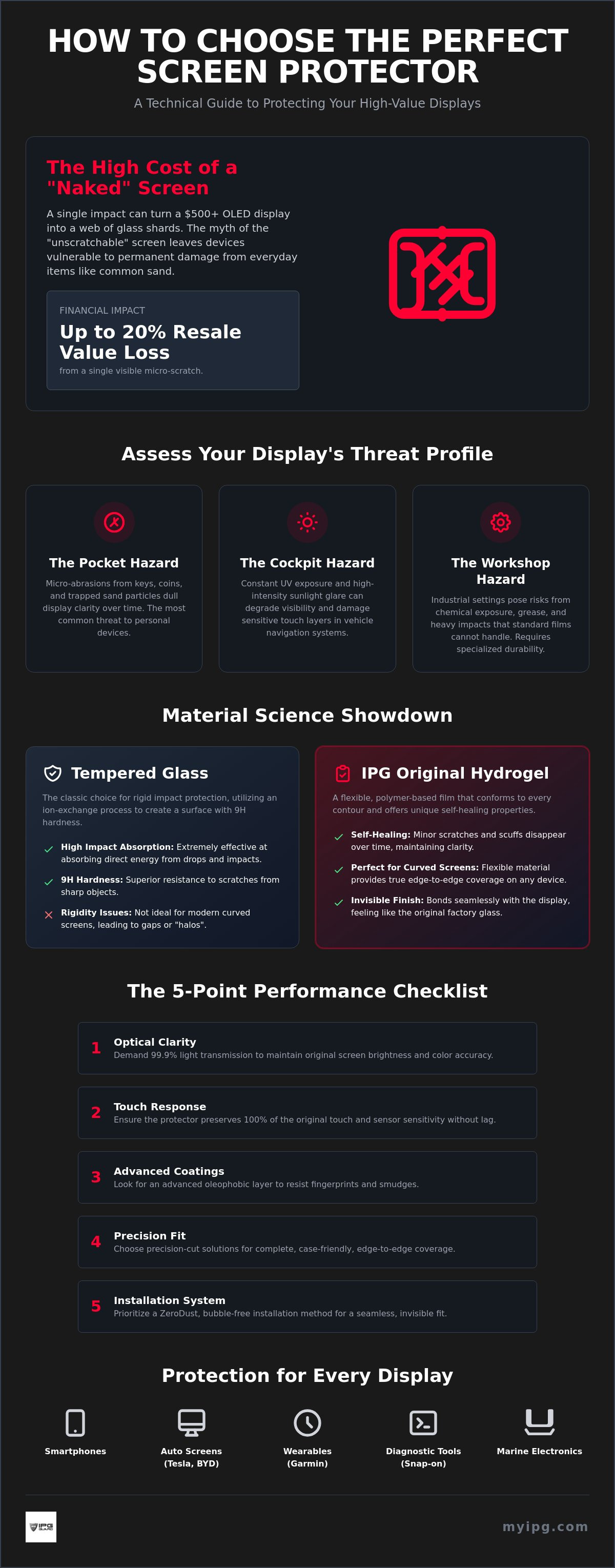
Modern smartphone manufacturers often market their displays as nearly invincible. This is a dangerous myth. While 2026 glass technology excels at shatter resistance, it remains vulnerable to the Mohs scale of mineral hardness. Your "unscratchable" screen can still be permanently marred by something as simple as common sand. Learning how to choose a screen protector starts with recognizing that different environments pose unique risks to your technology's integrity. You aren't just buying a piece of plastic; you're hiring a guardian for your most valued tools.
The "Pocket Hazard" is the most frequent offender for personal devices. Every time you slide your phone into a pocket, it encounters micro-abrasions from keys, coins, and trapped silica particles. These tiny scratches accumulate, dulling the display's clarity over time. For a deeper look at the evolution of these defenses, you can consult this overview of screen protector materials. But the threats don't stop at your pocket. If you drive a Tesla or BYD, your navigation display faces the "Cockpit Hazard." Constant UV exposure and high-intensity sunlight glare can degrade visibility and damage the sensitive touch layers of high-value vehicle interfaces like the BYD SEAL navigation screen.
Industrial settings introduce the "Workshop Hazard." Tools like Snap-on diagnostic scanners or Autel systems operate in harsh zones. They face chemical exposure, grease, and heavy impact risks that a standard phone film cannot handle. A diagnostic screen in a busy garage needs a different level of stewardship than a smartphone in a padded case. You need a shield that matches the specific threat profile of your environment to ensure your equipment remains functional and clear.
The Resale Value Reality
Display stewardship is a smart financial strategy. Data suggests a single visible micro-scratch can reduce a device's trade-in value by up to 20%. It's the difference between a premium "mint condition" return and a "good" tier payout. Beyond the money, there's an emotional peace of mind in knowing your gear is preserved. Naked screens simply fail the long-term durability test. Don't let a major investment suffer because of a missing protective layer.
Environmental Matching
Tailor your protection to your lifestyle. Outdoor enthusiasts require high-transparency films with advanced anti-glare properties to fight sunlight. Office professionals benefit from blue light filtration and privacy layers to secure sensitive data from prying eyes. Meanwhile, industrial workers need thick, chemical-resistant shielding that can withstand workshop debris and rough handling. When you understand how to choose a screen protector based on where you actually use the device, you ensure performance never falters. Choose a guardian that understands your specific world.
Material Science: Tempered Glass vs. Hydrogel vs. Speciality Films
Selection isn't just about finding the right size. It's about the molecular response to trauma. Deciding how to choose a screen protector requires a deep dive into material science. You need to match the shield's physical properties to your device's architecture. Modern displays utilize complex geometries and integrated sensors. Your choice of material determines whether those features remain functional or become frustrated by a poorly matched barrier.
Tempered glass remains the classic choice for rigid impact protection. It utilizes an ion-exchange process to create a surface with 9H hardness. This makes it incredibly effective at absorbing direct energy from drops. However, its rigidity is a weakness for modern, curved aesthetics. For those seeking a more adaptive solution, the IPG Original (Hydrogel) Screen Protector offers a flexible, polymer-based alternative that conforms to every contour. It doesn't just sit on the glass; it bonds with it. For next-gen displays requiring extreme clarity, IPG ProActive films provide advanced light filtration without sacrificing durability.
Be wary of nano liquid solutions. These "invisible" coatings often fail to provide real-world scratch resistance. They're essentially oleophobic treatments marketed as armor. They lack the physical thickness required to stop a sharp object from reaching your actual screen. True protection requires a tangible, engineered layer designed to take the hit so your device doesn't have to.
The Case for Hydrogel
Hydrogel is the superior choice for curved screens like the Samsung Galaxy series or the Apple Watch. Its elastic nature allows it to wrap around edges where glass would simply lift or crack. The standout feature is its self-healing capability. Minor scratches and scuffs in the film disappear over time as the polymers return to their original state. This material maintains 100% of the original touch sensitivity and haptic feedback. It's the "invisible" guardian that feels exactly like the factory display.
Tempered Glass Pros and Cons
Tempered glass provides the most natural "glass-on-glass" feel. It's the gold standard for flat smartphone screens and camera lenses.
- Pros: Extreme scratch resistance; high impact absorption; easy to clean.
- Cons: Can be thick; prone to edge chipping; doesn't support deep curves well.
Choosing by Device Category: Beyond the Smartphone
A smartphone is your most used device, but it isn't your only high-value display. Your car's dashboard, your workshop's diagnostic tools, and your boat's navigation system all represent significant financial investments. Each requires a specialized guardian. To master how to choose a screen protector, you must look beyond the pocket. You need to identify the specific stressors of each environment. A protector designed for a phone won't survive the chemical exposure of a garage or the saltwater spray of the open ocean.
Smartphones demand a balance of aesthetics and 24/7 pocket protection. They need to resist micro-abrasions while maintaining 99.9% light transmission. However, as we move into more specialized territory, the requirements shift from simple scratch resistance to environmental endurance. Whether it's a Garmin Descent on your wrist or an Autel MaxiSYS in your hand, the goal remains the same: total preservation of display integrity. We treat these items with the stewardship they deserve.
Automotive Screen Protection
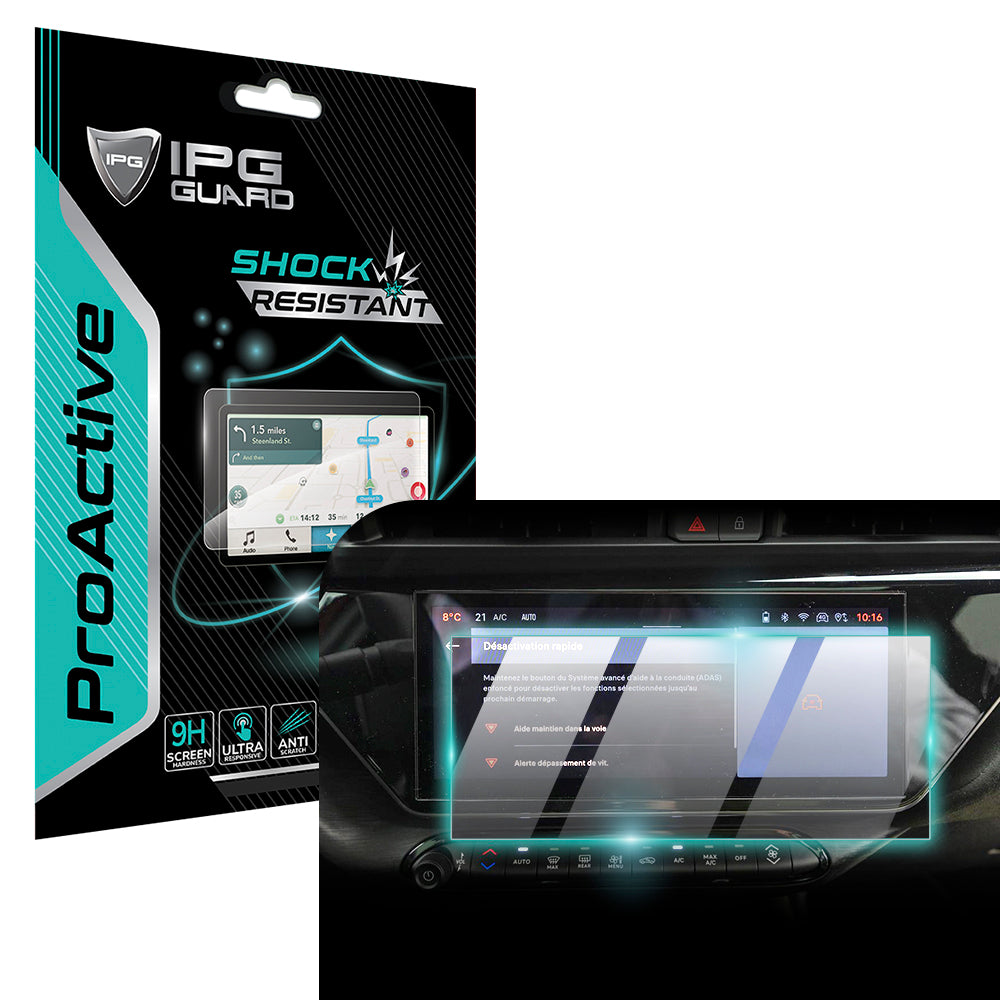
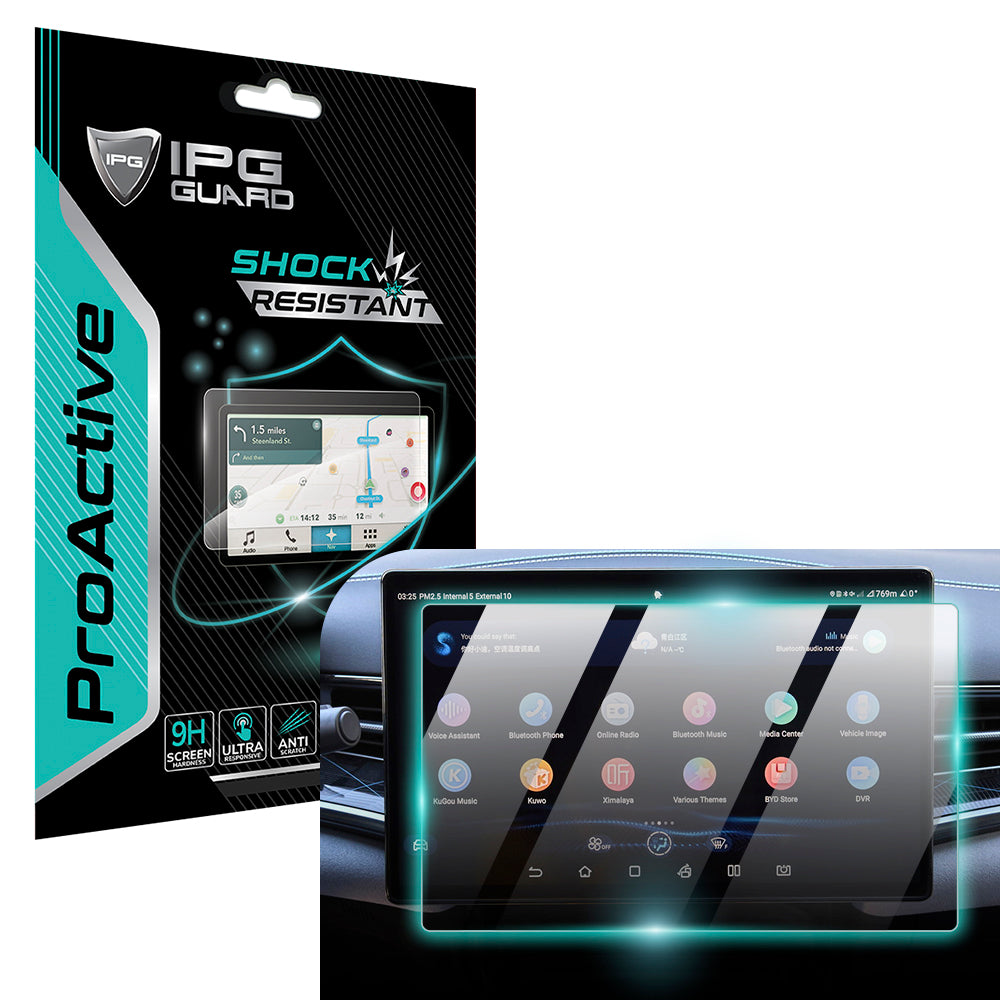
Your vehicle's infotainment system is the primary interface for navigation and climate control. Large displays, like the BYD Seal 15.6-inch screen, are prone to distracting glare and oily fingerprints. This is where anti-glare technology becomes a safety feature, not just an aesthetic one. Choosing the right car screen protectors ensures that your Tesla or BYD display remains legible even under direct midday sun. Precision-cut IPG ProActive films provide a seamless fit that resists the constant tapping and swiping of modern driving. These films are engineered for the specific heat cycles found inside a vehicle cabin.
Industrial and Marine Gear
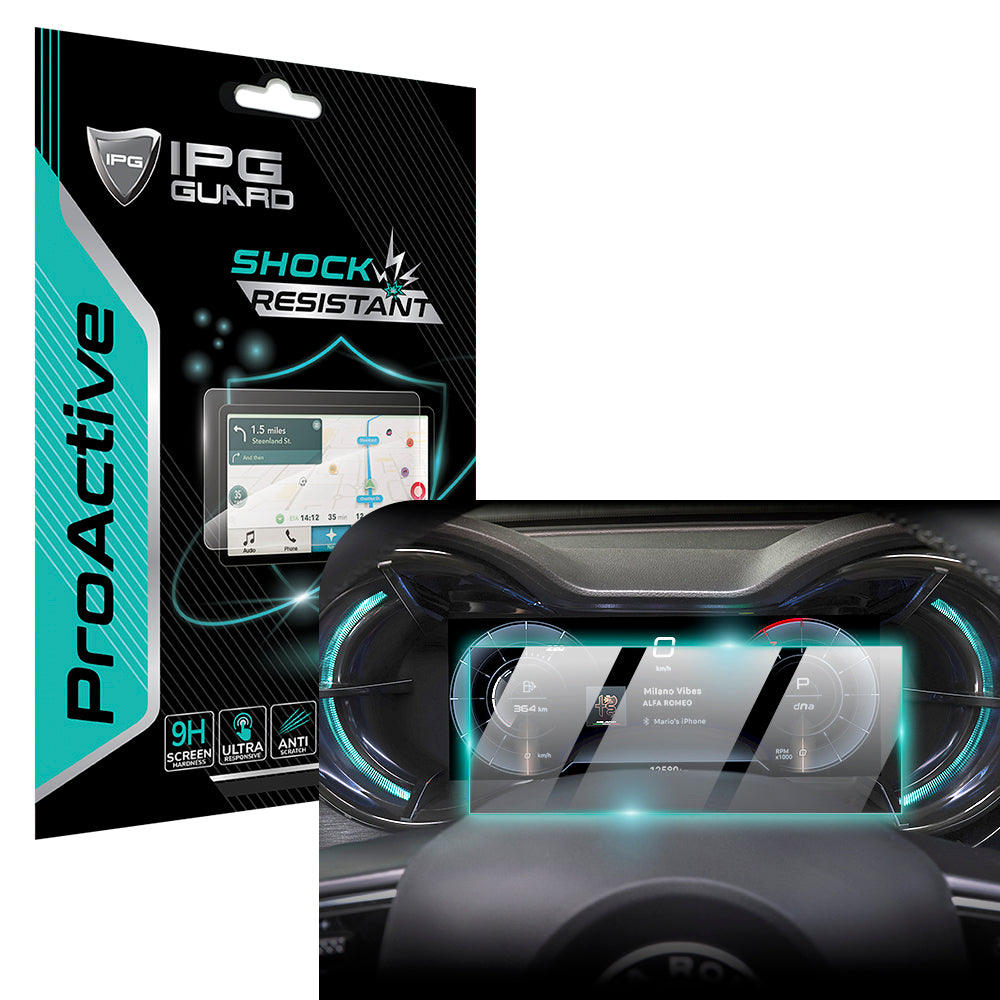
Workshop and marine environments are the ultimate test for any shield. Diagnostic tools like the Snap-on Triton, Apollo, and Solus + face daily exposure to grease, brake fluid, and heavy impact. A standard film would peel or cloud instantly. You need a ruggedized solution designed for industrial abuse. Similarly, marine electronics like Lowrance Eagle 4" and Elite HDS Pro FishFinders face a constant barrage of saltwater and intense UV radiation. Without a UV-resistant protector, these screens can yellow or crack over time. Even your motorcycle deserves specialist care; precision-cut shields for Harley-Davidson cluster displays prevent sun-bleaching and preserve the clarity of your vitals. Match your protection to the mission at hand.
The 5-Point Selection Checklist: Features That Matter in 2026
Selecting a guardian for your display requires a rigorous technical assessment. You need to look beyond the price tag and evaluate the material's performance profile. When researching how to choose a screen protector, use these five benchmarks to ensure you aren't compromising your device's capabilities. A poor choice doesn't just fail to protect; it actively degrades your user experience.
- Optical Clarity: Preserve your display's visual fidelity. A premium shield must offer 99.9% light transmission. Anything less will dull the vibrant colors of your OLED or LTPO screen. High-definition content deserves a transparent barrier that disappears.
- Anti-Fingerprint Coating: Daily swipes shouldn't leave grease trails. High-quality oleophobic layers repel skin oils. They keep your screen clean and make wiping away smudges effortless. This coating is essential for maintaining a professional, factory-fresh appearance.
- Touch Sensitivity: Lag is unacceptable. Whether you're gaming or using industrial diagnostic tools, you need zero-lag response. Your touch should feel immediate. A thick, poorly engineered protector creates a frustrating barrier between you and your data.
- Installation Technology: Installation failure is a common anxiety. Look for Zerodust technology and bubble-free adhesives. A perfect, dust-free application is the hallmark of a professional-grade product. It ensures the protector remains an invisible part of the device.
- Edge-to-Edge Fit: Avoid the "halo effect." This occurs when a protector doesn't sit flush against curved glass. A precision-engineered fit covers the entire display area without lifting. It creates a seamless transition that feels like the original factory finish.
Privacy vs. Clear Shields
Data security is a modern priority. A privacy screen protector utilizes microlouver technology. It narrows the viewing angle so only the person directly in front of the device can see the content. Learning how to choose a screen protector for privacy means balancing security with visibility. While these filters slightly reduce brightness, they provide essential protection for sensitive information in public spaces. Clear shields remain the standard for those prioritizing maximum brightness and color accuracy.
Specialized Lens Protection
Your display isn't the only vulnerable glass. An IPG Phone camera lens protector is vital for maintaining photo integrity. These precision-cut shields protect your sensors without interfering with the flash or focus. This same level of stewardship extends to professional Nikon and Canon displays. Every piece of glass on your high-value gear deserves a dedicated shield. Don't leave your optics exposed to the elements.
Secure your device today with an IPG Zerodust Screen Protector for a flawless, professional finish.
The IPG Advantage: Precision Engineering for Every Display
IPG serves as the dedicated Guardian of Technology. We don't just provide covers; we provide stewardship over your most valuable investments. With a catalog of over 5,000 unique device models, our precision-cut solutions offer a level of fit that generic brands cannot match. When you're deciding how to choose a screen protector, compatibility is the first pillar of performance. A shield that doesn't fit perfectly is a shield that fails to protect.
Our commitment to material innovation drives every product we develop. From the self-healing properties of the IPG Original (Hydrogel) Screen Protector to the advanced light filtration of our ProActive films, we stay ahead of display technology. We are a global authority in specialized protection. Whether you're navigating the open sea with Lowrance electronics or diagnosing a vehicle with Snap-on tools, our films are engineered for the specific rigors of your environment. We protect what you value most with meticulous attention to detail.
The ZeroDust Installation Experience
Installation anxiety is the number one consumer pain point. We've eliminated it. The IPG Zerodust Screen Protector utilizes advanced adhesive technology that allows for repositioning during the application process. You don't have to worry about a single speck of dust ruining your display. Our system enables DIY users to achieve professional, factory-quality results without air bubbles or misalignment. It's a seamless experience designed for absolute clarity.
Total Device Customization
Our expertise extends beyond the screen. We offer a "Total Device" approach to preservation. This includes specialized items like the IPG Tesla Model 3 / Model Y door handle decal and IPG Decal Honda Center Cap Overlay Wheel Tire Decals. Our "Invisible Shield" philosophy ensures that your protection doesn't look like it's there. It maintains the original aesthetic of your device while providing a robust barrier against the world. Understanding how to choose a screen protector means choosing a partner that understands the emotional and financial value of your gear.
Find your device’s perfect shield at My IPG and experience the ultimate in display integrity.
Secure Your Technology for the Long Term
Your technology represents a significant investment in both capital and daily utility. Preserving that value requires more than a generic cover; it demands a dedicated guardian. By matching your shield's material science to your specific threat profile, you ensure that clarity and sensitivity remain uncompromised. Whether you are navigating a BYD SEAL or operating industrial diagnostic tools, the right fit makes the difference between a pristine display and a costly repair.
Mastering how to choose a screen protector is the final step in ensuring your high-value items remain in showroom condition. We specialize in precision-cut solutions for over 5,000 unique device models, from smartphones to specialized automotive and industrial displays. With worldwide shipping available, professional-grade protection is accessible wherever your work or life takes you. Don't leave your screens to chance. Trust a specialist that understands the value of every pixel and every lens.
Secure Your Display with IPG Precision Protection and take the first step toward lifelong device stewardship. Your future self will thank you for the clarity you preserve today.
Frequently Asked Questions
Do I really need a screen protector for my iPhone 17 or Samsung Galaxy?
Yes. Even with the advanced glass technology of 2026, screens remain vulnerable to everyday minerals. Common sand and dust particles are harder than smartphone glass and cause permanent micro-scratches. A dedicated shield acts as a sacrificial layer. It maintains your device's pristine condition and secures its resale value. Don't leave your high-value OLED display exposed to the hidden hazards in your pocket.
What is the difference between IPG Original Hydrogel and tempered glass?
The primary difference lies in flexibility and impact response. Tempered glass is a rigid 9H barrier that excels at absorbing direct drops on flat surfaces. IPG Original Hydrogel is a flexible, self-healing polymer designed for edge-to-edge coverage on curved displays. When learning how to choose a screen protector, consider your device's shape. Hydrogel conforms to contours that rigid glass cannot reach.
Will a screen protector affect my phone’s touch sensitivity or fingerprint sensor?
Professional-grade protectors do not degrade touch performance. IPG shields are engineered for zero-lag response and 99.9% optical clarity. They are fully compatible with modern ultrasonic and optical under-display fingerprint sensors. You maintain the original tactile feel of the factory glass. High-performance adhesives ensure the protector remains an invisible, highly responsive layer between you and your technology.
How do I choose an anti-glare protector for my car navigation screen?
Prioritize matte finishes with high light transmission. Car displays, such as the BYD SEAL 15.6-inch screen, require specialized films that diffuse direct sunlight without blurring the navigation data. Choose a precision-cut solution like IPG ProActive. These films are specifically designed to withstand the high-temperature cycles of a vehicle cabin while resisting the oily fingerprints common in touch-heavy infotainment systems.
Can I install a screen protector on a curved display without air bubbles?
Yes. Successful installation on curved glass requires advanced adhesive technology. IPG Zerodust protectors allow for repositioning during the application process. This eliminates the common frustration of trapped dust and air pockets. By following a methodical application rhythm, you can achieve a seamless, professional-grade fit. The result is a bubble-free finish that follows every contour of your device perfectly.
Does a camera lens protector reduce the quality of my photos?
High-quality lens protection preserves your photo integrity. An IPG Phone camera lens protector uses ultra-clear glass that does not interfere with flash performance or autofocus sensors. It prevents scratches that would otherwise cause lens flare or permanent blurriness. You get total sensor stewardship without any compromise in image fidelity. It is an essential safeguard for the sophisticated optics found on modern flagship smartphones.
How do I safely remove an old screen protector without damaging the display?
Removal is a straightforward process that requires patience. Gently lift a corner using a fingernail or a thin plastic card. Slowly peel the protector back at a very low angle to minimize stress on the underlying display. This prevents the glass from cracking and ensures no adhesive residue is left behind. Once removed, your original screen will emerge in the same condition it was in when first protected.
Are there specific screen protectors for industrial diagnostic tools like Snap-on?
Yes. Specialized environments require ruggedized shielding. Understanding how to choose a screen protector for professional gear means looking for chemical and grease resistance. IPG offers precision-cut protectors for Snap-on Triton and Autel diagnostic systems. These are engineered to survive the harsh conditions of a workshop. They provide a robust barrier against heavy impacts and corrosive fluids while maintaining full touch functionality for your tools.