
What if the invisible dust in your pocket is actually more dangerous to your phone than a two-meter drop onto concrete? It's a frustrating reality for every tech owner. You invested in a flagship device featuring the latest Gorilla Armor 2, yet you still see those shimmering spiderwebs under direct sunlight. You aren't alone in wondering how to prevent micro scratches on phone screen surfaces that are marketed as indestructible. Even the toughest glass-ceramic materials can't fight the mineral science of a single grain of quartz sand.
At My IPG, we understand the value of your device. It's more than a tool; it's a high-value asset that deserves meticulous stewardship. This guide provides the technical breakdown of why micro-abrasions happen and the exact maintenance routine you need to keep your display factory-fresh through 2026. We'll explore the specific properties of sacrificial barriers like hydrogel and tempered glass. You'll learn how to implement a professional-grade protection strategy that preserves both visual clarity and resale value. Let's secure your screen.
Key Takeaways
- Identify the specific environmental minerals that exceed the Mohs Scale hardness of your display to neutralize threats before they cause permanent damage.
- Master how to prevent micro scratches on phone screen surfaces by implementing a dedicated pocket protocol and avoiding high-risk face-down placement.
- Evaluate the performance differences between self-healing hydrogel films and high-impact tempered glass to select the optimal sacrificial barrier for your lifestyle.
- Eliminate self-inflicted abrasions by replacing abrasive paper products and clothing fibers with high-quality microfiber cloths designed for precision optics.
- Utilize specialized My IPG aerospace-grade protectors and Zerodust installation technologies to preserve your device's factory-fresh finish and long-term resale value.
Understanding the Science of Micro-Scratches
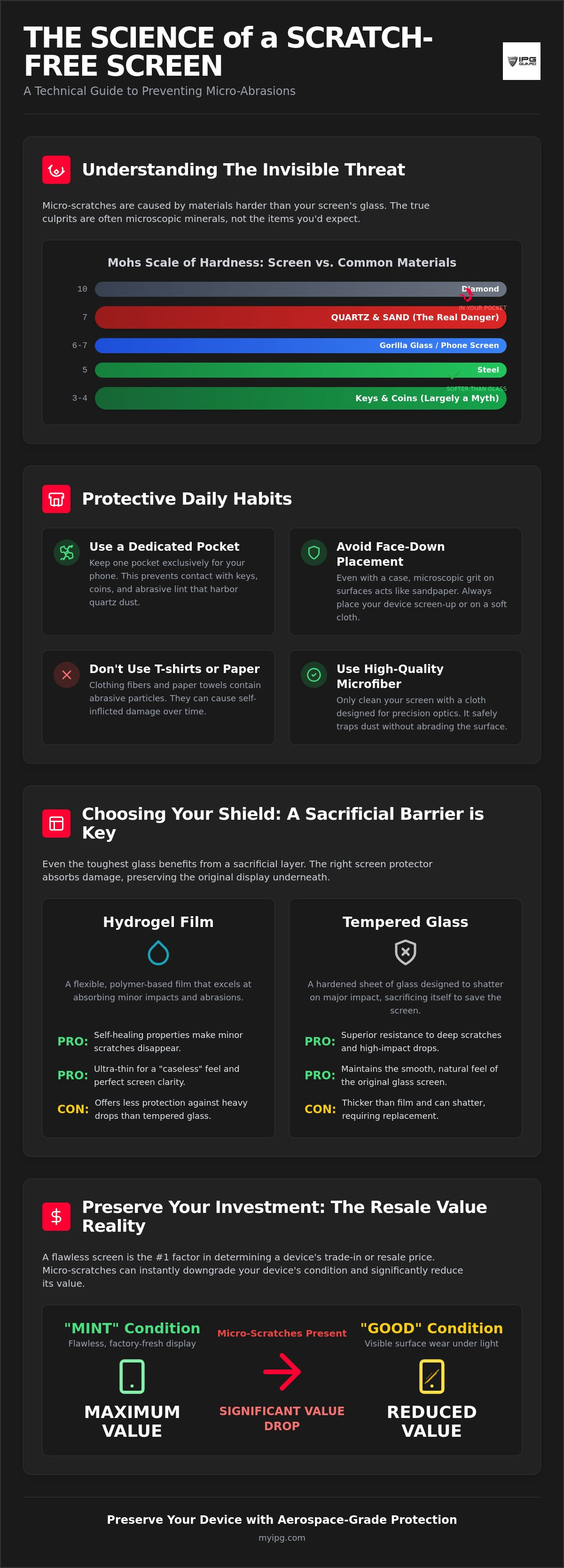
Micro-scratches are not structural failures. They are shallow, non-structural surface abrasions that typically remain invisible until caught by direct sunlight or harsh overhead LEDs. While they don't compromise the integrity of the display, they create a permanent visual distraction. Understanding how to prevent micro scratches on phone screen surfaces requires a look at mineralogy. We use the Mohs Scale of Hardness to rank materials from 1 (talc) to 10 (diamond). For a material to scratch another, it must be higher on this scale than the surface it touches. Most modern smartphone displays rank between a 6 and 7 on the Mohs scale.
The common "keys and coins" anxiety is largely a myth. Metals like copper, aluminum, and stainless steel typically fall between 3 and 5 on the hardness scale. Your keys might smudge the oleophobic coating, but they lack the physical hardness to gouge the glass. The true enemy is microscopic. Quartz-based sand and everyday grit found in pocket lint often reach a hardness of 7 or higher. These tiny minerals act like industrial abrasives against your display. A single grain of sand trapped between your screen and a surface can cause more damage than a handful of pocket change. At My IPG, we focus on neutralizing these microscopic threats before they make contact with your hardware.
Why "Tougher" Glass Scratches Easier
Modern glass engineering faces a constant trade-off. To make a screen shatter-resistant, manufacturers often make the glass less brittle. This increased flexibility helps the phone survive a drop, but it can sometimes result in a surface that is more susceptible to fine abrasions. Even with the advanced materials used in the iPhone 16 and 17 series, the surface remains vulnerable to environmental grit. When researching types of screen protectors, it's clear that a sacrificial layer is the only way to shield the underlying glass. Additionally, the oleophobic coating is significantly softer than the glass itself. Once this chemical layer is compromised by grit, the micro-scratches become far more apparent and difficult to clean.
The Resale Value Reality
A flawless display is the primary metric for device valuation. When it's time to upgrade, trade-in programs and secondary market buyers use high-intensity light to inspect for surface wear. A device with micro-abrasions is immediately downgraded from "mint" to "good" status. This downgrade can slash its resale value by a significant margin. Maintaining a factory-fresh screen is a financial strategy. It requires proactive care from day one. For comprehensive advice on maintaining all your devices, explore The Ultimate Screen Protector Guide to ensure every display you own retains its maximum value through 2026. My IPG remains committed to helping you preserve the financial and emotional value of your technology.
Daily Habits to Prevent Surface Wear
Stewardship of your technology begins with the physical environment you control. While the mineral hardness of quartz dust is the primary threat, your daily handling determines the frequency of exposure. Adopting a "dedicated pocket" rule is the most effective behavioral change you can make. Designate one specific pocket for your device. Ensure it remains free of keys, coins, and abrasive lint. Even if metal doesn't gouge the glass, constant friction against hardware can wear down the factory-applied coatings. This simple discipline is a cornerstone of how to prevent micro scratches on phone screen surfaces without relying solely on hardware.
Avoid the common habit of placing your phone face-down. Many users believe a raised case bezel provides total safety. However, microscopic grit often accumulates on tables, counters, and nightstands. When you place the device down, these particles can become trapped between the surface and the glass. Any slight movement or vibration acts like sandpaper. Furthermore, you must be vigilant about cleaning agents. Never use household glass cleaners or harsh chemicals. These substances strip the oleophobic layer, making the glass more susceptible to friction-based wear. To maintain the integrity of your display, learn how to safely clean your smartphone using only approved methods and materials.
Pocket Hygiene and Environment
Pockets are unintended collection points for environmental debris. Over time, they accumulate a fine layer of abrasive dust. Periodically turn your pockets inside out to shake out trapped particles. For a more thorough cleaning, use a vacuum attachment to remove deep-seated grit from the seams. This is especially critical after visiting high-risk environments like beaches or parks. Beach sand is almost entirely quartz. It is the most common cause of catastrophic surface wear. If you haven't yet secured your device with an IPG Original (Hydrogel) Screen Protector, consider using a dedicated soft microfiber pouch for transport.
Safe Handling in Public Spaces
Public surfaces are unpredictable. Sliding your phone across a cafe table or a retail counter is a high-risk action. These surfaces are rarely cleaned of abrasive minerals. Another overlooked danger zone is the car interior. Cup holders and center consoles often harbor grit that can vibrate against your screen during transit. For those looking to protect their vehicle's integrated displays as well, our Car Screen Protector Buying Guide offers specialized insights for automotive environments. Consistent awareness of where you place your device is the best way to ensure how to prevent micro scratches on phone screen damage from becoming a permanent regret.
Screen Protector Materials: Choosing Your Shield
Hardware habits and pocket discipline are your first line of defense. However, the only 100% effective method in how to prevent micro scratches on phone screen glass is the application of a sacrificial barrier. This layer is designed to be the primary recipient of environmental friction. It absorbs the mineral impact of quartz dust and grit, ensuring the factory-fresh display beneath remains untouched. When selecting a shield, you must choose between three distinct material technologies: Tempered Glass, Hydrogel (TPU), and PET Plastic. Each offers a different level of stewardship over your high-value device.
Tempered glass is the traditional choice for those prioritizing impact protection. It provides a rigid, high-clarity surface that mimics the tactile feel of the original screen. While excellent for preventing cracks during a drop, glass is inherently brittle. It can chip at the edges and, once scratched, those marks are permanent. PET plastic is a legacy solution. It's thin and affordable, but it lacks the premium feel and long-term durability of modern alternatives. For the user focused on absolute surface perfection, Hydrogel (TPU) has emerged as the specialized innovator in the field.
The Self-Healing Advantage of Hydrogel
Hydrogel isn't a standard plastic film. It's a sophisticated thermoplastic polyurethane (TPU) with a unique molecular memory. The IPG Original (Hydrogel) Screen Protector utilizes this aerospace-grade technology to "heal" itself. When a microscopic grain of sand creates a surface abrasion, the material's elastic structure allows it to expand and close the gap over time. Within hours, the micro-scratch effectively disappears. This self-healing property makes it the ideal solution for maintaining a flawless finish without the thickness or fragility of glass. Its flexible nature also ensures a precise, edge-to-edge fit on curved displays, providing a seamless look that preserves the device's original aesthetic.
Tempered Glass for Impact and Clarity
For users in high-impact environments, tempered glass remains a robust guardian. These protectors are often rated at 9H hardness. This technical specification indicates the material can resist scratches from almost any household item. While they don't possess the healing capabilities of hydrogel, they offer an uncompromising level of optical transparency and a smooth glide for touch-intensive tasks. Choosing between these materials depends on your specific risk profile. For a detailed breakdown of which shield fits your lifestyle, refer to our IPhone Screen Protector Buying Guide. Whether you prioritize impact resistance or the self-healing properties of hydrogel, the goal remains the same: total preservation of your display's integrity.
Safe Cleaning Practices to Avoid Self-Inflicted Scratches
Cleaning your device is a critical act of stewardship that often goes wrong. Many users inadvertently cause the very damage they seek to avoid. If you want to master how to prevent micro scratches on phone screen surfaces, you must retire the habit of using your shirt or paper towels. These materials are composed of abrasive wood-based fibers or synthetic threads that trap environmental grit. Use only high-quality, optics-grade microfiber cloths. These specialized textiles feature a dense weave designed to lift and lock away particles rather than dragging them across the glass.
Adopt the "Blow Before Wipe" rule as your first step. Before any physical contact occurs, use a dedicated bulb blower or a gentle breath to clear loose debris. This simple action removes the larger quartz particles that act like sandpaper under pressure. For persistent oils and fingerprints, apply a specialized screen cleaner or 70% isopropyl alcohol sparingly. Always apply the solution to the cloth rather than the device. This controlled application prevents liquid from migrating into sensitive speaker grilles or internal components. A damp cloth provides the necessary lubrication to float contaminants away safely.
The Danger of Dry Wiping
Dry wiping is a high-risk maintenance error. Without a liquid medium to suspend dust, any microscopic grit present on the display becomes an abrasive tool. The friction generated during a dry wipe can easily overcome the protective oleophobic coating. A light mist of an approved cleaner helps float these minerals. This allows the microfiber to capture them within its fibers. Use gentle, circular wiping motions without applying excessive downward force. Let the material properties of the precision cloth perform the cleaning. This methodical approach ensures you aren't grinding environmental dust into the surface you are trying to protect.
Maintaining Your Screen Protector
Your sacrificial barrier requires its own specific care routine to remain effective. Dust frequently accumulates at the transition point where the protector meets the device bezel. Use the edge of your microfiber cloth to gently clear these channels once a week. If you observe deep gouges or a significant reduction in optical clarity, the protector has fulfilled its purpose and requires replacement. A compromised shield can no longer provide the high-level security your display deserves. To ensure a completely pristine, grit-free application for your next guardian, utilize the IPG Zerodust Screen Protector. This advanced system eliminates the installation-phase debris that causes permanent micro-abrasions, maintaining your screen's factory-fresh integrity.
IPG Solutions: Advanced Stewardship for Your Tech
Effective stewardship requires more than just awareness; it demands specialized hardware. When considering how to prevent micro scratches on phone screen surfaces, the choice of material is paramount. IPG offers a range of precision-engineered solutions designed to withstand the rigors of 2026. Our IPG Original (Hydrogel) Screen Protector represents the pinnacle of this effort. It utilizes aerospace-grade thermoplastic polyurethane to provide a flexible, "invisible" shield. This material doesn't just block abrasions. It absorbs energy, maintaining a factory-fresh appearance without compromising the tactile response or optical clarity of your device. It's protection that feels like nothing is there.
Precision is the standard across our entire catalog. We provide exact-fit designs for everything from the latest flagship smartphones and tablets to specialized industrial equipment like Snap-on diagnostic tools. Every cut is calculated to ensure zero interference with sensors, speakers, or buttons. This meticulousness extends to the installation process. The IPG Zerodust Screen Protector addresses the primary cause of user frustration: trapped grit. By eliminating the particles that cause bubbles and microscopic surface wear during application, we ensure your guardian is perfectly seated from the first second. It's a professional-grade result achieved in minutes.
Comprehensive Protection Beyond the Screen
A truly protected device requires a 360-degree strategy. While the display is the primary touchpoint, the camera system and back glass are equally vulnerable to environmental quartz. A single table-top slide can ruin a high-definition lens, leading to permanent blur in your photos. This is why we recommend an IPG Phone camera lens protector to safeguard your optics. Our commitment to technical precision ensures that your photography remains sharp while the hardware stays secure. Protecting these secondary surfaces is vital for maintaining the total performance and resale value of your technology.
Easy Installation for Lasting Results
Achieving a professional, bubble-free finish is no longer a matter of luck. Our application systems are designed for immediate success. Unlike standard plastic guards that peel or yellow over time, IPG films offer long-term stability and resilience. They are engineered to remain bonded through temperature shifts and heavy daily use. This longevity reduces the need for frequent replacements, providing a cost-effective path for how to prevent micro scratches on phone screen units. Your device represents a significant financial and personal investment. We are here to act as its dedicated guardian. Secure your device with IPG precision-cut protection today and experience the peace of mind that comes with professional-grade stewardship.
Secure Your Device's Future Today
Your smartphone is a high-value asset that deserves professional-grade stewardship. We've explored how environmental quartz grit poses a greater threat than metal keys. You now understand that maintaining a factory-fresh display requires more than just careful handling. It demands a proactive strategy. By mastering pocket hygiene and adopting safe cleaning practices, you've taken the first steps in learning how to prevent micro scratches on phone screen surfaces. However, behavioral changes are only part of the solution. A dedicated sacrificial barrier is the ultimate insurance for your screen's integrity.
We provide the technical precision needed to keep your tech in mint condition. Our protection kits feature aerospace-grade hydrogel technology designed to heal itself from daily wear. Every shield is precision-cut for all major brands to ensure a seamless, invisible fit. With global shipping on all protection kits, professional security is accessible no matter where you are. Don't leave your display's resale value to chance. Preserve your screen with IPG’s invisible self-healing technology and maintain that out-of-the-box clarity for years to come. Your technology is in safe hands.
Frequently Asked Questions
Do micro-scratches happen on Gorilla Glass?
Yes, micro-scratches occur on even the most advanced Gorilla Glass surfaces. While modern glass-ceramics are engineered for high impact resistance, they typically rank between 6 and 7 on the Mohs scale. Environmental minerals like quartz sand rank higher at level 7. This means your display remains vulnerable to microscopic grit found in everyday environments. Proactive stewardship is the only way to ensure a flawless finish.
Can you buff out micro-scratches on a phone screen?
You cannot safely buff out scratches on a smartphone display. Attempting to use abrasive polishes or household "hacks" like toothpaste will permanently strip the oleophobic coating. This chemical layer is essential for fingerprint resistance and smooth touch interaction. Once this coating is gone, the screen becomes more susceptible to further wear. Applying a high-quality protector is the only safe way to manage existing surface damage.
Does a screen protector hide existing micro-scratches?
Yes, a screen protector can effectively mask existing surface wear. The specialized adhesive layer on a hydrogel or tempered glass shield fills the shallow valleys of micro-scratches. This restores a uniform refractive index across the display. It's a highly effective strategy for how to prevent micro scratches on phone screen glass from remaining a visual distraction during daily use. Your screen will look factory-fresh immediately after application.
Are keys the main cause of phone screen scratches?
Keys are rarely the direct cause of glass scratches. Most household keys are made of brass or steel, which fall between 3 and 5 on the Mohs scale. Since your screen is a level 6 or 7, these metals aren't hard enough to gouge the glass. The real danger is the microscopic quartz dust that accumulates on your keys. This grit acts as an industrial abrasive when pressed against your display.
Does AppleCare+ cover micro-scratches on an iPhone?
AppleCare+ does not provide coverage for cosmetic damage. This includes micro-scratches, scuffs, or minor surface abrasions that don't interfere with the device's operation. Because these marks impact resale value but not functionality, they are considered a maintenance issue rather than a hardware failure. You must take personal responsibility for your device's visual integrity by using a dedicated sacrificial barrier from day one.
What is the best material for preventing micro-scratches?
Aerospace-grade hydrogel is the superior material for neutralizing surface wear. Unlike tempered glass, which can show permanent marks, hydrogel features self-healing molecular properties. When microscopic grit causes an abrasion, the material's elastic structure expands to close the gap. This makes it the most resilient option for how to prevent micro scratches on phone screen damage in high-friction environments like pockets or bags.
Can sand in my pocket scratch my phone screen?
Sand is the primary cause of catastrophic surface wear. Most beach and environmental sand is composed of quartz, which is harder than smartphone glass. A single grain trapped in your pocket can act like a diamond-tipped scribe against your display. Always turn your pockets inside out to remove debris. This simple habit is a vital part of protecting your high-value technology from permanent mineral damage.
How often should I change my screen protector to prevent wear?
Replace your screen protector every 6 to 12 months for optimal performance. Over time, the protector's own coatings can wear down, or it may accumulate its own set of deep gouges. Swapping out the shield ensures your device is always protected by a fresh, high-clarity sacrificial layer. Regular maintenance preserves the premium touch experience and ensures your actual screen remains in mint condition for its entire lifespan.