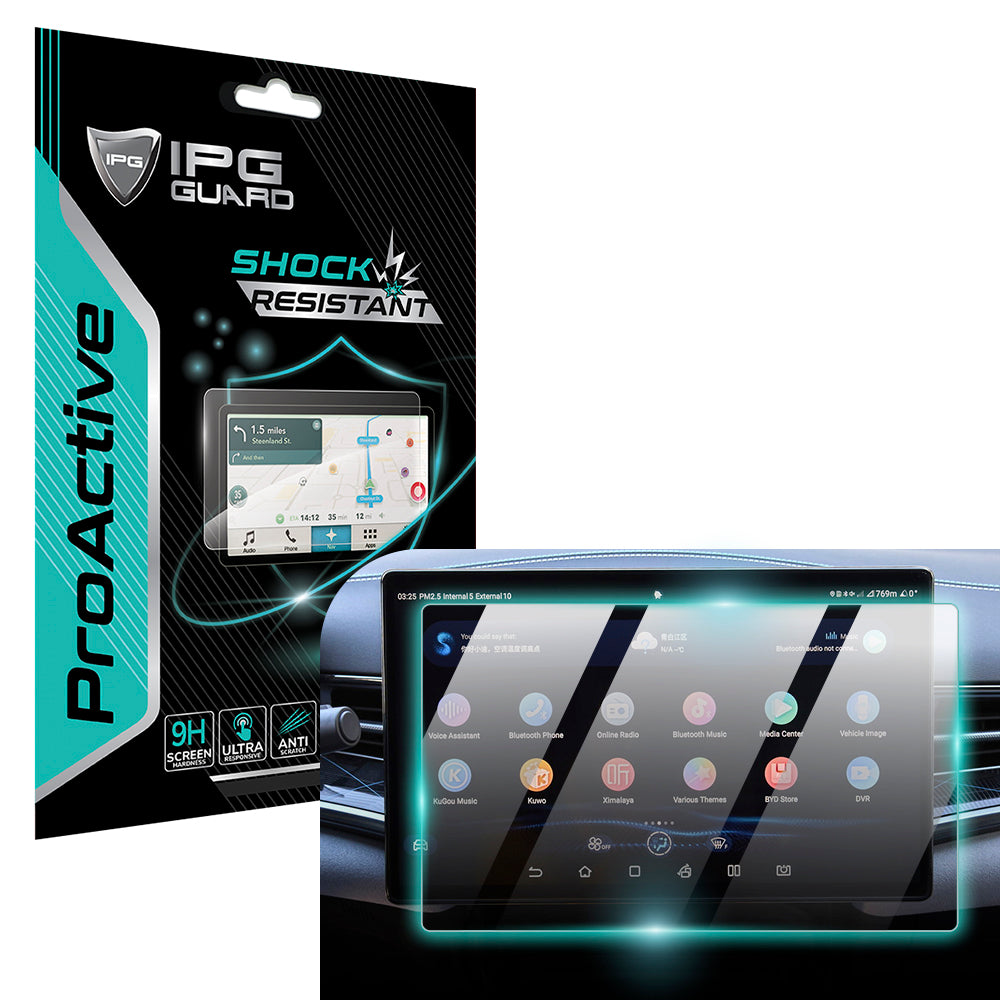


Imagine merging into highway traffic when a sudden midday sunburst turns your navigation display into a blinding mirror. In that split second, you lose more than your route; you lose visual command of the road. It's a common frustration for owners of high-value vehicle displays. You shouldn't have to squint through greasy fingerprints or harsh sun reflections to see your maps. Most drivers accept these distractions as an inevitable part of modern car ownership, but your safety shouldn't be a compromise.
We understand the stewardship required to protect these sophisticated integrated systems. You can master the science of screen clarity and eliminate dangerous driving distractions with the perfect anti glare car navigation screen protector for your vehicle. This guide breaks down the technical specifications of modern light filtration. We'll explore how ProActive technology maintains over 90% legibility even at 50,000 lux while shielding your display from permanent scratches. You'll learn the precise steps to achieve a bubble-free, factory-new finish that preserves your car's interior integrity for years. Let's secure your view and restore your focus on the drive ahead.
Key Takeaways
- Identify how modern cabin features like panoramic roofs increase light saturation and create dangerous visibility gaps on large infotainment displays.
- Learn the technical distinction between light diffusion and chemical coatings to select the optimal anti glare car navigation screen protector for your vehicle.
- Compare material durability to understand why IPG Original (Hydrogel) provides better adhesion and flexibility for complex curved automotive screens.
- Master the 'Zero Dust' cleaning protocol and vertical alignment techniques to achieve a flawless, bubble-free installation every time.
- Discover how precision-cut ProActive shields act as a guardian for your high-value tech, preserving factory-new clarity for 2022-2026 models.
Why Modern Car Screens Suffer from Severe Glare
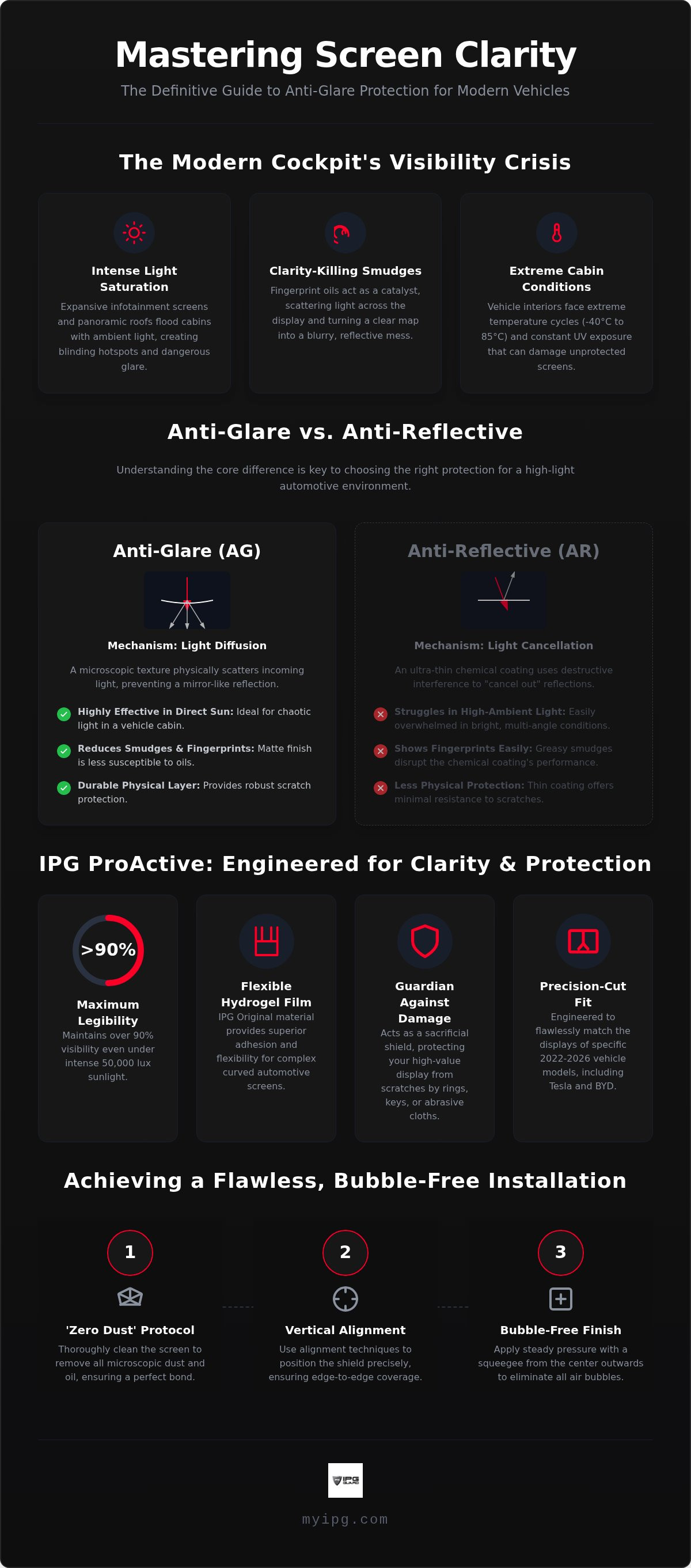
Modern vehicle interiors are no longer just cockpits; they're high-definition command centers. The rapid shift toward larger, vertically oriented infotainment displays has fundamentally changed the optical environment of your car. These expansive glass surfaces are designed for aesthetic impact, yet their positioning often makes them a magnet for ambient light. When you add the trend of panoramic glass roofs into the mix, cabin light saturation reaches levels that traditional dashboard designs never had to handle. Overhead light floods the cabin, bouncing off the console at angles that create intense, blinding hotspots.
The result is a dangerous "blind spot" right in the center of your console. During peak daylight hours, sun reflections can completely wash out navigation data, forcing you to guess your next turn. Fingerprint oils act as a catalyst here. These microscopic layers of sebum don't just look dirty; they scatter incoming light across the screen surface, turning a clear map into a blurry, reflective mess. While an anti-reflective (AR) coating can help reduce some bounce, a dedicated anti glare car navigation screen protector provides the physical diffusion needed to keep the display readable under direct sun.
The EV Screen Challenge
Owners of high-end EVs like the Tesla Model 3 or the BYD 2022-2025 SEAL (15.6 inch) face a unique set of stressors. These massive displays are the primary interface for almost every vehicle function. Standard screen protectors designed for mobile phones often fail in this environment. They aren't engineered for the extreme temperature cycles of a vehicle cabin, which can swing from -40°C to 85°C. Constant UV exposure through the windshield also threatens the integrity of the display. Without a specialized shield, the factory glass is vulnerable to micro-abrasions and heat-induced "ghosting" that can permanently mar the high-value electronics.
Visual Fatigue and Driver Safety
Safety is the core of our stewardship philosophy. Squinting at a reflective screen significantly slows your reaction time. Your brain must process the visual data beneath the glare while simultaneously ignoring the reflection of your own clothing or the sky above. This cognitive load leads to rapid visual fatigue and "screen distraction" during critical maneuvers. Beyond the safety implications, there is the matter of preservation. Modern high-gloss interior trim and integrated displays are expensive to replace. Using an anti glare car navigation screen protector ensures your cockpit retains its factory-fresh appearance. It guards against the scratches caused by rings, keys, or abrasive cleaning cloths, securing both your safety and your vehicle's resale value.
Understanding Anti-Glare vs. Anti-Reflective Technology
Selecting the right anti glare car navigation screen protector requires a brief look at the physics of light. Most drivers confuse anti-glare (AG) with anti-reflective (AR) technology, yet they function very differently. AR coatings use ultra-thin chemical layers to create destructive interference, effectively "canceling out" reflections. While AR is excellent for low-light contrast, it often struggles in high-ambient light environments like a vehicle cabin. It also leaves the screen highly susceptible to greasy fingerprint smudges that are difficult to remove.
Anti-glare technology relies on microscopic surface textures. This texture scatters incoming light rather than reflecting it directly back into your eyes. This distinction is critical for safety. An NHTSA investigation on glare highlights how specular reflections can severely impair a driver's ability to perceive information. In a car, light comes from every angle. Diffusion handles this chaos better than simple reflection reduction. It creates the "Matte Effect," which is a delicate balance. Too much texture and the screen looks grainy; too little and the glare remains. High-quality shields find the sweet spot where you maintain visibility without sacrificing the premium feel of your interior.
How Light Diffusion Works
Light diffusion is the scattering of photons to reduce specular reflection. By breaking up direct light beams, these protectors prevent the "mirroring" effect that makes screens unreadable. In technical terms, we measure this through the "Haze Factor." A higher haze percentage indicates better light scattering. This is essential for screens positioned under panoramic glass roofs or near large windows where light saturation is constant. Our approach ensures the light is spread so thinly that your eyes don't register a reflection at all.
Clarity vs. Protection
A common misconception suggests that adding a matte layer makes the display blurry. This isn't true with modern engineering. IPG ProActive technology utilizes advanced material science to maintain pixel-perfect resolution. By managing the microscopic grain of the surface, light from the pixels passes through clearly while external light is diffused. You get the protection you need without losing the crispness of your maps.
Achieving this level of precision requires a specialized "Zero Dust" manufacturing environment. Even a single microscopic particle can distort light transmission and create permanent visual artifacts. We prioritize this meticulous process to ensure your high-value display remains a clear window to your data. To protect your investment with professional-grade materials, consider exploring our specialized automotive collection. We handle every film with the care your vehicle deserves.
Comparing Screen Protector Materials for Automotive Displays
Selecting the right material for your dashboard is a decision about long-term stewardship. You aren't just buying a plastic sheet; you're choosing a barrier against environmental degradation. While many retailers suggest tempered glass as a default, automotive interiors present challenges that rigid materials can't solve. You need a solution that adapts to the unique geometry of a modern cockpit.
Tempered glass offers high impact resistance but fails in the high-saturation light environments of modern cockpits. Its crystalline structure often increases mirroring, reflecting the cabin interior back at the driver. In contrast, PET matte films provide excellent glare reduction but lack the durability needed for high-traffic touchscreens. They scratch easily and often peel at the edges under high cabin heat. For the discerning owner, IPG Original (Hydrogel) represents the "steward's choice." It combines the clarity of high-end optics with the resilience of advanced polymers. This material uses a specialized optical coating to manage light diffusion without the bulk of traditional glass. It's the ideal anti glare car navigation screen protector for integrated EV dashboards where precision and performance are non-negotiable.
The Case for Hydrogel in Cars
Hydrogel is engineered for the specific rigors of the road. Unlike rigid glass, it features self-healing properties that allow minor surface scratches from keys or rings to disappear over time. It's also built to withstand the extreme temperature cycles found in car cabins, which can range from -40°C to 85°C. This thermal stability ensures the adhesive doesn't fail during summer peaks. For vehicles with expansive displays like the BYD 2022-2025 SEAL (15.6 inch), hydrogel provides perfect edge-to-edge coverage that glass simply can't match on slightly curved surfaces.
Glass vs. Film: The Safety Factor
Safety remains our primary focus. In the event of a collision, a large tempered glass protector can shatter, creating dangerous shards within the cabin. Choosing a film-based anti glare car navigation screen protector is a proactive safety decision. Films like our IPG Original (Hydrogel) remain intact, acting as a protective skin rather than a brittle shell. Weight and thickness also matter. Thick glass layers can dampen capacitive haptic feedback, making your screen feel sluggish. Our ProActive technology ensures that touch sensitivity remains instantaneous, preserving the high-tech feel of your vehicle's interface while securing the display's integrity.
How to Install Your Navigation Shield Without Bubbles
Installing an anti glare car navigation screen protector on a 15-inch display requires more precision than a standard phone application. The vertical orientation of modern EV consoles introduces gravity as a variable that can complicate alignment. Success depends on a methodical, multi-stage process that prioritizes environmental control and technical patience. Follow these steps to ensure a flawless finish that looks like it came straight from the factory.
- Step 1: Deep Clean. Use a specialized degreasing agent to remove skin oils and cabin silicone residues. Employ the 'Zero Dust' technique by performing a final pass with an adhesive dust-removal strip to catch microscopic fibers.
- Step 2: Alignment. Position the film against the top edge of the display first. For large format screens, a dry run without peeling the liner is essential to visualize the gap tolerances before the adhesive makes contact.
- Step 3: Center-Out Squeegee. Apply pressure starting from the geometric center of the display and work toward the perimeter. This pushes trapped air across the shortest possible distance, preventing the formation of large air pockets.
- Step 4: Edge Management. Address the 'halo effect' by applying firm, sustained pressure to the edges. Hydrogel's flexibility allows it to conform to the slight curvatures found on high-end infotainment glass where rigid materials would lift.
- Step 5: Curing. Allow 24 to 48 hours for the IPG Original (Hydrogel) material to fully cure. Minor micro-bubbles often dissipate naturally during this period as the polymer settles and the moisture evaporates.
Mastering the Vertical Install
Gravity can pull your protector out of alignment if you attempt a side-to-side application. Always anchor the top edge first and let the weight of the film help you guide it down. Turn off your car's climate control and close all windows before beginning. Air movement is the primary carrier of floating dust particles that cause permanent bumps under the film. If you encounter a stubborn bubble, use a microfiber-wrapped squeegee to gently guide it to the nearest edge. Don't use your fingernails; they can mar the specialized matte texture of the shield.
The IPG Installation Advantage
Our ProActive designs are precision-cut for specific models, such as the BYD SEAL 15.6 inch display. This eliminates the risk of trimming mistakes and ensures edge-to-edge coverage. Each kit includes dedicated alignment tools to facilitate a factory-perfect fit on the first attempt. For deeper maintenance tips, consult The Ultimate Screen Protector Guide. To secure your vehicle's tech today, order your custom-fit protection kit and experience the clarity of a professional-grade installation.
IPG ProActive: Engineered Protection for Your Vehicle's Tech
At IPG, we view your vehicle's technology as more than just hardware. It's a vital interface for your safety and digital life. Our ProActive line represents the pinnacle of precision engineering for the 2022-2026 vehicle generation. We don't just manufacture films; we exercise stewardship over the high-value items you value most. This philosophy drives us to create solutions that offer more than basic scratch resistance. We focus on advanced light management to ensure your cockpit remains a place of clarity and focus.
Choosing the right anti glare car navigation screen protector is an act of preservation. Tesla and BYD owners worldwide trust our specialized solutions because we understand the specific optical demands of modern cabin environments. Our ProActive technology utilizes a specialized polymer structure that diffuses harsh light while maintaining the vibrant color accuracy of your display. It's a professional-grade shield that secures your investment without compromising the sleek, minimalist aesthetics of your interior. We provide the security you need to drive with confidence in any lighting condition.
Specialized Fit for Modern EVs
Modern electric vehicles feature unique display geometries that require a meticulous touch. Our custom dimensions for the BYD SEAL 15.6 inch display ensure a seamless, edge-to-edge fit that looks factory-installed. We also provide tailored solutions for Tesla Model 3 and Model Y dashboards, accounting for the specific angles and light exposure levels of these iconic cockpits. For a deeper dive into selecting the right shield for your specific model, consult our Car Screen Protector Buying Guide 2026. We ensure your tech is guarded by the most precise cuts in the industry.
The IPG Promise
Our commitment to you is built on technical authority and a deeply protective sentiment. We design performance-focused products that don't compromise on aesthetics. When you choose an anti glare car navigation screen protector from our ProActive line, you aren't just getting a product. You're joining a global community of protected drivers who refuse to settle for subpar visibility. We take our role as guardians of your technology seriously, delivering meticulous reliability in every kit. Secure your view and preserve your vehicle's integrity with a partner that understands the financial and emotional value of your car's tech.
Secure Your Visual Command Center
Mastering the optical environment of your cockpit is the final step in ensuring a safe, focused driving experience. You now understand that light diffusion is superior to simple reflection reduction in high-saturation cabins. By choosing a specialized anti glare car navigation screen protector, you move beyond basic maintenance into true technology stewardship. You've learned how to identify the right materials and master the vertical installation process to preserve your display's factory-new integrity.
Your vehicle's sophisticated interface remains vulnerable to environmental stressors without a professional-grade barrier. Our IPG Original (Hydrogel) solutions offer advanced self-healing technology and a zero-distraction anti-glare finish that rigid glass cannot match. Whether you need a precision-cut shield for 15.6' BYD SEAL displays or a tailored solution for your Tesla, we provide the security your tech deserves. Secure Your Display with IPG ProActive Automotive Shields today. Drive with the confidence that your view is guarded by the industry specialist. Your journey deserves perfect clarity.
Frequently Asked Questions
Will an anti-glare screen protector make my navigation screen look blurry?
No, modern precision-engineered shields maintain pixel clarity while diffusing external light. High-quality films utilize a specific haze factor designed to scatter photons without distorting the underlying display data. You'll notice a slight matte finish that actually improves readability in bright conditions by eliminating the mirror effect. It's about balancing light transmission with diffusion to ensure maps stay sharp while glare disappears. This secures your view without compromising the high-definition experience.
Is hydrogel better than tempered glass for a car navigation display?
Hydrogel is generally superior for automotive use because it offers better flexibility and safety. Unlike rigid glass, the IPG Original (Hydrogel) material conforms to the slight curves of modern dashboards and won't shatter into dangerous shards during an impact. It also features self-healing properties for minor surface abrasions. Glass often increases reflections and can struggle with the extreme temperature fluctuations common in vehicle cabins, whereas hydrogel remains stable and secure.
Can I install a screen protector on a curved car dashboard screen?
Yes, you can successfully protect curved displays by using a flexible material like hydrogel. Rigid tempered glass cannot bend to meet the contours of integrated infotainment systems, leading to lifting at the edges. A precision-cut anti glare car navigation screen protector made from hydrogel provides edge-to-edge adhesion. This ensures complete coverage for complex screen geometries found in the latest 2022-2026 vehicle models without compromising the sleek interior aesthetic or the safety of the glass.
How do I remove air bubbles from a large car screen protector?
Use a microfiber-wrapped squeegee to gently push bubbles from the center toward the nearest edge. For larger format displays, patience is key during the initial application. If tiny micro-bubbles remain after installation, don't panic or try to peel the film back. Hydrogel materials are breathable, meaning most small air pockets will naturally dissipate within 24 to 48 hours as the adhesive cures and stabilizes against the glass surface without any manual intervention.
Does an anti-glare shield affect the touch sensitivity of my Tesla screen?
A high-quality shield will not interfere with the capacitive haptic feedback of your Tesla display. Our ProActive technology is engineered to be ultra-thin, ensuring that every swipe and tap remains instantaneous. You'll maintain full control over your vehicle's functions while benefiting from a smoother, fingerprint-resistant surface. It's a protective layer that secures your tech without creating a barrier between you and your car's interface, preserving the responsive feel you expect from high-end electronics.
Will the heat inside my car cause the screen protector to peel off?
Professional-grade automotive films are designed to withstand temperatures ranging from -40°C to 85°C. We use advanced adhesives that remain stable even during peak summer heat when cabin temperatures soar. Unlike cheap plastic films, the IPG Original (Hydrogel) material is thermally resilient. It won't bubble, warp, or peel away from the glass when exposed to direct sunlight through the windshield, provided you followed the correct cleaning protocol during the initial installation process.
How do I clean my anti-glare screen protector without scratching it?
Always use a clean, dry microfiber cloth for daily maintenance to remove dust and light oils. If deep cleaning is necessary, apply a small amount of water or a specialized screen cleaner directly to the cloth, never the screen. Avoid abrasive paper towels or ammonia-based glass cleaners which can damage the matte texture. The self-healing properties of our hydrogel shields help manage micro-scratches, keeping your navigation interface looking factory-fresh for years of reliable use.
Is it worth getting a screen protector for a leased car?
Protecting a leased vehicle is a smart financial move to avoid excessive wear and tear charges at the end of your term. Scratched or permanently smudged infotainment screens can lead to costly penalties during the return inspection. Installing an anti glare car navigation screen protector preserves the original glass in pristine condition. Since these films are easily removable without leaving residue, you can return the car in factory-new state while enjoying better visibility throughout your lease.