

Imagine the sinking feeling of seeing a deep, jagged scratch across your scanner's display after a simple brake job. Your high-end diagnostic gear is likely the most expensive investment in your toolbox, yet it's constantly exposed to abrasive shop dust, corrosive chemicals, and accidental drops. A premium diagnostic tool screen protector acts as a dedicated guardian for your technology, ensuring that a single slip doesn't turn into a multi-thousand-dollar repair bill.
You work hard for your tools, and they should work just as hard for you. It's frustrating when glare from overhead shop lights or greasy fingerprints make reading live data on your Snap-on or Autel scanner impossible. This guide promises to help you choose and install a professional-grade shield that offers crystal clear visibility and superior touch responsiveness. We'll examine the technical benefits of self-healing hydrogel and the impact resistance of modern tempered glass. You'll discover how to maintain your tool's resale value while protecting it from the harsh realities of the automotive bay. Let's secure your tech for the long haul.
Key Takeaways
- Protect high-value investments by shielding your scanners from corrosive shop fluids, grease, and abrasive debris.
- Discover why aerospace-grade hydrogel technology offers superior self-healing properties compared to traditional tempered glass.
- Select a precision-cut diagnostic tool screen protector tailored specifically for Snap-on Triton, Apollo, or Autel MaxiSYS hardware.
- Master professional installation techniques to ensure a crystal-clear, bubble-free shield even in a busy bay environment.
- Maintain maximum touch responsiveness and high resale value for your shop's most critical diagnostic assets.
Why Your Diagnostic Tool Needs a Specialized Screen Protector
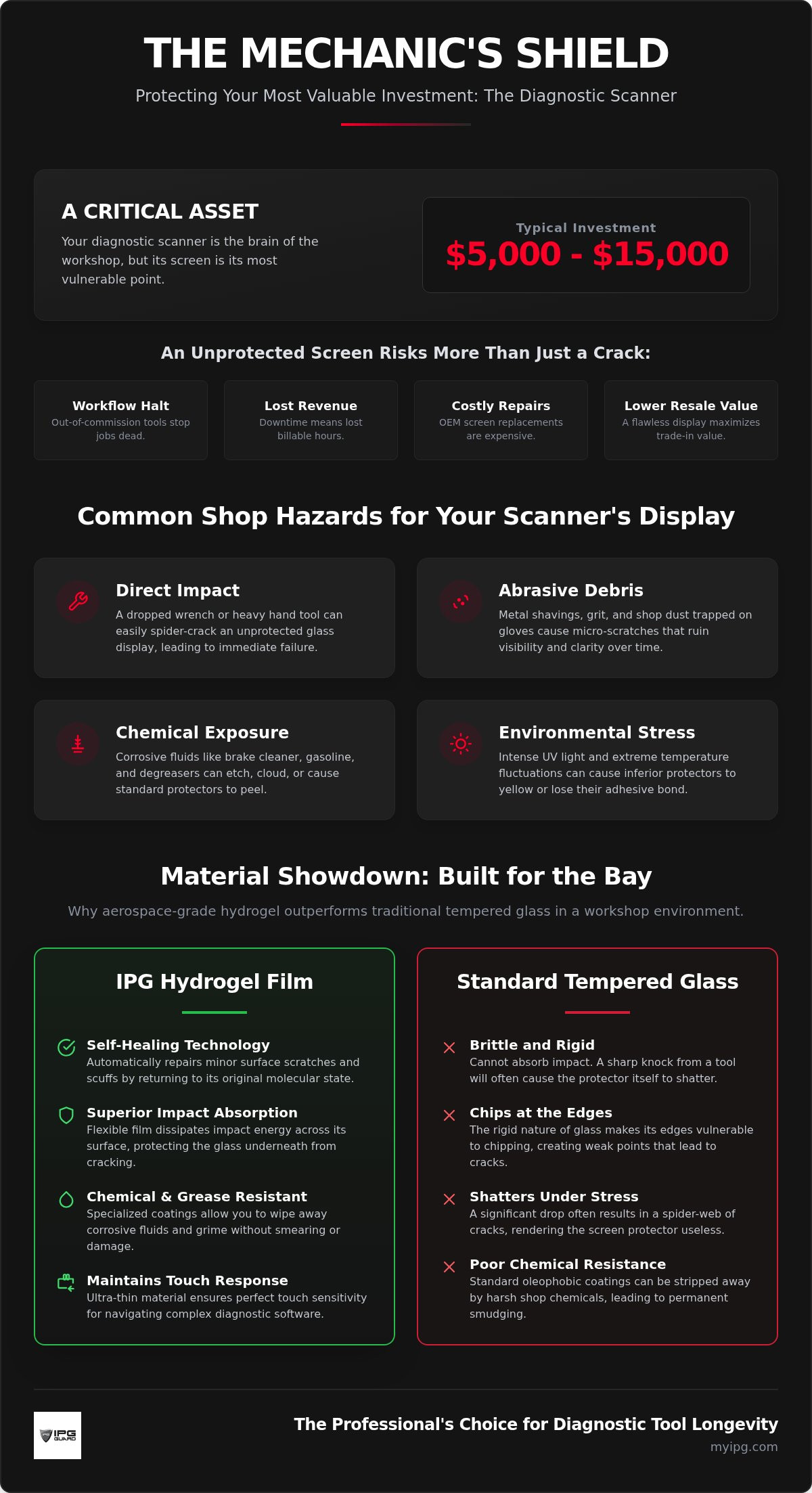
Your diagnostic scanner is the brain of your workshop. It's a high-value asset that often represents an investment between $5,000 and $15,000. While it's built for professional use, the glass display remains its most vulnerable point. A specialized diagnostic tool screen protector isn't just an accessory; it's a vital insurance policy for your most critical piece of tech. Without it, you're leaving your shop's efficiency to chance.
The shop floor is a battlefield for electronics. Heat, constant vibration, and accidental drops create a high-risk environment that consumer-grade devices never face. While you can find a basic overview of screen protectors online, industrial HMI (Human-Machine Interface) displays require something more robust. Generic plastic films fail under the pressure of professional use, peeling away or bubbling when exposed to the daily rigors of a busy bay.
The True Cost of a Cracked Scanner Screen
A shattered display does more than just look bad. It halts your entire workflow. Screen failure usually means the entire tool is out of commission, leaving you unable to perform basic resets or deep-system diagnostics. Professional repair labor and OEM replacement parts are expensive, but the real cost is the downtime. Every day your scanner is at a service center is a day of lost billable hours. Maintaining a pristine screen also secures your tool's resale value. When you're ready to upgrade your gear, a flawless display ensures you receive the maximum trade-in value from your tool distributor.
Common Shop Hazards for Diagnostic Displays
Daily operations expose your scanner to a variety of threats that can degrade the screen's integrity over time. These include:
- Direct Impact: A falling wrench or a heavy hand tool can easily spider-crack an unprotected glass display.
- Abrasive Debris: Metal shavings, grit, and shop dust trapped on dirty gloves cause micro-scratches that ruin visibility.
- Chemical Exposure: Corrosive fluids like brake cleaner, gasoline, and degreasers can etch or cloud standard screen surfaces.
- Environmental Stress: Intense UV light and extreme temperature fluctuations in the shop can cause inferior protectors to yellow or lose their adhesive bond.
Protecting your tech requires a shield that understands these specific challenges. You need a solution that maintains perfect touch sensitivity while standing up to the grit and grime of the automotive industry.
Material Science: Hydrogel vs. Tempered Glass in the Shop
Choosing the right material for your diagnostic tool screen protector depends on the unique stresses of your service bay. While tempered glass is common for consumer electronics, it often falls short in professional automotive environments. Glass is rigid and brittle. It chips at the edges and shatters under the sharp impact of a dropped socket or heavy hand tool. In a shop where tools are dropped and screens are bumped daily, you need a material that absorbs energy rather than breaking under it.
Why Hydrogel is the Mechanic's Best Friend
Hydrogel's primary advantage is its self-healing property, which allows the material to repair minor surface scratches automatically by returning to its original molecular state. Unlike rigid glass, this flexible film acts as a dedicated shock absorber. It dissipates impact energy across its surface to prevent the underlying display from cracking. This technology ensures that your high-end scanner remains operational after accidental bumps. High-quality hydrogel also maintains exceptional light transmission. It provides crystal clear visibility even under harsh, direct bay lighting. This clarity is essential for reading complex live data streams and wiring diagrams without eye strain. If you want to secure your investment, consider the IPG Original (Hydrogel) Screen Protector for a professional, durable fit.
Chemical Resistance for Automotive Fluids
The automotive environment is saturated with corrosive substances. Brake cleaner, motor oil, and engine coolant are constant threats to sensitive electronics. Most standard screen protectors cloud, etch, or peel when exposed to these chemicals. IPG's industrial-grade shields are engineered with specialized chemical-resistant coatings. These layers allow you to wipe away thick grease and grime without leaving permanent smears or damaging the display's surface. This durability is vital when navigating complex diagnostic software menus with oily fingers. This protection is supported by advanced scratch-resistance research into how specialized coatings protect surfaces from abrasive and chemical wear. Long-term adhesion is another critical factor. In high-temperature shop conditions, inferior adhesives often fail and cause edge peel-up. IPG's material is designed to stay bonded to the screen, providing a seamless protective layer that won't lift during intense summer heat or heavy daily use. It ensures your touch responsiveness remains precise, preserving the original haptic feel of your scanner's HMI display.
Precision Engineering for Industry Leaders: Snap-on and Autel
A generic, one-size-fits-all approach is a risk your shop shouldn't take. High-end diagnostic scanners feature complex bezels, recessed screens, and integrated sensors that require an exact fit to function correctly. Choosing a precision-engineered diagnostic tool screen protector ensures that your hardware remains fully functional while staying protected. Unlike "trim-to-fit" sheets that often leave jagged edges and gaps, laser-cut shields provide seamless edge-to-edge coverage. This prevents abrasive shop dust and metal shavings from migrating into the display bezel, where they can cause permanent internal damage or interfere with sensitive touch sensors.
Understanding the specific screen protector materials used in industrial environments is key to maintaining tool performance. Professional-grade hydrogel is cut to micron-level accuracy, allowing for tight tolerances around physical buttons and diagnostic ports. This meticulousness ensures that even when your tool is inside its ruggedized case, the protector doesn't lift or catch on the housing. It's about preserving the original design while adding a layer of invisible security. We act as the guardian of your technology, ensuring that every cut is precise enough to disappear once applied.
Protecting the Snap-on Ecosystem
Snap-on tools like the Triton, Apollo, and Solus + series are built for the front lines of automotive repair. We provide the IPG Snap-on Triton Apollo Solus + screen protector to safeguard these specific investments. Each shield is designed to maintain full access to physical buttons and side ports, ensuring your workflow remains uninterrupted. For technicians performing mobile diagnostics outside the bay, these protectors help manage harsh reflections, making data easier to read in varying light conditions. It's a tailored solution for the most demanding diagnostic environments.
Autel MaxiSYS and MaxiIM Shielding
The high-resolution displays on the MS909 and MS919 require a protector that doesn't compromise visual fidelity. The IPG screen protector Autel MaxiIM KM100 and MaxiSYS series is engineered for these advanced HMI interfaces. When you're performing deep-system coding or complex programming, you can't afford input lag. Our material ensures a zero-lag touch response, maintaining the precision you need for minute menu selections. Whether you're using the compact KM100 or the flagship MaxiSYS tablets, the shield remains virtually invisible, preserving the tool's haptic feedback and crystal-clear resolution.
Shop-Ready Installation: Achieving a Bubble-Free Shield
The automotive bay is a hostile environment for precision application. Dust, oil mist, and floating debris make a standard "stick and go" approach impossible. To ensure your diagnostic tool screen protector performs as intended, you must control your immediate surroundings. Setting up a dedicated "clean zone" on a cleared workbench is the first step toward a factory-quality finish. This meticulous preparation prevents the contamination that ruins industrial displays and maintains the professional appearance of your gear.
Step-by-Step Diagnostic Tool Application
- Step 1: Clean. Use a dedicated electronics cleaner. Don't use window cleaner or aggressive shop degreasers. Wipe the surface with a fresh, lint-free microfiber cloth until every trace of oil is gone.
- Step 2: Dust Removal. Use the provided stickers to lift stubborn particles. Even one speck of grit creates a visible bubble. Perform this step under a bright work light to see every detail.
- Step 3: Alignment. Use the "hinge" method. Tape one side of the protector to the tool body to create a fixed pivot point. This is critical for large 10-inch or 12-inch Autel and Snap-on displays where manual alignment is difficult.
- Step 4: Application. Peel the backing and sweep the squeegee from the center toward the edges. Use steady, firm pressure to drive out air and secure the bond.
Pro Tips for the Automotive Environment
If your shop is particularly dusty, try applying the shield in a more controlled space. A small, humid area, like a room where a steamer was just used, helps drop airborne particles out of the air. This significantly reduces the risk of dust trapping under the film. Always wash your hands thoroughly with grease-cutting soap before starting. Skin oils are a primary cause of adhesive contamination and edge lifting. We prioritize this level of detail because your scanner's clarity is non-negotiable for accurate diagnostics.
If you see tiny bubbles immediately after application, don't panic. Hydrogel is a breathable, advanced material. Most minor imperfections and application streaks will naturally dissipate within 24 to 48 hours as the adhesive cures. This self-leveling property is why professional mechanics prefer hydrogel over rigid glass. For a flawless application every time, choose the IPG Original (Hydrogel) Screen Protector, which includes a complete professional installation kit designed for the shop.
My IPG: The Professional’s Choice for Diagnostic Tool Longevity
My IPG isn't just a supplier; we're a dedicated partner in maintaining your shop's critical infrastructure. Our IPG ProActive technology represents the next generation of surface protection, designed specifically for high-stakes environments where hardware failure isn't an option. As a guardian of technology, we focus on the preservation of what you value most. Your diagnostic gear is the heartbeat of your business. It deserves a shield that matches its technical complexity. We take that responsibility seriously, ensuring every film we produce meets the highest industrial standards.
Professional tools often come with a heavy "tool truck tax" that inflates the cost of even simple accessories. We provide a high-end diagnostic tool screen protector directly to the technician, eliminating middleman markups without sacrificing quality. You receive the same precision engineering found in our specialized car screen protectors, tailored specifically for the rugged interface of an industrial scanner. This direct-to-consumer value allows you to outfit your entire shop with premium protection while keeping your budget focused on other essential gear.
Why Mechanics Trust My IPG
Trust is built through years of consistent performance. We've spent decades refining specialized film manufacturing to meet the evolving needs of the automotive industry. As new tools hit the market in 2026, our team ensures precision fitment is available immediately for the latest hardware. We don't settle for "close enough" measurements. Every kit is a result of meticulous testing and global expertise. This commitment to accuracy ensures your haptic feedback and display clarity remain exactly as the manufacturer intended. Our films are virtually invisible, yet they provide a robust barrier against the daily grit of the service bay.
Next Steps: Securing Your Gear
Securing your gear starts with a simple audit of your current assets. Walk through your bay and evaluate your tool fleet for screen vulnerability. Look for existing micro-scratches or areas where grease buildup is most prevalent on your displays. Once you identify the risks, order model-specific kits for your scanners to prevent further degradation. It's a small, proactive investment that prevents a massive repair bill or total tool replacement later. Don't wait for the first crack to appear. Browse the full range of IPG Diagnostic Tool Protectors today to find the perfect match for your Snap-on Triton, Apollo, or Autel MaxiSYS hardware and lock in your tool's longevity.
Secure Your Diagnostic Investment for the Long Haul
Your diagnostic scanner is an industrial asset, not a consumer tablet. It requires a specialized shield that survives the daily grit of a professional bay. We've explored how self-healing hydrogel technology outperforms rigid glass by absorbing impact and resisting corrosive shop fluids like brake cleaner and oil. Choosing a high-quality diagnostic tool screen protector ensures your high-end hardware remains a reliable partner for years. Precision engineering for Snap-on and Autel devices means zero compromise on touch sensitivity or sensor clearance. It's about maintaining the professional edge you need every day.
Lock in your scanner's performance and maintain its maximum resale value today. Our precision-cut films are trusted by professional mechanics worldwide for their durability and crystal-clear visibility. Don't wait for a costly accident or chemical splash to compromise your workflow. Secure your technology with a solution designed specifically for the automotive front lines. Protect Your Snap-on and Autel Tools with IPG Professional Shields. You've invested in the best equipment to do your job. Now, give that equipment the professional-grade protection it deserves to keep your shop moving forward.
Frequently Asked Questions
Will a screen protector affect the touch sensitivity of my Snap-on scanner?
No, IPG's thin film is designed to maintain zero-lag haptic feedback. It preserves the original capacitive response of Snap-on Triton and Apollo series. You won't notice a difference when navigating complex diagnostic menus. This precision ensures that your scanner remains as responsive as it was the day you unboxed it. High-end diagnostics require accuracy, and our protectors deliver that without compromise.
Can I install a screen protector on a diagnostic tool that already has minor scratches?
Yes, and it often improves visibility. The adhesive layer fills in minor micro-scratches, making them less visible and preventing them from snagging your finger. A diagnostic tool screen protector stops existing damage from spreading further across the display. It's an effective way to restore the feel of an older tool while adding a layer of security for the future.
How do I remove grease and oil before installing the protector?
Use a specialized electronics cleaner or 70% isopropyl alcohol with a fresh microfiber cloth. Avoid generic shop degreasers that can damage the screen's factory coating. Clean the surface until it's completely matte and free of any reflective oil sheen. This thorough preparation is the only way to ensure the industrial adhesive bonds correctly to your scanner's display. Meticulous cleaning prevents edge lifting over time.
Is hydrogel better than tempered glass for an industrial shop environment?
Hydrogel is superior because it absorbs energy instead of shattering. While tempered glass chips under heavy tool impacts, hydrogel's self-healing properties allow it to recover from minor shop scratches. It remains flexible and durable in high-vibration environments. This material was originally engineered for aerospace applications, making it the ideal guardian for high-value diagnostic equipment in rugged shop settings. It simply doesn't crack.
Does My IPG offer protectors for older Autel or Snap-on models?
Yes, we maintain a comprehensive catalog for legacy hardware. We provide precision-cut shields for older Solus and MaxiSYS models alongside the newest 2026 tool releases. Check our specific model listings to find the exact fit for your older fleet. We understand that many shops rely on a mix of equipment, and we're committed to protecting every generation of your diagnostic technology.
What should I do if I get a bubble under the protector during installation?
Use a squeegee to push larger bubbles toward the nearest edge. Don't worry about tiny air pockets or streaks immediately. IPG hydrogel is breathable, so most minor imperfections will naturally disappear within 24 to 48 hours as the film cures. Avoid peeling the corner to fix a small bubble, as this can introduce dust that ruins the final finish. Patience is key for clarity.
Will the screen protector peel off if it gets exposed to brake cleaner?
No, our industrial-grade adhesive is designed to resist common automotive chemicals. While you should wipe away splashes quickly, the film won't immediately lift or dissolve. It acts as a sacrificial barrier to protect the underlying glass from etching. This chemical resistance ensures your diagnostic tool screen protector remains clear and securely attached even in the messiest engine bays. It's built for professional use.
How often should I replace the screen protector on my diagnostic tool?
Replace your protector once it shows significant wear or deep gouges that the self-healing layer can't repair. Most professional mechanics find that one shield lasts 12 to 24 months, depending on the intensity of shop use. Keeping the protector fresh ensures you always have maximum visibility and touch precision when performing critical system resets or live data analysis. It's a low-cost maintenance step.