

That 9H hardness rating on your tempered glass protector won't stop it from shattering into a spiderweb of shards the moment your camera bumps a tripod leg. Brittle protection is a liability, not a feature. You've likely felt the frustration of a glass shield cracking within days or struggling with a touchscreen that suddenly ignores your swipes. It's a common pain for photographers who demand both rugged durability and seamless interaction with their gear.
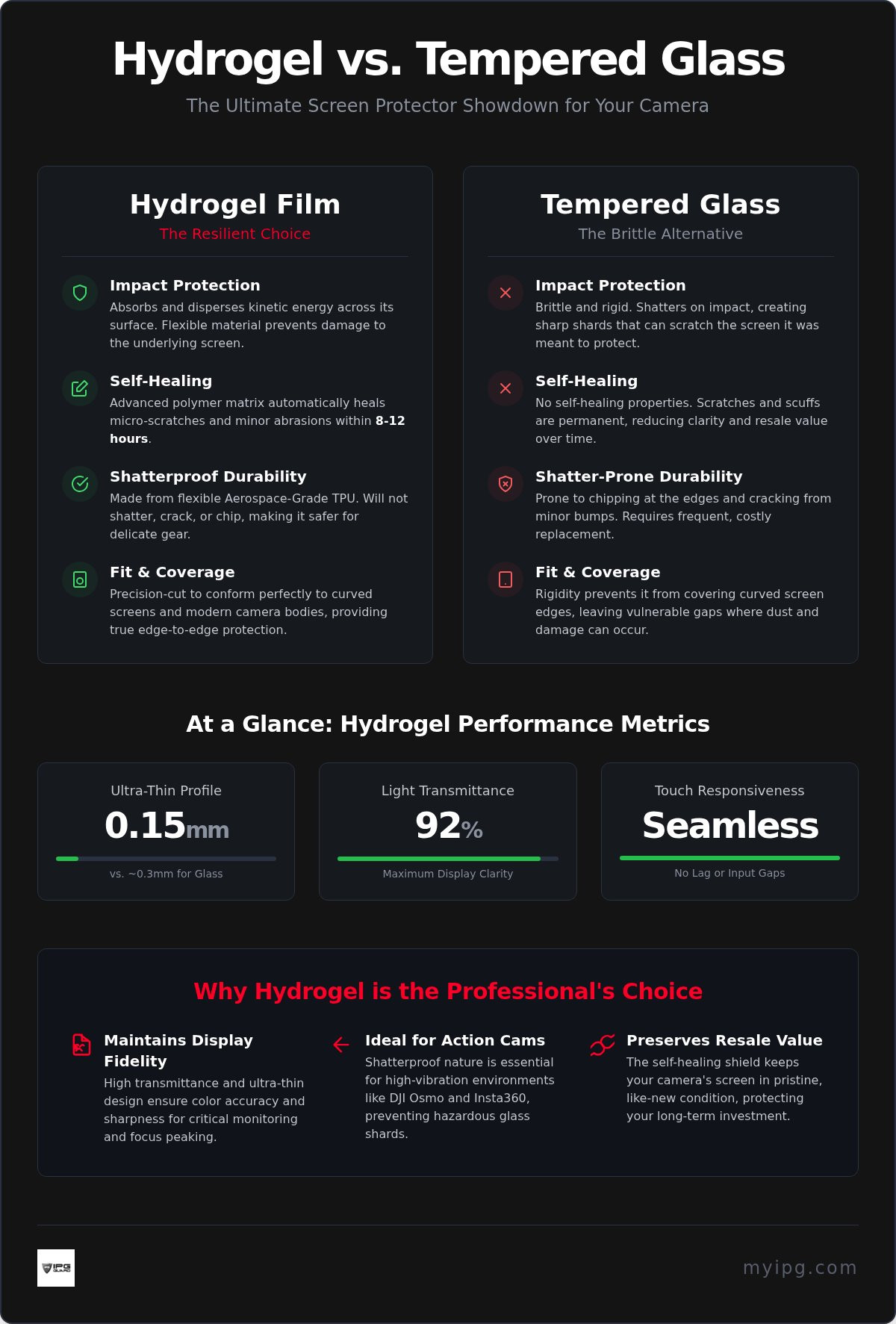
We understand that your camera is more than just a tool; it's an investment that deserves meticulous stewardship. This guide reveals why an aerospace-grade hydrogel camera screen protector is the superior choice for safeguarding high-end displays in 2026. These specialized films offer a virtually invisible shield that doesn't crack and actually heals itself from micro-scratches in just 8 to 12 hours. You'll discover how these 0.15mm ultra-thin protectors maintain 92% light transmittance while providing a perfect, bubble-free fit. We'll explore the technical specifications of hydrogel, compare its impact absorption to traditional materials, and help you choose the right precision-cut protection for your specific model.
Key Takeaways
- Understand why aerospace-grade TPU material offers superior energy absorption compared to the brittle, shattering nature of tempered glass.
- Discover how a hydrogel camera screen protector utilizes advanced polymer matrices to heal micro-scratches automatically within 8-12 hours.
- Learn the technical advantages of wet application for achieving a virtually invisible, bubble-free fit on curved camera bodies.
- Identify the specific protection needs for high-end mirrorless displays and rugged action cameras like the Insta360 and DJI Osmo series.
- Evaluate how 0.15mm ultra-thin shields maintain 92% light transmittance for maximum display clarity and touch-screen responsiveness.
What is a Hydrogel Camera Screen Protector?
A hydrogel camera screen protector is a highly flexible, multi-layered shield engineered from advanced Thermoplastic Polyurethane (TPU). Unlike the rigid, brittle nature of tempered glass, this material utilizes a specialized "wet application" process. This method ensures a seamless, edge-to-edge bond that conforms perfectly to the unique contours of modern camera bodies. It isn't just a basic plastic film; it's a sophisticated barrier designed for those who view their gear as a long-term investment. To truly grasp the material science involved, one might ask, What is a hydrogel? At its core, it's a network of cross-linked polymer chains that provide both incredible elasticity and structural resilience.
The "Aerospace Grade" designation isn't marketing fluff. It represents a patented material originally developed to protect high-value sensitive equipment in extreme environments. This technology outperforms standard PET films by offering superior energy dispersion. When your camera bumps against a tripod leg or a metal zipper on your gear bag, the hydrogel absorbs the impact. It spreads the force across the surface rather than allowing it to reach the glass. This is critical for modern flip-out and articulating displays. These screens are thinner and more fragile than older fixed LCDs. They require a protector that preserves touch-screen sensitivity while acting as a dedicated guardian against physical trauma.
The Science of Self-Healing Materials
Minor surface abrasions are a constant threat in the field. Sand, grit, and equipment contact often leave permanent marks on traditional protectors. Hydrogel changes the equation. It features a specialized polymer matrix that possesses "memory" properties. When a micro-scratch occurs, the material slowly returns to its original state. Most surface marks disappear entirely within 8 to 12 hours. This elasticity is essential for photographers working in rugged environments. It ensures that your view remains unobstructed by the "battle scars" of a heavy shoot, maintaining screen integrity without needing constant replacements.
Virtually Invisible: Maintaining Display Color Accuracy
Professional photographers rely on their LCD for color-critical monitoring and exposure checks. You can't afford a protector that shifts your white balance or dims your display. My IPG Original protectors are engineered for maximum clarity, offering over 92% light transmittance. This level of transparency ensures that the image you see on the screen is a faithful representation of your RAW data. It maintains peak sharpness for focus-peaking and keeps histograms readable in bright light. By reducing surface glare without sacrificing resolution, hydrogel provides a clear, unobstructed window into your creative work. It's the preferred choice for specialists who demand performance and precision in every frame.
Hydrogel vs. Tempered Glass: Which Shield is Best for Cameras?
Tempered glass often fails photographers because it's fundamentally rigid. When a glass protector takes a hit, it shatters into sharp fragments. This brittle failure can actually scratch the underlying LCD you're trying to protect. A hydrogel camera screen protector operates on a different mechanical principle. Instead of resisting force until it breaks, it absorbs and disperses kinetic energy throughout its molecular structure. This flexibility allows it to wrap around the curved edges of modern camera bodies where traditional glass simply cannot reach. This aerospace-grade resilience ensures your display remains pristine, even in the most demanding field conditions.
The Problem with Brittle Glass on Action Cams
Action cameras like the DJI Osmo or Insta360 series face extreme vibrations and rapid temperature shifts. Glass protectors frequently chip at the edges under these conditions. These tiny glass shards are a safety hazard and can migrate toward sensitive optics or weather-sealing gaskets. For hybrid shooters using gimbals, the added weight and thickness of 0.3mm glass can occasionally interfere with motor calibration. Hydrogel provides a lightweight, shatterproof alternative that stays bonded during high-intensity movement without adding bulk or risk to your gear's mechanical integrity.
Hydrogel's Edge in Touchscreen Responsiveness
Modern mirrorless menus require precision. A thick glass layer creates a perceptible "gap" between your finger and the sensor, leading to missed taps during critical setting changes. IPG's ultra-thin profile eliminates this lag entirely. This performance relies on advanced polymer materials that maintain high-response touch interfaces. Just as you prioritize smartphone screen integrity for your mobile devices, your camera deserves a shield that doesn't compromise its core functionality. We act as a guardian of your technology, ensuring every swipe is as fluid as the day you unboxed your gear.
Glass often develops "halo" effects where the edges lift and trap abrasive dust. Hydrogel's specialized wet application ensures a permanent, edge-to-edge bond that won't peel over time. It's a reliable, long-term solution for professionals who need their gear to perform without distraction. You can find a tailored fit for your specific model in our precision-cut camera protection collection.
Choosing the Right Protector for Your Camera Type
Generic "one-size-fits-all" protectors are the enemy of precision optics. They leave unsightly gaps, peel at the corners, and invite abrasive grit to settle against your LCD. Choosing the correct hydrogel camera screen protector depends on your specific shooting style and hardware design. Whether you're framing a studio portrait with a Nikon Z series or capturing a high-speed descent on an Insta360, the material must match the mission. We prioritize a precision-cut fit for over 44 camera models to ensure that every millimeter of your display is under our stewardship.
Mirrorless Giants: Canon EOS and Fujifilm X-Series
Modern mirrorless bodies like the Canon EOS R10 and Fujifilm X-H2S feature high-resolution displays that are often articulated. These screens fold against the camera body, creating a tight clearance that thick tempered glass can obstruct. A hydrogel shield provides the necessary impact resistance without the bulk. It ensures your screen closes flush every time, preventing unnecessary strain on the hinge. For photographers managing a full kit of gear, consulting the ultimate screen protector guide helps synchronize your protection strategy across all your high-value devices.
Action Ready: DJI and Insta360 Protection
Action shooters face the harshest environmental variables. The Insta360 X5 and DJI Pocket 2 demand a protector that won't lift during rapid temperature changes or underwater transitions. Because these devices often lack traditional protective housings, the screen is the primary point of failure. We recommend our 2-unit packs for these high-intensity models. It's about maintaining a constant state of readiness. As we look at the future of flexible screens, the role of adaptable, polymer-based shields becomes even more critical. They provide the elasticity required for the next generation of curved and wrap-around interfaces.
Compact digital cameras like the Sony DSC series or the Kodak Pixpro often suffer from neglected, scratched screens that make menu navigation a chore. Applying a fresh hydrogel camera screen protector can revitalize this older gear, filling in minor surface imperfections and restoring clarity. This protection extends to industrial tools as well. Specialized displays on FLIR C2 and C3 thermal cameras are prone to chemical exposure and rough handling. A precision-cut shield acts as a sacrificial layer, preserving the sensitive touch interface of these essential diagnostic tools. We treat these specialized items with the same care as a flagship DSLR, ensuring every tool in your bag remains professional-grade.
Key Features to Look for in a Camera Screen Guard
Many generic brands boast about 9H hardness. This is often a misleading metric based on a pencil scale that does nothing to prevent impact shattering. A true hydrogel camera screen protector focuses on energy absorption and precise fitment. You should look for features that enhance your interaction with the device rather than just marketing buzzwords. Precision engineering ensures your guard doesn't block proximity sensors or interfere with the tactile response of physical buttons. Every cutout must be exact to maintain the professional aesthetic of your gear.
Constant menu navigation and focus-point selection leave oil and fingerprints on your display. A premium oleophobic coating is essential for any serious photographer. It repels these contaminants, ensuring your view remains clear even after a full day of heavy shooting. This coating makes cleaning the screen a matter of a simple wipe rather than a deep scrub. It preserves the high-contrast look of your LCD, which is vital for reviewing exposure and color in the field.
The Benefits of Wet Application Technology
Traditional dry-film protectors are notorious for trapping dust the moment they touch the screen. Wet application technology changes the installation dynamic entirely. By using a specialized application fluid, you can slide the protector into perfect alignment before the bond sets. This fluid acts as a buffer, allowing for micro-adjustments that are impossible with adhesive-only films. Once the fluid evaporates, it leaves a virtually invisible finish that looks like part of the original hardware. Wet application creates a vacuum-like seal that effectively eliminates the "dust-trap" effect common with static-heavy dry films.
Warranty and Long-Term Value
Your camera is a high-value tool. Protecting it should be a one-time investment with long-term dividends. A "Free Lifetime Replacement" warranty is the hallmark of a brand that stands by its material quality. It means we act as the ongoing steward of your gear. If your protector takes a hit or starts to show wear after years of service, you're covered. This level of security is what separates a dedicated specialist from a generic retailer.
Consider the economics of protection. A professional LCD repair for a mirrorless body can easily exceed $300 and involve weeks of downtime. Investing in a high-quality shield is a minor expense by comparison. For travel photographers working in remote locations, a 2-unit pack is a mission-critical asset. Having a spare unit on hand means you can replace a damaged shield instantly without exposing your screen to the elements. Secure your gear today by exploring our precision-cut camera screen protector collection.
Standout Products from the IPG Camera Collection
Every camera model presents a unique set of geometry and display requirements. Our collection represents a meticulous approach to stewardship, offering precision-cut solutions for over 44 distinct camera models. We don't believe in universal fits that leave edges exposed. Instead, we provide a tailored hydrogel camera screen protector for each device, ensuring that sensors, articulating hinges, and touch interfaces remain completely unobstructed. This specialized focus allows us to act as the ultimate guardian for your technology, whether you're using a flagship mirrorless body or a rugged action cam.
Top Pick for Action Creators: Insta360 Series
Action creators demand equipment that survives high-velocity impact and extreme environmental shifts. The IPG Original for the Insta360 X5 and X4 models is engineered to meet these specific challenges. Because 360-degree cameras often lack a traditional protective cage for the screen, the display is a primary vulnerability. Our hydrogel shield provides a virtually invisible layer that allows you to review your spherical footage with perfect color accuracy. We include a 2-unit pack with these protectors, recognizing that field replacements are often necessary during high-intensity shoots. This ensures you're never left with an exposed display in the middle of an expedition.
The DJI Osmo Action 4 and Pocket 2 also benefit from this rugged polymer technology. These devices are frequently mounted on gimbals or helmets where weight and balance are critical. Our ultra-thin hydrogel profile provides the necessary impact dispersion without adding the bulk of tempered glass. It maintains the high-response touch interface required for rapid setting changes while you're on the move, ensuring your creative flow remains uninterrupted by hardware lag or screen damage.
Top Pick for Enthusiasts: Canon and Nikon Shields
For travel photographers and enthusiasts, display clarity is non-negotiable. We offer specialized protection for pro-sumer gear like the Canon PowerShot G7 X Mark III, the Canon EOS R10, and the Nikon Coolpix A1000. These cameras often feature flip-out screens that require a protector with a flush, edge-to-edge fit. Our aerospace-grade material ensures that your display remains pristine through thousands of cycles of opening and closing. It resists the oils and grit that typically accumulate during travel, keeping your histograms and focus-peaking indicators sharp and readable.
Even affordable digital compacts like the Kodak Pixpro series deserve professional-grade preservation. Applying a hydrogel shield to these devices prevents the "clouding" effect caused by micro-scratches over years of use. It's a simple, effective way to maintain the resale value and functional integrity of your entire kit. Whether you're protecting a professional workhorse or a family travel camera, our collection provides a specific, high-performance solution. Browse the full Camera Protection Collection here to find the perfect fit for your gear.
Secure Your Creative Legacy
Your camera is the lens through which you see the world. Protecting its display shouldn't be an afterthought or a compromise with brittle glass that shatters under pressure. Choosing a hydrogel camera screen protector means investing in aerospace-grade patented technology designed to absorb impact rather than break. We've explored how the self-healing properties of our TPU-based material maintain a pristine view for years, ensuring your focus-peaking and color monitoring remain accurate in every environment. It's about maintaining the professional standard of your gear without compromise.
With precision-cut support for over 44 specialized camera models, we provide a dedicated shield that feels virtually invisible. Our free lifetime replacement warranty reflects our commitment to being the guardian of your technology. Don't wait for a costly LCD repair to jeopardize your next shoot. Act now to preserve the integrity of your gear with a solution that balances technical performance and reliable security. It's time to focus on the frame while we handle the protection. Your equipment deserves a partner that values precision as much as you do.
Protect your gear today with the IPG Camera Collection
Frequently Asked Questions
Does a hydrogel protector affect the touch screen sensitivity of my camera?
A hydrogel camera screen protector won't interfere with your touch interface. Its 0.15mm profile is about half the thickness of tempered glass. This ensures that every tap and swipe on your mirrorless menu is registered instantly. You'll maintain the exact tactile response of the original display while benefiting from aerospace-grade protection. It's the ideal choice for photographers who rely on focus-peaking and rapid setting changes during active shoots.
Is it difficult to install a hydrogel protector using the wet application method?
Installation is straightforward because the wet application method allows for perfect alignment. Unlike dry films that bond instantly, the application fluid lets you slide the protector into position. This process effectively eliminates bubbles and trapped dust particles. Once the fluid evaporates, the shield creates a vacuum-like seal across the entire display. Most users find this much easier than trying to align a rigid glass protector on the first attempt.
How long does a hydrogel camera screen protector last before it needs replacing?
Your protector is designed to last for years under normal professional use. It doesn't become brittle or crack at the edges like tempered glass often does. The self-healing properties of the polymer matrix allow micro-scratches to disappear within 8 to 12 hours. This resilience means you won't need to replace it frequently. We provide a 2-unit pack to ensure you always have a backup ready for extreme expeditions or heavy field use.
Can I remove the hydrogel protector without leaving residue on my camera display?
You can remove the shield easily without leaving any adhesive residue on your camera display. The specialized bonding agent is designed to hold firmly during use but release cleanly when peeled from a corner. This ensures that the original anti-reflective coatings on your high-end LCD remain completely intact. It's a safe, non-permanent solution that preserves the resale value of your equipment while providing maximum security against surface trauma.
Does the hydrogel film distort the colors on my camera's LCD screen?
There is no perceptible color shift or distortion when using our protectors. With over 92% light transmittance, the film is virtually invisible once applied. This level of clarity is vital for professional photographers who need to monitor white balance and exposure accurately on their LCD screens. You'll see your images exactly as the sensor captures them, with full sharpness and contrast maintained across the entire viewing area.
What is the difference between IPG Original and standard screen protectors?
IPG Original uses an aerospace-grade patented material that is significantly more durable than standard plastic films. While generic protectors use thin PET or low-quality TPU, our shields are engineered for specific device fitment. We support over 44 specialized camera models with precision-cut designs that don't block sensors or buttons. This meticulous engineering provides superior impact absorption and longevity compared to the universal, "one-size-fits-all" options found elsewhere.
Will the hydrogel protector stay on my action camera during underwater use?
Yes, the protector remains securely bonded during underwater use and high-speed activities. The wet application process creates a powerful, edge-to-edge seal that resists water ingress. This makes it a reliable choice for action cameras like the DJI Osmo or Insta360 series. Once the curing process is complete, the shield acts as a permanent guardian against the elements, ensuring your display stays protected in surf, snow, or mud.
Does IPG offer a warranty if my protector gets scratched or damaged?
We offer a free lifetime replacement warranty for our protectors. If your shield becomes scratched or damaged while protecting your device, we'll replace it. This reflects our commitment as a steward of your high-value technology. We believe in the performance of our aerospace-grade material and want you to feel secure in your investment. This warranty ensures your camera display remains shielded for the entire lifespan of the device.