

The rigid tempered glass you trust to protect your smartphone might actually be the biggest threat to your Nikon's performance. While thick glass offers impact resistance, it often adds bulk that prevents tilt-screens from seating flush or dulls the responsiveness of a high-end mirrorless interface. Finding the right nikon camera screen protector in 2026 isn't just about stopping scratches. It's about maintaining the precision of a professional tool without compromise.
You've invested thousands in your Nikon Z-series or DSLR body, and the fear of a permanent grit-scuff on that high-resolution LCD is a constant concern. We understand that your gear is an extension of your vision and deserves a dedicated guardian. This guide shows you how to achieve invisible, professional-grade defense using specialized materials like IPG Original Hydrogel and Zerodust technology. We'll explore why flexible, self-healing films are replacing brittle glass, ensuring your display stays pristine and your touch controls remain lightning-fast in the field.
Key Takeaways
- Learn why modern hydrogel outperforms traditional glass by offering self-healing properties and superior impact absorption for active field photography.
- Discover how a precision-fit nikon camera screen protector maintains full touch responsiveness and ensures zero interference with complex multi-axis tilt-screen hinges.
- Master the IPG Zerodust application method to achieve a bubble-free, factory-quality finish that preserves your display's optical clarity.
- Understand the technical specifications behind light filtration and durability that keep your high-resolution LCD looking pristine in harsh environmental conditions.
- Compare the benefits of specialized films versus generic alternatives to find the exact level of stewardship your professional Nikon gear requires.
The Critical Role of Screen Protection for Nikon Mirrorless and DSLR Bodies
Professional photography is demanding. Your gear faces relentless environmental pressure. Standard glass protectors often fail in these high-stakes environments because they are brittle. They chip. They add unnecessary bulk. A high-performance nikon camera screen protector must do more than just sit on top of the display. It acts as a specialized barrier against salt spray, abrasive grit, and the dreaded "buckle-rash" caused by camera straps and clothing. We treat your equipment with the respect it deserves, providing a layer of security that feels like part of the original build.
Preserving display integrity is a matter of financial stewardship. A single deep scratch on a Z9 or D850 LCD can slash hundreds off its trade-in value. Beyond the money, it's about the view. You need a clear, undistorted look at your histogram and focus points. Protecting the high-resolution LCD ensures that your field work remains precise and your professional image remains untarnished. We provide the peace of mind required to focus on the shot, not the safety of the screen.
The Vulnerability of Modern Nikon Displays
Nikon engineers apply sophisticated anti-reflective coatings to their LCDs. These layers are delicate. A scratch doesn't just mark the surface; it compromises the optical clarity of the entire panel. Since the shift from DSLR to mirrorless, the stakes are higher. We now rely on touch-screens for focus tracking and menu navigation. This constant physical contact introduces oils and micro-abrasions that wear down factory finishes. Understanding different Screen protector materials is the first step in avoiding these avoidable overheads.
Repairing a damaged Nikon display is a costly setback. Out-of-warranty screen replacements for professional bodies often exceed $300. This doesn't include the downtime of shipping your primary tool to a service center. A proactive defense is the only logical choice for an active professional.
Preservation Without Compromise
We view ourselves as guardians of your technology. Our mission is to protect the sleek lines and ergonomic precision of your Nikon Z or D-series. A protector shouldn't look like an afterthought. It should be an invisible layer of defense. Our IPG Original Hydrogel technology is engineered for this exact purpose. It offers a seamless, edge-to-edge fit that follows the camera's contours perfectly. It provides rugged durability without the thickness of generic glass. By choosing a dedicated nikon camera screen protector, you ensure your gear remains in showroom condition while performing in the harshest field conditions. Protect your investment. Maintain your edge.
Material Science: Choosing Between Hydrogel and Tempered Glass for Your Nikon
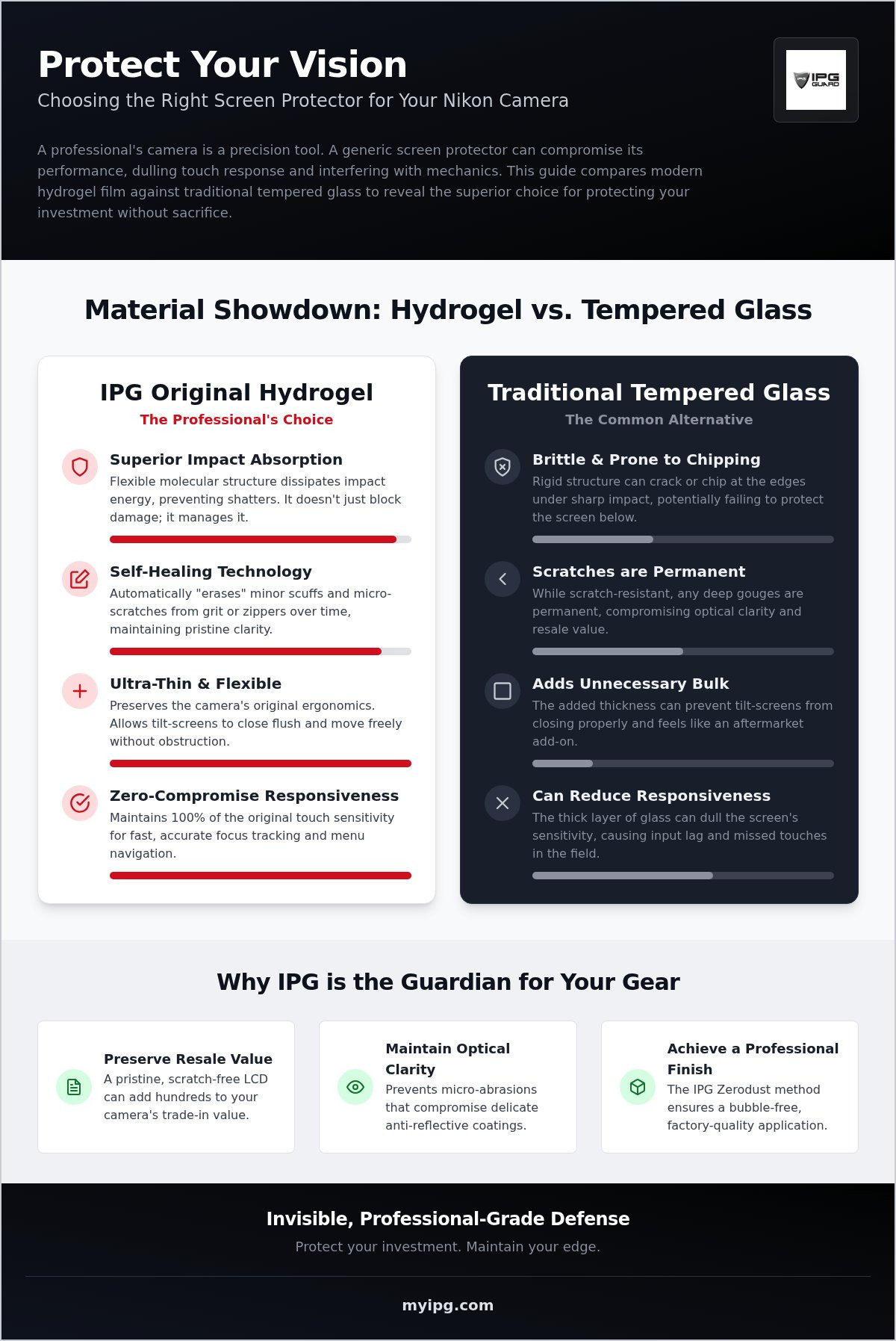
Selecting the right nikon camera screen protector involves more than just picking a brand. It requires a deep dive into the physics of display safety. Many photographers assume that harder materials are always better. However, the material science of screen protectors reveals that rigidity can be a liability. While tempered glass excels at scratch resistance, it is prone to chipping and cracking under sharp impacts. Hydrogel offers a different approach. It uses molecular elasticity to absorb and dissipate energy. It doesn't just block damage; it manages it through flexibility.
Impact absorption is only half the story. Our IPG Original (Hydrogel) features self-healing technology. This allows the material to "erase" micro-scratches caused by sand or equipment zippers over time. It maintains a pristine surface without the need for frequent replacements. Adhesive integrity is equally critical. In extreme environments, from humid tropics to freezing peaks, generic adhesives often fail. We use specialized bonding agents that resist edge-peel, ensuring your protection stays secure regardless of the climate.
The Hydrogel Advantage for Professionals
The IPG Original (Hydrogel) is the preferred choice for the Nikon Z-series. Its ultra-thin profile preserves the camera's slim ergonomics. Precision-cut edges ensure the protector never snags on straps or camera bags. This flexibility makes it ideal for articulated displays. It moves with the hinge. It doesn't add the mechanical bulk that can jam a multi-axis screen. If you prioritize a seamless, invisible look, consider our specialized Nikon protection kits for your next shoot.
Tempered Glass: When Maximum Hardness is Required
For photographers working in high-grit environments, maximum hardness is essential. Our tempered glass features a 9H rating. This means it can withstand scratches from materials that would easily mar standard displays. We incorporate shatter-proof layers for added safety. If the protector sustains a massive hit, it holds together. This prevents glass shards from damaging your gear or your hands. We engineer our glass to maintain perfect optical clarity, ensuring it never interferes with proximity sensors or viewfinder performance. This nikon camera screen protector option is built for those who prioritize a traditional, glass-like feel with industrial-grade strength.
Ergonomics and Performance: Impact on Touch and Tilt-Screens
A professional nikon camera screen protector must be invisible to the touch. Modern Nikon Z-series bodies integrate touch-interface controls for critical tasks like focus-point selection and playback zooming. Any increase in input latency or reduction in sensitivity can disrupt a high-speed workflow. We prioritize zero-lag performance. Our materials ensure that your interaction with the camera remains tactile and immediate. You shouldn't feel a layer between your intent and the camera's response.
Visibility is the second pillar of performance. Shooting in bright midday sun requires superior light filtration and anti-glare properties. We apply advanced oleophobic coatings to our protectors. These layers repel fingerprints and facial oils. This is vital when moving your eye from the viewfinder to the LCD. A high-quality nikon camera screen protector keeps the display clear and reduces the need for constant cleaning during a shoot. This stewardship of your viewing experience allows you to judge exposure accurately in any lighting condition.
Optimizing the Nikon User Experience
We rigorously test touch responsiveness using IPG films on current Nikon mirrorless systems. Our goal is absolute transparency. A protector shouldn't shift color accuracy or dim the brightness of your display. Proper on-screen playback is essential for verifying exposure and white balance in the field. By using high-grade optical materials, we help reduce screen fatigue and maintain the vibrant output Nikon users expect. We treat the LCD as a critical diagnostic tool, not just a viewing panel.
Hinge and Articulation Compatibility
The multi-axis hinges on the Nikon Z8 and Z9 represent a significant engineering feat. They require precise clearances to function. Generic, bulky glass protectors often exceed these tolerances. This creates mechanical stress on the hinge and prevents the screen from seating flush against the camera body. We focus on a precision-fit approach. Our IPG ProActive technology provides a flush, interference-free fit. It offers edge-to-edge defense without compromising the mechanical integrity of your camera's moving parts. This ensures your gear remains as agile as the day you unboxed it.
Installation and Maintenance: Achieving a Professional Finish
Achieving a factory-quality seal on your nikon camera screen protector requires a methodical environment. Forget unreliable "shower steam" tricks found on hobbyist forums. We recommend the IPG Zerodust approach. Start by selecting a flat, well-lit workspace. Minimize air movement by turning off fans or air conditioning. This creates a controlled setting for your high-value gear. Precision is the goal. Stewardship of your camera begins with a clean, patient installation process.
Long-term maintenance preserves the integrity of your device. Clean your protector using only a dry microfiber cloth or a mild, alcohol-free solution. Harsh chemicals can degrade the specialized oleophobic coating over time. Regular, gentle wiping prevents the buildup of environmental grit that could lead to micro-abrasions. This simple routine ensures your display remains optically perfect through years of heavy field use. It's about maintaining the professional standard your work demands.
The Perfect Application Guide
Pre-cleaning is vital. Use the provided microfiber cloth to strip away stubborn oils and factory residues. Even invisible fingerprints can compromise the bond. For alignment, the hinge method is superior for larger Nikon LCDs. Secure one edge with tape before removing the backing to ensure the film drops perfectly into place. The wet application process for hydrogel films involves using a specialized solution to allow for precise positioning and sliding of the film before the adhesive sets. This technique guarantees a centered, professional finish every time.
Removing air bubbles is a matter of technique, not force. Use a squeegee or a soft card to push air from the center toward the edges. Work slowly. If you encounter a persistent bubble, it's often a sign of a trapped dust particle. Address it immediately rather than trying to press it out, which can stretch the material. Secure your Nikon's future with our professional-grade installation kits today.
Troubleshooting Common Issues
Dust happens. If a particle gets trapped mid-install, don't panic. Use the adhesive dust-remover tool to lift the edge and extract the grit. Patience is key for hydrogel materials. Remember the 24-hour settling period. Micro-bubbles and slight haze usually disappear as the adhesive cures and bonds to the display. If you ever need to upgrade or replace your defense, you must know how to safely remove a screen protector without leaving stubborn residue on your Nikon's anti-reflective coating. Use a fingernail to lift a corner gently and peel at a low angle.
Why IPG is the Ultimate Choice for Nikon Camera Protection
Choosing a nikon camera screen protector shouldn't be a gamble. Universal brands often prioritize production volume over mechanical precision. We take a different path. Every IPG shield is the result of meticulous engineering. We design for specific tolerances. This ensures your Z-series or DSLR body maintains its factory aesthetic while gaining industrial-grade defense. It's about stewardship. We handle your high-value items with professional care and retail-oriented confidence.
We recognize that every photographer has a unique workflow. Some require the self-healing flexibility of our IPG Original (Hydrogel). Others need the rigid, scratch-defying surface of our tempered glass. This material diversity is why we are a trusted partner for professionals worldwide. We provide global accessibility to reliable protection. Your gear stays safe from the studio to the most remote field locations. We focus on performance so you can focus on the frame.
Engineered for the Professional
We don't wait for the market to catch up. Our team monitors new Nikon releases to ensure immediate precision-cut availability. We speak your language. Our specifications focus on light filtration and surface durability. We support your journey across every environment. Whether you're shooting a fast-paced wedding or a month-long wildlife expedition, we have the specialized fit you need. Our rapid communication rhythm ensures you feel informed and ready to act. We are innovators in a niche that demands perfection.
Beyond the Screen: Comprehensive Protection
Your professional kit likely includes more than just your camera body. We apply our core technologies across your entire ecosystem. Explore how IPG Phone camera lens protectors bring the same level of preservation to your mobile devices. Being a dedicated specialist means we understand the emotional and financial value of your gear. We are guardians of your technology. Join a global community of professionals who trust the IPG shield to maintain the integrity of their most valued tools. Secure your gear. Preserve your vision.
Invest in the Longevity of Your Vision
Your Nikon is a professional asset. It requires a dedicated guardian. We've explored how the right nikon camera screen protector balances rugged defense with the delicate ergonomics of mirrorless and DSLR bodies. Choosing between the self-healing properties of hydrogel and the impact-resistant strength of tempered glass is a decision that dictates the lifespan and resale value of your gear. Don't let environmental grit or mechanical stress compromise your professional output.
Our commitment to stewardship ensures that every shield we produce fits your device perfectly. We provide precision-cut solutions for all Nikon Z and D series models. Our materials utilize zero-residue adhesives that protect your display without leaving a trace. Experience the confidence of field-tested protection that maintains absolute touch sensitivity and optical clarity. We focus on the technical details so you can focus on the frame. Your gear deserves nothing less than a professional standard of care.
Secure Your Nikon with IPG Professional Protection and keep your focus where it belongs: on the perfect shot.
Frequently Asked Questions
Does a screen protector affect the touch sensitivity of my Nikon Z-series?
IPG Original (Hydrogel) is engineered for zero-lag responsiveness. It maintains the tactile precision of the Nikon Z-series interface. Focus point selection and menu navigation remain immediate. We use ultra-thin materials that don't interfere with capacitive touch technology. You get full protection without sacrificing the lightning-fast workflow that mirrorless systems provide. This ensures your professional interaction with the device feels natural and unobstructed. We prioritize performance to match your creative pace.
Can I use a tempered glass protector on a Nikon tilt-screen?
Yes, provided the protector is precision-cut for your specific model. Bulky universal glass can jam multi-axis hinges on the Nikon Z8 or Z9. Our tempered glass options use a slim profile to ensure the screen seats flush against the body. Always check for clearance before closing the screen. If you prefer a thinner, more flexible alternative, the IPG Original (Hydrogel) offers a seamless fit for articulating displays without adding mechanical bulk.
Will removing an IPG protector damage the anti-reflective coating on my Nikon?
Removing our nikon camera screen protector will not damage factory coatings. We use a zero-residue adhesive designed for high-end optical surfaces. It bonds securely during use but releases cleanly when lifted from a corner. This preserves the integrity of your Nikon's delicate anti-reflective layers. Avoid using sharp metal tools during removal. A fingernail or plastic edge is sufficient to lift the corner without marking the glass. It's a safe, non-destructive process.
What is the difference between IPG Hydrogel and standard plastic film?
IPG Original (Hydrogel) is a sophisticated material with self-healing properties. Standard plastic films are thin, scratch-prone, and offer minimal impact absorption. Hydrogel uses molecular elasticity to dissipate energy and erase micro-scratches over time. It provides a more durable, glass-like feel while remaining flexible enough for moving parts. This is professional-grade defense, not a temporary plastic cover. It represents a significant leap in material science for gear preservation and long-term display security.
How do I get air bubbles out of my Nikon screen protector?
Most micro-bubbles disappear within 24 hours as the adhesive settles and cures. For larger bubbles during installation, use a squeegee to push the air toward the nearest edge. Work with slow, firm pressure. If a bubble is caused by a trapped dust particle, use the IPG Zerodust tool to lift the film and extract the grit. Don't press excessively hard, as this can stretch the hydrogel material. Patience is key to achieving a professional finish.
Is a screen protector necessary if I only use my Nikon in a studio?
Protection is essential even in controlled environments. Studio gear faces constant contact with oils from your skin and dust from equipment bags. Accidental bumps from light stands or tethering cables can happen in an instant. A nikon camera screen protector acts as a permanent guardian against these micro-abrasions. It maintains the showroom condition of your LCD, ensuring your trade-in value remains high when it's time for an upgrade. Don't risk your professional investment.
Does the screen protector affect the color accuracy of my LCD?
Our protectors are engineered with high-grade optical clarity to ensure zero color shift. We prioritize light filtration that doesn't dim the display or alter the white balance of your on-screen playback. You need to trust what you see when verifying exposure and saturation in the field. Our materials provide a transparent shield that preserves the vibrant, accurate colors Nikon users expect from their professional-grade LCD panels. Reliability in color reproduction is our standard.
How often should I replace my camera screen protector?
Replace your protector only when it sustains significant impact or deep gouges that the self-healing layer cannot resolve. Our hydrogel technology is designed for long-term stewardship of your gear. It doesn't yellow or peel under normal conditions. If you notice edge-lifting due to extreme environmental grit, it may be time for a fresh application. Regular cleaning with a dry microfiber cloth will extend the life of the protective coating. It's built for durability and resilience.