

With the global smartphone screen protector market reaching 56.2 billion dollars in 2026, device safety is no longer a luxury; it is a precision science. You have likely felt that sharp flash of panic when an expensive phone slides toward the pavement. You want to shield those vulnerable, protruding lenses from micro-scratches and keep your display pristine without sacrificing touch sensitivity or hiding the design under a bulky shell. Finding the right phone screen and camera protector is about more than just a piece of glass. It is about stewardship over the high-value technology you use every day.
We agree that your phone deserves total defense without the compromise of bubbles or reduced clarity. This guide helps you master the art of 360-degree device preservation by matching advanced hydrogel and tempered glass technology to your specific hardware. We will break down the 2026 shift toward dual-material strategies, explain why 9H hardness is only one part of the security equation, and provide the technical specifications for a perfect DIY installation. Prepare to achieve invisible protection with professional-grade impact resistance and total optical clarity.
Key Takeaways
- Identify why 2026 smartphone designs with exposed sensors and thinner glass require a specialized 360-degree defense strategy.
- Compare the technical properties of Hydrogel and Tempered Glass to determine which material offers the best impact or scratch resistance for your lifestyle.
- Learn how to select a phone screen and camera protector that maintains 99.9% transparency and original photo clarity through anti-reflective coatings.
- Discover the precision of custom-cut protection for flagship devices and specialized displays, ensuring an invisible, bubble-free fit.
- Master the selection process for high-intensity environments, balancing heavy-duty impact protection with the phone's original aesthetic.
The Evolution of Full-Body Phone Protection in 2026
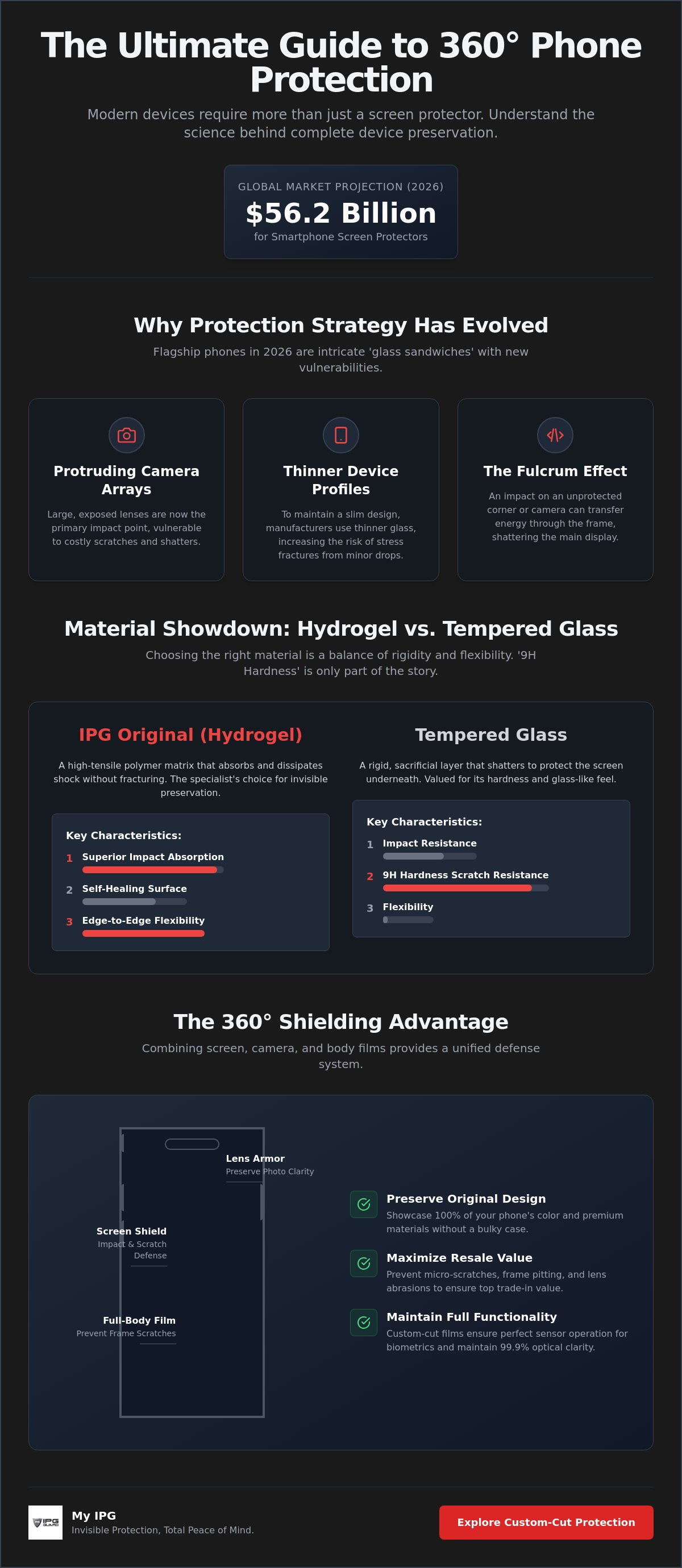
Modern smartphones have evolved into intricate glass sandwiches with massive, protruding camera arrays. Protecting just the display is no longer a viable strategy for device longevity. In 2026, a comprehensive phone screen and camera protector system is the only way to safeguard your investment. While the evolution of screen protectors began with simple plastic films, it has transitioned into a sophisticated ecosystem of high-impact materials. We view our products as guardians. We provide a stewardship over your technology that preserves the device's original feel while ensuring it survives the rigors of daily life.
The 2026 flagship models feature larger sensors that capture incredible light but also present a massive target for damage. Manufacturers have pushed for thinner glass to maintain slim profiles; however, this increases the risk of stress fractures from minor drops. Our philosophy centers on invisible protection. You shouldn't have to hide your phone's premium design behind a bulky, plastic case just to keep it safe. High-performance films allow you to maintain the original aesthetic while providing a high-tensile barrier against the world.
Why a Screen Protector Alone Isn’t Enough
Repairing a damaged camera module in a modern flagship can cost hundreds of dollars. It isn't just about total failure. Micro-abrasions on the lens housing can cause light flares or disrupt autofocus performance, ruining your high-resolution photography. Then there is the fulcrum effect. When a phone hits the ground on its corner, the impact energy travels through the chassis. If the camera array or the back glass isn't reinforced, that energy has nowhere to go but into the display. This causes the screen to shatter even if it has its own guard. A phone screen and camera protector combination distributes this energy more effectively.
The 360-Degree Shielding Concept
Resale value depends on a like-new condition. Combining a screen guard with specialized camera and body films ensures every millimeter is covered. Precision matters. A custom-cut IPG iPhone screen protector provides edge-to-edge security that integrates seamlessly with your lens armor. This holistic approach offers a psychological benefit: you can place your phone on any surface or slide it into a pocket full of keys without a second thought. Consider these advantages of a unified shielding strategy:
- Preserve 100% of the manufacturer's original design and color.
- Eliminate the unnecessary bulk of traditional rugged cases.
- Ensure maximum trade-in value by preventing frame pitting and lens scratches.
- Maintain perfect sensor functionality for biometric unlocks and photography.
By treating the device as a single unit rather than a collection of separate parts, you achieve a level of security that standard accessories cannot match. It is about choosing a shield that is as advanced as the technology it protects, a principle that also guides Carolina IT Group in their strategic technology planning for local businesses.
Hydrogel vs. Tempered Glass: Choosing Your Shield Material
Select your material with technical precision. Most retail options highlight "9H hardness" as the ultimate metric. It isn't. This only measures scratch resistance, not impact energy dissipation. Choosing a screen protector requires a strategic balance between rigidity and flexibility. Tempered glass serves as a sacrificial layer. It shatters to save your display. Conversely, IPG Original (Hydrogel) utilizes a high-tensile polymer matrix to absorb shock without fracturing. This distinction is vital when selecting a phone screen and camera protector for modern, multi-lens arrays. Complex optics often have geometry that makes rigid glass difficult to seat; hydrogel adapts to these contours flawlessly.
Modern installation techniques have solved the debris problem. The Zero Dust revolution uses specialized adhesives and wet application methods. This creates a sterile, perfect bond. It ensures your phone screen and camera protector stays clear and functional. No air pockets. No frustration. Whether you prefer the dry application of glass or the repositionable wet application of hydrogel, the goal remains the same: a flawless, high-transparency barrier.
IPG Original (Hydrogel) Benefits
IPG Original (Hydrogel) is the specialist's choice for invisible preservation. Its self-healing properties allow the material to "flow" back into micro-scratches. This maintains a clear view for years. This material is exceptionally effective for the Samsung Galaxy series and other devices with curved glass. It wraps around the edges where tempered glass often fails or lifts. Because it is ultra-thin, it eliminates the annoying raised edge that catches your thumb during gesture navigation. If you prefer a "naked" phone feel with high-level scratch defense, explore the My IPG collection for a tailored fit.
Tempered Glass Strengths
Tempered glass remains the gold standard for high-impact protection. It acts as a primary shield. If your phone takes a direct hit on a hard surface, the glass protector is designed to fracture. This disperses the kinetic energy before it reaches your expensive display. The surface feel is identical to the original screen. Advanced oleophobic coatings repel fingerprints and skin oils. For those with a more active lifestyle or flat-screen flagships, choosing an IPG Samsung screen protector in its tempered glass variant offers maximum peace of mind. It provides a smooth, frictionless swiping experience that feels natural while standing guard against catastrophic drops.
The Camera Lens Protector Debate: Optics vs. Armor
The most common reservation regarding camera protection is the fear of degraded image quality. Many users believe that adding an extra layer of glass will inevitably lead to blurry shots or unwanted artifacts. This skepticism often stems from experiences with low-grade plastic covers that lack the necessary optical properties. A high-quality phone screen and camera protector must prioritize light transmission above all else. While the science of phone glass involves complex ion-exchange processes to ensure durability, protecting the lens requires a focus on transparency and light filtration.
Precision is our standard. We utilize anti-reflective (AR) coatings that allow for 99.9% transparency, ensuring that every photon reaches your sensor without interference. One critical technical detail is the prevention of flash flare. Generic protectors often cause a "milky" haze in night photos because light from the LED flash bleeds through the protector glass into the lens. Our solution involves precision-cut black rings around the flash and lens apertures to isolate light paths. This ensures your midnight captures remain crisp and high-contrast. Adopting an integrated phone screen and camera protector kit means you don't have to choose between a pristine lens and a professional-grade photograph.
Optical Clarity and Light Transmission
Modern 48MP and 200MP sensors demand optical-grade materials. If the protector material is inconsistent, it creates light refraction that the phone's software cannot correct. We use IPG ProActive technology to maintain the original color profile and sharpness of your hardware. The myth of the "blurry photo" is usually caused by inferior adhesives that "gas out" or create micro-bubbles over time. By using chemically stable, clear adhesives, IPG Phone camera lens protectors preserve the native resolution of your high-end sensors. Your photos remain sharp. We guarantee it.
Protecting the LiDAR and Sensors
Smartphone camera arrays now include LiDAR scanners and sophisticated autofocus sensors. These components rely on infrared light to measure depth and distance. A poorly designed cover can interfere with these signals, leading to sluggish focus or failed portrait mode effects. We offer both precision cutouts and full-cover designs tailored to specific hardware requirements. Maintaining the full functionality of the IPG Camera Lens Protector for iPhone Samsung Tempered glass is our priority. Whether you are using a LiDAR-equipped iPhone or a multi-sensor Samsung flagship, our shields are engineered to stay out of the way of your technology's "eyes" while standing guard against impact.
Selection Guide: Matching Protection to Your Device
Choosing a phone screen and camera protector isn't a one-size-fits-all task. Your device has unique tolerances that a "universal" fit simply can't respect. Precision-cut films are essential for maintaining the functionality of modern sensors, microphones, and speakers. If a protector is even a fraction of a millimeter off, it can cause proximity sensor failure or muffled audio. We focus on a tailored approach because we understand that your hardware is an investment; much like how API Pilot creates custom software solutions for businesses, your shield should be as refined and specific as the device itself.
Your lifestyle also dictates your material choice. For the "Outdoor Enthusiast" who spends weekends on mountain bikes or hiking trails, maximum impact absorption is the priority. You need the sacrificial strength of tempered glass to handle high-velocity drops. Conversely, the "Minimalist" user wants to preserve the phone's original aesthetic. For this, the Zerodust film provides an invisible barrier. It stops micro-scratches from keys and sand without adding a single millimeter of perceived bulk. It's about stewardship over the design you love.
iPhone 16 and 17 Series Protection
The 2026 flagship designs like the iPhone 17 Pro Max feature extreme edge-to-edge displays. An iPhone 16e screen protector must account for the Dynamic Island and the Action Button with absolute precision. We've engineered our films to ensure that haptic feedback remains crisp and responsive. Titanium frames, while durable, are prone to "pitting" and fine scratches from pocket debris. Matching your iPhone with a body film preserves that premium metal finish, ensuring the device looks brand new when it's time for a trade-in.
Samsung Galaxy and Google Pixel Nuances
Samsung's ultrasonic fingerprint sensors are notoriously sensitive to protector thickness. If the film is too dense, biometric speed drops significantly. Selecting the correct samsung screen protector ensures that your security remains fast and reliable. Pixel owners face a unique challenge with the "Camera Bar" design. While Galaxy users might prefer individual lens rings, Pixel devices require a wide-format shield that covers the entire visor without obstructing the sensors. For foldable users, our specialized hydrogel films for the Z-Fold and Flip series offer the flexibility needed for thousands of folds without lifting at the crease.
Find your perfect fit in our collection and secure your device with a guardian that understands its specific geometry.
The IPG Advantage: Full-Body Protection for the Modern Era
Choosing My IPG means opting for a dedicated specialist that prioritizes the longevity of your hardware. We act as the "Guardian of Technology" for a global user base, providing a level of stewardship that goes beyond simple retail. Our expertise in material science isn't limited to mobile devices. We apply the same surgical precision used for the BYD Seal Navigation Display to every phone screen and camera protector we manufacture. This cross-industry experience ensures our films handle extreme temperatures and environmental stressors without failing. We don't just sell covers; we provide a high-performance barrier designed for the most valuable items in your life.
The PHONE FULL BODY PROTECTOR collection is the pinnacle of this protective philosophy. While competitors offer generic sizes, our films are custom-cut to the exact micrometer of your specific hardware. This eliminates the gaps where dust and lint typically accumulate. By shielding the chassis, the camera array, and the display simultaneously, you create a unified defense system. This 360-degree coverage is essential for maintaining the structural integrity and the flawless aesthetic of your device over years of usage.
Innovative Features: From Privacy to Anti-Glare
Modern environments demand specialized solutions that standard glass cannot provide. For those handling sensitive data in public spaces, the IPG Privacy Screen Protector narrows the viewing angle to ensure your information stays for your eyes only. If you spend significant time outdoors, our anti-glare technology diffuses harsh sunlight. This allows you to see your screen clearly without cranking the brightness and draining your battery. The biggest hurdle for most users is the installation itself. Our Zerodust application process changes that. It utilizes a specialized adhesive layer that neutralizes static and traps microscopic particles. This ensures a bubble-free, professional-grade finish every time you apply a phone screen and camera protector at home.
Your Next Steps to Total Protection
Take a moment to audit your current device status. Look closely at the edges of your screen and the glass surrounding your camera lenses. If you see even tiny micro-abrasions, the structural integrity is already being compromised. Waiting for the first visible scratch is often a $200 mistake in lost resale value or repair costs. Preservation is always more efficient than restoration. Secure your investment now and enjoy the peace of mind that comes with professional-grade shielding. Secure your device today with the full IPG Phone Full Body Protector collection.
Secure Your Digital Legacy for 2026
Mastering device preservation requires a strategic blend of material science and precision engineering. You now understand that a high-performance phone screen and camera protector is a unified defense system, not a collection of separate accessories. Whether you choose the self-healing resilience of our specialized hydrogel or the sacrificial impact strength of tempered glass, your focus remains on maintaining the integrity of your high-value hardware.
Protecting the intricate optics of your camera array ensures that your memories stay sharp while custom precision-cut designs for over 1,000 devices guarantee a perfect fit. We take our role as your technology's guardian seriously. With global shipping on all IPG protective solutions, professional-grade security is accessible no matter where you are.
Don't leave your phone's future to chance. Browse the Full Body Phone Protector Collection and invest in the invisible armor your device deserves. You've worked hard for your technology; let us help you keep it pristine.
Frequently Asked Questions
Do I really need a camera lens protector if I have a case?
Yes, a case alone is insufficient because it provides lateral protection but leaves the glass optics vulnerable to direct impact and micro-abrasion from pocket debris. Even a raised case lip cannot stop a grain of sand or a sharp corner from striking the lens directly. Using a dedicated phone screen and camera protector ensures that the most delicate part of your photography hardware remains pristine and functional.
Will a tempered glass screen protector work with my phone’s fingerprint sensor?
High-quality tempered glass is fully compatible with modern biometric sensors. Most flagship devices use ultrasonic or optical sensors that require precise light transmission or sound wave passage. We engineer our glass with specialized, high-clarity adhesives that maintain 100% recognition speed. If you experience minor lag, simply re-register your fingerprints after the installation to calibrate the sensor to the new surface and restore instant access.
How do I remove a screen protector without damaging the original glass?
Removing a protector safely requires patience and a gentle lift from one corner. Use your fingernail or a thin plastic card to create a small gap, then slowly peel the material back away from the screen. Don't pull upward with excessive force. Instead, maintain a low angle to prevent the glass from shattering during the process. Any remaining adhesive residue can be wiped away with a microfiber cloth and isopropyl alcohol.
Can I use a screen protector if my screen is already slightly scratched?
Applying a protector can actually improve the appearance of a lightly scratched screen. The liquid-like adhesive used in our hydrogel films flows into micro-abrasions, effectively filling the gaps and making them nearly invisible to the naked eye. This not only restores the visual clarity of your display but also prevents those existing scratches from deepening or catching dirt. It is a proactive way to stop further degradation.
Does the IPG ProActive film affect the touch sensitivity of the iPhone 17?
IPG ProActive technology is designed to be completely transparent to the device's touch sensors. The iPhone 17 utilizes sophisticated haptic engines and high-refresh-rate displays that require a low-friction surface. Our films maintain the original electrical conductivity and tactile response of the bare glass. You won't experience any ghost touches or reduced sensitivity during fast-paced gaming, ensuring your interaction with the device remains fluid and precise.
What is the difference between IPG Original Hydrogel and standard plastic films?
IPG Original Hydrogel is a high-tensile polymer matrix, whereas standard plastic films are typically simple PET or TPU layers. Hydrogel offers unique self-healing properties that allow minor indentations to disappear within 24 hours. It also provides superior impact absorption and a much smoother, glass-like touch. Unlike cheap plastic, it won't yellow or peel at the edges when exposed to sunlight, heat, or heavy daily usage.
How often should I replace my phone screen and camera protector?
You should replace your phone screen and camera protector whenever you notice deep scratches, cracks, or lifting edges. Even without visible damage, many users choose to refresh their shield every 12 months. This ensures that the oleophobic coating remains effective at repelling fingerprints and skin oils. Keeping a fresh barrier is the most efficient way to maintain the stewardship of your device's long-term resale value.
Will the camera protector cause a glare when using the flash at night?
Glare is only an issue with low-quality, full-cover glass that lacks proper light isolation. Our camera protectors feature precision-cut apertures and black-inked rings around the flash and lens openings. This prevents light from the LED flash from bleeding into the glass layer and creating a milky haze in your night photos. Your low-light photography remains crisp, clear, and free from unwanted artifacts or light flares.