

What if the "shatterproof" glass you just installed is actually the weakest link in your mobile setup? It's a common frustration. You invest in a high-end device, only to watch a tempered glass protector chip at the edges or lose its grip on a curved display within weeks. We understand that choosing between a hydrogel vs tempered glass screen protector is about more than just a purchase. It's about securing an investment. You want a screen that stays flawless, maintains perfect touch sensitivity, and doesn't require a monthly replacement.
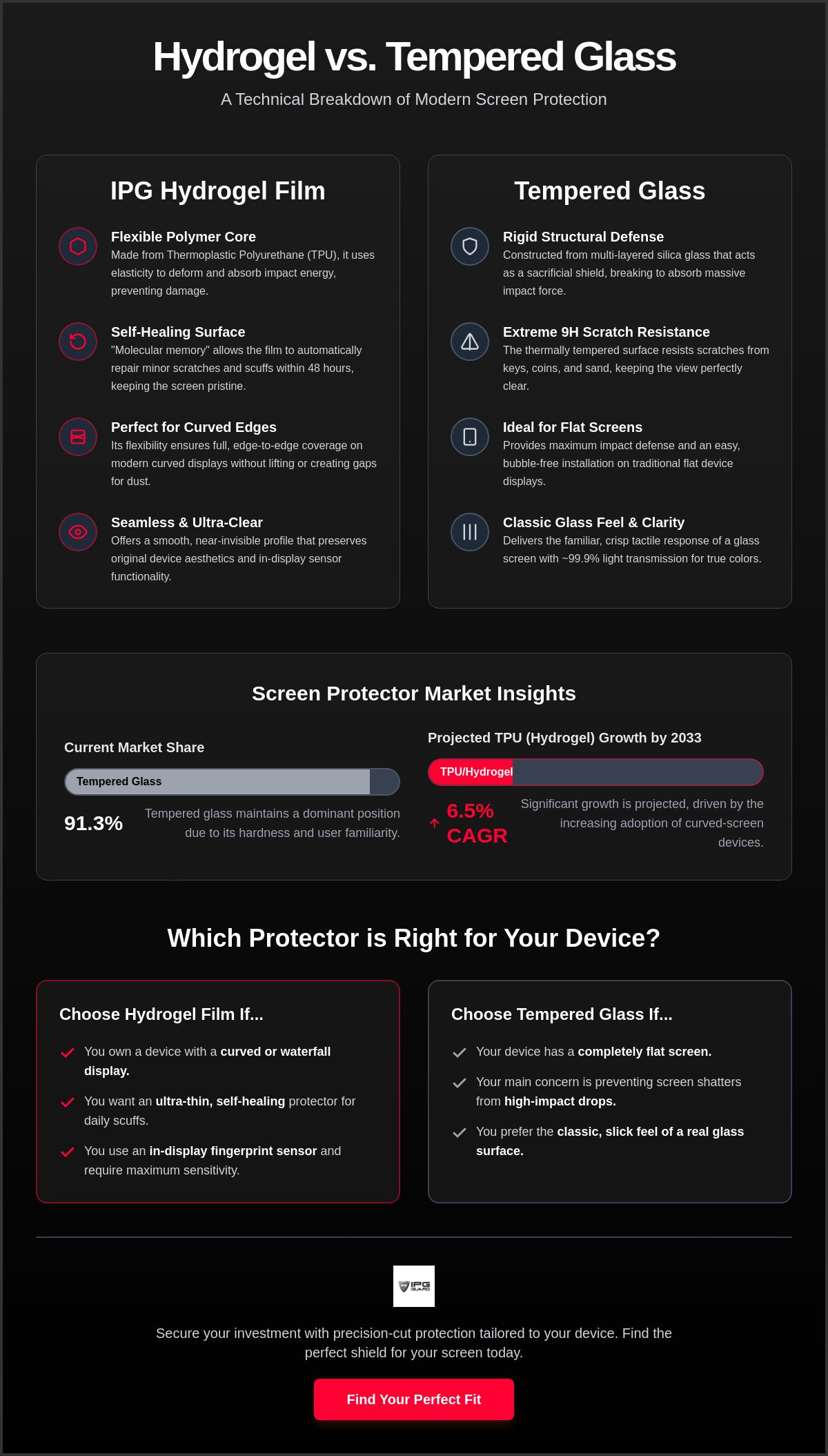
This technical breakdown provides the clarity you need. By examining the material science of 2026, we'll help you choose a solution tailored to your hardware. We'll explore why the TPU segment is projected for 6.5% growth through 2033 and how tempered glass maintains its 91.3% market dominance. From self-healing polymers to high-tension glass, discover how to preserve what you value most. We'll analyze impact resistance, the reality of "9H" hardness, and the specific advantages of hydrogel for modern in-display sensors.
Key Takeaways
- Contrast the rigid structural integrity of multi-layered silica with the impact-absorbing deformation of flexible TPU polymers.
- Understand how molecular memory enables hydrogel to self-heal minor surface scratches within 48 hours for a lasting, pristine finish.
- Evaluate the technical trade-offs of a hydrogel vs tempered glass screen protector to align your choice with your specific environmental risks.
- Match your protector to your device geometry to ensure maximum touch sensitivity on curved displays or superior impact defense on flat screens.
- Learn how precision-cut edges and advanced material science work together to prevent dust ingress and preserve high-value optical sensors.
Hydrogel vs. Tempered Glass: Decoding the Modern Screen Shield
Choosing the right defense for your display is a matter of material science. It's not just a choice between a plastic film or a piece of glass; it's a calculated barrier against daily hazards. When comparing a hydrogel vs tempered glass screen protector, you're choosing between two distinct philosophies of protection. Tempered glass relies on structural rigidity and multi-layered silica. It's designed to be a sacrificial layer, absorbing the energy of a drop by breaking so your screen doesn't have to. Hydrogel, specifically Thermoplastic Polyurethane (TPU), uses elasticity to deform and absorb energy. It's a dynamic, flexible response to impact.
Think of this choice as selecting a guardian for your technology. A rigid guardian stands firm against blunt force, while a flexible guardian yields to pressure to preserve the core. Your choice depends on your specific threat level. Are you prone to high-velocity drops on concrete, or do you struggle with micro-scratches from pocket debris? Understanding these materials is the first step in maintaining the integrity of your high-value devices.
The Rise of IPG Original Hydrogel
Modern hydrogel films offer a near-invisible profile that traditional protectors can't match. They've become the technical standard for curved-edge displays, such as those found on the latest Samsung flagships or BYD navigation screens. Our IPG Original (Hydrogel) Screen Protector utilizes a high-grade TPU that stretches and conforms to complex geometries. This flexibility ensures full-surface coverage without the edge lifting common in rigid materials. These films are engineered for seamless integration. They maintain the original aesthetic of your device while providing a self-healing surface. Both materials utilize advanced oleophobic coatings. These specialized layers repel skin oils and maintain the smooth, tactile response you expect from a premium display.
Tempered Glass: The Classic 9H Standard
Tempered glass provides a familiar, high-clarity experience with a focus on extreme scratch resistance. The common "9H" designation refers to the pencil hardness scale. This means the surface resists scratches from anything softer than a 9H lead pencil, including keys, coins, and sand. Safety is a critical design element here. High-quality glass protectors include a shatter-proof film layer. This ensures that if the protector sustains a massive impact and breaks, the shards stay contained and don't damage your fingers or the underlying screen. A precise silicone adhesive layer is equally vital. It facilitates a vacuum-tight seal, ensuring the protector remains a permanent, bubble-free guardian of your screen's clarity.
Material Science: TPU Elasticity vs. 9H Thermal Tempering
The debate over a hydrogel vs tempered glass screen protector often focuses on surface hardness, but the true differentiator lies in molecular behavior. Thermoplastic Polyurethane (TPU), the core of hydrogel, is a complex polymer with "molecular memory." When the surface is disturbed by a minor scratch, the material doesn't just sit there. The polymer chains are engineered to return to their original, undisturbed state. This elastic recovery is what gives hydrogel its unique resilience and makes it a reliable guardian for modern, high-value displays.
Tempered glass operates on a different physical principle. The tempering process introduces high levels of compressive stress to the surface of the glass. When an object strikes the protector, this internal tension works to stop cracks from spreading. Instead of bending like TPU, the glass remains rigid, distributing the energy of an impact across the entire silicone adhesive layer. This rigidity ensures your device's display remains untouched while the protector takes the brunt of the force, acting as a sacrificial shield.
Despite these mechanical differences, both materials achieve nearly 99.9% light transmission. You won't sacrifice visual fidelity for security. Whether you choose the rigid defense of silica or the adaptive response of TPU, your screen's colors and sharpness remain uncompromised. If you're looking for that perfect balance of clarity and resilience, consider exploring our IPG Original (Hydrogel) Screen Protector for a precision fit that feels like part of the device.
The Self-Healing Mechanism Explained
Self-healing is the polymer's ability to return to its original shape after being deformed by a scratch. Surface scuffs from keys or coins typically vanish within 24 to 48 hours as the TPU molecules realign. Deep gouges that actually sever the polymer chains won't fully disappear, but they often become less visible over time. Ambient temperature plays a significant role here. In warmer environments, the molecules move more freely, which accelerates the healing process and restores the surface faster than in cold conditions.
Rigidity and the "Original Feel" Factor
Many users prefer tempered glass because it perfectly mimics the tactile response of the native smartphone screen. The low friction coefficient of glass provides a smooth, "gliding" sensation for your fingertips. Hydrogel has a slightly higher "grip" or "tackiness," which some find helpful for precision typing and preventing accidental slips. Crucially, the thin profile of hydrogel often yields better results with ultrasonic fingerprint sensors. While glass is ultra-smooth, the flexible nature of TPU allows for more consistent haptic feedback and faster biometric recognition on modern displays.
The Performance Face-Off: Impact, Scratches, and User Experience
Real-world performance determines the lifespan of your device. When evaluating a hydrogel vs tempered glass screen protector, you're looking at two different failure modes. Tempered glass is a sacrificial barrier. It's designed to shatter upon high-velocity impact, dispersing kinetic energy away from your actual display. This "one-and-done" defense is highly effective for blunt force. Hydrogel takes a different path. It uses elastic deformation to absorb and dampen shock. This academic research on screen protector impact resistance demonstrates how TPU and chemically strengthened glass react uniquely to stress, highlighting hydrogel's ability to remain intact where glass would fail.
Scratch resistance presents another trade-off. Glass is nearly immune to metal objects like keys or coins. However, it's susceptible to edge chipping and micro-cracks over time. Hydrogel excels at resisting the "swirl marks" and fine abrasions caused by pocket debris. While it's softer, its ability to recover keeps the surface looking newer for longer. Physical dimensions also play a role in your daily experience. Standard tempered glass measures approximately 0.33mm in thickness, creating a noticeable "lip" on the screen. Hydrogel is a lean 0.15mm. This thinner profile ensures better compatibility with tight-fitting rugged cases and maintains the sleek, original lines of your hardware.
Installation remains the final hurdle for many users. The "Zero Dust" challenge is real. While glass is easier to align due to its rigidity, any trapped dust creates a permanent air pocket. Hydrogel requires a more patient hand, but its flexible nature allows for easier bubble extraction during the initial 24-hour settling period. Selecting the right guardian means balancing these tactile and protective priorities.
Edge-to-Edge Coverage and Curved Screens
The "Halo Effect" is a common frustration for glass users. Rigid glass cannot follow the 2.5D or 3D contours of modern displays, leading to unsightly air gaps at the edges. These gaps act as magnets for dust and pocket lint, eventually compromising the adhesive. Hydrogel is the definitive solution for complex geometry. It wraps around curves with surgical precision, providing seamless, edge-to-edge security. For devices with aggressive screen curvatures, the IPG Original (Hydrogel) Screen Protector provides the necessary flexibility to bond perfectly without lifting or peeling.
Durability and Replacement Cycle
Longevity is where the value proposition shifts. A single chip at the edge of a tempered glass protector usually necessitates immediate replacement. These chips quickly turn into full-length cracks that obscure your view and threaten your fingers. Hydrogel is remarkably resilient. It doesn't chip, crack, or shatter. For the average user, a single hydrogel film can outlast three or four glass protectors. This creates a lower cost-over-time and reduces the frequency of tedious re-installations. You spend less time fixing your protection and more time using your device with confidence.
Selection Guide: Matching the Material to Your Device Environment
Protection isn't universal. Your final decision in the hydrogel vs tempered glass screen protector debate must align with your specific daily hazards. High-impact environments, such as construction sites or industrial warehouses, favor the sacrificial defense of tempered glass. Its ability to absorb blunt force protects the underlying substrate from catastrophic failure. However, for users navigating modern digital cockpits or specialized technical fields, the requirements shift toward flexibility, thermal stability, and edge-to-edge precision.
Screen geometry dictates the physical limits of your shield. Flat surfaces allow tempered glass to shine. Curved displays, common in premium smartphones and late-model vehicle interfaces, present a challenge for rigid materials. When a protector doesn't match the screen's contour, it creates weak points for dust ingress and adhesive failure. Identifying your primary threat—whether it is high-velocity drops, micro-abrasions from grit, or environmental glare—is the first step in securing your investment. Choose a guardian that complements your hardware's design and your lifestyle's demands.
Automotive and Marine: The EV Shield
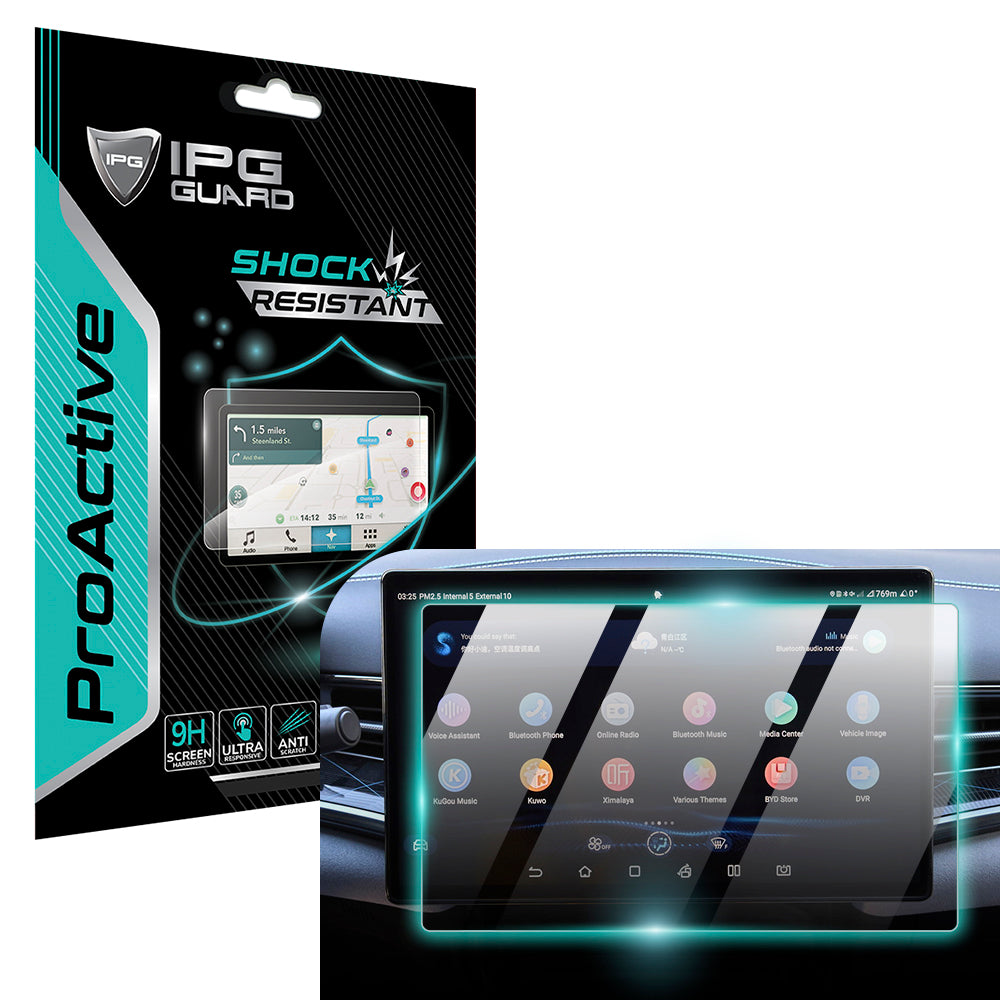
Vehicle interiors are hostile environments for electronics. Rapid temperature fluctuations and constant UV exposure can cause traditional adhesives to fail. Hydrogel is the superior choice for large-format displays, such as the BYD Seal Navigation Display. This 15.6-inch panel requires a protector that can expand and contract without cracking or lifting. Unlike rigid glass, which can become a safety hazard if it shatters during an accident, hydrogel remains bonded to the surface. For marine environments, anti-glare properties are essential. Specialized films for Lowrance fishfinders ensure readability under direct sunlight while resisting salt spray and moisture. Secure your vehicle's interface with a custom-fit solution from our automotive protection collection.
Industrial and Specialized Gear
Technical precision requires uncompromised touch sensitivity. Diagnostic tools, like those protected by Snap-on Screen Protectors, often operate in greasy or high-vibration settings. Hydrogel maintains the high-clarity and tactile responsiveness needed for accurate data entry and tool calibration. This material also excels on motorcycle clusters, where vibration would cause glass to rattle or chip. Camera optics require even more specialized care. Using IPG Camera Lens Protectors ensures your lenses stay free from scratches without distorting light filtration or image quality. In these specialized niches, a hydrogel vs tempered glass screen protector comparison highlights hydrogel's ability to provide invisible, high-performance security across diverse hardware types.
The IPG Advantage: Precision-Cut Protection for Every Display
My IPG bridges the gap between advanced material science and a bespoke, custom fit. While the debate over a hydrogel vs tempered glass screen protector often centers on the raw materials, the real-world efficacy depends on manufacturing precision. A protector is only as good as its bond. My IPG utilizes precision-cut edges to eliminate the microscopic gaps where dust ingress begins. By ensuring a vacuum-tight seal right to the edge of your hardware, we prevent the slow adhesive degradation that plagues generic, mass-produced alternatives.
We operate as a dedicated specialist, acting as the guardian of your technology. This sense of stewardship is why we focus on "Preservation Without Compromise." We understand that your devices represent both a significant financial investment and a vital tool for your daily life. Our professional confidence is backed by a meticulous approach to compatibility, ensuring that whether you choose the rigid defense of glass or the elastic resilience of TPU, the fit is surgical and the protection is absolute.
Custom Solutions for Rare Devices
Standard retailers often overlook the specialized hardware that professionals rely on. My IPG provides tailored solutions for everything from Autel diagnostic tools to high-vibration Harley cluster displays. These environments require our "Zero Dust" installation philosophy, where the material bonds instantly to prevent particles from being trapped during application. This is especially critical for technical gear where even a single speck of dust can obscure vital data. For a comprehensive look at how we secure every display in your life, consult The Ultimate Screen Protector Guide.
Final Verdict: Which Should You Choose?
The choice in the hydrogel vs tempered glass screen protector standoff depends on your primary risk profile. If you operate in high-impact construction zones where blunt force is the constant threat, the sacrificial glass shield is your best ally. However, for the vast majority of modern users, hydrogel offers the most sophisticated defense. It provides the self-healing longevity, curved-edge compatibility, and slim profile needed for 2026’s high-end hardware. My IPG ensures that regardless of your choice, your device is handled with the care it deserves.
Shop the full IPG collection to find your perfect match and secure your technology today.
Master Your Device Defense
Choosing the ultimate guardian for your display is a decision rooted in material science and personal priority. You've explored how tempered glass serves as a sacrificial shield for blunt force, while hydrogel provides a flexible, self-healing response to daily wear. This understanding of a hydrogel vs tempered glass screen protector ensures you can match the right material to your specific environment, whether it's a construction site or a modern EV cockpit.
My IPG takes pride in its role as the dedicated specialist for your high-value items. Our precision-fit protectors are trusted by owners of Tesla, Snap-on, and Garmin devices worldwide. By utilizing advanced TPU self-healing technology and offering global shipping, we ensure your tech remains in showroom condition. Don't settle for generic protection that fails at the edges. Invest in a solution that mirrors the quality of the device it guards. Your investment deserves a protector that balances technical performance with a protective sentiment.
Secure Your Display with My IPG Precision-Cut Protection
Stay confident knowing your most valued screens are under expert watch and ready for whatever the day brings.
Frequently Asked Questions
Does hydrogel protect against drops as well as tempered glass?
Hydrogel provides excellent shock absorption through elastic deformation, but tempered glass is superior for high-velocity blunt force impacts. Glass acts as a sacrificial layer that shatters to disperse energy. When comparing a hydrogel vs tempered glass screen protector for drop defense, choose glass for construction or industrial sites and hydrogel for general daily resilience where cracking is a frequent annoyance.
Will a tempered glass protector make my screen less sensitive?
High-quality tempered glass maintains original touch responsiveness, though its 0.33mm thickness can occasionally interfere with specific ultrasonic fingerprint sensors. Ensure your device settings have "Touch Sensitivity" enabled if you notice a slight delay. For users requiring absolute tactile precision and biometric speed, a thinner hydrogel film often provides a more seamless interface experience without the bulk of rigid silica.
Can I use a hydrogel protector on a screen that is already cracked?
Applying any protector to an already cracked screen is not recommended as a repair solution. The uneven surface prevents a vacuum-tight seal and can lead to immediate bubbling or adhesive failure. Sharp glass shards may also puncture the hydrogel film during installation. Use these protectors as a preventative measure to secure your device's integrity before damage occurs.
How long does the self-healing process take for hydrogel?
Minor surface scuffs and "swirl marks" typically vanish within 24 to 48 hours. This duration depends on the ambient temperature; warmer environments accelerate the molecular realignment of the TPU polymer. While deep gouges that sever the material won't fully disappear, most daily abrasions from keys or coins will heal themselves, keeping your display's surface looking pristine without constant replacements.
Why do tempered glass protectors often lift at the edges of my phone?
Edge lifting occurs because rigid tempered glass cannot conform to the 2.5D or 3D curvatures of modern smartphone displays. This creates the "halo effect" where air gaps allow dust and lint to compromise the adhesive. When choosing a hydrogel vs tempered glass screen protector for a curved device, hydrogel is the technical winner. It wraps around complex contours to provide a secure, edge-to-edge bond.
Is hydrogel better for car navigation screens than glass?
Hydrogel is the preferred choice for large automotive displays due to its superior thermal stability and flexibility. Large panels expand and contract with cabin temperature changes. Rigid glass can crack under this thermal stress or become a safety hazard in a collision. Hydrogel remains securely bonded, providing a clear, anti-glare interface that handles the constant vibration of the road.
How do I remove air bubbles from a hydrogel screen protector?
Small micro-bubbles often disappear naturally within 24 hours as the material settles and the adhesive cures. For larger bubbles, use a soft-edged squeegee or a credit card wrapped in a microfiber cloth to gently push the air toward the nearest edge. Avoid using excessive force or sharp objects, as these can permanently deform the TPU polymer and compromise the self-healing surface.
Do screen protectors affect the quality of my camera photos?
Premium protectors with 99.9% light transmission do not perceptibly alter image quality or color accuracy. Specialized guardians, like our IPG Camera Lens Protector, use high-clarity materials to prevent scratches without distorting the lens's focal path. Maintaining a clean, smudge-free surface is more critical for photo quality than the presence of the protector itself. Ensure the lens is perfectly clear before application.