

Your marine electronics represent a significant investment in precision. They face a relentless environmental assault from the moment you leave the dock. Salt spray dries into abrasive crystals; direct UV exposure and intense glare turn your high-definition display into an unreadable mirror. You've likely felt the frustration of seeing micro-scratches appear after a simple wipe-down or struggled to find a marine GPS screen protector that actually stands up to the elements. It's a painful reality for any navigator who values their gear.
Protecting these assets requires more than a generic film. It demands specialized shielding designed for the unique rigors of the open water. This 2026 guide shows you how to safeguard your electronics from saltwater corrosion while significantly enhancing visibility. We'll examine the technical specifications of IPG ProActive films and the self-healing properties of IPG Original hydrogel technology. You'll learn how to maintain an easy-to-clean surface that resists salt crust and preserves your device's long-term resale value. From custom-fit Lowrance Eagle protection to Garmin-specific durability, we're diving into the essential gear that keeps your tech factory-fresh.
Key Takeaways
- Identify the "Marine Triple Threat" of UV radiation, salt crystallization, and physical impact to prevent permanent screen etching.
- Learn why a hydrogel marine GPS screen protector like the IPG Original offers superior vibration resistance and shatter-proof security compared to traditional tempered glass.
- Discover how IPG ProActive films maintain crystal clear visibility even when wearing polarized sunglasses in high-glare midday sun.
- Master the professional installation techniques required to remove salt residue and oils for a perfect, bubble-free seal on your boat's electronics.
- Gain insights into the benefits of precision-cut shielding tailored specifically for high-end navigation displays like the Lowrance Eagle and Garmin series.
The Harsh Reality: Why Marine GPS Screens Need Specialized Protection
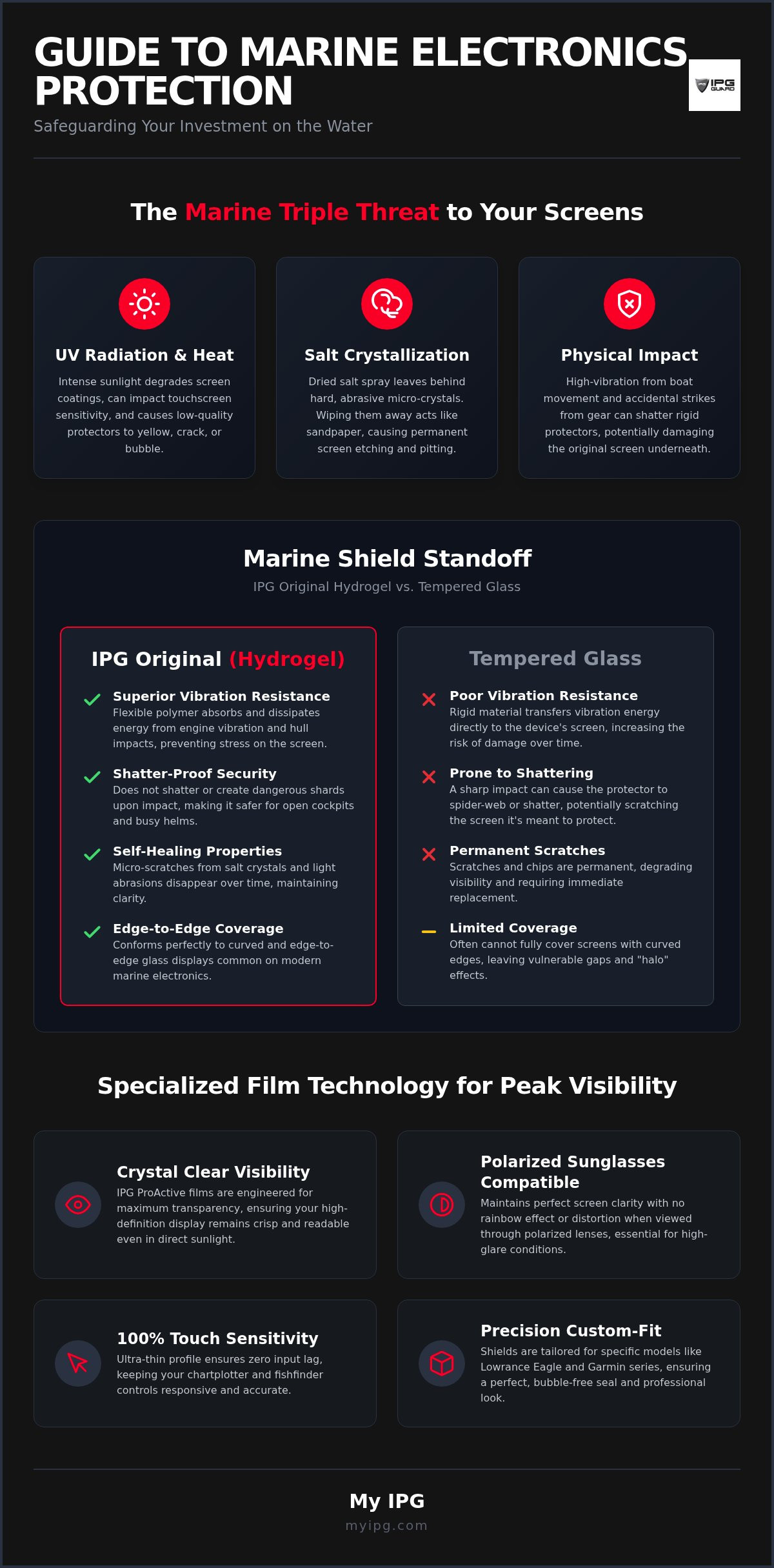
Your marine electronics are precision instruments designed for the bridge, but the ocean environment is inherently hostile. The "Marine Triple Threat" consists of intense UV radiation, salt crystallization, and physical impact. These forces work together to degrade your display from the first launch. Most factory coatings on high-end units like the Lowrance Eagle or Garmin HDS series are optimized for clarity, not for years of offshore abuse. Once these coatings fail, the screen becomes vulnerable to permanent etching and cloudiness. This damage isn't just cosmetic; it significantly reduces the resale value of your gear when it's time for an upgrade.
The danger often starts with a simple cleanup. When saltwater dries on an unprotected display, it leaves behind microscopic salt crystals. These crystals are incredibly hard. Wiping them away with a dry cloth or a sleeve turns them into micro-abrasives that act like sandpaper on your screen. Using a dedicated marine GPS screen protector provides a sacrificial barrier that takes the hit so your original glass doesn't have to. Understanding different screen protector materials is the first step in building a proper defense strategy for your helm.
Salt Spray and Chemical Corrosion
Salt crystals don't just sit on the surface; they can pit the glass over time through consistent physical and chemical stress. Beyond the ocean itself, your own protective gear can be the enemy. Common chemicals found in DEET-based insect repellents and sunscreens contain solvents that can dissolve factory oleophobic coatings. Once this protective layer is compromised, salt crust and fingerprints bond more tightly to the surface. Installing a high-quality hydrogel or specialized film creates a chemically resistant shield that is far easier to clean and much cheaper to replace than a factory display.
UV Degradation and Heat Exposure
Direct sunlight in 2026 environments subjects your electronics to extreme thermal loads. Intense UV exposure doesn't just cause glare; it can eventually impact touchscreen sensitivity, making your chartplotter feel sluggish or unresponsive. Low-quality protectors often use cheap adhesives that yellow, crack, or bubble when trapped in the heat of a center console. You need a solution like IPG ProActive films that are engineered to handle high thermal stress while maintaining perfect transparency. These specialized shields ensure that your navigation remains crisp and your touch interface stays sharp, even after hours of exposure to the midday sun.
Hydrogel vs. Tempered Glass: Choosing the Right Marine Shield
Boaters often default to tempered glass because of the smartphone market. That's a mistake. A boat isn't a pocket; it's a high-vibration environment where rigid materials often fail under pressure. Choosing the right marine GPS screen protector depends on how you use your vessel and where your electronics are mounted. While 9H hardness ratings sound impressive on paper, they don't account for the kinetic energy of a heavy lure strike or the constant pounding of hull-to-water impact. Rigid glass transfers that energy directly to your expensive display, whereas flexible materials act as a buffer.
Experts at Salt Water Sportsman emphasize that protecting marine electronics requires a material that can withstand both physical force and environmental stress. This is where IPG Original (Hydrogel) technology changes the game. Unlike glass, which can spider-web upon impact, hydrogel is a specialized flexible polymer. It absorbs and dissipates energy. It doesn't shatter. This makes it inherently safer for open-cockpit fishfinders and chartplotters where gear is constantly in motion. It's about stewardship over your high-value navigation tools.
The Case for IPG Original Hydrogel
Many modern marine units feature edge-to-edge glass or slightly curved diagnostic displays. Hydrogel excels in these applications because it conforms perfectly to the substrate. Its lightweight, ultra-thin profile ensures your chartplotter remains responsive with zero input lag. Touch sensitivity stays 100% accurate, which is critical when navigating tight channels or marking waypoints in a swell. The real magic lies in the self-healing properties. When sand or salt crystals cause micro-scratches during a quick wipe-down, the hydrogel film naturally "heals" those imperfections over time. It maintains a crystal-clear view for the life of the device. For those seeking professional-grade resilience, an IPG Original (Hydrogel) Screen Protector is the superior choice for long-term tech preservation.
When to Choose Tempered Glass
Tempered glass still has a specific role in the marine world. It offers maximum scratch resistance for heavy-duty industrial applications or fixed-mount electronics located inside a climate-controlled cabin. If your gear is protected from high-vibration environments and lure strikes, the traditional "feel" of glass is often preferred by legacy users. It provides a familiar tactile experience and high clarity. However, for most offshore anglers and center-console owners, the risk of a shattered glass protector damaging the underlying factory screen is simply too high. Hydrogel remains the innovator's choice for 2026 shielding.
Visibility on the Water: Anti-Glare and Polarization Compatibility
On the open water, visibility is safety. A high-quality marine GPS screen protector must do more than just shield against scratches; it must manage light. The glare from the midday sun can turn a high-end chartplotter into an expensive mirror, hiding critical depth contours or hazardous shoals. Modern displays are engineered for peak brightness, but without the right film, that performance is lost to environmental reflection. You need a solution that preserves the integrity of the data while battling the elements.
Maintaining 99% transparency is vital for every phase of your trip. For dawn departures or late-night returns, you can't afford a protector that dims the screen's output. Color accuracy is equally crucial. When you're using high-frequency structure scanning, subtle color shifts on the sonar return indicate changes in bottom composition or fish density. A poor-quality film distorts these colors, leading to missed opportunities. It's essential to protect displays from UV, moisture, dust and damage without sacrificing the visual clarity you rely on to find fish.
Solving the Polarized Sunglasses Problem
Most offshore anglers wear polarized sunglasses to cut through surface glare. However, many standard screen protectors use materials that interfere with polarized light. This creates a distracting "rainbow" or "oil slick" effect on the screen. In extreme cases, the display can even "black out" when viewed at certain angles. IPG ProActive films are specifically engineered to eliminate this interference. They allow polarized light to pass through clearly. This ensures you can read your Lowrance or Garmin unit from the helm, the casting deck, or the cockpit without removing your glasses. Always test your visibility at multiple angles before leaving the dock to ensure your shield is performing correctly.
Anti-Glare vs. High-Definition Clear
Choosing between a matte anti-glare finish and a high-definition clear film depends on your boat's layout. Open-cockpit center consoles are exposed to direct, overhead sunlight. An anti-glare protector is the gold standard here. It diffuses reflected light, reducing eye strain and allowing you to track sonar returns through the brightest part of the day. If you operate from a covered pilothouse or cabin, a high-definition clear film like IPG Original (Hydrogel) may be preferable. It provides maximum sharpness for high-resolution displays where ambient reflection is already managed by the boat's structure. Both options provide the same level of environmental stewardship, ensuring your technology remains factory-fresh.
Marine-Grade Installation: Ensuring a Bubble-Free Seal
Installing a marine GPS screen protector requires a different approach than a standard smartphone application. The common "bathroom steam" trick used to settle dust indoors is impossible at the marina or on the dock. On a boat, you face a constant barrage of wind, humidity, and microscopic salt particles. These environmental factors are the primary cause of failed installations. If you don't account for them, you risk trapping abrasives against your expensive display. Precision is the goal; stewardship is the mindset. You aren't just applying a film; you're sealing a high-value asset against a hostile environment.
Success starts with aggressive surface preparation. You must remove every trace of salt residue and skin oils. Even a single dried salt crystal acts like a pebble under the film, creating a permanent air pocket. Use a high-quality microfiber cloth and a specialized, ammonia-free cleaner. Avoid harsh chemicals that might strip the factory anti-reflective coatings. For large 12-inch displays common on modern center consoles, use the "hinge method." Secure one edge of the protector to the unit's bezel with masking tape before peeling the adhesive backing. This ensures perfect alignment on the first attempt, which is critical for recessed screens where repositioning is difficult and risky.
The Clean Room Effect on a Boat
You don't need a laboratory, but you do need a controlled environment. If you're installing outdoors, create a temporary wind-block using your boat's canvas or a simple shield. This prevents the breeze from carrying fresh dust onto your cleaned surface during the critical seconds of application. Focus on the edges first. Ensure the seal is tight to prevent saltwater from "wicking" under the protector later. To ensure a pristine surface before you seal the display, consider using a professional-grade IPG Zerodust Screen Protector to eliminate static and debris.
Post-Installation Care
Patience is a virtue after the film is down. Give the adhesive at least 24 hours to cure before exposing the unit to direct salt spray or heavy humidity. If you see tiny bubbles after a significant temperature shift, don't panic. High-quality hydrogel films are gas-permeable and often allow these small pockets to settle naturally within a few days. For routine maintenance, always rinse the screen with fresh water before wiping. This removes abrasive crystals and extends the life of your IPG shield, keeping your navigation data crisp and clear for years to come.
My IPG Marine Protection: Custom-Fit Shields for Your Electronics
Generic "universal" fits are a liability in the marine environment. These one-size-fits-all options often require manual trimming, which leaves jagged edges and exposed gaps. Saltwater is opportunistic. It uses capillary action to "wick" into these tiny spaces, quickly compromising the adhesive bond. Once lifting begins, the protector becomes a trap for abrasive salt crystals. My IPG eliminates this risk with CAD-informed, precision-cut designs. We offer exact fits for the Lowrance Eagle, Elite, and HDS Pro series. This edge-to-edge accuracy ensures a permanent seal that resists the relentless pressure of spray and wind.
Our expertise extends across the entire marine electronics spectrum. We provide specialized marine GPS screen protector solutions for Garmin and Raymarine chartplotters, ensuring every pixel remains visible. This technical authority comes from our extensive work in the automotive sector. We've adapted the high-durability films used in Tesla and BYD navigation systems for offshore use. The same light filtration and impact resistance that protect luxury vehicles now safeguard your helm. It's a professional-grade crossover that brings retail-oriented confidence to the open water.
Supporting Your Marine Tech Ecosystem
Boaters rely on a complex ecosystem of technology beyond the primary chartplotter. Handheld GPS units and specialized wearables like the Garmin Descent series require the same level of environmental shielding. We've expanded our protective reach to cover these essential tools. Don't overlook the journey to the dock. Our detailed guide on car screen protectors explains how to shield your vehicle's infotainment system from UV damage and cabin heat. When the action heats up on deck, your smartphone is your primary camera. Equipping your device with IPG Phone camera lens protectors prevents salt spray from etching your optics. This allows you to capture high-definition memories of your catch without risking permanent lens damage.
Why Boaters Trust My IPG
My IPG stands as a dedicated specialist and a guardian of your technology. We understand that your electronics are more than just tools; they are significant financial and emotional investments. Our brand persona blends technical meticulousness with a protective sentiment. We don't just sell films; we offer a partnership in maintenance. Every product reflects a retail-centric focus on performance and reliability. We handle your high-value items with the care they deserve. This commitment to stewardship ensures your electronics remain factory-fresh. Whether you're navigating the open road or the open sea, My IPG provides the security you need to focus on the adventure ahead.
Secure Your Command Center for the Open Sea
Your chartplotter is the brain of your vessel. It deserves a level of protection that matches the intensity of the offshore environment. We've explored how a dedicated marine GPS screen protector does more than stop scratches. It manages salt crystallization, absorbs high-vibration impacts, and ensures your data remains visible under the harshest midday sun. By choosing specialized hydrogel over traditional tempered glass, you're investing in a self-healing barrier that won't shatter when the water gets rough.
My IPG provides the precision-cut shielding your tech requires. Our custom-fit designs for major brands like Lowrance and Garmin ensure a perfect seal that prevents saltwater wicking and edge lifting. With anti-glare technology optimized for outdoor visibility, you'll never lose sight of your depth contours or fish targets. Take the next step in preserving your device's clarity and long-term resale value. Secure your marine electronics with My IPG precision-cut protectors today. Your gear is an investment in every successful trip; protect it with the authority it deserves. Safe navigating and tight lines.
Frequently Asked Questions
Will a marine GPS screen protector make the screen harder to see with polarized sunglasses?
No, it won't make it harder if you choose the right film. IPG ProActive films are specifically engineered for polarization compatibility. Unlike cheap plastics that cause rainbow effects, these specialized materials maintain light alignment. You can read your chartplotter from any angle on the casting deck while wearing your fishing glasses. This ensures constant situational awareness without the need to remove your protective eyewear during critical navigation moments.
Can I install a screen protector on a fishfinder that already has some scratches?
Yes, you can, and it often improves the appearance. The adhesive layer on an IPG Original (Hydrogel) protector fills in minor micro-scratches and surface etching. This creates a more uniform refractive surface, making existing damage less visible. While it won't fix deep gouges, it prevents further degradation and restores a level of clarity to an aging display. It's a proactive step in stewardship for your existing marine hardware.
What is the difference between IPG Original Hydrogel and standard tempered glass?
Hydrogel is a flexible, energy-absorbing polymer, while tempered glass is a rigid, shatter-prone material. In high-vibration boating environments, glass can crack under the stress of hull impacts or lure strikes. IPG Original Hydrogel provides a self-healing surface that dissipates kinetic energy. It doesn't shatter or spider-web. This makes it a safer, more durable marine GPS screen protector for open-cockpit electronics that face constant physical and environmental movement.
How do I remove salt crust from my screen protector without scratching it?
Always rinse the surface with fresh water first to dissolve the salt crystals. Never wipe a dry, salt-encrusted screen with a cloth or your sleeve. Once the salt is liquidated, use a clean microfiber cloth and a dedicated marine electronic cleaner to gently lift the residue. Because IPG films have oleophobic properties, the salt crust doesn't bond as aggressively. This maintenance routine ensures your protective layer remains crystal clear for the long haul.
Is it possible to remove the screen protector later without damaging the factory coating?
Yes, our protectors are designed for clean removal. The specialized adhesives used in IPG films are non-corrosive and won't bond permanently to the display's anti-reflective layers. To remove, simply lift a corner and peel slowly. This process leaves no sticky residue and preserves the integrity of your factory screen. It's the ideal solution for maintaining the high resale value of your Lowrance or Garmin units when upgrading gear.
Does the screen protector affect the touch sensitivity of my Garmin or Lowrance unit?
Touch sensitivity remains 100% accurate with our ultra-thin shielding. Whether you're using a Garmin Descent smartwatch or a large-format Lowrance HDS Pro, the capacitive response is immediate. We use high-conductivity materials that ensure every swipe and pinch-to-zoom gesture registers without lag. You won't feel any difference in the interface, even when operating the unit with wet fingers or in high-humidity conditions common on the water.
How long does a marine-grade screen protector typically last in salt environments?
A high-quality marine-grade protector typically lasts 12 to 24 months depending on exposure. In intense saltwater environments with daily use, you might notice wear around the edges after a year. However, the UV-resistant properties of IPG ProActive films prevent yellowing and cracking for significantly longer than generic alternatives. Regular freshwater rinsing and proper cleaning can extend this lifespan, ensuring your expensive electronics remain guarded against the relentless Marine Triple Threat.
Can I use a universal screen protector and cut it to size for my marine GPS?
We strongly advise against using universal protectors that require manual cutting. Hand-cut edges are rarely perfect and often lead to wicking, where saltwater enters the gaps and lifts the film. IPG provides precision-cut designs tailored specifically for models like the Lowrance Eagle series. These CAD-informed dimensions ensure a factory-tight seal around the entire bezel. A custom-fit shield is the only way to guarantee a bubble-free, permanent bond in offshore conditions.