

Your premium smartphone screen is a masterpiece of engineering, yet you're likely protecting it with a rigid sheet of glass that chips at the first sign of trouble. It's a paradox. You buy a curved, high-definition display only to mask it with a thick, brittle layer that ruins touch sensitivity. You've likely experienced the frustration of a fingerprint sensor failing or glare washing out your EV navigation display while missing out on the true benefits of hydrogel screen protector technology. It's an outdated way to treat high-value equipment. Stop settling for compromised clarity.
We understand that your devices are more than just tools. They're essential investments that require a dedicated guardian. This 0.15mm liquid-polymer matrix doesn't just sit on your screen. It bonds to it. Discover how hydrogel provides a self-healing, edge-to-edge shield that makes traditional glass look like a relic. In this guide, we'll explore how 2026 innovations erase micro-scratches in under 12 hours and maintain 92% light transmittance. From smartphones to marine electronics, learn why this invisible armor is the professional standard for total device integrity.
Key Takeaways
- Understand why TPU-based liquid polymers offer a self-healing miracle that erases micro-scratches and maintains a flawless surface over time.
- Explore the core benefits of hydrogel screen protector technology, including edge-to-edge adhesion that prevents the chipping and lifting common with tempered glass.
- Discover why precision-cut films are vital for protecting high-value displays in Tesla EVs, marine electronics, and industrial diagnostic tools.
- Achieve perfect biometric accuracy with ultra-thin materials designed specifically for modern under-display fingerprint sensors and high-definition screens.
- Master the 24-hour curing rule to ensure a bubble-free, invisible finish that preserves the original feel and clarity of your device.
What is a Hydrogel Screen Protector? The Science of Invisible Shielding
A hydrogel screen protector is not a basic plastic sheet. It is a sophisticated thermoplastic polyurethane (TPU) based liquid-polymer film designed for high-performance displays. Think of it as a second skin for your device. This material serves as a dedicated guardian, preserving the original screen feel and optical clarity without the bulk of traditional glass. The technology has evolved rapidly. We have moved past simple PET plastics into advanced, multi-layered hydrogel systems. These systems are central to our Ultimate Screen Protector Guide, which outlines how to safeguard every display in 2026. One of the key benefits of hydrogel screen protector applications is the seamless, invisible finish it provides for both smartphones and industrial tools.
The Molecular Structure of IPG Original Hydrogel
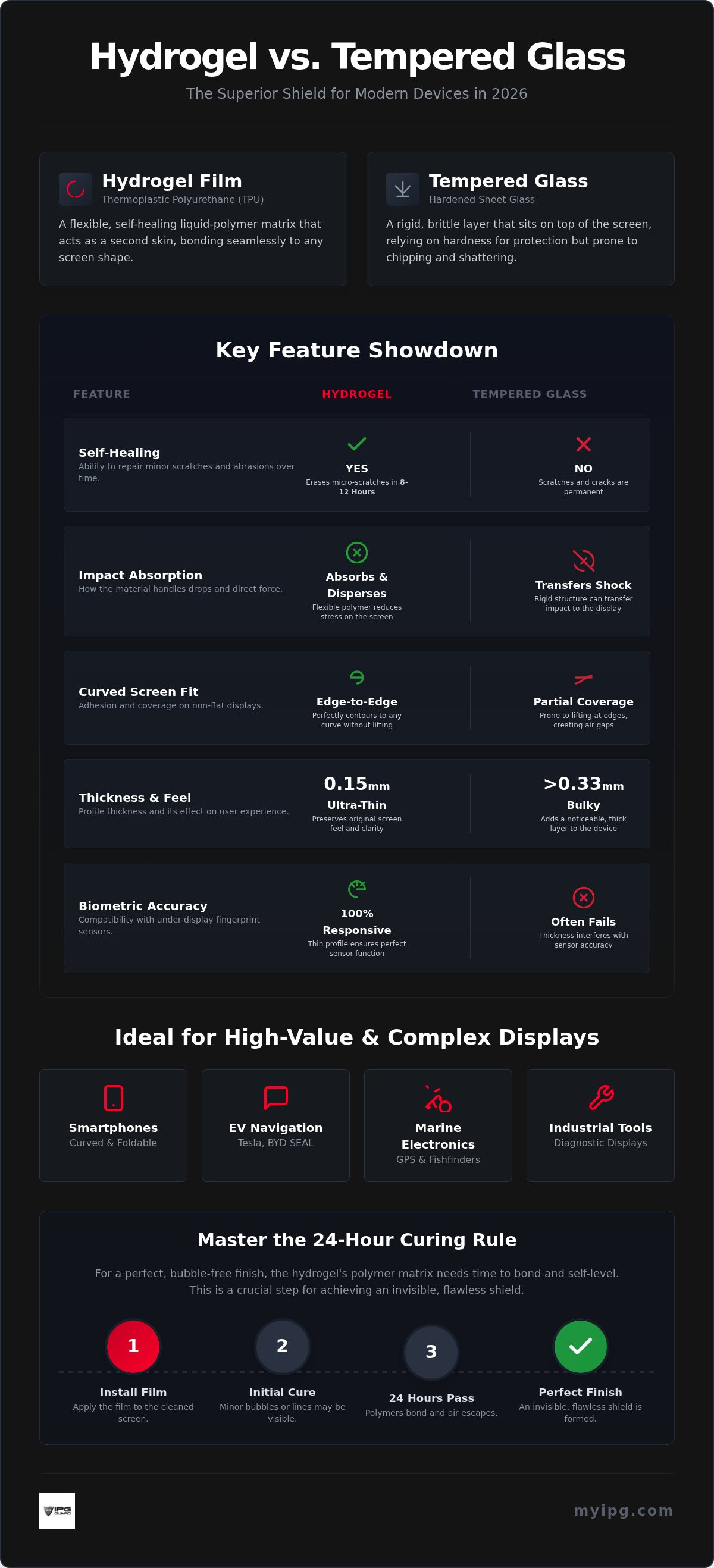
The IPG Original Hydrogel relies on a specialized polymer matrix. These molecular chains are engineered to stretch. When an object strikes the surface, the chains deform to absorb and distribute energy. This flexibility allows the film to be significantly thinner than glass. Most 2026 hydrogel films measure between 0.15mm and 0.2mm in thickness. This ultra-thin profile ensures that under-display fingerprint sensors remain 100% responsive. The Science of Invisible Shielding involves these unique 'memory' properties. The material can return to its original shape after impact. We also apply a premium oleophobic coating to every film. This repels fingerprints and environmental oils, maintaining a smudge-free surface for marine and automotive use.
Why 2026 Devices Demand Flexible Protection
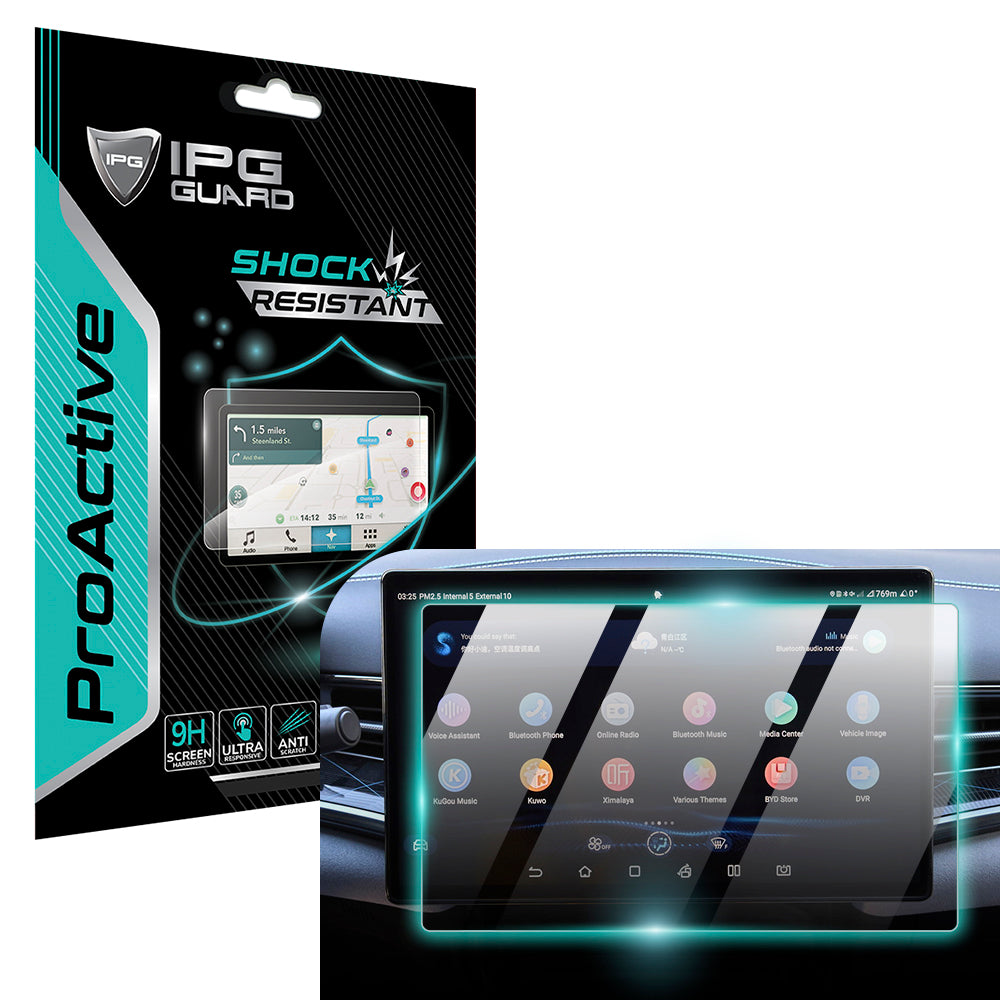
Modern hardware is defined by complex geometry. Smartphones, tablets, and EV navigation displays now feature aggressive curves and edge-to-edge glass. Rigid tempered glass cannot bond to these surfaces effectively. It often lifts at the corners, creating unsightly air gaps and collecting debris. Flexible polymers solve this problem. They provide a perfect, contoured fit for devices like the BYD SEAL navigation display or Harley-Davidson instrument clusters. This protection preserves the aesthetic integrity of high-end electronics. You get robust security that doesn't ruin the sleek design of your hardware. It is the only way to ensure total coverage for the latest generation of foldable and curved screens.
Unmatched Durability: The Self-Healing and Impact Benefits of Hydrogel
Traditional tempered glass is built on a flawed premise. It relies on hardness to prevent scratches, yet that same rigidity makes it prone to catastrophic failure. One small impact at the corner causes the entire sheet to spiderweb. One of the primary benefits of hydrogel screen protector technology is its ability to absorb and neutralize force rather than resisting it until it breaks. This shift from "hard" to "resilient" ensures your high-value displays remain functional even after significant stress. By choosing a flexible polymer, you eliminate the cycle of frequent, expensive glass replacements.
How Self-Healing Technology Works
The magic behind the IPG Original (Hydrogel) lies in its shape memory polymers. These materials are engineered to react to ambient temperature and pressure. When a key or a coin creates a micro-abrasion, the surface tension of the film is disrupted. Self-healing is the molecular realignment of TPU chains after surface tension is broken. This process allows the film to "fill in" minor scratches, often within 8 to 12 hours. While deep gouges that pierce the film won't disappear, everyday wear and tear effectively vanishes. This Unmatched Durability is a result of advanced material science that prioritizes the long-term integrity of the screen. It keeps your device looking brand new without requiring constant maintenance.
Superior Impact Absorption for Fragile Displays
Rigid materials like 9H glass transmit shockwaves directly to the underlying display panel. This often results in a cracked internal screen even if the protector stays intact. Hydrogel works differently. It acts as a shock absorber. The gel-like consistency disperses energy across the entire surface of the film, drastically reducing the localized pressure on the glass. This is why hydrogel is the preferred choice for high-vibration environments, such as marine electronics or industrial diagnostic tools like those from Snap-on and Autel. It doesn't shatter, chip, or flake into your fingers. If you're tired of sharp glass edges, it's time to switch to the IPG Original (Hydrogel) Screen Protector for a more reliable shield.
Over the lifespan of a device, the maintenance costs of hydrogel are significantly lower. Glass protectors often need replacement every few months due to edge-chipping or "lifting" on curved screens. A single, precision-cut hydrogel film can last the entire life of the smartphone or EV display. It remains bonded, clear, and functional. You save money by investing in a protector that doesn't crack under pressure. It's a professional solution for those who value performance over temporary fixes.
Hydrogel vs. Tempered Glass: Finding the Superior Shield for 2026
The debate between rigid glass and flexible polymers has shifted. While tempered glass once dominated the market, modern hardware design has rendered it increasingly obsolete. Glass is static. It doesn't adapt. When applied to the 2.5D or 3D curved edges of a 2026 smartphone, rigid glass inevitably fails to maintain a permanent bond. This leads to "edge-lifting," where the protector peels away, trapping dust and creating a structural weak point that chips at the slightest touch. One of the core benefits of hydrogel screen protector technology is its ability to physically contour to these curves, providing a seamless, permanent fit that glass simply cannot match.
Safety is another critical differentiator. When tempered glass fails, it shatters into sharp, microscopic shards that can embed in your skin or damage the underlying OLED panel. Hydrogel is a non-shattering polymer. It absorbs impact through energy dispersion, as discussed in previous sections, without ever becoming a hazard itself. For a deeper dive into the technical nuances between these materials, consult our iPhone Screen Protector Buying Guide to see how different films perform under daily stress.
Ultrasonic Fingerprint Sensor Compatibility
Biometric failure is the most common complaint among glass users. Thick tempered glass, often measuring 0.33mm or more, creates a physical barrier that disrupts the ultrasonic waves used by Samsung S-series and Google Pixel sensors. This results in "no-match" errors and forced PIN entries. IPG Original films solve this through a ultra-thin 0.15mm profile. You get zero-latency touch response and instant fingerprint recognition. Your biometric security remains seamless and reliable. It's the only way to maintain the high-speed performance you expect from a flagship device without compromising on protection.
Aesthetic Integration: The 'Naked Screen' Look
Modern electronics are designed to be felt. Rigid glass creates a noticeable "lip" or sharp edge when you swipe from the side of the screen, breaking the ergonomic flow of the device. Hydrogel eliminates this. It bonds so tightly to the edges that it becomes virtually invisible. This aesthetic integration preserves the "naked screen" look while offering robust defense. With 99.9% optical transparency, our films ensure that the vibrant colors and deep blacks of your OLED display remain untainted. You don't have to sacrifice visual brilliance for security. It's a professional-grade shield that respects the design of your high-value hardware. To discover other ways to elevate your lifestyle with curated everyday products, you can find out more at Cariigo.
Automotive Navigation and Cluster Protection
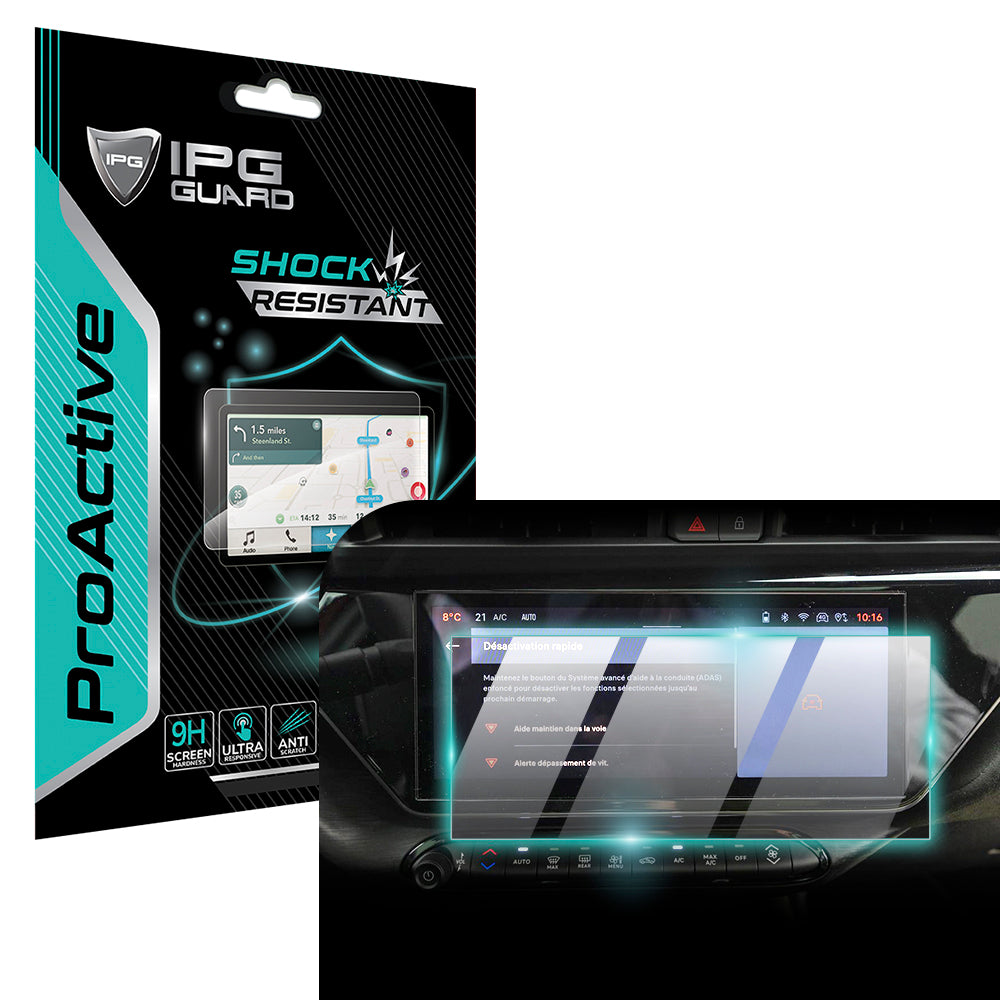
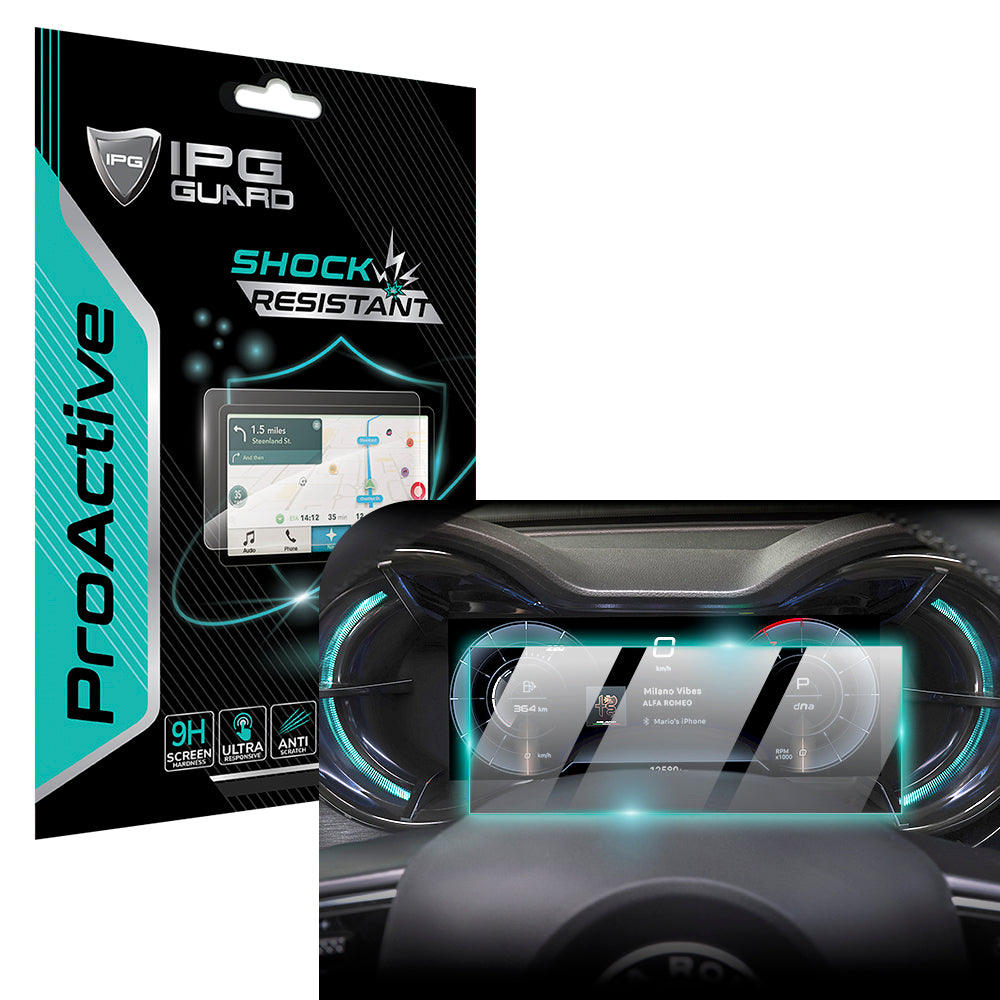
Electric vehicles like the Tesla Model 3 and the BYD SEAL feature expansive 15.6-inch infotainment screens that serve as the primary control hub for the car. These displays are vulnerable to high-intensity glare and constant touch. Our specialized ProActive films address these issues directly, maintaining visibility even in direct sunlight. Thermal stability is another critical factor. Interiors can reach temperatures over 140°F (60°C) when parked in the sun. Rigid glass can expand and crack under thermal stress, but IPG Original hydrogel remains stable and bonded. For a complete breakdown of how to safeguard your vehicle's interior, read our Car Screen Protector Buying Guide. This protection also extends to exposed clusters, such as those on a Harley-Davidson, where road debris and UV exposure can quickly degrade the plastic lens.
Marine and Industrial Precision
In the marine world, equipment like the Lowrance Eagle 4" Elite HDS Pro must endure salt spray, moisture, and intense UV radiation. Glass protectors often trap salt crystals at the edges, leading to corrosion and lifting. Hydrogel creates an airtight seal that keeps contaminants out. In industrial settings, diagnostic tools like the Snap-on Triton, Apollo, or Autel MaxiSYS are used in oily, high-impact garages. These screens are constantly exposed to chemical solvents and accidental drops. Precision-cut IPG films provide the industrial toughness required to keep these tools operational. They resist oil penetration and absorb the shock of a dropped wrench or heavy tool.
Every IPG Original film is precision-cut to match the exact dimensions of your specific HMI screen. This ensures that every millimeter of the display is covered, from the edges of a marine fishfinder to the complex curves of an automotive instrument cluster. You get a professional, factory-installed look that doesn't interfere with the sensitivity of the interface. Protect your high-value displays with the IPG Original (Hydrogel) Screen Protector today.
Expert Installation and Care: Ensuring a Bubble-Free, Long-Lasting Shield
Achieving a professional-grade finish requires more than just steady hands. It demands a commitment to a methodical preparation process. One of the standout benefits of hydrogel screen protector installation is the flexibility it offers during the initial alignment phase. While tempered glass is a rigid, one-shot application that often results in wasted materials if misaligned, hydrogel allows for a controlled process. This ensures that every cutout for cameras and sensors aligns with surgical precision, providing the edge-to-edge coverage your high-value device deserves.
Don't be discouraged by small bubbles or a slight haze immediately after the install. The 24-hour disappearance rule is a technical reality of TPU-based materials. Because the polymer matrix is semi-permeable, trapped air molecules and residual moisture naturally dissipate through the film as it cures. One of the practical benefits of hydrogel screen protector technology is this "self-settling" feature. Within 48 hours, the shield becomes virtually invisible, bonded perfectly to every contour and curve of the display.
The Secret to a Perfect, Bubble-Free Install
- Sanitize the Environment: Work in a clean, dust-free area. Steam from a nearby shower can help ground airborne particles before you begin.
- Precision Cleaning: Use a lint-free cloth and a specialized screen cleaner to remove every trace of skin oils and debris.
- Center-Out Squeegee: Apply firm, consistent pressure from the center of the display toward the edges. This technique forces air toward the perimeter and ensures a strong bond.
- Patience: Allow the device to sit for at least two hours before placing it in a pocket or case. Full curing takes up to two days.
Long-term Maintenance for Your Shield
The premium oleophobic coating on your IPG Original (Hydrogel) is engineered to repel oils and smudges. To preserve this vital layer, avoid harsh chemical cleaners containing ammonia or high concentrations of alcohol. These substances can degrade the polymer and strip the protective coating over time. A dry microfiber cloth is usually sufficient for daily maintenance. If needed, a cloth slightly dampened with distilled water will remove stubborn marks without compromising the integrity of the film.
Recognizing when to replace your shield is essential for maintaining the "Guardian of Technology" standard. While the self-healing properties can handle hundreds of micro-scratches, the material eventually reaches a saturation point where the TPU chains lose their elasticity. If you notice persistent clouding or deep gouges that no longer heal, it's time for a fresh application. Ready to protect? Explore IPG Original Hydrogel Protectors for your device and ensure your technology remains in showroom condition.
Future-Proof Your Technology With Resilient Shielding
You've seen how TPU-based liquid polymers outperform rigid glass in every critical category. From self-healing micro-scratches to ensuring 100% biometric accuracy, the benefits of hydrogel screen protector technology are undeniable for modern hardware. It isn't just about preventing cracks. It's about preserving the original integrity and touch sensitivity of your most valuable equipment. Whether you're navigating a Tesla or operating heavy-duty Snap-on diagnostic tools, your screens require a guardian that adapts to their unique curves.
We provide specialized protection for BYD displays, Harley-Davidson clusters, and Lowrance marine units. Every IPG Original film is a precision-cut self-healing polymer designed for the demanding environments of 2026. We handle your technology with care, offering global shipping for all electronic device shields to ensure professional-grade security is always within reach. Don't let a brittle sheet of glass compromise your user experience.
Secure your high-value displays with IPG Original Hydrogel today. Trust the dedicated specialist to maintain the perfection of your digital world. Your devices deserve a shield that is as advanced as the technology it protects.
Frequently Asked Questions
Are hydrogel screen protectors better than tempered glass?
Hydrogel is superior for curved screens and biometric accuracy, while tempered glass offers higher surface hardness for flat displays. One of the key benefits of hydrogel screen protector technology is its resilience. It doesn't chip or shatter like glass. Glass often fails at the edges of modern 3D displays. Hydrogel remains bonded and flexible. It's the professional choice for those prioritizing long-term durability and a seamless user experience.
Does a hydrogel screen protector actually heal itself from scratches?
Yes, the IPG Original (Hydrogel) utilizes shape memory polymers to erase micro-scratches. When surface tension is broken by a minor abrasion, the TPU chains realign to their original state. This process typically takes 8 to 12 hours at room temperature. While deep gouges that penetrate the film won't vanish, everyday wear from keys or coins effectively disappears. This ensures your high-value display maintains showroom clarity for years.
Can I use a hydrogel protector with a phone case?
Most modern hydrogel films are case-friendly due to their precision-cut dimensions. Because the material is only 0.15mm thick, it doesn't create the bulk that causes cases to lift the protector. We design our shields with a slight offset to ensure compatibility with rugged protective covers. This allows you to combine the impact absorption of a heavy-duty case with the invisible, self-healing security of a liquid-polymer shield.
Will a hydrogel screen protector affect the fingerprint sensor?
No, hydrogel is specifically engineered for ultrasonic and optical fingerprint sensors. Thick tempered glass often disrupts the waves required for biometric matching in Samsung S-series and Pixel devices. One of the major benefits of hydrogel screen protector films is their 0.15mm thickness. This ensures zero-latency touch response and instant recognition. You get seamless security without compromising on the high-speed performance of flagship biometric systems.
Is hydrogel protection strong enough to prevent a screen from cracking?
Hydrogel prevents cracking by dispersing impact energy across its surface. Unlike glass, which transmits shockwaves directly to the display panel, the gel-like TPU acts as a shock absorber. It significantly reduces the localized pressure that leads to internal screen failure. While no protector is 100% indestructible, hydrogel offers superior protection in high-vibration environments and during typical drops. It provides a robust, non-shattering defense for your investment.
How do I remove air bubbles from my hydrogel screen protector?
Patience is the most effective tool for removing air bubbles. Small imperfections and hazy spots typically vanish on their own within 24 to 48 hours. The semi-permeable nature of the polymer allows trapped air to escape as the adhesive settles. If large bubbles remain immediately after installation, use a center-out squeegee technique to push them toward the edges. Avoid using fingernails or sharp objects that could pierce the film.
Are hydrogel protectors compatible with curved screens like the Tesla navigation?
Hydrogel is the industry standard for curved automotive displays. Rigid materials cannot bond to the complex geometry of a Tesla or BYD Seal navigation screen without lifting. The flexible TPU matrix contours perfectly to 3D edges, ensuring a permanent, airtight seal. This prevents dust accumulation and maintains the aesthetic integrity of your EV's interior. It's a specialized solution for massive, high-definition infotainment systems that demand total coverage and clarity.
Is hydrogel better for outdoor use and marine electronics?
Yes, hydrogel is ideal for marine and outdoor environments due to its chemical and UV resistance. It handles salt spray and intense sun exposure better than glass, which can become brittle or trap contaminants. Our ProActive films also reduce glare on fishfinders and instrument clusters. This ensures visibility in direct sunlight. It's a durable, professional-grade guardian for Lowrance units and Harley-Davidson displays that face constant environmental stress.