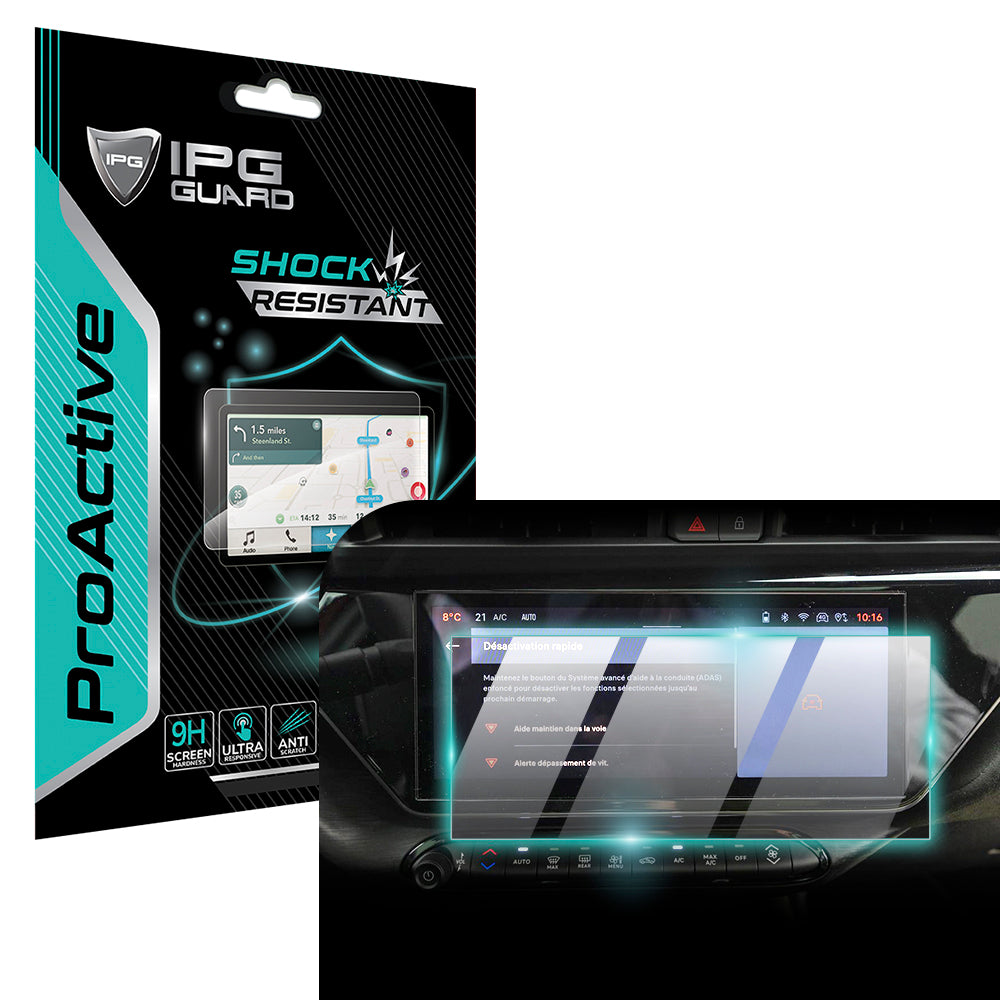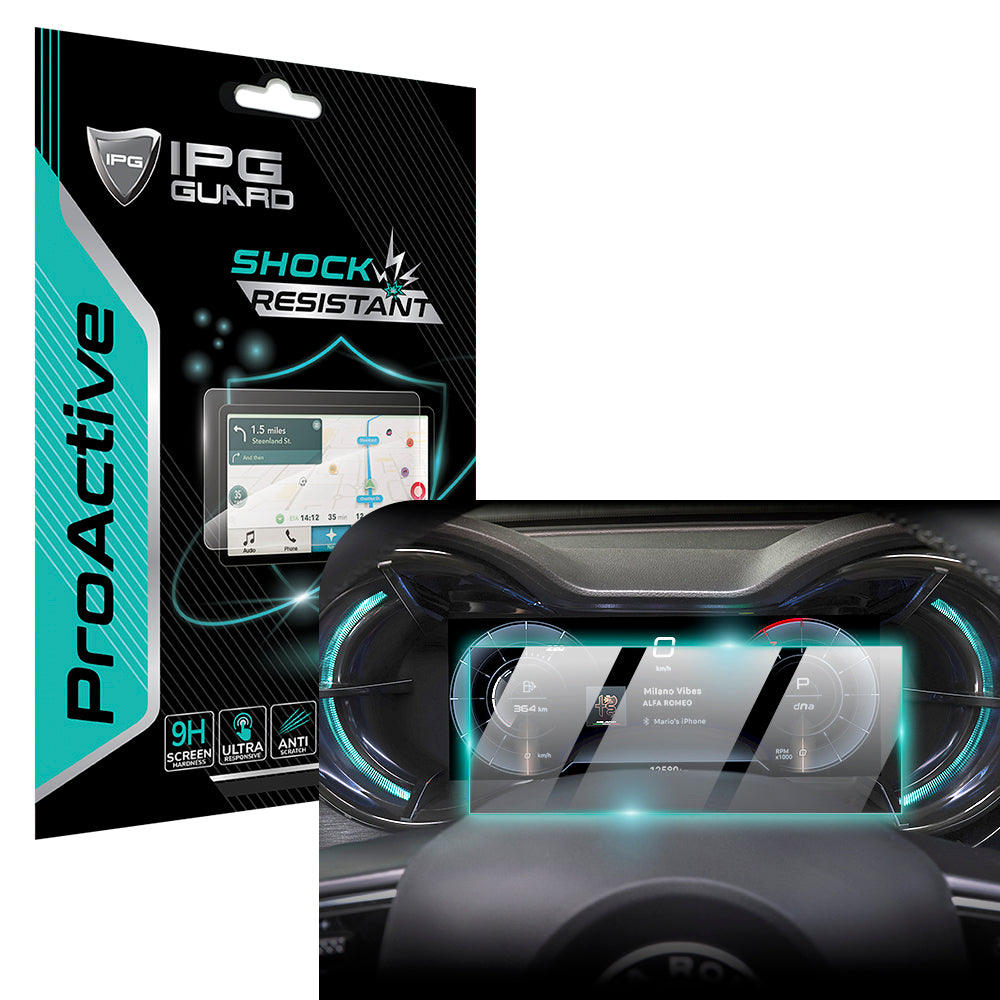
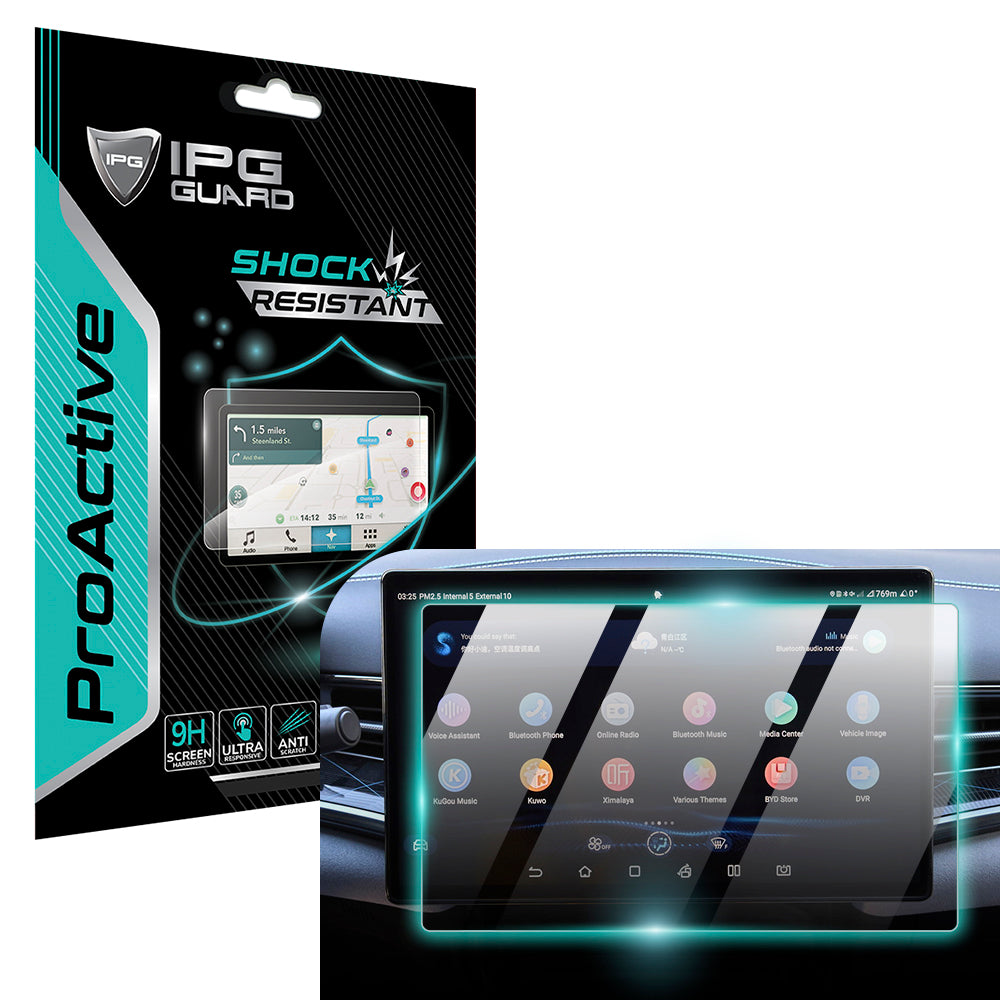


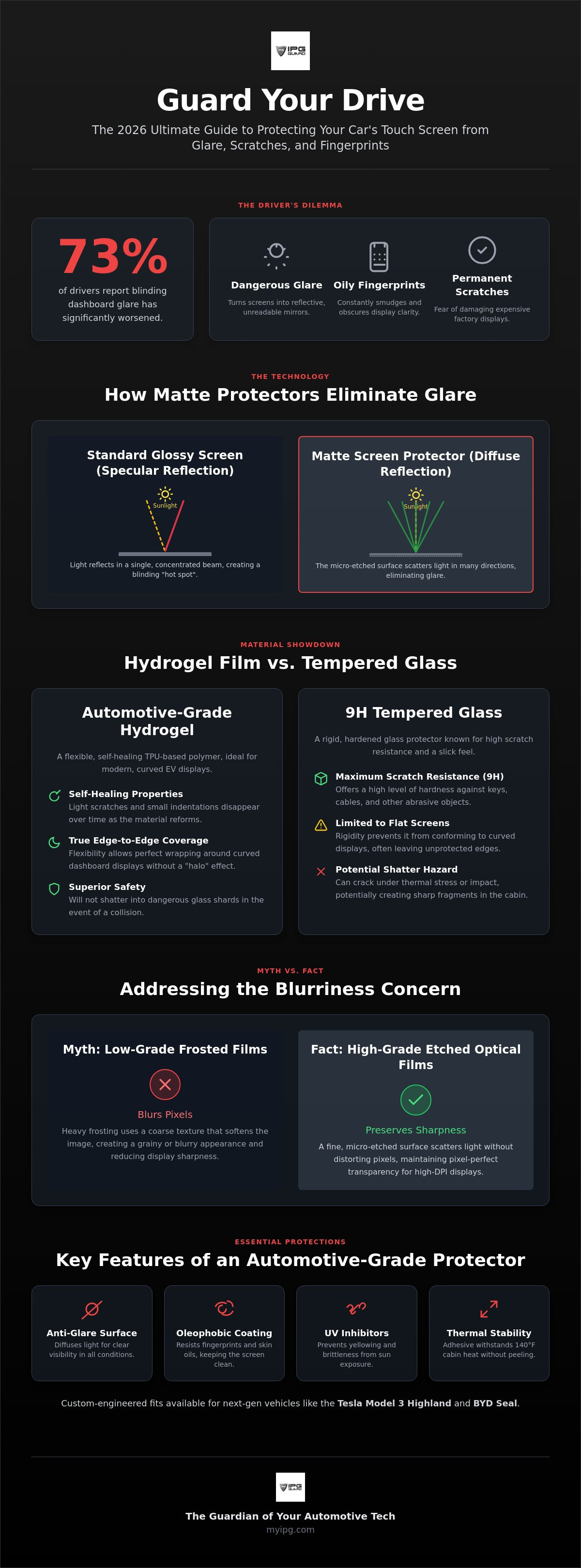
73% of drivers report that blinding dashboard glare has significantly worsened over the last decade. It's a dangerous distraction. You've felt that moment of panic when the afternoon sun hits your infotainment screen, turning your navigation into a useless, reflective mirror. Beyond the glare, the constant buildup of oily fingerprints and the fear of permanent scratches on an expensive factory display are constant stresses. You're likely looking for how to protect car touch screen surfaces without losing the vibrant resolution you paid for.
We understand the value of your vehicle's technology. This 2026 guide promises to show you how to achieve a clear, glare-free display that feels completely invisible to the touch. You'll learn about the latest optical calibrations in matte protection, including precision-cut solutions for the Tesla Model 3 Highland and BYD Seal. We'll break down the technical differences between 9H tempered glass and advanced hydrogel films. This ensures you can secure your dashboard with confidence and precision.
Key Takeaways
- Master how to protect car touch screen surfaces using micro-etched matte films that scatter light and eliminate dangerous driver distractions.
- Evaluate the performance trade-offs between 9H tempered glass and high-flexibility hydrogel materials optimized for 140°F cabin environments.
- Ensure pixel-perfect transparency for high-DPI displays by choosing etched optical films over low-grade frosted textures.
- Secure a guaranteed fit for next-gen vehicles like the Tesla Model 3 Highland and the BYD Seal with custom-engineered, model-specific protectors.
What is a Matte Screen Protector for Car Displays?
A matte screen protector for car displays is a precision-engineered layer of micro-etched material. It's designed to diffuse light. Unlike standard glossy covers, these protectors utilize a specialized surface texture to scatter incoming rays. This prevents the mirror effect that often blinds drivers during peak daylight hours. By 2026, the industry has shifted away from cheap, frosted plastics. Modern solutions now utilize advanced optical-grade polymers. These materials maintain high-resolution clarity while providing a sacrificial layer for your expensive hardware. Understanding how to protect car touch screen surfaces starts with choosing materials that handle the unique light dynamics of a vehicle cabin.
Beyond visibility, these protectors serve as a guardian for your interior's aesthetic. The primary function is reducing reflections that cause eye fatigue and driver distraction. However, the secondary benefits are equally vital. The micro-textured surface reduces the surface tension of skin oils. This means fingerprints don't smear. They disappear. The texture also provides a smoother glide for your fingertips, making the interface feel more responsive than the factory glass.
How Anti-Glare Technology Works in Your Cockpit
The core of this technology lies in the transition from specular to diffuse reflection. When light hits a factory glossy screen, it bounces back in a concentrated beam. This is specular reflection. A matte surface breaks this light apart. It scatters the rays in multiple directions. This diffusion eliminates the blinding hot spots of light. Modern "floating" infotainment systems sit high on the dashboard. They catch more direct sunlight than traditional recessed dials. A high-quality Screen protector specifically engineered for automotive use also masks the tiny micro-scratches that appear from frequent cleaning with microfiber cloths.
Matte vs. Glossy: The Visual Trade-Off
Choosing the Right Material: Hydrogel vs. Tempered Glass
Selecting the right material is the first step in learning how to protect car touch screen units from the harsh realities of the road. Your vehicle isn't a climate-controlled office. It's a high-heat environment. Interior temperatures often soar to 140°F. Standard consumer-grade adhesives fail here. They bubble. They peel. Specialized automotive films and glass use thermally stable bonding agents. These ensure the protector stays flush against the display regardless of the season. This precision bonding is what separates a professional installation from a temporary fix.
Longevity is a critical factor for any vehicle owner. Constant UV exposure through the windshield causes inferior plastics to yellow and become brittle. High-quality materials are engineered with UV-resistant inhibitors. This maintains crystal-clear transparency for years. It preserves the factory look of your cockpit. If you're looking for a durable, shatterproof solution, the IPG Original (Hydrogel) Screen Protector provides an industrial-grade barrier that won't degrade over time. It's a specialized guardian for your high-value tech.
Surface feel also dictates the daily user experience. Glass provides a familiar, slick interaction. Hydrogel offers a slightly dampened feel. This can be better for precision tapping while the vehicle is in motion. Both materials must accommodate the expansion and contraction of the dashboard. Without industrial-grade flexibility, rigid protectors can crack under extreme thermal stress. When deciding how to protect car touch screen hardware, consider the size and curvature of your specific display.
The Case for Automotive-Grade Hydrogel
Hydrogel is a flexible, TPU-based polymer. It's the preferred choice for modern EV displays. It features self-healing properties. Small indentations or light scratches literally disappear as the material reshapes itself. Because it's a film, it offers true edge-to-edge coverage. It won't leave a white "halo" effect on curved dashboard edges. Safety is a major advantage. In a collision, a lightweight film won't shatter. It won't create dangerous glass shards across the cabin. It's a secure, invisible-feeling layer of protection.
When to Choose Tempered Glass
Tempered glass offers a 9H hardness rating. This provides a rugged shield against heavy-duty impact or industrial tools. It feels exactly like your factory screen. The smooth, cool touch is a premium experience many drivers love. However, glass has limitations. It's rigid. This makes installation on screens larger than 12 inches difficult. One tiny misalignment leads to permanent air bubbles. For smaller, flat displays, glass remains a gold standard for scratch resistance and high-resolution clarity.
Model-Specific Protection: From Tesla to BYD
Universal, cut-to-fit kits are a significant risk for modern vehicles. They often lack the precision required for integrated automotive sensors. Most 2026 infotainment systems house proximity sensors and ambient light detectors behind the glass. A poorly aligned protector can disable your auto-brightness or interfere with touch gestures. When considering how to protect car touch screen hardware, precision engineering is the only way to ensure full functionality. High-end vehicles require a tailored guardian that respects the original equipment manufacturer's design. It's a matter of technical compatibility, not just coverage.
Massive displays in the 2026 Chevy Silverado and the curved arrays in the BMW iX present unique structural challenges. These screens aren't just large. They're often part of a complex, multi-layered dashboard architecture. A standard film will lift at the corners due to the subtle tension in the material. Our model-specific protectors are cut to a technical tolerance of 0.1mm. This ensures a factory-level fit that remains stable under the vibration and thermal expansion of a moving vehicle. It's about preserving the integrity of the cockpit while securing its most vulnerable asset.
Protecting the Tesla Infotainment Ecosystem
Designing for the 15.4-inch Tesla Model 3 Highland requires an absolute edge-to-edge matte finish. This screen is the primary interface for everything from gear selection to climate control. Any misalignment is immediately visible. For the 2025-2026 Tesla Model Y Juniper, interior longevity is a priority. These displays sit in direct sunlight for hours. A specialized protector prevents UV-induced degradation of the liquid crystal layer. For a deeper dive into these requirements, read our Car Screen Protector Buying Guide 2026. It details the exact specifications needed for the modern Tesla cockpit.
Specialized Shields for BYD and Next-Gen EVs
The BYD Seal 15.6-inch rotating display is a unique engineering challenge. The protection must survive high-speed rotation without peeling or shifting. We utilize IPG ProActive technology for these high-brightness EV displays. It's specifically tuned to handle the intense backlight of BYD systems without causing a rainbow effect. This is how to protect car touch screen units while maintaining perfect touch responsiveness. Even with the protector installed, HVAC controls and navigation gestures feel fluid and immediate. We act as the dedicated specialist for these complex, rotating interfaces, ensuring your technology remains pristine and functional.
Addressing the Blurriness Myth: Will It Ruin My Screen?
Many drivers avoid matte protection because of the "grainy mess" often reported on enthusiast forums. This distortion is known as the rainbow effect. It occurs when the texture of a cheap film is too coarse for the high-DPI resolution of a modern dashboard. When the matte grain matches the pixel pitch, light refracts unevenly. This creates a shimmering, multicolored sparkle that strains the eyes. High-quality etched optical films solve this. They utilize a fine-grain surface that scatters external glare without breaking the internal light path of the pixels. Learning how to protect car touch screen units shouldn't mean sacrificing 4K clarity for visibility.
The difference lies in the manufacturing process. Low-grade protectors use a frosted spray-on coating. This layer is thick and inconsistent. It blurs text and washes out black levels. In contrast, professional-grade protectors use a chemical etching process directly on the substrate. This maintains deep contrast and color accuracy. Pro tip: because matte surfaces diffuse light, you may need to increase your display brightness by 5 to 10 percent. This small adjustment compensates for light scattering and keeps your navigation maps looking vibrant even in mid-day sun. You can achieve a crystal-clear view by choosing the IPG Zerodust Screen Protector to ensure an optically pure application.
The Science of Light Diffusion vs. Image Sharpness
Optical-grade films are engineered to preserve the underlying image. They maintain sharp edges on text and icons while killing 90 percent of mirror-like reflections. Cheap protectors look blurry because of poor adhesive quality. If the adhesive layer is too thick, it acts as a secondary lens that distorts the image. You can test a protector by holding it an inch above your screen. If the image blurs significantly, the etch is too aggressive. High-quality films remain clear even when held away from the surface. This ensures that your high-resolution dashboard remains a crisp, readable tool.
Installation Secrets for a Crystal-Clear Finish
Dust is the primary enemy of a clear finish, especially in a vehicle's upholstery-heavy environment. We recommend a wet install for large automotive screens. This method allows you to slide the protector into perfect alignment before the adhesive sets. It also helps neutralize static that attracts floating fibers. Use the ZeroDust approach by closing your car doors and windows ten minutes before starting. This allows airborne particles to settle. For a complete breakdown of modern application techniques, consult The Ultimate Screen Protector Guide. It provides the technical roadmap for how to protect car touch screen surfaces without a single bubble or speck of dust.
Why My IPG is the Guardian of Your Automotive Tech
Your vehicle is a high-value asset. We treat it as such. At My IPG, we act as the dedicated specialist for your cockpit's most sensitive components. Our custom-fit precision eliminates the need for manual cutting. This is critical for the complex, integrated dashboards of 2026. A single slip with a blade can cause permanent damage to your interior trim. We provide a tailored, ready-to-install solution that ensures how to protect car touch screen surfaces correctly from day one. It's about stewardship over the technology you value most.
Our ProActive material is specifically engineered for the unique light conditions of a vehicle cockpit. It isn't just a generic film. It's an advanced light-filtration system. This material handles the high-UV environment of a car interior without yellowing or peeling. From the 15.6-inch array of the My IPG ProActive for BYD 2022-2025 SEAL Navigation Display Screen Protector to the compact clusters of a motorcycle, we maintain a global reach. We understand that performance and security are non-negotiable when you're behind the wheel.
Maintaining screen integrity is a direct investment in your vehicle's resale value. A scratched or delaminated infotainment system can significantly reduce a vehicle's future price. By applying an invisible-feeling layer of protection now, you preserve the factory-new look for the next owner. It's a methodical approach to vehicle maintenance. You secure your technology. You secure your investment. This is how to protect car touch screen hardware with professional-grade confidence.
Beyond the Screen: Comprehensive Car Protection
Our expertise extends to every high-touch surface in your automotive ecosystem. We provide specialized solutions like the My IPG Tesla Model 3 / Model Y door handle decal to prevent paint scuffs. For those on two wheels, the My IPG Camera Lens Protector for Harley Cluster Display protector offers the same industrial-grade durability. Our reputation for reliability is why we are the trusted provider for professional equipment. This includes the My IPG Snap-on Triton Apollo Solus +screen protector and the My IPG screen protector Autel MaxiIM KM100 MaxiCharger MaxiSYS MS909 MS919. We guard the tools that keep the world moving.
Beyond automotive applications, advanced glass technology is revolutionizing how we interact with our environments; for example, you can learn more about Pramie International and their specialist smart glass solutions for residential and commercial sectors.
Ready to Shield Your Drive?
Matte protection is the professional choice for 2026 driving safety. It eliminates blinding glare. It stops fingerprint buildup. Most importantly, it preserves the high-resolution clarity of your next-gen display. Don't leave your dashboard's integrity to chance. Find your specific vehicle model in our extensive catalog to ensure a perfect, bubble-free fit. Take the first step in securing your cockpit. Protect your car navigation with My IPG today and experience the ultimate in technical performance and optical clarity.
Secure Your High-Resolution Driving Experience
You've explored the technical evolution of automotive display protection. Selecting the ideal material depends on your vehicle's specific geometry and the 140°F thermal realities of your cabin. Whether you choose the rugged 9H hardness of tempered glass or the edge-to-edge flexibility of hydrogel, precision fitment is the only way to maintain sensor compatibility. Mastering how to protect car touch screen hardware ensures your cockpit remains a safe, glare-free environment. It preserves your vehicle's resale value while enhancing daily visibility and touch responsiveness.
We apply the same ProActive anti-glare technology trusted by owners of high-value industrial and marine electronics to your personal vehicle. Our 2026 catalog features custom-fit solutions for the latest Tesla and BYD models, engineered to eliminate distracting reflections without compromising pixel-perfect clarity. You don't have to settle for grainy, low-grade films that blur your navigation maps. Take command of your technology and secure the pristine look of your interior today. Browse Precision-Fit Car Screen Protectors and drive with the confidence that your most valuable interfaces are shielded by a dedicated specialist. Your journey deserves a clear view.
Frequently Asked Questions
Do matte screen protectors for cars affect touch sensitivity?
High-quality matte protectors don't reduce touch responsiveness. Modern etched optical films are extremely thin, often measuring around 0.06mm, which ensures your taps and swipes are registered instantly. The micro-textured surface actually reduces skin friction. This makes navigating through complex menus feel smoother than on the factory glass. You'll maintain full control over your HVAC and infotainment settings without any lag or pressure issues.
Will a matte protector make my car screen look blurry?
Blurriness is only a risk with low-grade frosted plastics. Professional-grade protectors use precision chemical etching to scatter external glare while letting the internal display light pass through clearly. This prevents the grainy rainbow effect often seen on cheaper alternatives. When you choose an optical-grade guardian, you preserve the high-resolution crispness of your 4K dashboard while eliminating the blinding reflections that cause eye fatigue.
Can I remove a car screen protector without damaging the factory coating?
Yes, you can safely remove a professional protector without harming the original display. These products use advanced, non-corrosive silicone adhesives that bond securely but peel away cleanly. They don't leave sticky residue or strip the factory anti-reflective coatings. This is a critical part of how to protect car touch screen surfaces because it allows you to refresh the protection without risking the integrity of your expensive hardware.
How do I clean a matte screen protector without scratching it?
Clean your matte surface using a high-quality microfiber cloth and a dedicated, ammonia-free screen cleaner. Avoid paper towels or rough fabrics that can trap grit and cause micro-scratches. While the matte texture naturally hides oily fingerprints better than glossy glass, a light weekly wipe maintains its light-scattering properties. This simple maintenance routine keeps your cockpit looking pristine and ensures the anti-glare technology functions at peak performance.
Are matte protectors better than glossy ones for night driving?
Matte protectors offer a significant advantage during night driving by diffusing internal light bloom. Glossy screens often reflect your car's ambient lighting or the headlights of passing vehicles, which can be distracting in a dark cabin. A matte surface scatters these light sources, reducing glare and lowering eye strain. This creates a more focused driving environment, allowing you to see your navigation maps clearly without reflective interference.
Do I need a special screen protector for my Tesla Model 3 Highland?
You definitely need a model-specific protector for the 15.4-inch Model 3 Highland display. This screen serves as the primary hub for gear selection and vehicle settings, so a perfect fit is mandatory. Universal kits often block proximity sensors or interfere with the slim bezel design. A precision-cut guardian ensures that every gesture and sensor remains fully functional while securing the screen against the high UV exposure typical of Tesla cockpits.
What is the best material for a car screen protector in 2026?
Hydrogel is the leading material choice for 2026 due to its self-healing properties and thermal stability. While tempered glass offers excellent scratch resistance for flat displays, hydrogel demand has grown by 34% because it handles large, curved EV screens more effectively. It won't shatter in an accident and it stays bonded even when cabin temperatures reach 140°F. It's the most versatile solution for modern, high-tech vehicle interiors.
How do I get rid of air bubbles after installing a car screen protector?
Small air bubbles can be removed by using a soft-edged squeegee to push them toward the nearest edge. If you've used a hydrogel film, tiny micro-bubbles often disappear on their own within 24 to 48 hours as the material breathes. This is a vital step in how to protect car touch screen units with a professional finish. Patience is key, as the adhesive needs time to settle and clear any remaining moisture from the installation process.