

What if you could make your $1,299 Samsung Galaxy S26 Ultra display invisible to everyone but you, without losing the ability to see it under the midday sun? You've likely felt that spike of anxiety when a stranger glares at your screen on a crowded train or struggled with blinding reflections on your marine navigation display. It's frustrating to invest in high-end tech only to have fingerprints or glare ruin the aesthetic. Deciding between a privacy screen protector vs matte finish is no longer just about scratch resistance. It's about managing light direction versus light diffusion.
We understand that your devices are high-value assets that deserve meticulous care. You'll master the technical differences between microlouver technology and etched light-diffusing surfaces to find your perfect balance of data security and display clarity. This guide examines how these shields impact your 9H hardness protection, viewing angles limited to 30 degrees, and haptic sensitivity on modern screens like the iPhone 17 Pro. You'll learn how to maintain color accuracy while choosing a dedicated guardian for your digital life. We provide the technical clarity you need to protect what you value most.
Key Takeaways
- Understand the optical mechanics of microlouver vertical slats versus etched light-diffusing surfaces to optimize your display for security or visibility.
- Evaluate the performance trade-offs of a privacy screen protector vs matte finish regarding peak brightness, color accuracy, and smudge resistance.
- Match your shield to your environment, whether you need 30-degree visual blocking for commuting or zero-glare performance for marine navigation.
- Learn how specialized materials like My IPG ProActive hydrogel maintain haptic sensitivity and display integrity on modern haptic screens.
- Master the installation process using the My IPG Zerodust system to ensure a bubble-free, factory-quality finish for your high-value devices.
Privacy Screen Protector vs Matte: Defining the 2026 Standards
The landscape of device defense has shifted. As we enter 2026, the choice between a privacy screen protector vs matte finish isn't just a matter of preference. It's a strategic decision for the modern professional. High-brightness OLED and MicroLED panels are standard now. They offer stunning clarity but also make your personal data visible from across a room. You need a solution that respects the sophisticated engineering of your display while safeguarding your workspace.
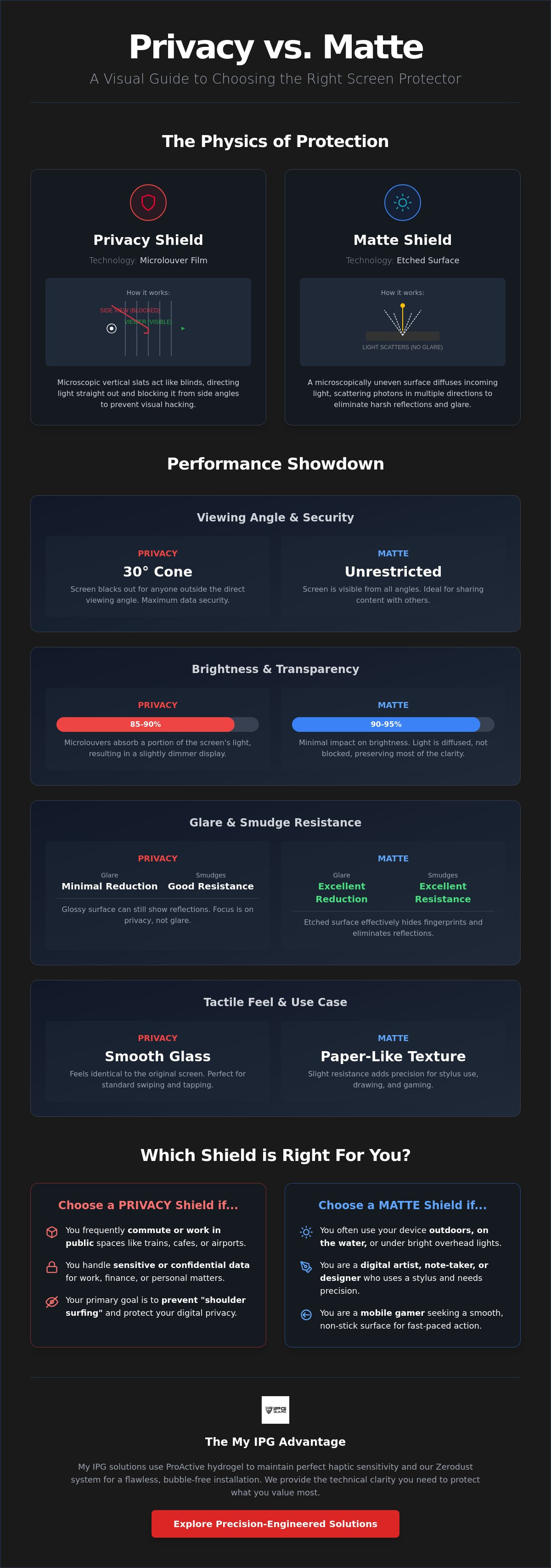
A privacy protector acts as a sophisticated optical Monitor filter. It uses microlouvers, which are microscopic vertical slats, to narrow the viewing angle. Conversely, a matte protector uses a light-diffusing shield. This etched surface scatters incoming light to eliminate harsh reflections. When evaluating a privacy screen protector vs matte, you are essentially choosing between absolute data security and peak visual comfort. Both serve as a dedicated guardian for your technology, but they solve different environmental challenges.
The Core Purpose of Privacy Shields
Visual hacking has become a sophisticated threat in public spaces. In 2026, protecting your sensitive information on a crowded flight or in a busy transit hub is a security priority. These shields utilize a 30-degree "blackout" threshold. If an observer isn't looking directly at the screen, they see nothing but a dark, obscured panel. This provides a dual-role benefit. You get robust physical protection for screen surfaces against abrasions and a digital barrier against prying eyes. It's about maintaining the integrity of your private life without compromising on device performance. We handle your security with the same care you put into your work.
The Core Purpose of Matte (Anti-Glare) Shields
Matte shields focus on the user's optical health and tactile experience. They use precision-etched surfaces to break up specular reflection. This prevents "hot spots" from overhead office lights or the direct midday sun. For stylus users and mobile gamers, the appeal is primarily tactile. It provides a "paper-like" feel that increases control and reduces friction during high-stakes tasks. By scattering photons across the surface, these protectors significantly reduce eye strain during long work sessions. They transform a glossy, reflective glass slab into a smooth, readable canvas that remains visible in any lighting condition. It's a professional-grade solution for those who value focus and precision.
The Physics of Protection: Microlouvers vs. Light Diffusion
Understanding the mechanical differences between a privacy screen protector vs matte finish requires a look at how they manipulate photons. Microlouver technology is the engineering core of the modern privacy shield. Imagine thousands of microscopic vertical slats, similar to Venetian blinds, embedded within a thin film. These slats are precision-aligned to allow light to pass through only when viewed from a direct, 90-degree angle. When the viewing angle shifts to 30 or 45 degrees, these louvers physically block the light, rendering the screen dark to anyone nearby. This physical barrier is why privacy protectors have the lowest transparency levels in the industry, typically ranging from 85% to 90%.
Matte surfaces operate on the principle of light diffusion rather than direction. Instead of using internal slats, the surface of a matte protector is chemically etched or sandblasted to create a microscopic, uneven texture. When light hits this surface, it doesn't bounce back in a single, concentrated beam. Instead, the photons scatter in multiple directions. This diffusion eliminates "hot spots" from overhead office lights or direct sunlight, maintaining a transparency level of 90% to 95%. While a privacy screen protector manages light direction to secure your data, a matte screen manages light texture to preserve your vision. If you need uncompromised data security for your mobile office, an IPG Privacy Screen Protector provides the precision-engineered barrier your device requires.
Microlouver Alignment: 2-Way vs. 4-Way
Privacy filters are generally categorized by their blocking axis. A 2-way protector limits visibility in portrait mode only, which is ideal for smartphone users who want to share photos or videos by simply rotating the device to landscape. In contrast, 4-way privacy protectors offer 360-degree security. These are essential for tablets and laptops used in high-traffic public spaces. However, the additional layers required for 4-way protection often increase the total thickness of the shield, which can slightly decrease touch sensitivity on some haptic displays.
Surface Haze and the Matte Grain Effect
The effectiveness of a matte protector is measured by its "haze" percentage. A higher haze value provides superior anti-glare performance but can introduce a "grainy" or "rainbow" effect on high-resolution 4K+ displays. To avoid this, premium matte shields use finer etching patterns that scatter light without distorting the underlying pixel structure. Balancing this haze is critical for maintaining sharpness while ensuring the screen remains readable under harsh, direct light sources. Choosing the right grain density ensures your display stays crisp without the distraction of blinding reflections.
Performance Showdown: Comparing Clarity, Security, and Durability
Choosing the right defense for your high-value display requires weighing real-world performance against laboratory specifications. Comparing a privacy screen protector vs matte finish reveals distinct winners in clarity and smudge resistance. While both provide a reliable shield, their impact on your viewing experience differs significantly. Matte protectors lead in light diffusion, maintaining transparency levels between 90% and 95%. Privacy filters, by contrast, focus on light direction, which inherently reduces transparency to a range of 85% to 90%. This slight reduction is the necessary trade-off for professional-grade data security.
Fingerprint smudges often ruin the high-end aesthetics of modern devices. Matte is the undisputed king of oleophobic performance, earning a 5/5 rating for fingerprint resistance. Its etched surface hides oils and prevents the "greasy" look common on glossy displays. Privacy protectors perform well with a 3/5 rating, but they don't match the pristine, smudge-free finish of a true matte shield. For users who prioritize a clean aesthetic above all else, the matte finish remains the superior choice for maintaining a factory-fresh look.
Outdoor visibility presents another critical performance gap. Matte protectors earn a 5/5 star rating for anti-glare performance, effectively neutralizing direct sunlight. Privacy protectors score a 3/5 in this category; they don't diffuse light as broadly, but their "blackout" effect can actually help in high-ambient light by blocking off-angle reflections. Regardless of the finish you choose, durability remains a non-negotiable standard. Both styles are available in 9H hardness tempered glass, ensuring your display is guarded against scratches, impacts, and daily wear with meticulous care.
The "Dark Screen" Problem: Transmittance Levels
Privacy filters typically result in a 15% to 30% light loss due to the internal microlouver structure. You'll likely need to increase your device's brightness settings by one or two notches to maintain your preferred visibility. While this can impact battery life, modern My IPG films are engineered to optimize transmittance, minimizing this dimming effect more effectively than generic alternatives. We recommend using auto-brightness features to help balance visual clarity with power efficiency throughout your workday.
Tactile Response and Haptics
The tactile experience varies from the "slick" feel of privacy glass to the "satin" texture of matte. Mobile gamers and digital artists often prefer the matte finish for its consistent friction and paper-like resistance. This texture provides better control for precision stylus work and rapid-fire gaming inputs. Both finishes are designed to maintain full compatibility with modern haptic screens, ensuring that every tap and long-press feels responsive and accurate. We prioritize the preservation of your device's haptic integrity, ensuring the protective layer never interferes with your haptic feedback experience.
Environment-Based Selection: Which Shield Fits Your Life?
Your surroundings define your device's vulnerability. Choosing a privacy screen protector vs matte shield depends on where you do your most critical work. If you're a professional handling sensitive client data in transit, the 30-degree blackout threshold of a privacy filter is a non-negotiable requirement. It prevents visual hacking in high-density areas like airport lounges or commuter trains. We treat your digital privacy with the same meticulous care you apply to your own career, ensuring your screen remains a private workspace.
For outdoor enthusiasts, sunlight is the primary obstacle. High-gloss displays on marine electronics become unreadable without proper diffusion. Use anti glare fish finder screen protectors to maintain peak visibility when reflections would otherwise wash out your sonar data. Similarly, modern automotive infotainment systems are prone to distracting glare that can compromise safety. Our specialized car screen protectors balance clarity with reduced reflections to keep you focused on the road. In manufacturing environments, hmi screen protectors ensure that interface controls remain legible under the harsh, high-lumen lighting of a factory floor.
Secure your display today with a precision-cut IPG Privacy Screen Protector tailored for your specific work environment.
Biometric Compatibility in 2026
Modern ultrasonic fingerprint sensors require a perfect bond between the display and the protector. While microlouvers in privacy shields can occasionally interfere with the light-based scanning of older optical sensors, 2026 technology has largely solved these conflicts. We recommend re-registering your biometrics immediately after installation to ensure the sensor adapts to the new optical layer. FaceID and other infrared-based facial recognition systems typically bypass these filters entirely, maintaining your seamless login experience without any loss in speed or accuracy.
Installation Precision for Specialized Finishes
Alignment is critical for privacy filters. If the shield is slightly off-center, you may experience a "half-dark" screen or uneven viewing angles. We've developed a detailed guide on how to put a screen guard on like a pro to help you achieve a factory-quality finish. If you encounter issues during the process, knowing how to get air bubbles out of screen protector surfaces without marring the specialized matte texture is essential. Use a soft squeegee and move from the center outward to preserve the integrity of the light-diffusing layer.
The My IPG Advantage: Precision-Engineered Privacy and Matte Solutions
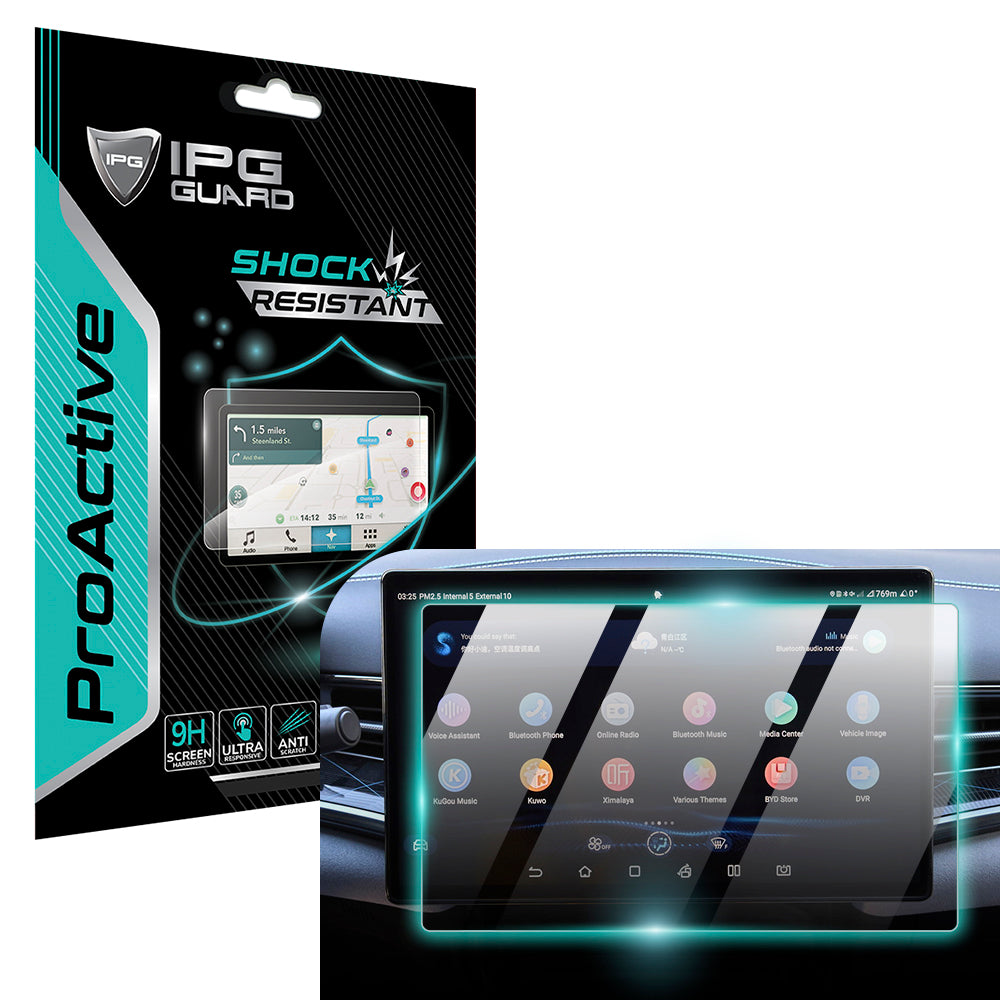
Your search for the perfect privacy screen protector vs matte shield ends with precision engineering. We don't just provide a layer of plastic or glass; we offer a dedicated system of stewardship for your high-value devices. Our My IPG ProActive technology integrates advanced light-filtration properties directly into custom-fit hydrogel and tempered glass. Whether you're securing an iPhone 17 Pro or a specialized My IPG ProActive for BYD 2022-2025 SEAL navigation display, our materials are designed to preserve the emotional and financial value of your technology. We understand that these aren't just gadgets. They're essential tools for your life and work.
Installation remains the primary barrier to display integrity. Dust and bubbles don't just look unprofessional; they compromise the optical properties of your shield. The My IPG Zerodust Screen Protector system eliminates this frustration. It provides a seamless, factory-like finish that maintains the haptic sensitivity of modern haptic screens. Our commitment to reliability extends beyond consumer electronics. We provide specialized protection for industrial equipment, including the My IPG Snap-on Triton Apollo Solus + screen protector, ensuring that even the most rugged tools receive high-end optical care.
Custom-Cut Protection for Niche Devices
Precision is our standard. Mass-market protectors often fail on rounded edges or unique sensor arrays, leaving vulnerable gaps. We provide precision-cut films tailored to the exact specifications of your hardware. This includes everything from the My IPG Lowrance Eagle 4" Elite hds poro FishFinder screen protector to automotive infotainment systems and industrial HMI displays. By using specialized materials that adapt to unique contours, we ensure every millimeter of your display is guarded against the environment. This meticulous approach is how we act as the ultimate guardian for your digital assets.
The Verdict: Can You Have Both?
If you find yourself torn between data security and glare reduction, you don't have to choose. The My IPG Matte Privacy hybrid is our premier solution, combining the 30-degree blackout threshold of microlouvers with an etched, light-diffusing surface. It's the definitive answer for those seeking total glare reduction without sacrificing data security. When making your final choice, remember the selection framework: if your environment demands absolute data security in crowded public spaces, prioritize Privacy. If your workflow requires zero-glare visibility and a paper-like touch experience in direct light, prioritize Matte. Secure your device with the ultimate guardian today.
Future-Proof Your Display with Precision Shielding
Navigating the choice between a privacy screen protector vs matte finish is about aligning your device's defense with your specific daily environment. You've identified how advanced microlouver technology secures your sensitive data from prying eyes while precision-etched surfaces neutralize distracting glare. Whether you're managing a corporate workflow in a crowded airport terminal or navigating open waters with marine electronics, the right shield preserves both your display's clarity and your own peace of mind. We take pride in our role as the meticulous guardian of your technology, offering custom-fit solutions for 5,000+ devices.
Every shield we craft at My IPG utilizes 9H hardness tempered glass options to ensure your high-value items remain in factory-fresh condition. These specialized materials maintain the haptic integrity of your screen while providing a robust barrier against daily wear. Don't leave your display's integrity to chance. Take the final step in professional device maintenance and Secure Your Display with My IPG Precision Shields today. Your technology represents a significant investment; it deserves a specialist's touch to stay protected for years to come.
Frequently Asked Questions
Do privacy screen protectors make the screen too dark for outdoor use?
Privacy screen protectors do reduce light transmittance by 15% to 30%, which can make the display appear darker in direct sunlight. To maintain visibility outdoors, you'll need to increase your device's brightness settings manually. While this impacts battery life, it's a necessary trade-off for the 30-degree visual blackout security provided by the internal microlouver slats. High-brightness OLED panels help mitigate this effect significantly.
Will a matte screen protector make my high-resolution display look grainy?
A matte screen protector can introduce a slight "grainy" or "rainbow" effect on 4K+ high-resolution displays if the surface etching is too aggressive. Premium matte shields utilize a lower haze percentage to scatter light without distorting the underlying pixel structure. This ensures you maintain sharpness while benefiting from a 5/5 star rating in anti-glare performance and superior fingerprint resistance for your high-value tech.
Can I use a privacy screen protector with a fingerprint scanner?
You can use a privacy screen protector with a fingerprint scanner, though ultrasonic sensors require precise installation for a perfect bond. Immediately after applying the shield, you should re-register your fingerprints to help the sensor adapt to the new optical layer. Infrared-based facial recognition, such as FaceID, typically bypasses these filters entirely without any loss in speed or accuracy, maintaining your seamless login experience.
Is there a screen protector that is both matte and privacy?
Yes, hybrid solutions exist that integrate both light-diffusing matte textures and microlouver privacy technology. Choosing a hybrid privacy screen protector vs matte standalone option allows you to achieve total data security alongside a 5/5 anti-glare rating. This is the ultimate choice for professionals working in high-glare public environments who refuse to compromise on either visibility or digital privacy while protecting their device's integrity.
How do I know if I need a 2-way or 4-way privacy filter?
Choose a 2-way privacy filter if you only need protection in portrait mode, which allows you to share your screen in landscape by rotating the device. If you frequently use your tablet or laptop in high-traffic areas, a 4-way filter provides 360-degree security. Keep in mind that 4-way filters are often slightly thicker, which can impact touch sensitivity on some modern haptic displays during rapid, precise interactions.
Does a matte screen protector affect the quality of my mobile photos?
A matte screen protector doesn't affect the quality of your mobile photos because precision-cut shields include dedicated openings for the front-facing camera. For the rear cameras, we recommend an IPG Phone camera lens protector to ensure your optics remain scratch-free. As long as the lens itself is guarded by clear tempered glass, your photo clarity and color accuracy will remain uncompromised by the matte finish.
Are privacy screen protectors harder to install than standard ones?
Privacy screen protectors require more precise alignment than standard clear shields to ensure the viewing angles are perfectly centered. Misalignment can lead to uneven "blackout" zones or a partially dark display when viewed straight-on. Utilizing a system like the IPG Zerodust Screen Protector ensures a bubble-free application, allowing you to achieve a factory-quality finish that preserves the haptic integrity and aesthetic value of your device.
Can I remove a privacy protector and reuse it on another device?
You can't effectively remove and reuse a privacy protector on another device because the silicone adhesive layer is designed for a single, permanent bond. Attempting to peel the shield off often bends the internal microlouvers and attracts dust particles that cause permanent bubbles during a second application. For the best display integrity, always use a fresh, precision-cut protector tailored specifically to your hardware's unique dimensions and sensors.